Kirjojen hintavertailu. Mukana 12 390 323 kirjaa ja 12 kauppaa.

Kirjailija

James Ladyman

Kirjat ja teokset yhdessä paikassa: 8 kirjaa, julkaisuja vuosilta 2001-2026, suosituimpien joukossa Every Thing Must Go. Vertaile teosten hintoja ja tarkista saatavuus suomalaisista kirjakaupoista.

8 kirjaa

Kirjojen julkaisuhaarukka 2001-2026.

Understanding Philosophy of Science
In this exceptionally clear and engaging introduction to the philosophy of science, James Ladyman explores the philosophical questions that arise when we reflect on the nature of the scientific method and the knowledge it produces. He discusses whether fundamental philosophical questions about knowledge and reality might be answered by science, and considers in detail the debate between realists and antirealists about the extent of scientific knowledge. The style remains unassuming, bringing to life the essential questions in the philosophy of science. Ideal for any student of philosophy or science, the book requires no previous knowledge of either discipline. It contains suggestions for further reading and cross-references with an extensive bibliography, making this the ideal textbook for students coming to the subject for the first time.The second edition includes the following key features: new chapter ‘Confirmation and Evidence’ which will include Nicod’s criterion and Hempel’s symmetry thesis and Bayesianism new content added to the ‘Revolutions and Rationality’ chapter, including Post-Kuhnian views of the scientific method more content on social factors in science and recent views of science.
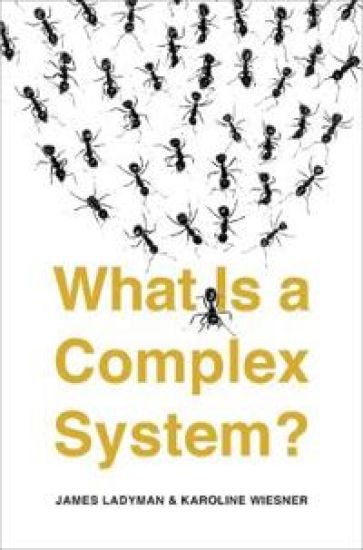
What Is a Complex System?

What Is a Complex System?

James Ladyman; Karoline Wiesner

Yale University Press
2020
pokkari
A clear, concise introduction to the quickly growing field of complexity science that explains its conceptual and mathematical foundations What is a complex system? Although “complexity science” is used to understand phenomena as diverse as the behavior of honeybees, the economic markets, the human brain, and the climate, there is no agreement about its foundations. In this introduction for students, academics, and general readers, philosopher of science James Ladyman and physicist Karoline Wiesner develop an account of complexity that brings the different concepts and mathematical measures applied to complex systems into a single framework. They introduce the different features of complex systems, discuss different conceptions of complexity, and develop their own account. They explain why complexity science is so important in today’s world.
Materialism

Materialism

Robin Brown; James Ladyman

Routledge
2019
nidottu
The doctrine of materialism is one of the most controversial in the history of ideas. For much of its history it has been aligned with toleration and enlightened thinking, but it has also aroused strong, often violent, passions amongst both its opponents and proponents. This book explores the development of materialism in an engaging and thought-provoking way and defends the form it takes in the twenty-first century.Opening with an account of the ideas of some of the most important thinkers in the materialist tradition, including Epicurus, Lucretius, Hobbes, Hume, Darwin and Marx, the authors discuss materialism’s origins, as an early form of naturalistic explanation and as an intellectual outlook about life and the world in general. They explain how materialism’s beginnings as an imaginative vision of the true nature of things faced a major challenge from the physics it did so much to facilitate, which now portrays the microscopic world in a way incompatible with traditional materialism. Brown and Ladyman explain how out of this challenge materialism developed into the new doctrine of physicalism.Drawing on a wide range of colourful examples, the authors argue that although materialism does not have all the answers, its humanism and commitment to naturalistic explanation and the scientific method is our best philosophical hope in the ideological maelstrom of the modern world.
Materialism

Materialism

Robin Brown; James Ladyman

Routledge
2019
sidottu
The doctrine of materialism is one of the most controversial in the history of ideas. For much of its history it has been aligned with toleration and enlightened thinking, but it has also aroused strong, often violent, passions amongst both its opponents and proponents. This book explores the development of materialism in an engaging and thought-provoking way and defends the form it takes in the twenty-first century.Opening with an account of the ideas of some of the most important thinkers in the materialist tradition, including Epicurus, Lucretius, Hobbes, Hume, Darwin and Marx, the authors discuss materialism’s origins, as an early form of naturalistic explanation and as an intellectual outlook about life and the world in general. They explain how materialism’s beginnings as an imaginative vision of the true nature of things faced a major challenge from the physics it did so much to facilitate, which now portrays the microscopic world in a way incompatible with traditional materialism. Brown and Ladyman explain how out of this challenge materialism developed into the new doctrine of physicalism.Drawing on a wide range of colourful examples, the authors argue that although materialism does not have all the answers, its humanism and commitment to naturalistic explanation and the scientific method is our best philosophical hope in the ideological maelstrom of the modern world.
Every Thing Must Go

Every Thing Must Go

James Ladyman; Don Ross; David Spurrett; John Collier

Oxford University Press
2009
nidottu
Every Thing Must Go argues that the only kind of metaphysics that can contribute to objective knowledge is one based specifically on contemporary science as it really is, and not on philosophers' a priori intuitions, common sense, or simplifications of science. In addition to showing how recent metaphysics has drifted away from connection with all other serious scholarly inquiry as a result of not heeding this restriction, they demonstrate how to build a metaphysics compatible with current fundamental physics ('ontic structural realism'), which, when combined with their metaphysics of the special sciences ('rainforest realism'), can be used to unify physics with the other sciences without reducing these sciences to physics itself. Taking science metaphysically seriously, Ladyman and Ross argue, means that metaphysicians must abandon the picture of the world as composed of self-subsistent individual objects, and the paradigm of causation as the collision of such objects. Every Thing Must Go also assesses the role of information theory and complex systems theory in attempts to explain the relationship between the special sciences and physics, treading a middle road between the grand synthesis of thermodynamics and information, and eliminativism about information. The consequences of the author's metaphysical theory for central issues in the philosophy of science are explored, including the implications for the realism vs. empiricism debate, the role of causation in scientific explanations, the nature of causation and laws, the status of abstract and virtual objects, and the objective reality of natural kinds.
Every Thing Must Go

Every Thing Must Go

James Ladyman; Don Ross

Clarendon Press
2007
sidottu
Every Thing Must Go argues that the only kind of metaphysics that can contribute to objective knowledge is one based specifically on contemporary science as it really is, and not on philosophers' a priori intuitions, common sense, or simplifications of science. In addition to showing how recent metaphysics has drifted away from connection with all other serious scholarly inquiry as a result of not heeding this restriction, they demonstrate how to build a metaphysics compatible with current fundamental physics ('ontic structural realism'), which, when combined with their metaphysics of the special sciences ('rainforest realism'), can be used to unify physics with the other sciences without reducing these sciences to physics itself. Taking science metaphysically seriously, Ladyman and Ross argue, means that metaphysicians must abandon the picture of the world as composed of self-subsistent individual objects, and the paradigm of causation as the collision of such objects. Everything Must Go also assesses the role of information theory and complex systems theory in attempts to explain the relationship between the special sciences and physics, treading a middle road between the grand synthesis of thermodynamics and information, and eliminativism about information. The consequences of the author's metaphysical theory for central issues in the philosophy of science are explored, including the implications for the realism vs. empiricism debate, the role of causation in scientific explanations, the nature of causation and laws, the status of abstract and virtual objects, and the objective reality of natural kinds.
Understanding Philosophy of Science
Few can imagine a world without telephones or televisions; many depend on computers and the Internet as part of daily life. Without scientific theory, these developments would not have been possible. In this exceptionally clear and engaging introduction to philosophy of science, James Ladyman explores the philosophical questions that arise when we reflect on the nature of the scientific method and the knowledge it produces. He discusses whether fundamental philosophical questions about knowledge and reality might be answered by science, and considers in detail the debate between realists and antirealists about the extent of scientific knowledge. Along the way, central topics in philosophy of science, such as the demarcation of science from non-science, induction, confirmation and falsification, the relationship between theory and observation and relativism are all addressed. Important and complex current debates over underdetermination, inference to the best explaination and the implications of radical theory change are clarified and clearly explained for those new to the subject.
Understanding Philosophy of Science
Few can imagine a world without telephones or televisions; many depend on computers and the Internet as part of daily life. Without scientific theory, these developments would not have been possible. In this exceptionally clear and engaging introduction to philosophy of science, James Ladyman explores the philosophical questions that arise when we reflect on the nature of the scientific method and the knowledge it produces. He discusses whether fundamental philosophical questions about knowledge and reality might be answered by science, and considers in detail the debate between realists and antirealists about the extent of scientific knowledge. Along the way, central topics in philosophy of science, such as the demarcation of science from non-science, induction, confirmation and falsification, the relationship between theory and observation and relativism are all addressed. Important and complex current debates over underdetermination, inference to the best explaination and the implications of radical theory change are clarified and clearly explained for those new to the subject.