Kirjailija
James Lane Allen
Kirjat ja teokset yhdessä paikassa: 221 kirjaa, julkaisuja vuosilta 2002-2026, suosituimpien joukossa John Gray. Vertaile teosten hintoja ja tarkista saatavuus suomalaisista kirjakaupoista.
221 kirjaa
Kirjojen julkaisuhaarukka 2002-2026.


Flute and Violin and Other Kentucky Tales and Romances (1891). By: James Lane Allen: Novel (Illustrated)
James Lane Allen
Createspace Independent Publishing Platform
2018
nidottu
James Lane Allen (December 21, 1849 - February 18, 1925) was an American novelist and short story writer whose work, including the novel A Kentucky Cardinal, often depicted the culture and dialects of his native Kentucky. His work is characteristic of the late-19th century local color era, when writers sought to capture the vernacular in their fiction. Allen has been described as "Kentucky's first important novelist." Early life and education: James Lane Allen was born near Lexington, Kentucky to Richard and Helen Jane (Foster) Allen on December 21, 1849. Allen, the youngest child in the family, had four sisters Lydia, May, Sally, and Annie, and two brothers, John and Henry.Allen lived at the Scarlet Gate estate in Lexington in the late 1800s until age 22 years.Allen spent his youth in Lexington during the Antebellum era, the American Civil War, and the Reconstruction periods. His childhood experience heavily influenced his writing. He described living at Scarlet Gate in the introduction to A Kentucky Cardinal. Death and legacy: Allen is buried in Lexington Cemetery. At the northern edge of Gratz Park in Lexington is the "Fountain of Youth", built in memory of Allen using proceeds willed to the city by him. James Lane Allen School, an elementary school off Alexandria Drive in Lexington, Kentucky is named in his honor.
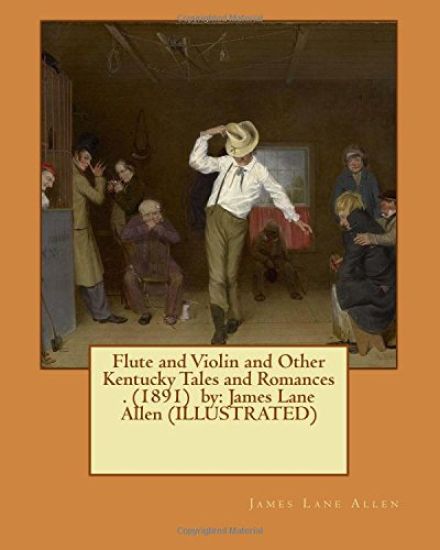
Flute and Violin and Other Kentucky Tales and Romances . (1891) by: James Lane Allen (ILLUSTRATED)
James Lane Allen
Createspace Independent Publishing Platform
2016
nidottu

John Gray: a Kentucky tale of the olden time. By: James Lane Allen
James Lane Allen
Createspace Independent Publishing Platform
2016
nidottu
James Lane Allen(December 21, 1849 - February 18, 1925) was an American novelist and short story writer whose work, including the novel A Kentucky Cardinal, often depicted the culture and dialects of his native Kentucky. His work is characteristic of the late-19th century local color era, when writers sought to capture the vernacular in their fiction. Allen has been described as "Kentucky's first important novelist." Allen was born near Lexington, Kentucky, and his youth there during the Ante-bellum, Civil War, and Reconstruction periods heavily influenced his writing. He graduated from Transylvania University in 1872, delivering the Salutatorian address in Latin. In 1893 Allen moved to New York City, where he lived until his death. He was a contributor to Harper's Magazine, The Atlantic Monthly, and other popular magazines of the time. His novels include The Choir Invisible, which was a very popular best seller in 1897. Allen is buried in Lexington Cemetery. At the northern edge of Gratz Park in Lexington is the "Fountain of Youth", built in memory of Allen using proceeds willed to the city by him.James Lane Allen School, an elementary school off Alexandria Drive in Lexington, Kentucky is named in his honor.








The Reign Of LawA Tale Of The Kentucky Hemp Fields (Edition1)
James Lane Allen
Double 9 Books LLP
2025
nidottu

Sister Dolorosa and posthumous fame reflects the quiet tension between sacred devotion and the awakening of earthly longing. The novel centers on a woman cloistered in religious life who begins to sense the emotional and spiritual pull of the world beyond the convent walls. As she walks through the countryside in quiet reflection, the simplicity of nature and memories of ordinary human connection prompt her to question the confines of her path. The sight of a wounded creature stirs compassion and vulnerability, offering a subtle metaphor for her own internal state. Moments of calm are interrupted by encounters that challenge her clarity, not through overt conflict but through small gestures, fragments of memory, and chance meetings that shift the boundaries of faith and duty. The narrative delicately contrasts spiritual discipline with the involuntary stirrings of the heart, suggesting that a life of complete renunciation may not extinguish longing but only redirect it inward. The novel gently reveals the quiet drama of a soul uncertain of its own strength and destination.