Kirjojen hintavertailu. Mukana 12 595 353 kirjaa ja 12 kauppaa.

Kirjailija

James Lee

Kirjat ja teokset yhdessä paikassa: 461 kirjaa, julkaisuja vuosilta 2004-2026, suosituimpien joukossa Silesian Folk Tales. Vertaile teosten hintoja ja tarkista saatavuus suomalaisista kirjakaupoista.

461 kirjaa

Kirjojen julkaisuhaarukka 2004-2026.

Environmental Conflict and Cooperation
Environmental Conflict and Cooperation explores the evolution of environmental conflict as a field of research and the study of cooperation as an alternative to war. Over four key parts, James R. Lee navigates the contours of this growing field and paints a vivid framework for better understanding issues around environmental conflict and security: • The premise of the field and its historic manifestations• The definition and purpose of research• The persuasions or types of environmental conflict and cooperation• The promise of research in leading to better decision-making and to broaching new challenges.Over the course of these parts, the author outlines the deep historic record of this discipline, arguing that it will play a key role in understanding important future trends. Utilizing a wide variety of case studies that range from ancient examples, including conflict over the Cedars of Lebanon and the role of tin in the Peloponnesian Wars, to future-oriented scenarios, including expanded island-building in the South China Sea and the global politics of geo-engineering, Lee highlights key concepts, metrics, and policy contexts that will test current understandings. He also examines a variety of research methods and provides examples of the ways in which such research can be used to inform policy improvements.This book will draw specific interest from students and scholars of environmental conflict and cooperation, as well as researchers of environmental politics and security studies.
Environmental Conflict and Cooperation
Environmental Conflict and Cooperation explores the evolution of environmental conflict as a field of research and the study of cooperation as an alternative to war. Over four key parts, James R. Lee navigates the contours of this growing field and paints a vivid framework for better understanding issues around environmental conflict and security: • The premise of the field and its historic manifestations• The definition and purpose of research• The persuasions or types of environmental conflict and cooperation• The promise of research in leading to better decision-making and to broaching new challenges.Over the course of these parts, the author outlines the deep historic record of this discipline, arguing that it will play a key role in understanding important future trends. Utilizing a wide variety of case studies that range from ancient examples, including conflict over the Cedars of Lebanon and the role of tin in the Peloponnesian Wars, to future-oriented scenarios, including expanded island-building in the South China Sea and the global politics of geo-engineering, Lee highlights key concepts, metrics, and policy contexts that will test current understandings. He also examines a variety of research methods and provides examples of the ways in which such research can be used to inform policy improvements.This book will draw specific interest from students and scholars of environmental conflict and cooperation, as well as researchers of environmental politics and security studies.
Housing, Home Ownership and Social Change in Hong Kong
First published in 1999, this volume examines the issue that, in the last two decades, the housing system in Hong Kong has witnessed a slow but consistent transition from a tenure dominated by public rental housing to one dominated by private home ownership. This book seeks to explain the unique social organization of home ownership in contemporary Hong Kong. Specifically, the book deals with the genesis of home ownership from three areas: housing histories, family culture and capital gains from home transactions. It is agreed that extreme deprivations in housing conditions in early lives, a strong family culture of mutual help as well as unprecedented capital gains, all contribute towards explaining the complex nature of home ownership growth. In conclusion the book suggests that with China regaining sovereignty after July 1997, the social organization of home ownership will be further complicated by more internal migrations from other parts of China, making housing problems even more acute.
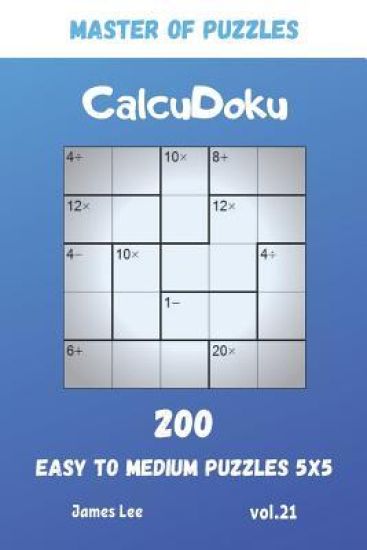
Master of Puzzles - CalcuDoku 200 Easy to Medium Puzzles 5x5 vol.21
Each puzzle consists of a grid containing blocks surrounded by bold lines. The object is to fill all empty squares so that the numbers 1 to N (where N is the number of rows or columns in the grid) appear exactly once in each row and column and the numbers in each block produce the result shown in the top-left corner of the block according to the math operation appearing on the top of the grid. In CalcuDoku a number may be used more than once in the same block.
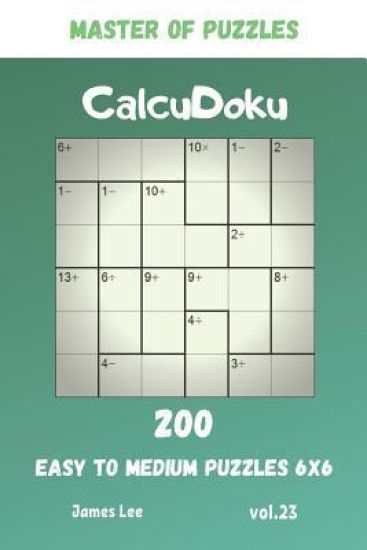
Master of Puzzles - CalcuDoku 200 Easy to Medium Puzzles 6x6 vol.23
Each puzzle consists of a grid containing blocks surrounded by bold lines. The object is to fill all empty squares so that the numbers 1 to N (where N is the number of rows or columns in the grid) appear exactly once in each row and column and the numbers in each block produce the result shown in the top-left corner of the block according to the math operation appearing on the top of the grid. In CalcuDoku a number may be used more than once in the same block.
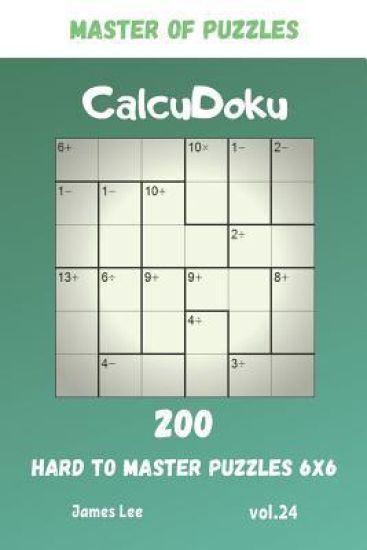
Master of Puzzles - CalcuDoku 200 Hard to Master Puzzles 6x6 vol.24
Each puzzle consists of a grid containing blocks surrounded by bold lines. The object is to fill all empty squares so that the numbers 1 to N (where N is the number of rows or columns in the grid) appear exactly once in each row and column and the numbers in each block produce the result shown in the top-left corner of the block according to the math operation appearing on the top of the grid. In CalcuDoku a number may be used more than once in the same block.
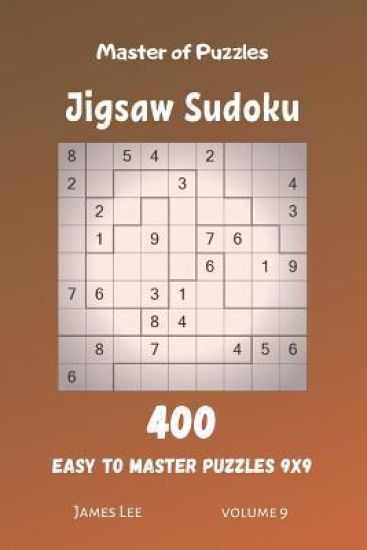
Master of Puzzles - Jigsaw Sudoku 400 Easy to Master Puzzles 9x9 vol.9
The rules of Jigsaw Sudoku are similar to standard Sudoku, since you must place each of the numbers 1 to 9 (or 1 to whatever the size of the puzzle is) into each of the rows and columns. However whereas standard Sudoku also has rectangular boxes that must each contain every number, in Jigsaw Sudoku these boxes are replaced by different bold-lined shapes that must each contain every number instead.
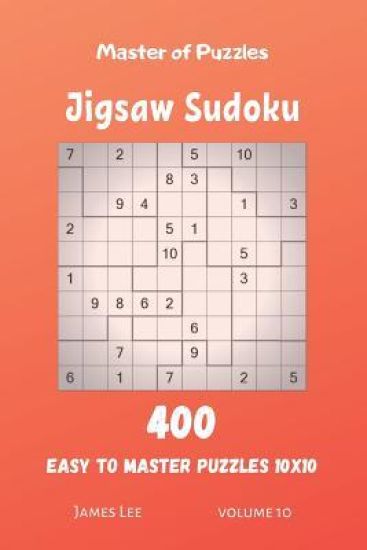
Master of Puzzles - Jigsaw Sudoku 400 Easy to Master Puzzles 10x10 vol.10
The rules of Jigsaw Sudoku are similar to standard Sudoku, since you must place each of the numbers 1 to 10 (or 1 to whatever the size of the puzzle is) into each of the rows and columns. However whereas standard Sudoku also has rectangular boxes that must each contain every number, in Jigsaw Sudoku these boxes are replaced by different bold-lined shapes that must each contain every number instead.
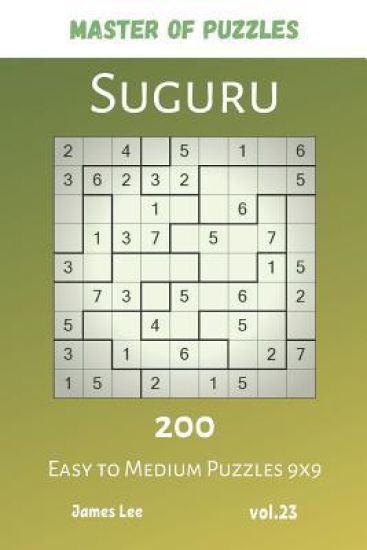
Master of Puzzles - Suguru 200 Easy to Medium Puzzles 9x9 vol.23
Suguru, also known as Tectonics or Number Blocks, is a Japanese puzzle invented by Naoki Inaba. The goal is to fill a given rectangular grid with numbers, so that every designated area contains a sequence of non-repeating, consecutive numbers, starting from 1 and going up. Also, adjacent (touching) cells should not contain the same number, even diagonally.
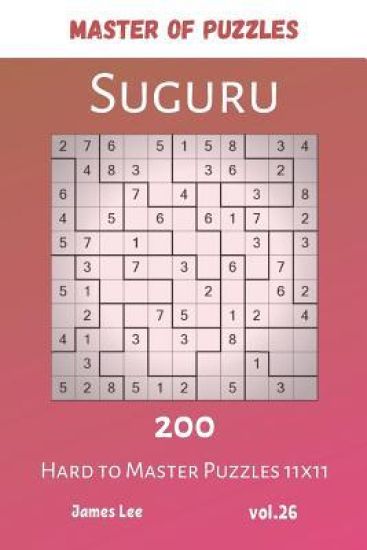
Master of Puzzles - Suguru 200 Hard to Master Puzzles 11x11 vol.26
Suguru, also known as Tectonics or Number Blocks, is a Japanese puzzle invented by Naoki Inaba. The goal is to fill a given rectangular grid with numbers, so that every designated area contains a sequence of non-repeating, consecutive numbers, starting from 1 and going up. Also, adjacent (touching) cells should not contain the same number, even diagonally.
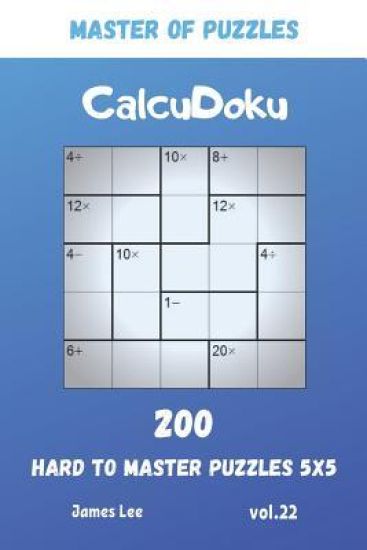
Master of Puzzles - CalcuDoku 200 Hard to Master Puzzles 5x5 vol.22
Each puzzle consists of a grid containing blocks surrounded by bold lines. The object is to fill all empty squares so that the numbers 1 to N (where N is the number of rows or columns in the grid) appear exactly once in each row and column and the numbers in each block produce the result shown in the top-left corner of the block according to the math operation appearing on the top of the grid. In CalcuDoku a number may be used more than once in the same block.
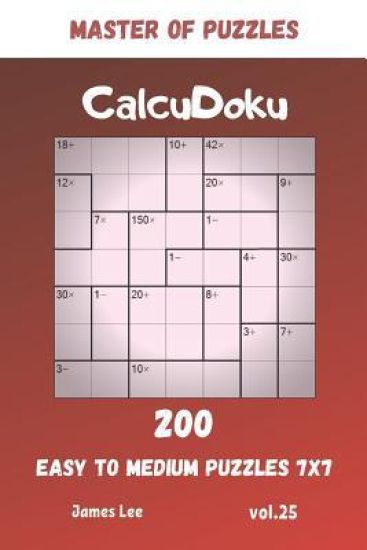
Master of Puzzles - CalcuDoku 200 Easy to Medium Puzzles 7x7 vol.25
Each puzzle consists of a grid containing blocks surrounded by bold lines. The object is to fill all empty squares so that the numbers 1 to N (where N is the number of rows or columns in the grid) appear exactly once in each row and column and the numbers in each block produce the result shown in the top-left corner of the block according to the math operation appearing on the top of the grid. In CalcuDoku a number may be used more than once in the same block.
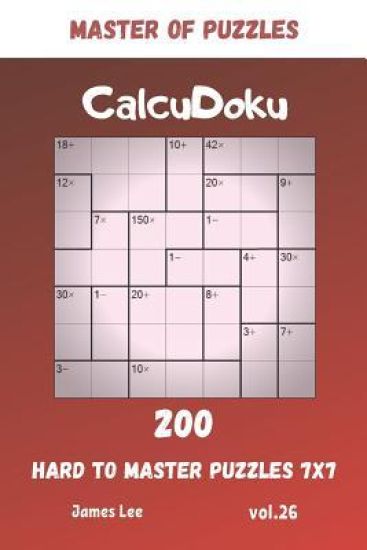
Master of Puzzles - CalcuDoku 200 Hard to Master Puzzles 7x7 vol.26
Each puzzle consists of a grid containing blocks surrounded by bold lines. The object is to fill all empty squares so that the numbers 1 to N (where N is the number of rows or columns in the grid) appear exactly once in each row and column and the numbers in each block produce the result shown in the top-left corner of the block according to the math operation appearing on the top of the grid. In CalcuDoku a number may be used more than once in the same block.
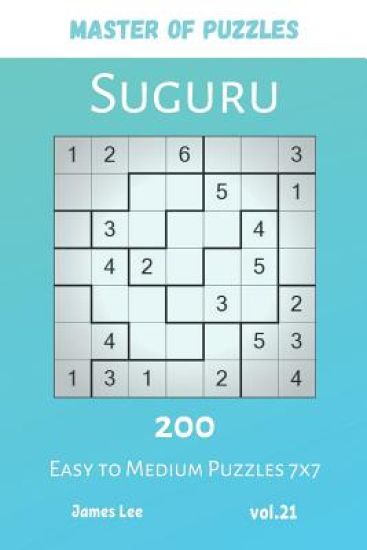
Master of Puzzles - Suguru 200 Easy to Medium Puzzles 7x7 vol.21
Suguru, also known as Tectonics or Number Blocks, is a Japanese puzzle invented by Naoki Inaba. The goal is to fill a given rectangular grid with numbers, so that every designated area contains a sequence of non-repeating, consecutive numbers, starting from 1 and going up. Also, adjacent (touching) cells should not contain the same number, even diagonally.
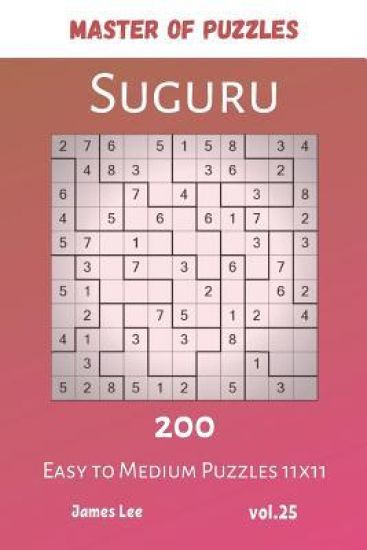
Master of Puzzles - Suguru 200 Easy to Medium Puzzles 11x11 vol.25
Suguru, also known as Tectonics or Number Blocks, is a Japanese puzzle invented by Naoki Inaba. The goal is to fill a given rectangular grid with numbers, so that every designated area contains a sequence of non-repeating, consecutive numbers, starting from 1 and going up. Also, adjacent (touching) cells should not contain the same number, even diagonally.
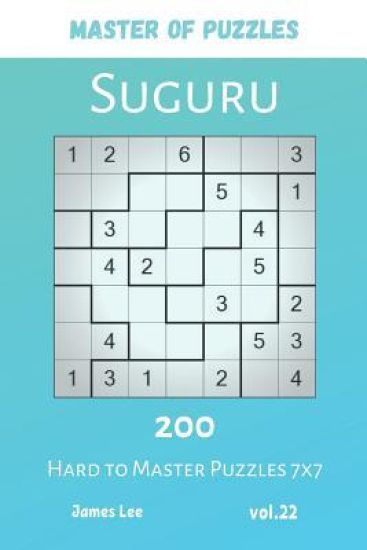
Master of Puzzles - Suguru 200 Hard to Master Puzzles 7x7 vol.22
Suguru, also known as Tectonics or Number Blocks, is a Japanese puzzle invented by Naoki Inaba. The goal is to fill a given rectangular grid with numbers, so that every designated area contains a sequence of non-repeating, consecutive numbers, starting from 1 and going up. Also, adjacent (touching) cells should not contain the same number, even diagonally.