Kirjojen hintavertailu. Mukana 12 390 323 kirjaa ja 12 kauppaa.

Kirjailija

James Longenbach

Kirjat ja teokset yhdessä paikassa: 20 kirjaa, julkaisuja vuosilta 1991-2024, suosituimpien joukossa Wallace Stevens: The Plain Sense of Things. Vertaile teosten hintoja ja tarkista saatavuus suomalaisista kirjakaupoista.

20 kirjaa

Kirjojen julkaisuhaarukka 1991-2024.

Wallace Stevens: The Plain Sense of Things

Wallace Stevens: The Plain Sense of Things

James Longenbach

Oxford University Press Inc
1992
nidottu
Most readers of Wallace Stevens wonder at his `double life'; the poet and the lawyer who worked in the insurance business. But Longenbach argues that Stevens lived no such double life. By examining a full range of Stevens' writing in the context of American political and intellectual history, Longenbach's book reveals for the first time a poet who was not only aware of events taking place around him but whose work was often inspired by those events. While the focus is on Stevens, and the historical events and ideological debates around him, poets like Eliot, Williams, Marianne Moore, and Burke are also examined.
Seafarer

Seafarer

James Longenbach

WW NORTON CO
2024
sidottu
Standing on the shore, preparing to journey into the unknown, James Longenbach wrote these final poems with astonishing courage and clarity. Seafarer opens with a gorgeous sequence in which the poet looks down on his life from above, as if he’s already left it behind. With prophetic perception, Longenbach reflects on the encroaching tide of mortality through myth and memory. This volume unites Seafarer with Forever (2021) and the National Book Critics Circle Award finalist Earthling (2017); the three works have a powerful symmetry in their recognition of the ordinary, extraordinary, and precarious experiences of love and loss.
Forever

Forever

James Longenbach

WW NORTON CO
2023
nidottu
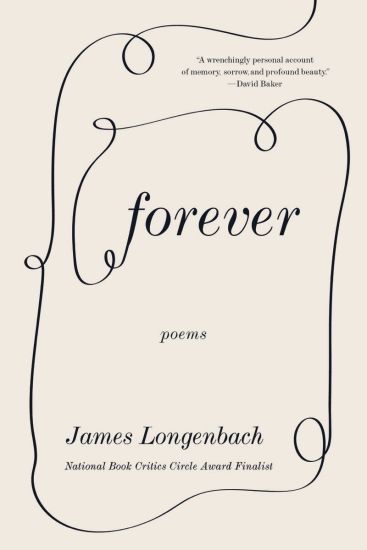
Praised for a voice with "the crystalline, transformative, pure pitch of a lyric poet" (Ilya Kaminsky), James Longenbach explores a life lived with the knowledge of its end in his sixth collection. These luminous, lyrical poems pose a question: Why did this poet once live as if he would live forever? And what does it mean to know that we will not? Forever explores the meaning of love, from its discovery in the first poem, "Two People", to its maintenance in the last, "Forever". In between, the volume explores the precariously imminent demise of all that we love—the finite lives of other people, the mortal beauty of Venice—all thrown into urgent relief by the poet’s own cancer diagnosis. Evoking "the vivid dailiness of domestic life…and the specificity and poignance" of memories, "these lyrics are intimately personal, achingly autobiographical" (Langdon Hammer, American Scholar). Forthright, moving and wry, the poems in Forever look back gratefully—excitedly—on a lifetime of self-making and self-shattering events.
Forever

Forever

James Longenbach

WW Norton Co
2021
sidottu
Praised for a voice with "the crystalline, transformative, pure pitch of a lyric poet" (Ilya Kaminsky), James Longenbach explores a life lived with the knowledge of its end in his sixth collection. These luminous, lyrical poems pose a question: Why did this poet once live as if he would live forever? And what does it mean to know that we will not? Forever explores the meaning of love, from its discovery in the first poem, "Two People," to its maintenance in the last, "Forever." In between, the volume explores the precariously imminent demise of all that we love the finite lives of other people, the mortal beauty of Venice—all thrown into urgent relief by the poet’s own cancer diagnosis. Evoking "the vivid dailiness of domestic life…and the specificity and poignance" of memories, "these lyrics are intimately personal, achingly autobiographical" (Langdon Hammer, American Scholar). Forthright, moving, and wry, the poems in Forever look back gratefully—excitedly—on a lifetime of self-making and self-shattering events.
The Lyric Now

The Lyric Now

James Longenbach

University of Chicago Press
2020
sidottu
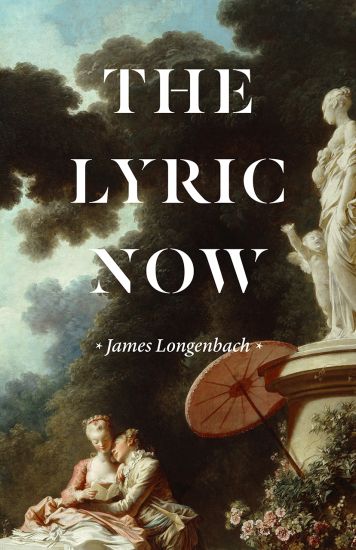
For more than a century, American poets have heeded the siren song of Ezra Pound’s make it new, staking a claim for the next poem on the supposed obsolescence of the last. But great poems are forever rehearsing their own present, inviting readers into a nowness that makes itself new each time we read or reread them. They create the present moment as we enter it, their language relying on the long history of lyric poetry while at the same time creating a feeling of unprecedented experience. ?In poet and critic James Longenbach’s title, the word “now” does double duty, evoking both a lyric sense of the present and twentieth-century writers’ assertion of “nowness” as they crafted their poetry in the wake of Modernism. Longenbach examines the fruitfulness of poetic repetition and indecision, of naming and renaming, and of the evolving search for newness in the construction, history, and life of lyrics. Looking to the work of thirteen poets, from Marianne Moore and T. S. Eliot through George Oppen and Jorie Graham to Carl Phillips and Sally Keith, and several musicians, including Virgil Thomson and Patti Smith, he shows how immediacy is constructed through language. Longenbach also considers the life and times of these poets, taking a close look at the syntax and diction of poetry, and offers an original look at the nowness of lyrics.
The Lyric Now

The Lyric Now

James Longenbach

University of Chicago Press
2020
nidottu
For more than a century, American poets have heeded the siren song of Ezra Pound’s make it new, staking a claim for the next poem on the supposed obsolescence of the last. But great poems are forever rehearsing their own present, inviting readers into a nowness that makes itself new each time we read or reread them. They create the present moment as we enter it, their language relying on the long history of lyric poetry while at the same time creating a feeling of unprecedented experience. ?In poet and critic James Longenbach’s title, the word “now” does double duty, evoking both a lyric sense of the present and twentieth-century writers’ assertion of “nowness” as they crafted their poetry in the wake of Modernism. Longenbach examines the fruitfulness of poetic repetition and indecision, of naming and renaming, and of the evolving search for newness in the construction, history, and life of lyrics. Looking to the work of thirteen poets, from Marianne Moore and T. S. Eliot through George Oppen and Jorie Graham to Carl Phillips and Sally Keith, and several musicians, including Virgil Thomson and Patti Smith, he shows how immediacy is constructed through language. Longenbach also considers the life and times of these poets, taking a close look at the syntax and diction of poetry, and offers an original look at the nowness of lyrics.
How Poems Get Made

How Poems Get Made

James Longenbach

WW Norton Co
2018
nidottu
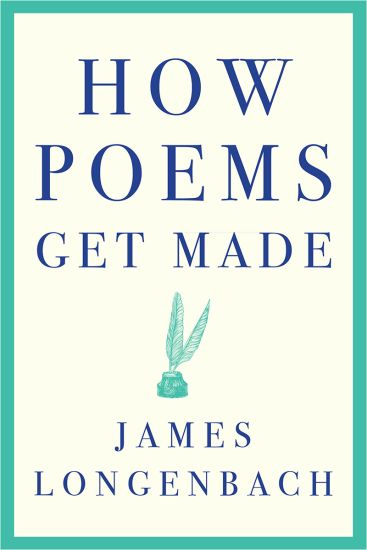
Each of the twelve chapters of How Poems Get Made examines a specific aspect of the poetic medium: diction, syntax, rhythm, echo, figure, repetition and more. Acclaimed poet and critic James Longenbach shows how a poet may manipulate these most basic elements of diction and syntax to create voice, image, tone or song, and bring a poem to life.
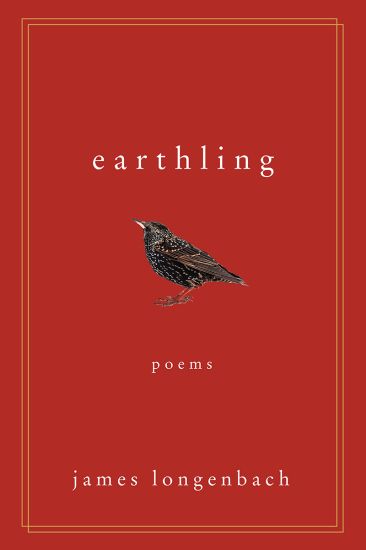
Earthling

Earthling

James Longenbach

WW Norton Co
2017
nidottu
“Earthling” is one of the oldest words in the English language, our original word for ploughman, a keeper of the earth. In poems simultaneously ordinary and otherworldly, James Longenbach traces the life of a modern-day earthling as he looks squarely at his little patch of earth and at the vast emptiness of interstellar space. Beginning with the death of the earthling’s mother and ending with a confrontation with his own mortality, the poems within Earthling resist complaint or agitation. In them, the real and the imagined, the material and the allegorical, intersect at shifting angles and provide fresh perspectives and lasting consolation.
Modernist Poetics of History

Modernist Poetics of History

James Longenbach

Princeton University Press
2016
sidottu
By thoroughly examining T. S. Eliot and Ezra Pound collected and uncollected writings, James Longenbach presents their understandings of the philosophical idea of history and analyzes the strategies of historical interpretation they discussed in their critical prose and embodied in their poems including history." Originally published in 1987. The Princeton Legacy Library uses the latest print-on-demand technology to again make available previously out-of-print books from the distinguished backlist of Princeton University Press. These editions preserve the original texts of these important books while presenting them in durable paperback and hardcover editions. The goal of the Princeton Legacy Library is to vastly increase access to the rich scholarly heritage found in the thousands of books published by Princeton University Press since its founding in 1905.
Modernist Poetics of History

Modernist Poetics of History

James Longenbach

Princeton University Press
2014
pokkari
By thoroughly examining T. S. Eliot and Ezra Pound collected and uncollected writings, James Longenbach presents their understandings of the philosophical idea of history and analyzes the strategies of historical interpretation they discussed in their critical prose and embodied in their poems including history." Originally published in 1987. The Princeton Legacy Library uses the latest print-on-demand technology to again make available previously out-of-print books from the distinguished backlist of Princeton University Press. These editions preserve the original texts of these important books while presenting them in durable paperback and hardcover editions. The goal of the Princeton Legacy Library is to vastly increase access to the rich scholarly heritage found in the thousands of books published by Princeton University Press since its founding in 1905.
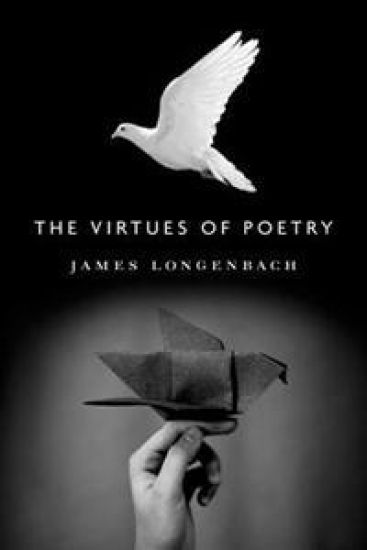
The Virtues of Poetry

The Virtues of Poetry

James Longenbach

GRAYWOLF PRESS
2013
nidottu
An illuminating look at the many forms of poetry's essential excellence by James Longenbach, a writer with "an ear as subtle and assured as any American poet now writing" (John Koethe) "This book proposes some of the virtues to which the next poem might aspire: boldness, change, compression, dilation, doubt, excess, inevitability, intimacy, otherness, particularity, restraint, shyness, surprise, and worldliness. The word 'virtue' came to English from Latin, via Old French, and while it has acquired a moral valence, the word in its earliest uses gestured toward a magical or transcendental power, a power that might be embodied by any particular substance or act. With vices I am not concerned. Unlike the short-term history of taste, which is fueled by reprimand or correction, the history of art moves from achievement to achievement. Contemporary embodiments of poetry's virtues abound, and only our devotion to a long history of excellence allows us to recognize them." -from James Longenbach's preface The Virtues of Poetry is a resplendent and ultimately moving work of twelve interconnected essays, each of which describes the way in which a particular excellence is enacted in poetry. Longenbach closely reads poems by Shakespeare, Donne, Blake, Keats, Dickinson, Yeats, Pound, Bishop, and Ashbery (among others), sometimes exploring the ways in which these writers transmuted the material of their lives into art, and always emphasizing that the notions of excellence we derive from art are fluid, never fixed. Provocative, funny, and astute, The Virtues of Poetry is indispensable for readers, teachers, and writers. Longenbach reminds us that poetry delivers meaning in exacting ways, and that it is through its precision that we experience this art's lasting virtues.
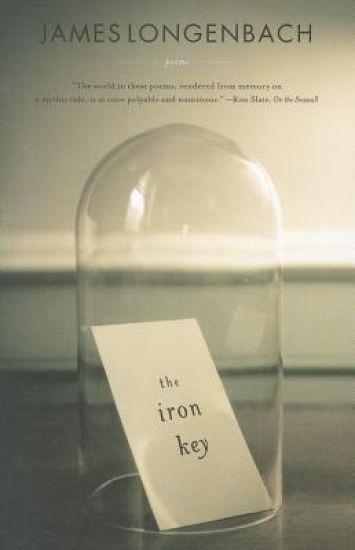
The Iron Key

The Iron Key

James Longenbach

WW Norton Co
2012
nidottu
“Tightly conceived, elegantly architectured, and sophisticatedly enunciated. . . . [The Iron Key] oozes nostalgia for the many charms of Venice, the complexities of Greek myths, and the ethereal pleasures of opera and poetry that is, paradoxically, both old-fashioned and refreshing.”—The Rumpus
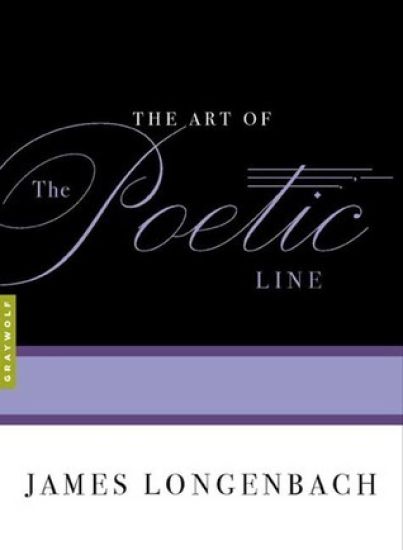
The Art Of The Poetic Line

The Art Of The Poetic Line

James Longenbach

Graywolf Press,U.S.
2007
nidottu
Poetry is the sound of language organized in lines.' James Longenbach opens The Art of the Poetic Line with that essential statement. Through a range of examples - from Shakespeare and Milton to Ashbery and Gluck - Longenbach describes the function of line in metered, rhymed, syllabic and free-verse poetry. That function is sonic, he argues, and our true experience of it can only be identified in relation to other elements in a poem. A vital new resource by one of America's most important critics and one of poetry's most engaging practitioners.'
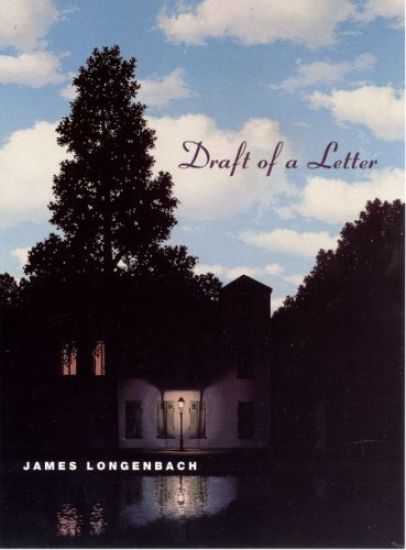
Draft of a Letter

Draft of a Letter

James Longenbach

University of Chicago Press
2007
nidottu
From the Second Draft: What other people learn From birth, Betrayal, I learned late. My soul perched On an olive branch Combing itself, Waving its plumes. I said Being mortal, I aspire to Mortal things. I need you, Said my soul, If you're telling the truth. "Draft of a Letter" is a book about belief - not belief in the unknowable but belief in what seems bewilderingly plain. Pondering the bodies we inhabit, the words we speak, these poems discover infinitude in the most familiar places. The revelation is disorienting and, as a result, these poems talk to themselves, revise themselves, fashioning a dialogue between self and soul that opens outward to include other voices, lovers, children, angels, and ghosts. For James Longenbach, great distance makes the messages we send sweeter. To be divided from ourselves is never to be alone. "If the kingdom is in the sky," says the body to the soul, "Birds will get there before you." "In time," says the awakening soul, "I liked my second/Body better/Than the first." To live, these poems insist, is to arise every day to the strange magnificence of the people and places we thought we knew best. "Draft of a Letter" is an unsettled and radiant paradiso, imagined in the death-shadowed, birth-haunted middle of a long life.
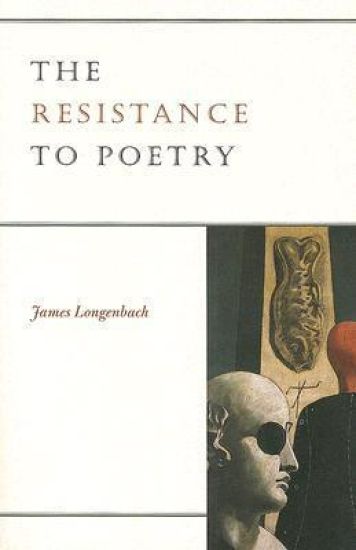
The Resistance to Poetry

The Resistance to Poetry

James Longenbach

University of Chicago Press
2005
nidottu
Poetry, argues James Longenbach, is its own best enemy. Examining a wide array of poets, from Callimachus to Louise Gluck, he explains that the resistance to poetry is, quite specifically, the wonder of poetry. Poems do convey knowledge, he suggests, but they do so in forms that continually work against their being facile vehicles for its efficient transmission. In fact, this self-resistance is the source of the reader's pleasure: we read poetry not to escape difficulty but to embrace it. Longenbach makes his case through a sustained engagement with the language of poems. Each chapter brings a fresh perspective to a crucial aspect of poetry (line, syntax, figurative language, voice, disjunction), showing that the power of language depends less on meaning than on the way in which it means - on the temporal process we negotiate in the act of reading or writing a poem. A graceful and skilled study, "The Resistance to Poetry" comes at a crucial time - a time when many people are trying to mold and market poetry into something it is not.
Fleet River

Fleet River

James Longenbach

University of Chicago Press
2003
nidottu
A sequel of sorts to his first book of poetry, James Longenbach's new collection is about wonder: falling in love with the world, as though for the first time. With crisp phrasing and tightly controlled abstraction, "Fleet River" traces the journey of two children, two lovers and two travellers through landscapes earthly and otherworldly, following the river as it turns, dips underground, then reemerges unexpectedly as they experience awe at the workings of the universe. Mimicking the river's shifting course, the poems revise themselves as the book moves forward, turning against their own best conclusions, proving that the pilgrims' journey is less the discovery of love than the recreation, poem by poem, of love's possibilities.
Fleet River

Fleet River

James Longenbach

University of Chicago Press
2003
sidottu
A sequel of sorts to his first book of poetry, James Longenbach's new collection is about wonder: falling in love with the world, as though for the first time. With crisp phrasing and tightly controlled abstraction, "Fleet River" traces the journey of two children, two lovers and two travellers through landscapes earthly and otherworldly, following the river as it turns, dips underground, then reemerges unexpectedly as they experience awe at the workings of the universe. Mimicking the river's shifting course, the poems revise themselves as the book moves forward, turning against their own best conclusions, proving that the pilgrims' journey is less the discovery of love than the recreation, poem by poem, of love's possibilities.
Threshold

Threshold

James Longenbach

University of Chicago Press
1998
sidottu
Threshold is an extraordinary first collection that explores the shifting spaces between differing states of human experience. James Longenbach's poems dwell on metaphoric gates, doorways, and end points past which our everyday world seems luminous and strange. Technically superb and quietly moving, Threshold resonates with a fresh poetic voice.
Threshold

Threshold

James Longenbach

University of Chicago Press
1998
nidottu
Threshold is an extraordinary first collection that explores the shifting spaces between differing states of human experience. James Longenbach's poems dwell on metaphoric gates, doorways, and end points past which our everyday world seems luminous and strange. Technically superb and quietly moving, Threshold resonates with a fresh poetic voice.
Stone Cottage

Stone Cottage

James Longenbach

Oxford University Press Inc
1991
nidottu
Ezra Pound and W.B. Yeats spent the winters of 1913-16 living together in a Cottage in Sussex. During that period, Yeats, with Pound's help, developed his autobiographies and Noh-style plays. Pound, similarly, under Yeats's influence, experimented with esoteric texts in the development of his own Imagistic theory. Drawing on extensive literary scholarship and previously unpublished work by Pound and Yeats, Longenbach's book breaks new ground in the study of this critical period in the rise of Modernism.