Kirjojen hintavertailu. Mukana 12 168 357 kirjaa ja 12 kauppaa.

Kirjailija

James M. Collins

Kirjat ja teokset yhdessä paikassa: 5 kirjaa, julkaisuja vuosilta 1995-2011, suosituimpien joukossa Exorcism and Deliverance Ministry in the Twentieth Century: An Analysis of the Practice and Theology of Exorcism in Modern Western Christianity. Vertaile teosten hintoja ja tarkista saatavuus suomalaisista kirjakaupoista.

5 kirjaa

Kirjojen julkaisuhaarukka 1995-2011.

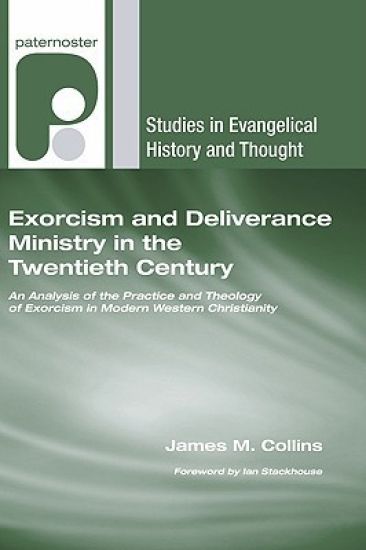
Exorcism and Deliverance Ministry in the Twentieth Century: An Analysis of the Practice and Theology of Exorcism in Modern Western Christianity
This study seeks to demonstrate that exorcism/deliverance ministry is an innately enthusiastic practice utilizing John Knox's classic study of Christian enthusiasm. The twentieth century provides an ideal arena for such a study since it frames a complete lifecycle for this rite from its infancy during the early decades, through its heyday in the 1970s and 80s, on to creeping routinisation by the end of the century. Two enthusiastic settings, Charismatic and Evangelical Fundamentalist, are identified and examined as the environment in which two related streams of exorcism/deliverance ministry was practiced. Finally, enthusiastic Sacramentalist exorcism is considered in order to establish the thesis that enthusiastic settings provide a conducive atmosphere for the emergence and practice of exorcism/deliverance ministry. Attention is paid to historical factors within the Charismatic and Evangelical Fundamentalist streams that underlie the development of this rite. As a result important secondary insights are gained into the tidal nature of enthusiastic movements, the role of itinerant preachers in the propagation of enthusiasm, the routinisation of enthusiastic practices and the manner in which enthusiasm overcomes institutional denominational boundaries. The study provides the foundation for future investigation of the manner in which enthusiastic experience is presented for apologetic purposes, the relationship between exorcism/deliverance ministry and millenarianism and the practice of this rite within non-Western churches.
Exorcism and Deliverance Ministry in the Twentieth Century
This study seeks to demonstrate that exorcism/deliverance ministry is an innately enthusiastic practice utilizing John Knox's classic study of Christian enthusiasm. The twentieth century provides an ideal arena for such a study since it frames a complete lifecycle for this rite from its infancy during the early decades, through its heyday in the 1970s and 80s, on to creeping routinisation by the end of the century. Two enthusiastic settings, Charismatic and Evangelical Fundamentalist, are identified and examined as the environment in which two related streams of exorcism/deliverance ministry was practiced. Finally, enthusiastic Sacramentalist exorcism is considered in order to establish the thesis that enthusiastic settings provide a conducive atmosphere for the emergence and practice of exorcism/deliverance ministry. Attention is paid to historical factors within the Charismatic and Evangelical Fundamentalist streams that underlie the development of this rite. As a result important secondary insights are gained into the tidal nature of enthusiastic movements, the role of itinerant preachers in the propagation of enthusiasm, the routinisation of enthusiastic practices and the manner in which enthusiasm overcomes institutional denominational boundaries. The study provides the foundation for future investigation of the manner in which enthusiastic experience is presented for apologetic purposes, the relationship between exorcism/deliverance ministry and millenarianism and the practice of this rite within non-Western churches.

Strategic Risk

Strategic Risk

James M. Collins; Timothy W. Ruefli

Springer-Verlag New York Inc.
2011
nidottu
Strategic Risk examines a fundamental issue in the field of strategic management and organizations: how to study changes in the competitive outcomes of firms. Collins and Ruefli develop the concept of ordinal risk and extend this concept and its associated measures to the more general framework of state-defined systems. The book makes the state-defined risk methodology more accessible to strategic management researchers, and to social scientists in general. The need for quantitative frameworks with which to analyze the dynamics of strategic management has been apparent for some time. The state-defined risk methodology has the advantage of being based on a common usage definition of risk, and is also based on a mathematically well-behaved function. It permits investigation of the chance of gain while yielding a measure of environmental uncertainty. Finally, the development is general and permits applications employing a variety of performance dimensions over a range of entities in a diversity of contexts. The authors demonstrate the practicability and reliability of this approach by applying the model to mutual funds, large mining and manufacturing firms, and public firms on an industry by industry basis.
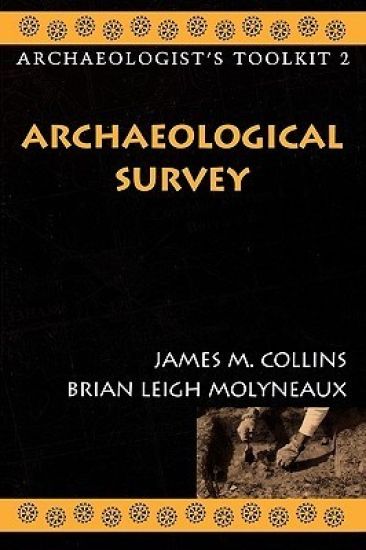
Archaeological Survey

Archaeological Survey

James M. Collins; Brian Leigh Molyneaux

AltaMira Press,U.S.
2003
nidottu
Two longtime fieldworkers offer mentors' advice on finding and mapping archaeological sites. They outline the logic behind field surveying and the various designs used for survey projects. Recognizing that logistical issues—like schedule, budget, and equipment—are equally important to complete the job, particularly in a cultural resource management context, the authors also guide new professionals through the practical details of their work. The volume also ranges through the legal and ethical context of fieldwork and the various geophysical methods available for non-intrusive surveying. As a handy guide for novices, or a text for students and field schools, Collins and Molyneaux's book will be the place to start.
Strategic Risk

Strategic Risk

James M. Collins; Timothy W. Ruefli

Springer
1995
sidottu
Strategic Risk examines a fundamental issue in the field of strategic management and organizations: how to study changes in the competitive outcomes of firms. Collins and Ruefli develop the concept of ordinal risk and extend this concept and its associated measures to the more general framework of state-defined systems. The book makes the state-defined risk methodology more accessible to strategic management researchers, and to social scientists in general. The need for quantitative frameworks with which to analyze the dynamics of strategic management has been apparent for some time. The state-defined risk methodology has the advantage of being based on a common usage definition of risk, and is also based on a mathematically well-behaved function. It permits investigation of the chance of gain while yielding a measure of environmental uncertainty. Finally, the development is general and permits applications employing a variety of performance dimensions over a range of entities in a diversity of contexts. The authors demonstrate the practicability and reliability of this approach by applying the model to mutual funds, large mining and manufacturing firms, and public firms on an industry by industry basis.