Kirjojen hintavertailu. Mukana 12 478 664 kirjaa ja 12 kauppaa.

Kirjailija

James M. Cypher

Kirjat ja teokset yhdessä paikassa: 8 kirjaa, julkaisuja vuosilta 2010-2024, suosituimpien joukossa The Process of Economic Development. Vertaile teosten hintoja ja tarkista saatavuus suomalaisista kirjakaupoista.

Mukana myös kirjoitusasut: James M Cypher

8 kirjaa

Kirjojen julkaisuhaarukka 2010-2024.

State And Capital In Mexico

State And Capital In Mexico

James M Cypher

TAYLOR FRANCIS LTD
2024
nidottu
In development studies it is widely recognized that state intervention has been more profound in Mexico than elsewhere in Latin America. Since the 1930s, successive governments have actively adopted import substitution as a means of spurring economic growth, often with spectacular results. The collapse of the petro-boom in 1982, however, brought an
The Political Economy of Transnational Power and Production

The Political Economy of Transnational Power and Production

James M. Cypher; Mateo Crossa

TAYLOR FRANCIS LTD
2023
nidottu
The Political Economy of Transnational Power and Production: Mexico's Metamorphosis 1982-2022 How and why Mexico’s socioeconomic structure was transformed through plutocratic preferences, US corporate strategies, and ideology—all powering transnational processes of neoliberalization—are issues examined in this comprehensive, carefully documented publication covering four crucial decades of metamorphosis. The causes and consequences of the creation of a new, regional power bloc—the North American Free Trade Agreement (NAFTA)—are extensively examined.Readers will benefit from the many important demystifications presented here, chronicling the asymmetric Mexico-US production system. The impacts of the new transnational structure for labor on both sides of the border are matters of centrality. Specialists and general readers alike will find an explicit and accessible account of the powerful forces opening access to and profiting from millions of low-wage workers enabling Mexico to become a strategic source of US imports. Portrayed by mainstream economists and major policy makers as a "win-win" triumph of "free trade" theory, this book documents the opposing reality imposed by NAFTA and the US-Mexico-Canada Free Trade Agreement on both the US and Mexican working classes. US economists foretold a dramatic narrowing of the income gap—the US would benefit; Mexico would benefit even more. But instead, the yawning gap increased for three decades, bringing devastation for workers while debilitating Mexico’s national industrial base.
The Political Economy of Transnational Power and Production

The Political Economy of Transnational Power and Production

James M. Cypher; Mateo Crossa

TAYLOR FRANCIS LTD
2023
sidottu
The Political Economy of Transnational Power and Production: Mexico's Metamorphosis 1982-2022 How and why Mexico’s socioeconomic structure was transformed through plutocratic preferences, US corporate strategies, and ideology—all powering transnational processes of neoliberalization—are issues examined in this comprehensive, carefully documented publication covering four crucial decades of metamorphosis. The causes and consequences of the creation of a new, regional power bloc—the North American Free Trade Agreement (NAFTA)—are extensively examined.Readers will benefit from the many important demystifications presented here, chronicling the asymmetric Mexico-US production system. The impacts of the new transnational structure for labor on both sides of the border are matters of centrality. Specialists and general readers alike will find an explicit and accessible account of the powerful forces opening access to and profiting from millions of low-wage workers enabling Mexico to become a strategic source of US imports. Portrayed by mainstream economists and major policy makers as a "win-win" triumph of "free trade" theory, this book documents the opposing reality imposed by NAFTA and the US-Mexico-Canada Free Trade Agreement on both the US and Mexican working classes. US economists foretold a dramatic narrowing of the income gap—the US would benefit; Mexico would benefit even more. But instead, the yawning gap increased for three decades, bringing devastation for workers while debilitating Mexico’s national industrial base.
The Process of Economic Development

The Process of Economic Development

James M. Cypher

Routledge
2020
nidottu
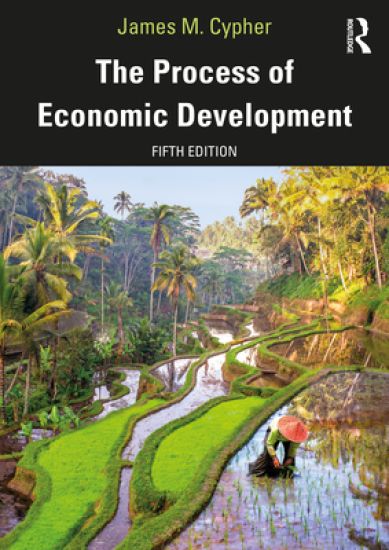
The fifth edition of The Process of Economic Development offers a thorough and up-to-date treatment of development economics. It has been extensively revised throughout, reflecting the most recent developments in research and incorporating the latest empirical data, as well as key theoretical advances and many new topics. The world has seen vast economic growth in China, economic transformation in India, new challenges in Latin America, rapid economic progress in Southeast Asia, and the deepening impact of environmental issues such as climate change. This new edition addresses all these critical issues as well as the pivotal role of the state, where China’s capacity is contrasted with that of African states.Transnational corporations’ reliance on low-wage manufacturing and labor arbitrage is featured in the book. Agricultural policy—extensively explored—remains crucial, as does the promotion of industrialization. This fifth edition offers a ‘state-of-the-art’ analysis of these essential themes and many others. Numerous case studies and issue focuses have been integrated with sundry central topics. Neoclassical theories and applications, including a timely exploration of behavioral economics, are both rigorously and accessibly explicated.Cypher’s comprehensive account remains the development economics text par excellence, as it takes a much more practical, hands-on view of the issues facing the developing countries than other, overly mathematical texts. This book is unique in its scope and in the detailed attention it gives to a vast range of ideas, including pioneering developmentalist and heterodox formulations. Distinct institutional structures are examined within their historical contexts.This landmark text will continue to be an invaluable resource for students, teachers, and researchers in the fields of development economics and development studies.
The Process of Economic Development

The Process of Economic Development

James M. Cypher

Routledge
2020
sidottu
The fifth edition of The Process of Economic Development offers a thorough and up-to-date treatment of development economics. It has been extensively revised throughout, reflecting the most recent developments in research and incorporating the latest empirical data, as well as key theoretical advances and many new topics. The world has seen vast economic growth in China, economic transformation in India, new challenges in Latin America, rapid economic progress in Southeast Asia, and the deepening impact of environmental issues such as climate change. This new edition addresses all these critical issues as well as the pivotal role of the state, where China’s capacity is contrasted with that of African states.Transnational corporations’ reliance on low-wage manufacturing and labor arbitrage is featured in the book. Agricultural policy—extensively explored—remains crucial, as does the promotion of industrialization. This fifth edition offers a ‘state-of-the-art’ analysis of these essential themes and many others. Numerous case studies and issue focuses have been integrated with sundry central topics. Neoclassical theories and applications, including a timely exploration of behavioral economics, are both rigorously and accessibly explicated.Cypher’s comprehensive account remains the development economics text par excellence, as it takes a much more practical, hands-on view of the issues facing the developing countries than other, overly mathematical texts. This book is unique in its scope and in the detailed attention it gives to a vast range of ideas, including pioneering developmentalist and heterodox formulations. Distinct institutional structures are examined within their historical contexts.This landmark text will continue to be an invaluable resource for students, teachers, and researchers in the fields of development economics and development studies.
State And Capital In Mexico

State And Capital In Mexico

James M Cypher

Routledge
2019
sidottu
For the past twenty-eight years I have traveled to and periodically lived in Mexico. As an extranjero I have enjoyed the advantage of association with nearly every social strata-from descamisados in ciudades perdidas to members of the elite. These have been my maestros, and I owe them a great deal.
Mexico's Economic Dilemma

Mexico's Economic Dilemma

James M. Cypher; Raúl Delgado Wise

Rowman Littlefield Publishers
2011
nidottu
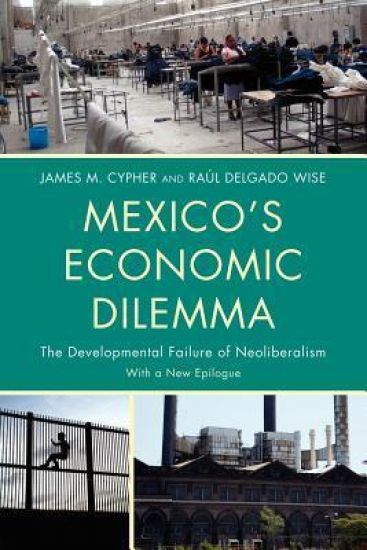
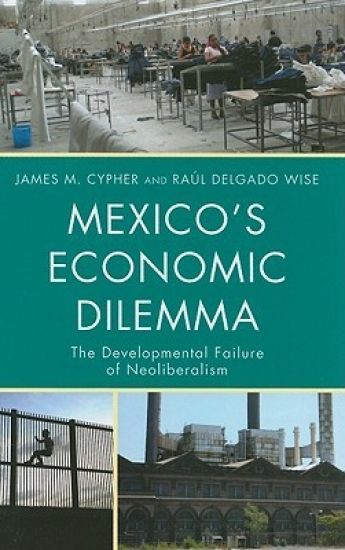
Written by two leading scholars, this book provides a detailed analysis of Mexico's political economy. James M. Cypher and Raúl Delgado Wise begin with an examination of Mexico's pivotal economic crisis of the 1980s and the consequent turn toward an export-led economy, later anchored by NAFTA. They show how Mexico, after abandoning frequently successful past practices of state-led development, disastrously tied its future to an unconditional reliance on foreign corporations to promote an export-led growth strategy. Focusing on Mexico's cheap labor export model, the authors use the maquiladora sector and the auto industry as case studies of the perils of globalization—the "race to the bottom" as capital becomes ever more international. The government's unconstrained free-market policies, they convincingly argue, have resulted in a fragmented economy marked by stagnation, falling wages, informal part-time employment, and massive migration, which define daily life for all but a tiny minority.
Mexico's Economic Dilemma

Mexico's Economic Dilemma

James M. Cypher; Raúl Delgado Wise

Rowman Littlefield Publishers
2010
sidottu
Written by two leading scholars, this book provides a detailed analysis of Mexico's political economy. James M. Cypher and Raúl Delgado Wise begin with an examination of Mexico's pivotal economic crisis of the 1980s and the consequent turn toward an export-led economy, later anchored by NAFTA. They show how Mexico, after abandoning frequently successful past practices of state-led development, disastrously tied its future to an unconditional reliance on foreign corporations to promote an export-led growth strategy. Focusing on Mexico's cheap labor export model, the authors use the maquiladora sector and the auto industry as case studies of the perils of globalization—the "race to the bottom" as capital becomes ever more international. The government's unconstrained free-market policies, they convincingly argue, have resulted in a fragmented economy marked by stagnation, falling wages, informal part-time employment, and massive migration, which define daily life for all but a tiny minority.