Kirjojen hintavertailu. Mukana 12 142 102 kirjaa ja 12 kauppaa.
Kirjailija
James M. Freeman
Kirjat ja teokset yhdessä paikassa: 13 kirjaa, julkaisuja vuosilta 1991-2023, suosituimpien joukossa Untouchable. Vertaile teosten hintoja ja tarkista saatavuus suomalaisista kirjakaupoista.
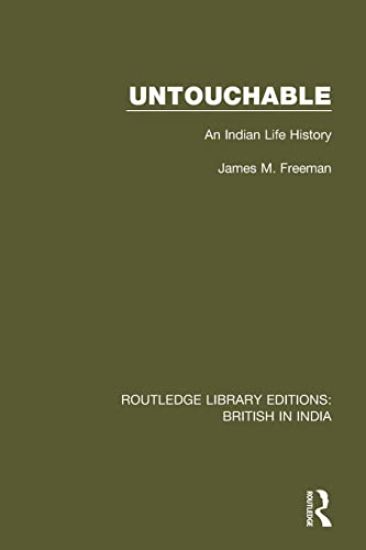
Nearly 16% of India’s population – or over 100 million people – are untouchables. Most of them, despite decades of government efforts to improve their economic and social position, remain desperately poor, illiterate, subject to brutal discrimination and economic exploitation, and with no prospect for improvement of their condition. This is the autobiography, first published in 1979, of Muli, a 40-year-old untouchable of the Bauri caste, living in the Indian state of Orissa, as told to an American anthropologist. Muli is a narrator who combines rich descriptions of daily life with perceptive observations of his social surroundings. He describes with absorbing detail what it is like to be at the bottom of Indian life, and what happens when an untouchable attempts to break out of his accepted role.
Nearly 16% of India’s population – or over 100 million people – are untouchables. Most of them, despite decades of government efforts to improve their economic and social position, remain desperately poor, illiterate, subject to brutal discrimination and economic exploitation, and with no prospect for improvement of their condition. This is the autobiography, first published in 1979, of Muli, a 40-year-old untouchable of the Bauri caste, living in the Indian state of Orissa, as told to an American anthropologist. Muli is a narrator who combines rich descriptions of daily life with perceptive observations of his social surroundings. He describes with absorbing detail what it is like to be at the bottom of Indian life, and what happens when an untouchable attempts to break out of his accepted role.
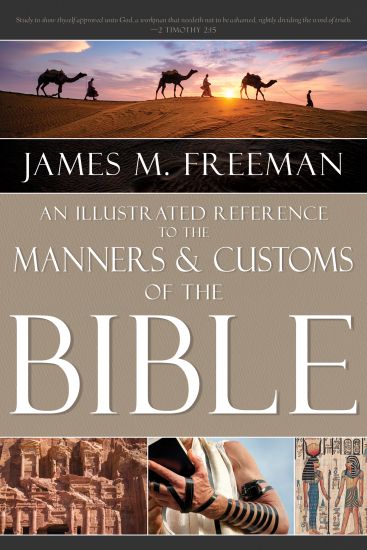
Any study of the Bible inevitably turns up situations that give us pause. We wonder: How could ancient peoples use slime for mortar?Why is lifting up your eyes a sign of respect?What were the images that Rachel stole from her father?Why would a grieving family hire mourners?How did people in biblical times cast lots?What made the housetop so important? Author James Midwinter Freeman (1827-1900) takes you through the Bible, from Genesis to Revelation, to explain different Oriental manners and customs that were common to people in ancient times, some of which are still evident in the East today. An Illustrated Reference to Manners & Customs of the Bible is a handy reference book filled with more than 140 helpful illustrations and fascinating information that you will turn to again and again. It will greatly aid anyone wishing to increase their understanding of the traditions, customs, and observances of biblical times.
This book has been considered by academicians and scholars of great significance and value to literature. This forms a part of the knowledge base for future generations. So that the book is never forgotten we have represented this book in a print format as the same form as it was originally first published. Hence any marks or annotations seen are left intentionally to preserve its true nature.
Wave after wave of political and economic refugees poured out of Vietnam beginning in the late 1970s, overwhelming the resources available to receive them. Squalid conditions prevailed in detention centers and camps in Hong Kong and throughout Southeast Asia, where many refugees spent years languishing in poverty, neglect, and abuse while supposedly being protected by an international consortium of caregivers. Voices from the Camps tells the story of the most vulnerable of these refugees: children alone, either orphaned or separated from their families.Combining anthropology and social work with advocacy for unaccompanied children everywhere, James M. Freeman and Nguyen Dinh Huu present the voices and experiences of Vietnamese refugee children neglected and abused by the system intended to help them. Authorities in countries of first asylum, faced with thousands upon thousands of increasingly frightened, despairing, and angry people, needed to determine on a case-by-case basis whether they should be sent back to Vietnam or be certified as legitimate refugees and allowed to proceed to countries of resettlement. The international community, led by UNHCR, devised a well-intentioned screening system. Unfortunately, as Freeman and Nguyen demonstrate, it failed unaccompanied children.The hardships these children endured are disturbing, but more disturbing is the story of how the governments and agencies that set out to care for them eventually became the children's tormenters. When Vietnam, after years of refusing to readmit illegal emigrants, reversed its policy, the international community began doing everything it could to force them back to Vietnam. Cutting rations, closing schools, separating children from older relations and other caregivers, relocating them in order to destroy any sense of stability--the authorities employed coercion and effective abuse with distressing ease, all in the name of the "best interests" of the children.While some children eventually managed to construct a decent life in Vietnam or elsewhere, including the United States, all have been scarred by their refugee experience and most are still struggling with the legacy. Freeman and Nguyen's presentation and analysis of this sobering chapter in recent history is a cautionary tale and a call to action.
Wave after wave of political and economic refugees poured out of Vietnam beginning in the late 1970s, overwhelming the resources available to receive them. Squalid conditions prevailed in detention centers and camps in Hong Kong and throughout Southeast Asia, where many refugees spent years languishing in poverty, neglect, and abuse while supposedly being protected by an international consortium of caregivers. Voices from the Camps tells the story of the most vulnerable of these refugees: children alone, either orphaned or separated from their families.Combining anthropology and social work with advocacy for unaccompanied children everywhere, James M. Freeman and Nguyen Dinh Huu present the voices and experiences of Vietnamese refugee children neglected and abused by the system intended to help them. Authorities in countries of first asylum, faced with thousands upon thousands of increasingly frightened, despairing, and angry people, needed to determine on a case-by-case basis whether they should be sent back to Vietnam or be certified as legitimate refugees and allowed to proceed to countries of resettlement. The international community, led by UNHCR, devised a well-intentioned screening system. Unfortunately, as Freeman and Nguyen demonstrate, it failed unaccompanied children.The hardships these children endured are disturbing, but more disturbing is the story of how the governments and agencies that set out to care for them eventually became the children's tormenters. When Vietnam, after years of refusing to readmit illegal emigrants, reversed its policy, the international community began doing everything it could to force them back to Vietnam. Cutting rations, closing schools, separating children from older relations and other caregivers, relocating them in order to destroy any sense of stability--the authorities employed coercion and effective abuse with distressing ease, all in the name of the "best interests" of the children.While some children eventually managed to construct a decent life in Vietnam or elsewhere, including the United States, all have been scarred by their refugee experience and most are still struggling with the legacy. Freeman and Nguyen's presentation and analysis of this sobering chapter in recent history is a cautionary tale and a call to action.
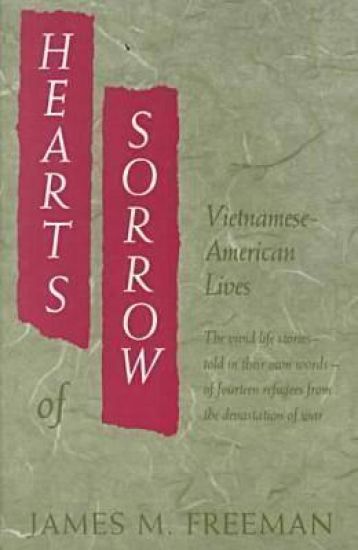
The first-person narratives in this book provide a glimpse into the personal lives of fourteen Vietnamese-Americans who were devastated by war and the refugee experience but who were able to create new lives in a new cultural environment.