Kirjailija
James M. McPherson
Kirjat ja teokset yhdessä paikassa: 33 kirjaa, julkaisuja vuosilta 1976-2025, suosituimpien joukossa Both Prayed to the Same God. Vertaile teosten hintoja ja tarkista saatavuus suomalaisista kirjakaupoista.
33 kirjaa
Kirjojen julkaisuhaarukka 1976-2025.
Both Prayed to the Same God is the first book-length, comprehensive study of religion in the Civil War. While much research has focused on religion in a specific context of the civil war, this book provides a needed overview of this vital yet largely forgotten subject of American History. Writing passionately about the subject, Father Robert Miller presents this history in an accessible but scholarly fashion. Beginning with the religious undertones in the lead up to the war and concluding with consequences on religion in the aftermath, Father Miller not only shows us a forgotten aspect of history, but how our current historical situation is not unprecedented.
The Enigmatic South
Gaines M. Foster; James M. McPherson
LOUISIANA STATE UNIVERSITY PRESS
2025
pokkari
The Enigmatic South brings together leading scholars of the Civil War period to challenge existing perceptions of the advance to secession, the Civil War, and its aftermath. The pioneering research and innovative arguments of these historians bring crucial insights to the study of this era in American history. Christopher Childers, Sarah L. Hyde, and Julia Huston Nguyen consider the ways politics, religion, and education contributed to southern attitudes toward secession in the antebellum period. George C. Rable, Paul F. Paskoff, and John M. Sacher delve into the challenges the Confederate South faced as it sought legitimacy for its cause and military strength for the coming war with the North. Richard Follett, Samuel C. Hyde, Jr., and Eric H. Walther offer new perspectives on the changes the Civil War wrought on the economic and ideological landscape of the South. The essays in The Enigmatic South speak eloquently to previously unconsidered aspects and legacies of the Civil War and make a major contribution to our understanding of the rich history of a conflict whose aftereffects still linger in American culture and memory.
Faith of the Fathers
Robert J. Miller; James M. McPherson
UNIVERSITY OF NOTRE DAME PRESS
2025
sidottu
Faith of the Fathers provides a captivating collective biography of the Catholic priests who served in America's most deadly war. Faith of the Fathers brings to light the forgotten stories of courageous chaplains whose commitments to faith and to men at war during America's most divisive conflict have long been overlooked. The Reverend Robert J. Miller provides a comprehensive and compelling portrait of the 126 priest-chaplains who served during the Civil War and reflects on the importance of religion and faith in nineteenth-century America. As a culture of death and horror raged around them, Catholic priest-chaplains met the needs of soldiers and officers alike, providing years of faithful and dedicated service in hospitals, prisons, battlefields, and camps. Whether ministering to Union or Confederate soldiers (or both), in eastern or western theaters, in battle or camp, these priests risked their lives to bring faith and hope to one of the darkest and most devastating periods of American history.
More than 140 years ago, Mark Twain observed that the Civil War had "uprooted institutions that were centuries old, changed the politics of a people, transformed the social life of half the country, and wrought so profoundly upon the entire national character that the influence cannot be measured short of two or three generations." In fact, five generations have passed, and Americans are still trying to measure the influence of the immense fratricidal conflict that nearly tore the nation apart. In The War that Forged a Nation, Pulitzer Prize-winning historian James M. McPherson considers why the Civil War remains so deeply embedded in our national psyche and identity. The drama and tragedy of the war, from its scope and size--an estimated death toll of 750,000, far more than the rest of the country's wars combined--to the nearly mythical individuals involved--Abraham Lincoln, Robert E. Lee, Stonewall Jackson--help explain why the Civil War remains a topic of interest. But the legacy of the war extends far beyond historical interest or scholarly attention. Here, McPherson draws upon his work over the past fifty years to illuminate the war's continuing resonance across many dimensions of American life. Touching upon themes that include the war's causes and consequences; the naval war; slavery and its abolition; and Lincoln as commander in chief, McPherson ultimately proves the impossibility of understanding the issues of our own time unless we first understand their roots in the era of the Civil War. From racial inequality and conflict between the North and South to questions of state sovereignty or the role of government in social change--these issues, McPherson shows, are as salient and controversial today as they were in the 1860s. Thoughtful, provocative, and authoritative, The War that Forged a Nation looks anew at the reasons America's civil war has remained a subject of intense interest for the past century and a half, affirms the enduring relevance of the conflict for America today.
More than 140 years ago, Mark Twain observed that the Civil War had "uprooted institutions that were centuries old, changed the politics of a people, transformed the social life of half the country, and wrought so profoundly upon the entire national character that the influence cannot be measured short of two or three generations." In fact, five generations have passed, and Americans are still trying to measure the influence of the immense fratricidal conflict that nearly tore the nation apart. In The War that Forged a Nation, Pulitzer Prize-winning historian James M. McPherson considers why the Civil War remains so deeply embedded in our national psyche and identity. The drama and tragedy of the war, from its scope and size--an estimated death toll of 750,000, far more than the rest of the country's wars combined--to the nearly mythical individuals involved--Abraham Lincoln, Robert E. Lee, Stonewall Jackson--help explain why the Civil War remains a topic of interest. But the legacy of the war extends far beyond historical interest or scholarly attention. Here, McPherson draws upon his work over the past fifty years to illuminate the war's continuing resonance across many dimensions of American life. Touching upon themes that include the war's causes and consequences; the naval war; slavery and its abolition; and Lincoln as commander in chief, McPherson ultimately proves the impossibility of understanding the issues of our own time unless we first understand their roots in the era of the Civil War. From racial inequality and conflict between the North and South to questions of state sovereignty or the role of government in social change--these issues, McPherson shows, are as salient and controversial today as they were in the 1860s. Thoughtful, provocative, and authoritative, The War that Forged a Nation looks anew at the reasons America's civil war has remained a subject of intense interest for the past century and a half, and affirms the enduring relevance of the conflict for America today.
The Enigmatic South
Gaines M. Foster; James M. McPherson
Louisiana State University Press
2014
sidottu
The Enigmatic South brings together leading scholars of the Civil War period to challenge existing perceptions of the advance to secession, the Civil War, and its aftermath. The pioneering research and innovative arguments of these historians bring crucial insights to the study of this era in American history.Christopher Childers, Sarah L. Hyde, and Julia Huston Nguyen consider the ways politics, religion, and education contributed to southern attitudes toward secession in the antebellum period. George C. Rable, Paul F. Paskoff, and John M. Sacher delve into the challenges the Confederate South faced as it sought legitimacy for its cause and military strength for the coming war with the North. Richard Follett, Samuel C. Hyde, Jr., and Eric H. Walther offer new perspectives on the changes the Civil War wrought on the economic and ideological landscape of the South.The essays in The Enigmatic South speak eloquently to previously unconsidered aspects and legacies of the Civil War and make a major contribution to our understanding of the rich history of a conflict whose aftereffects still linger in American culture and memory.
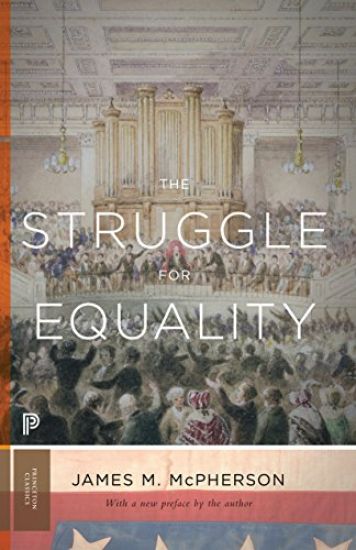
Originally published in 1964, The Struggle for Equality presents an incisive and vivid look at the abolitionist movement and the legal basis it provided to the civil rights movement of the 1960s. Pulitzer Prize-winning historian James McPherson explores the role played by rights activists during and after the Civil War, and their evolution from despised fanatics into influential spokespersons for the radical wing of the Republican Party. Asserting that it was not the abolitionists who failed to instill principles of equality, but rather the American people who refused to follow their leadership, McPherson raises questions about the obstacles that have long hindered American reform movements. This new Princeton Classics edition marks the fiftieth anniversary of the book's initial publication and includes a new preface by the author.
The Civil War Diary of Gideon Welles, Lincoln's Secretary of the Navy
Gideon Welles; James M. McPherson
University of Illinois Press
2014
sidottu
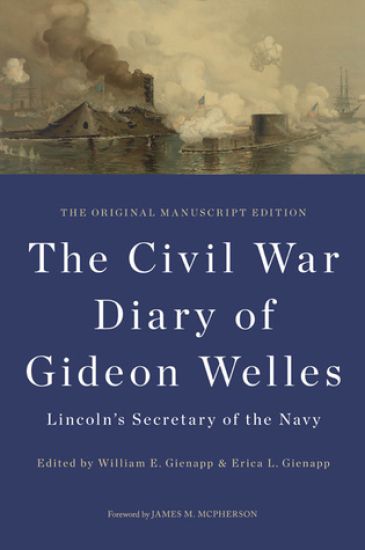
Gideon Welles's 1861 appointment as secretary of the navy placed him at the hub of Union planning for the Civil War and in the midst of the powerful personalities vying for influence in Abraham Lincoln's cabinet. Although Welles initially knew little of naval matters, he rebuilt a service depleted by Confederate defections, planned actions that gave the Union badly needed victories in the war's early days, and oversaw a blockade that weakened the South's economy. Perhaps the hardest-working member of the cabinet, Welles still found time to keep a detailed diary that has become one of the key documents for understanding the inner workings of the Lincoln administration. In this new edition, William E. and Erica L. Gienapp have restored Welles's original observations, gleaned from the manuscript diaries at the Library of Congress and freed from his many later revisions, so that the reader can experience what he wrote in the moment. With his vitriolic pen, Welles captures the bitter disputes over strategy and war aims, lacerates colleagues from Secretary of State William H. Seward to General-in-Chief Henry Halleck, and condemns the actions of the self-serving southern elite he sees as responsible for the war. He just as easily waxes eloquent about the Navy's wartime achievements, extols the virtues of Lincoln, and drops in a tidbit of Washington gossip. Carefully edited and extensively annotated, this edition contains a wealth of supplementary material. The appendixes include short biographies of the members of Lincoln's cabinet, the retrospective Welles wrote after leaving office covering the period missing from the diary proper, and important letters regarding naval matters and international law.
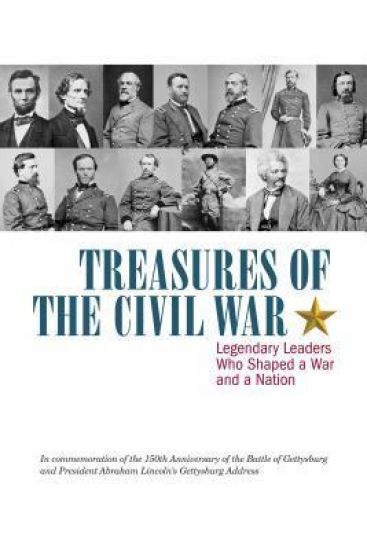
The fate of the nation during the Civil War rested with a handful of political, military and cultural leaders. Some had formal wartime roles that demanded leadership of them; some had the challenges of leadership thrust upon them. Each vowed to create a more perfect country for their respective causes. All played a role in charting the future course of the nation during its greatest crisis. To honor the efforts of these extraordinary leaders, and to commemorate the 150th Anniversary of the Battle of Gettysburg and President Abraham Lincoln’s Gettysburg Address, Gettysburg National Military Park and the Gettysburg Foundation launched a special exhibit called Treasures of the Civil War: Legendary Leaders Who Shaped a War and a Nation, a distinctive collection of more than 90 artifacts and powerful displays, accompanied by this limited-edition gallery book. Treasures of the Civil War gives a rare glimpse into the professional and personal sides of several key wartime leaders—an up-close look at the giants who shaped today’s America 150 years ago.
It's a poignant irony in American history that on Independence Day, 1863, not one but two pivotal Civil War battles ended in Union victory, marked the high tide of Confederate military fortune, and ultimately doomed the South's effort at secession. But on July 4, 1863, after six months of siege, Ulysses Grant's Union army finally took Vicksburg and the Confederate west.On the very same day, Robert E. Lee was in Pennsylvania, parrying the threat to Vicksburg with a daring push north to Gettysburg. For two days the battle had raged; on the next, July 4, 1863, Pickett's Charge was thrown back, a magnificently brave but fruitless assault, and the fate of the Confederacy was sealed, though nearly two more years of bitter fighting remained until the war came to an end.In Receding Tide, Edwin Cole Bearss draws from his popular Civil War battlefield tours to chronicle these two widely separated but simultaneous clashes and their dramatic conclusion. As the recognized expert on both Vicksburg and Gettysburg, Bearss tells the fascinating story of this single momentous day in our country's history, offering his readers narratives, maps, illustrations, characteristic wit, dramatic new insights and unerringly intimate knowledge of terrain, tactics, and the colorful personalities of America's citizen soldiers, Northern and Southern alike.
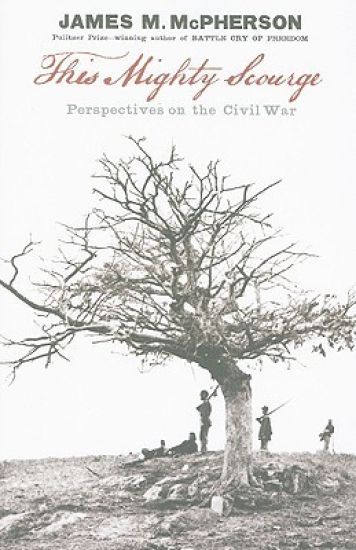
The author of the Pulitzer Prize-winning Battle Cry of Freedom and the New York Times bestsellers Crossroads of Freedom and Tried by War, among many other award-winning books, James M. McPherson is America's preeminent Civil War historian. In this collection of provocative and illuminating essays, McPherson offers fresh insight into many of the enduring questions about one of the defining moments in our nation's history. McPherson sheds light on topics large and small, from the average soldier's avid love of newspapers to the postwar creation of the mystique of a Lost Cause in the South. Readers will find insightful pieces on such intriguing figures as Harriet Tubman, John Brown, Jesse James, and William Tecumseh Sherman, and on such vital issues as Confederate military strategy, the failure of peace negotiations to end the war, and the realities and myths of the Confederacy. This Mighty Scourge includes several never-before-published essays--pieces on General Robert E. Lee's goals in the Gettysburg campaign, on Lincoln and Grant in the Vicksburg campaign, and on Lincoln as Commander-in-Chief. All of the essays have been updated and revised to give the volume greater thematic coherence and continuity, so that it can be read in sequence as an interpretive history of the war and its meaning for America and the world. Combining the finest scholarship with luminous prose, and packed with new information and fresh ideas, this book brings together the most recent thinking by the nation's leading authority on the Civil War.
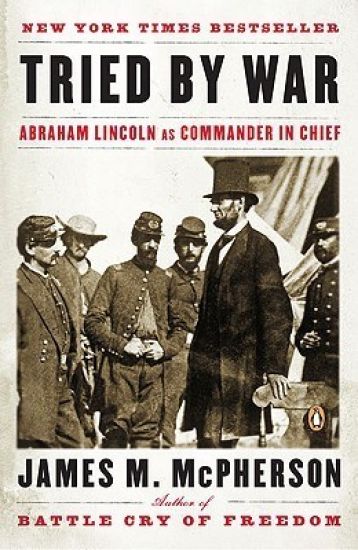
The Pulitzer Prize-winning author reveals how Lincoln won the Civil War and invented the role of commander in chief as we know it As we celebrate the bicentennial of Lincoln's birth, this study by preeminent, bestselling Civil War historian James M. McPherson provides a rare, fresh take on one of the most enigmatic figures in American history. Tried by War offers a revelatory (and timely) portrait of leadership during the greatest crisis our nation has ever endured. Suspenseful and inspiring, this is the story of how Lincoln, with almost no previous military experience before entering the White House, assumed the powers associated with the role of commander in chief, and through his strategic insight and will to fight changed the course of the war and saved the Union.
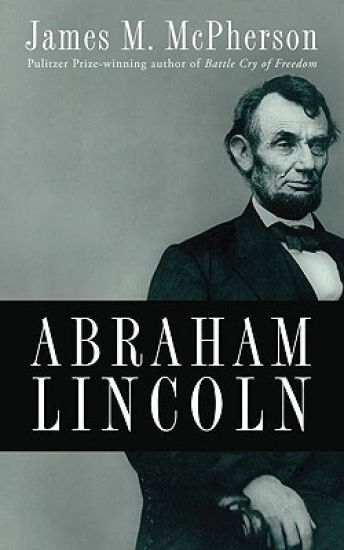
The first short biography of the sixteenth president by America's preeminent Civil War historian, Abraham Lincoln follows the son of Thomas Lincoln and Nancy Hanks from their Kentucky farm to the Illinois legislature, and finally the nation's capitol. February of 2009 marks the bicentennial of his birth and this book will be a compact, concise history of a man with big ideals and an even larger legacy. James McPherson, our country's foremost historian of the Civil War, authors this attractively packaged book on Lincoln for an audience that would prefer a brief treament rather than David Herbert Donald's 720-page opus, or Michael Burlingame's forthcoming multi-volume work.
Both Prayed to the Same God is the first book-length, comprehensive study of religion in the Civil War. While much research has focused on religion in a specific context of the civil war, this book provides a needed overview of this vital yet largely forgotten subject of American History. Writing passionately about the subject, Father Robert Miller presents this history in an accessible but scholarly fashion. Beginning with the religious undertones in the lead up to the war and concluding with consequences on religion in the aftermath, Father Miller not only shows us a forgotten aspect of history, but how our current historical situation is not unprecedented.
A new collection of incisive, thought-provoking essays by the Pulitzer Prize-winning author of Battle Cry of Freedom offers a fresh perspective on diverse facets of the Civil War, with profiles of such figures as Harriet Tubman and Jesse James, analyses of Confederate and Union military strategy, and studies on such topics as presidential power, the myths and realities of the Confederacy, and more.
Fields of Honor
Edwin Bearss; James M. McPherson
THE UNIVERSITY OF NORTH CAROLINA PRESS
2006
sidottu
Few historians have ever captured the drama, excitement, and tragedy of the War Between the States quite like Edwin Bearss. The acclaimed "Homer of the Civil War," has won a huge, devoted following with his extraordinary battlefield tours and eloquent soliloquies about the heroes, scoundrels, and little-known moments of a conflict that still fascinates America. Antietam, Shiloh, Chickamauga, Gettysburg: these hallowed battles and more than a dozen more come alive as never before, rich with human interest and colorful detail culled from a lifetime of study.Illustrated with detailed maps and archival images, this 464-page volume commemorates the 140th anniversary of the war's end with a unique narrative of its most critical battles, translating Bearss' inimitable delivery into print. As he guides readers from the first shots at Fort Sumter to Gettysburg's bloody fields to the dignified surrender at Appomattox, his engagingly plainspoken but expert account demonstrates why he stands beside Shelby Foote, James McPherson, and Ken Burns in the front rank of modern chroniclers of the Civil War, as the Pulitzer Prize-winning McPherson himself points out in his admiring introduction.A must for every one of America's countless Civil War and history buffs alike, this major work will stand as an important reference and enduring legacy of a great historian for generations to come.
Now featuring a new Afterword by the author, this handy paperback edition of the Pulitzer Prize-winning Battle Cry of Freedom is without question the definitive one-volume history of the Civil War. James McPherson's fast-paced narrative fully integrates the political, social, and military events that crowded the two decades from the outbreak of one war in Mexico to the ending of another at Appomattox. Packed with drama and analytical insight, the book vividly recounts the momentous episodes that preceded the Civil War including the Dred Scott decision, the Lincoln-Douglas debates, John Brown's raid on Harper's Ferry. From there it moves into a masterful chronicle of the war itself--the battles, the strategic maneuvering by each side, the politics, and the personalities. Particularly notable are McPherson's new views on such matters as the slavery expansion issue in the 1850s, the origins of the Republican Party, the causes of secession, internal dissent and anti-war opposition in the North and the South, and the reasons for the Union's victory. The book's title refers to the sentiments that informed both the Northern and Southern views of the conflict. The South seceded in the name of that freedom of self-determination and self-government for which their fathers had fought in 1776, while the North stood fast in defense of the Union founded by those fathers as the bulwark of American liberty. Eventually, the North had to grapple with the underlying cause of the war, slavery, and adopt a policy of emancipation as a second war aim. This "new birth of freedom," as Lincoln called it, constitutes the proudest legacy of America's bloodiest conflict. This authoritative volume makes sense of that vast and confusing "second American Revolution" we call the Civil War, a war that transformed a nation and expanded our heritage of liberty.
The Battle of Antietam, fought on September 17, 1862, was the bloodiest single day in American history, with more than 6,000 soldiers killed--four times the number lost on D-Day, and twice the number killed in the September 11th terrorist attacks. In Crossroads of Freedom, America's most eminent Civil War historian, James M. McPherson, paints a masterful account of this pivotal battle, the events that led up to it, and its aftermath. As McPherson shows, by September 1862 the survival of the United States was in doubt. The Union had suffered a string of defeats, and Robert E. Lee's army was in Maryland, poised to threaten Washington. The British government was openly talking of recognizing the Confederacy and brokering a peace between North and South. Northern armies and voters were demoralized. And Lincoln had shelved his proposed edict of emancipation months before, waiting for a victory that had not come--that some thought would never come. Both Confederate and Union troops knew the war was at a crossroads, that they were marching toward a decisive battle. It came along the ridges and in the woods and cornfields between Antietam Creek and the Potomac River. Valor, misjudgment, and astonishing coincidence all played a role in the outcome. McPherson vividly describes a day of savage fighting in locales that became forever famous--The Cornfield, the Dunkard Church, the West Woods, and Bloody Lane. Lee's battered army escaped to fight another day, but Antietam was a critical victory for the Union. It restored morale in the North and kept Lincoln's party in control of Congress. It crushed Confederate hopes of British intervention. And it freed Lincoln to deliver the Emancipation Proclamation, which instantly changed the character of the war. McPherson brilliantly weaves these strands of diplomatic, political, and military history into a compact, swift-moving narrative that shows why America's bloodiest day is, indeed, a turning point in our history.
Winner of the 1988 Pulitzer Prize for History and a New York Times Bestseller, Battle Cry of Freedom is universally recognized as the definitive account of the Civil War. It was hailed in The New York Times as "historical writing of the highest order." The Washington Post called it "the finest single volume on the war and its background." And The Los Angeles Times wrote that "of the 50,000 books written on the Civil War, it is the finest compression of that national paroxysm ever fitted between two covers." Now available in a splendid new edition is The Illustrated Battle Cry of Freedom. Boasting some seven hundred pictures, including a hundred and fifty color images and twenty-four full-color maps, here is the ultimate gift book for everyone interested in American history. McPherson has selected all the illustrations, including rare contemporary photographs, period cartoons, etchings, woodcuts, and paintings, carefully choosing those that best illuminate the narrative. More important, he has written extensive captions (some 35,000 words in all, virtually a book in themselves), many of which offer genuinely new information and interpretations that significantly enhance the text. The text itself, streamlined by McPherson, remains a fast-paced narrative that brilliantly captures two decades of contentious American history, from the Mexican War to Lee's surrender at Appomattox. The reader will find a truly masterful chronicle of the war itself--the battles, the strategic maneuvering on both sides, the politics, and the personalities--as well as McPherson's thoughtful commentary on such matters as the slavery expansion issue in the 1850s, the origins of the Republican Party, the causes of secession, internal dissent and anti-war opposition in the North and the South, and the reasons for the Union's victory. A must-have purchase for the legions of Civil War buffs, The Illustrated Battle Cry of Freedom is both a spectacularly beautiful volume and the definitive account of the most important conflict in our nation's history.