Kirjailija
James M. Wilson
Kirjat ja teokset yhdessä paikassa: 7 kirjaa, julkaisuja vuosilta 2007-2018, suosituimpien joukossa William Robert Grove. Vertaile teosten hintoja ja tarkista saatavuus suomalaisista kirjakaupoista.
Mukana myös kirjoitusasut: James M Wilson
7 kirjaa
Kirjojen julkaisuhaarukka 2007-2018.
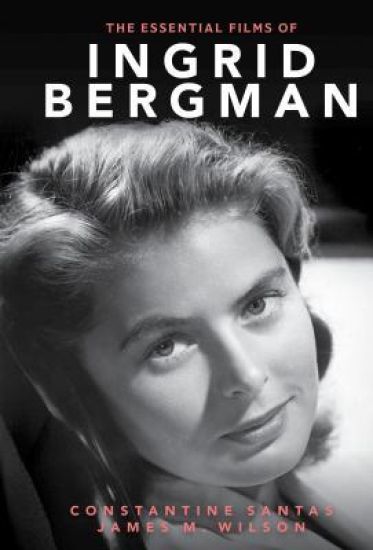
The Essential Films of Ingrid Bergman
Constantine Santas; James M. Wilson
Rowman Littlefield
2018
sidottu
Ingrid Bergman was not only an incomparable beauty but one of the finest actresses of cinema’s Golden Age. She made her start in modest productions in Sweden before Hollywood beckoned and soon became one of filmdom’s brightest stars. She appeared in many acclaimed films including Casablanca, For Whom the Bell Tolls, and Gaslight. While her personal life was briefly tainted by an affair and a consequent falling out with the American public, Bergman was eventually able to return to Hollywood, and eventually earned two of her three Academy Awards. In The Essential Films of Ingrid Bergman, Constantine Santas and James Wilson look at the most notable performances of the award-winning actress’s career. From her early work in Swedish films to her final role in the mini-series A Woman called Golda, this book analyzes the entirety of Bergman’s on-screen career, paying special attention to those aspects of her acting that made her stand out most—her undeniable range of emotion, her stunning vulnerability, and her indisputable beauty. Among the films discussed in this volume are Casablanca, Gaslight, Spellbound, The Bells of St. Mary’s, Notorious, Indiscreet, and Murder on the Orient Express. This volume looks at each of Bergman’s most significant films, covering nearly five decades of film making, from Swedish productions to her final films. Each entry provides production history, plot summaries, film highlights, and major award details. Highlighting more than twenty productions, The Essential Films of Ingrid Bergman is a must-have for every fan of the legendary actress.
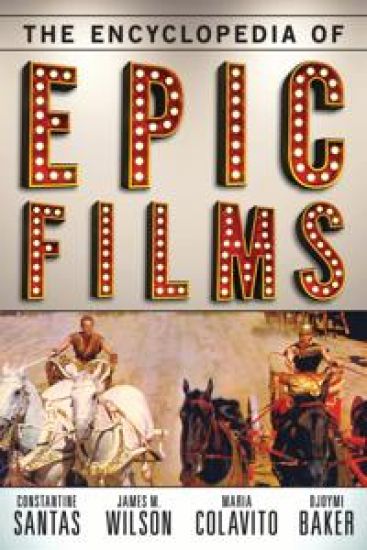
The Encyclopedia of Epic Films
Constantine Santas; James M. Wilson; Maria Colavito; Djoymi Baker
Rowman Littlefield Publishers
2014
sidottu
Soon after film came into existence, the term epic was used to describe productions that were lengthy, spectacular, live with action, and often filmed in exotic locales with large casts and staggering budgets. The effort and extravagance needed to mount an epic film paid off handsomely at the box office, for the genre became an immediate favorite with audiences. Epic films survived the tribulations of two world wars and the Depression and have retained the basic characteristics of size and glamour for more than a hundred years. Length was, and still is, one of the traits of the epic, though monolithic three- to four-hour spectacles like Gone with the Wind (1939) and Lawrence of Arabia (1962) have been replaced today by such franchises as the Harry Potter films and the Lord of the Rings trilogy. Although the form has evolved during many decades of existence, its central elements have been retained, refined, and modernized to suit the tastes of every new generation. The Encyclopedia of Epic Films identifies, describes, and analyzes those films that meet the criteria of the epic—sweeping drama, panoramic landscapes, lengthy adventure sequences, and, in many cases, casts of thousands. This volume looks at the wide variety of epics produced over the last century—from the silent spectacles of D. W. Griffith and biblical melodramas of Cecil B. DeMille to the historical dramas of David Lean and rollercoaster thrillers of Steven Spielberg. Each entry contains: ·Major personnel behind the camera, including directors and screenwriters ·Cast and character listings ·Plot summary ·Analysis ·Academy Award wins and nominations ·DVD and Blu-ray availability ·Resources for further study This volume also includes appendixes of foreign epics, superhero spectaculars, and epics produced for television, along with a list of all the directors in the book. Despite a lack of overall critical recognition and respect as a genre, the epic remains a favorite of audiences, and this book pays homage to a form of mass entertainment that continues to fill movie theaters. The Encyclopedia of Epic Films will be of interest to academics and scholars, as well as any fan of films made on a grand scale.
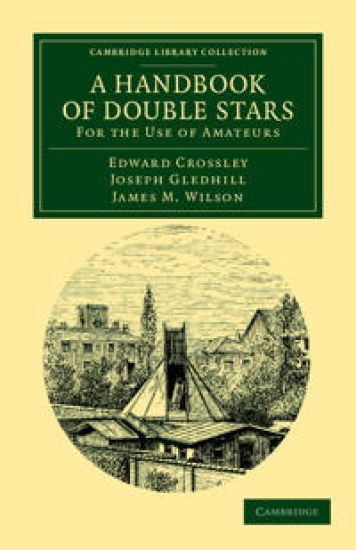
A Handbook of Double Stars
Edward Crossley; Joseph Gledhill; James M. Wilson
Cambridge University Press
2011
pokkari
Used to describe both binary systems and optical doubles, the term 'double star' has been familiar to astronomers since the seventeenth century. This book, first published in 1879, outlines the history of their study, and describes the methods and equipment needed in order to observe the fascinating phenomenon. Written for non-specialists by Fellows of the Royal Society Edward Crossley (1841–1904), Joseph Gledhill (1837–1906) and James M. Wilson (1836–1931), the catalogue of over 1,200 double stars appears beside detailed notes and does not assume mathematical expertise. Also offered are a fully worked example of how to find the orbit of a binary star, and illustrations of telescopes, observatories, and even custom-made observation chairs. This reissue includes the supplement with corrections and notes published in 1880. A standard reference text in the late nineteenth century, the work remains a resources for students and scholars of the history of astronomy.