Kirjojen hintavertailu. Mukana 12 290 406 kirjaa ja 12 kauppaa.

Kirjailija

James N. Druckman

Kirjat ja teokset yhdessä paikassa: 10 kirjaa, julkaisuja vuosilta 2015-2024, suosituimpien joukossa Black Networks Matter. Vertaile teosten hintoja ja tarkista saatavuus suomalaisista kirjakaupoista.

10 kirjaa

Kirjojen julkaisuhaarukka 2015-2024.

Black Networks Matter

Black Networks Matter

Matthew David Simonson; Ray Block Jr; James N. Druckman; Katherine Ognyanova; David M. J. Lazer

Cambridge University Press
2024
pokkari
Scholars have long recognized that interpersonal networks play a role in mobilizing social movements. Yet, many questions remain. This Element addresses these questions by theorizing about three dimensions of ties: emotionally strong or weak, movement insider or outsider, and ingroup or cross-cleavage. The survey data on the 2020 Black Lives Matter protests show that weak and cross-cleavage ties among outsiders enabled the movement to evolve from a small provocation into a massive national mobilization. In particular, the authors find that Black people mobilized one another through social media and spurred their non-Black friends to protest by sharing their personal encounters with racism. These results depart from the established literature regarding the civil rights movement that emphasizes strong, movement-internal, and racially homogenous ties. The networks that mobilize appear to have changed in the social media era. This title is also available as Open Access on Cambridge Core.
Partisan Hostility and American Democracy

Partisan Hostility and American Democracy

James N. Druckman; Samara Klar; Yanna Krupnikov; Matthew Levendusky; John Barry Ryan

THE UNIVERSITY OF CHICAGO PRESS
2024
sidottu
An unflinching examination of the effects and boundaries of partisan animosity. For generations, experts argued that American politics needed cohesive parties to function effectively. Now many fear that strong partisan views, particularly hostility to the opposing party, are damaging democracy. Is partisanship as dangerous as we fear it is? To provide an answer, this book offers a nuanced evaluation of when and how partisan animosity matters in today’s highly charged, dynamic political environment, drawing on panel data from some of the most tumultuous years in recent American history, 2019 through 2021. The authors show that partisanship powerfully shapes political behaviors, but its effects are conditional, not constant. Instead, it is most powerful when politicians send clear signals and when an issue is unlikely to bring direct personal consequences. In the absence of these conditions, other factors often dominate decision-making. The authors argue that while partisan hostility has degraded US politics—for example, politicizing previously non-political issues and undermining compromise—it is not in itself an existential threat. As their research shows, the future of American democracy depends on how politicians, more than ordinary voters, behave.
Black Networks Matter

Black Networks Matter

Matthew David Simonson; Ray Block Jr; James N. Druckman; Katherine Ognyanova; David M. J. Lazer

Cambridge University Press
2024
sidottu
Scholars have long recognized that interpersonal networks play a role in mobilizing social movements. Yet, many questions remain. This Element addresses these questions by theorizing about three dimensions of ties: emotionally strong or weak, movement insider or outsider, and ingroup or cross-cleavage. The survey data on the 2020 Black Lives Matter protests show that weak and cross-cleavage ties among outsiders enabled the movement to evolve from a small provocation into a massive national mobilization. In particular, the authors find that Black people mobilized one another through social media and spurred their non-Black friends to protest by sharing their personal encounters with racism. These results depart from the established literature regarding the civil rights movement that emphasizes strong, movement-internal, and racially homogenous ties. The networks that mobilize appear to have changed in the social media era. This title is also available as Open Access on Cambridge Core.
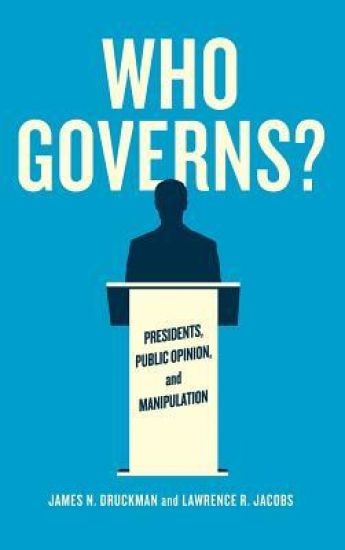
Who Governs?

Who Governs?

James N. Druckman; Lawrence R. Jacobs

University of Chicago Press
2015
sidottu
America's model of representational government rests on the premise that elected officials respond to the opinions of citizens. This is a myth, however, say James N. Druckman and Lawrence R. Jacobs. In Who Governs?, Druckman and Jacobs combine existing research with novel data from US presidential archives to show that presidents make policy by largely ignoring the views of most citizens in favor of affluent and well-connected political insiders. Presidents treat the public as pliable, priming it to focus on personality traits and often ignoring it on issues that fail to become salient. Melding big debates about democratic theory with existing research on American politics and innovative use of the archives of three modern presidents-Johnson, Nixon, and Reagan-Druckman and Jacobs deploy lively and insightful analysis to show that the conventional model of representative democracy bears little resemblance to the actual practice of American politics. The authors conclude by arguing that polyarchy and the promotion of accelerated citizen mobilization and elite competition can improve democratic responsiveness. An incisive study of American politics and the flaws of representative government, this book will be warmly welcomed by readers interested in US politics, public opinion, democratic theory, and the fecklessness of American leadership and decision-making.
Partisan Hostility and American Democracy

Partisan Hostility and American Democracy

James N. Druckman; Samara Klar; Yanna Krupnikov; Matthew Levendusky; John Barry Ryan

THE UNIVERSITY OF CHICAGO PRESS
2024
nidottu
An unflinching examination of the effects and boundaries of partisan animosity. For generations, experts argued that American politics needed cohesive parties to function effectively. Now many fear that strong partisan views, particularly hostility to the opposing party, are damaging democracy. Is partisanship as dangerous as we fear it is? To provide an answer, this book offers a nuanced evaluation of when and how partisan animosity matters in today’s highly charged, dynamic political environment, drawing on panel data from some of the most tumultuous years in recent American history, 2019 through 2021. The authors show that partisanship powerfully shapes political behaviors, but its effects are conditional, not constant. Instead, it is most powerful when politicians send clear signals and when an issue is unlikely to bring direct personal consequences. In the absence of these conditions, other factors often dominate decision-making. The authors argue that while partisan hostility has degraded US politics—for example, politicizing previously non-political issues and undermining compromise—it is not in itself an existential threat. As their research shows, the future of American democracy depends on how politicians, more than ordinary voters, behave.
Equality Unfulfilled

Equality Unfulfilled

James N. Druckman; Elizabeth A. Sharrow

Cambridge University Press
2023
pokkari
The year 1972 is often hailed as an inflection point in the evolution of women's rights. Congress passed Title IX of the Education Amendments of 1972, a law that outlawed sex-based discrimination in education. Many Americans celebrate Title IX for having ushered in an era of expanded opportunity for women's athletics; yet fifty years after its passage, sex-based inequalities in college athletics remain the reality. Equality Unfulfilled explains why. The book identifies institutional roadblocks – including sex-based segregation, androcentric organizational cultures, and overbearing market incentives – that undermine efforts to achieve systemic change. Drawing on surveys with student-athletes, athletic administrators, college coaches, members of the public, and fans of college sports, it highlights how institutions shape attitudes toward gender equity policy. It offers novel lessons not only for those interested in college sports but for everyone seeking to understand the barriers that any marginalized group faces in their quest for equality.
Equality Unfulfilled

Equality Unfulfilled

James N. Druckman; Elizabeth A. Sharrow

Cambridge University Press
2023
sidottu
The year 1972 is often hailed as an inflection point in the evolution of women's rights. Congress passed Title IX of the Education Amendments of 1972, a law that outlawed sex-based discrimination in education. Many Americans celebrate Title IX for having ushered in an era of expanded opportunity for women's athletics; yet fifty years after its passage, sex-based inequalities in college athletics remain the reality. Equality Unfulfilled explains why. The book identifies institutional roadblocks – including sex-based segregation, androcentric organizational cultures, and overbearing market incentives – that undermine efforts to achieve systemic change. Drawing on surveys with student-athletes, athletic administrators, college coaches, members of the public, and fans of college sports, it highlights how institutions shape attitudes toward gender equity policy. It offers novel lessons not only for those interested in college sports but for everyone seeking to understand the barriers that any marginalized group faces in their quest for equality.
Experimental Thinking

Experimental Thinking

James N. Druckman

Cambridge University Press
2022
sidottu
Experiments are a central methodology in the social sciences. Scholars from every discipline regularly turn to experiments. Practitioners rely on experimental evidence in evaluating social programs, policies, and institutions. This book is about how to “think” about experiments. It argues that designing a good experiment is a slow moving process (given the host of considerations) which is counter to the current fast moving temptations available in the social sciences. The book includes discussion of the place of experiments in the social science process, the assumptions underlying different types of experiments, the validity of experiments, the application of different designs, how to arrive at experimental questions, the role of replications in experimental research, and the steps involved in designing and conducting “good” experiments. The goal is to ensure social science research remains driven by important substantive questions and fully exploits the potential of experiments in a thoughtful manner.
Experimental Thinking

Experimental Thinking

James N. Druckman

Cambridge University Press
2022
pokkari
Experiments are a central methodology in the social sciences. Scholars from every discipline regularly turn to experiments. Practitioners rely on experimental evidence in evaluating social programs, policies, and institutions. This book is about how to “think” about experiments. It argues that designing a good experiment is a slow moving process (given the host of considerations) which is counter to the current fast moving temptations available in the social sciences. The book includes discussion of the place of experiments in the social science process, the assumptions underlying different types of experiments, the validity of experiments, the application of different designs, how to arrive at experimental questions, the role of replications in experimental research, and the steps involved in designing and conducting “good” experiments. The goal is to ensure social science research remains driven by important substantive questions and fully exploits the potential of experiments in a thoughtful manner.
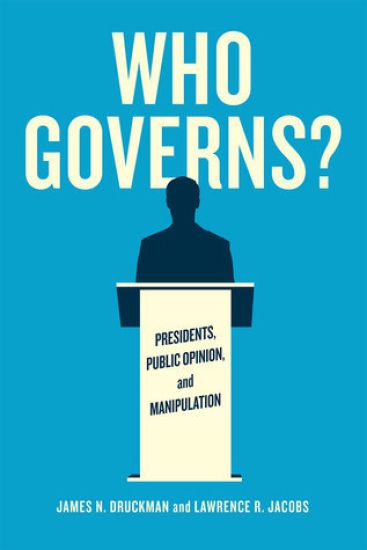
Who Governs?

Who Governs?

James N. Druckman; Lawrence R. Jacobs

University of Chicago Press
2015
nidottu
America's model of representational government rests on the premise that elected officials respond to the opinions of citizens. This is a myth, however, say James N. Druckman and Lawrence R. Jacobs. In Who Governs?, Druckman and Jacobs combine existing research with novel data from US presidential archives to show that presidents make policy by largely ignoring the views of most citizens in favor of affluent and well-connected political insiders. Presidents treat the public as pliable, priming it to focus on personality traits and often ignoring it on issues that fail to become salient. Melding big debates about democratic theory with existing research on American politics and innovative use of the archives of three modern presidents - Johnson, Nixon, and Reagan - Druckman and Jacobs deploy lively and insightful analysis to show that the conventional model of representative democracy bears little resemblance to the actual practice of American politics. The authors conclude by arguing that polyarchy and the promotion of accelerated citizen mobilization and elite competition can improve democratic responsiveness. An incisive study of American politics and the flaws of representative government, this book will be warmly welcomed by readers interested in US politics, public opinion, democratic theory, and the fecklessness of American leadership and decision-making.