Kirjojen hintavertailu. Mukana 12 595 353 kirjaa ja 12 kauppaa.

Kirjailija

James P Bruce

Kirjat ja teokset yhdessä paikassa: 6 kirjaa, julkaisuja vuosilta 1997-2024, suosituimpien joukossa Ireland's Hope. Vertaile teosten hintoja ja tarkista saatavuus suomalaisista kirjakaupoista.

Mukana myös kirjoitusasut: James P. Bruce

6 kirjaa

Kirjojen julkaisuhaarukka 1997-2024.

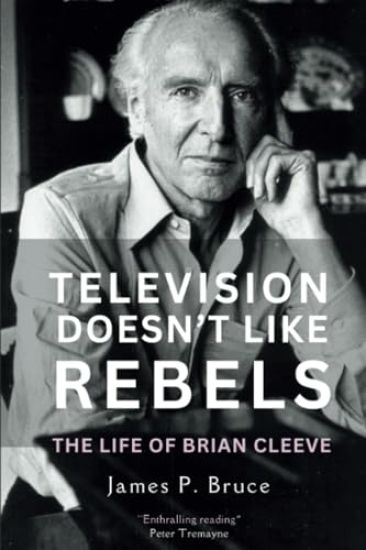
Television Doesn't Like Rebels

Television Doesn't Like Rebels

James P Bruce

Lulu.com
2024
pokkari
Brian Cleeve was a star of Irish television during the 1960s. In that first heady decade of RT 's existence Gay Byrne might have been top of the tree, but Brian was not far below him. By the early-1970s, however, Brian Cleeve was gone from our TV screens. Brian Cleeve's many facets emerge vividly in this biography: the ex-public schoolboy with a thirst for adventure who found it in the greatest conflict the world has seen, the businessman expelled from South Africa because he opposed apartheid, the broadcaster who won awards for his moving and thought-provoking television programmes, the writer who produced novels of wit and compassion, the seeker of truth who finally found what he had been searching for.
Ireland's Hope

Ireland's Hope

James P Bruce

Vernon Press
2020
pokkari
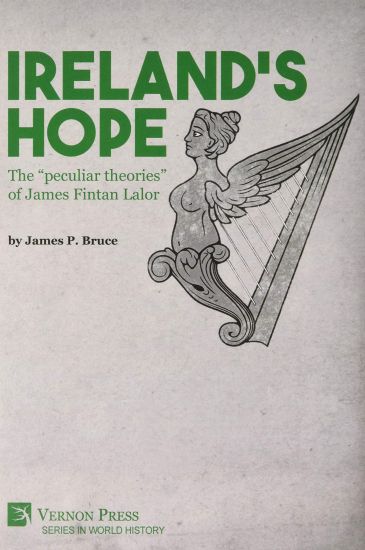
In 1847 and 1848 a little-known farmer named James Fintan Lalor wrote a series of newspaper articles in which he outlined his vision for Ireland after the Great Famine. Although they have been reprinted and republished many times since, until now there has been no systematic study of the principles and proposals that Lalor expounded. In this book, the author considers Lalor's brief career as a writer and offers new insights into his treatment of the national and land questions. By elucidating Lalor's ideas on these questions, exploring possible influences on his thinking, and assessing the impact of his writings on his contemporaries, the author seeks to address what he regards as two deficiencies in the historiography. The first of these is the tendency to assign only a minor, supporting role to Lalor during the brief heyday of Young Ireland. Academic studies typically portray him as little more than a catalyst in the radicalisation of figures like John Mitchel, rather than as a profoundly original thinker in his own right. The second issue is the commonly held perception of Lalor's proposals on land tenure as foreshadowing the creation of a "peasant proprietary" later in the century. The author argues that Lalor advocated a much more radical plan that would link his two primary objectives: the creation of a sovereign Irish republic, and transfer of control over landholding from a small number of landlords to the entire Irish people. By comparing and contrasting Lalor's theories with those of earlier figures such as Thomas Paine and James 'Bronterre' O'Brien, this ground-breaking book broadens the perspective on Lalor and his writings beyond the context of Irish nationalism. As the author concludes, Lalor's unique contribution to Irish radical thought merits a more prominent place in nineteenth-century intellectual history than it has hitherto received. This book will be of great value to anyone interested in Irish history since 1800, especially in the areas of the Great Famine, the Young Ireland movement, and the Land War.
Ireland's Hope: The “peculiar theories” of James Fintan Lalor
In 1847 and 1848 a little-known farmer named James Fintan Lalor wrote a series of newspaper articles in which he outlined his vision for Ireland after the Great Famine. Although they have been reprinted and republished many times since, until now there has been no systematic study of the principles and proposals that Lalor expounded. In this book, the author considers Lalor's brief career as a writer and offers new insights into his treatment of the national and land questions. By elucidating Lalor's ideas on these questions, exploring possible influences on his thinking, and assessing the impact of his writings on his contemporaries, the author seeks to address what he regards as two deficiencies in the historiography. The first of these is the tendency to assign only a minor, supporting role to Lalor during the brief heyday of Young Ireland. Academic studies typically portray him as little more than a catalyst in the radicalisation of figures like John Mitchel, rather than as a profoundly original thinker in his own right. The second issue is the commonly held perception of Lalor's proposals on land tenure as foreshadowing the creation of a "peasant proprietary" later in the century. The author argues that Lalor advocated a much more radical plan that would link his two primary objectives: the creation of a sovereign Irish republic, and transfer of control over landholding from a small number of landlords to the entire Irish people. By comparing and contrasting Lalor's theories with those of earlier figures such as Thomas Paine and James 'Bronterre' O'Brien, this ground-breaking book broadens the perspective on Lalor and his writings beyond the context of Irish nationalism. As the author concludes, Lalor's unique contribution to Irish radical thought merits a more prominent place in nineteenth-century intellectual history than it has hitherto received. This book will be of great value to anyone interested in Irish history since 1800, especially in the areas of the Great Famine, the Young Ireland movement, and the Land War.
Climate Change Policy

Climate Change Policy

Catrinus J. Jepma; Mohan Munasinghe; Bert Bolin; Robert Watson; James P. Bruce

Cambridge University Press
1997
sidottu
There is increasing scientific evidence to suggest that humans are gradually but certainly changing the Earth's climate. In an effort to prevent further damage to the fragile atmosphere, and with the belief that action is required now, the scientific community has been prolific in its dissemination of information on climate change. Inspired by the results of the Intergovernmental Panel on Climate Change's Second Assessment Report, Jepma and Munasinghe set out to create a concise, practical, and compelling approach to climate change issues. They deftly explain the implications of global warming, and the risks involved in attempting to mitigate climate change. They look at how and where to start action, and what organization is needed to be able to implement the changes. This book represents a much needed synopsis of climate change and its real impacts on society. It will be an essential text for climate change researchers, policy analysts, university students studying the environment, and anyone with an interest in climate change issues.
Climate Change Policy

Climate Change Policy

Catrinus J. Jepma; Mohan Munasinghe; Bert Bolin; Robert Watson; James P. Bruce

Cambridge University Press
1997
pokkari
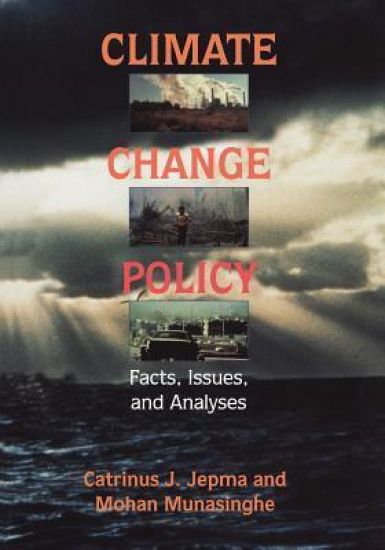
There is increasing scientific evidence to suggest that humans are gradually but certainly changing the Earth's climate. In an effort to prevent further damage to the fragile atmosphere, and with the belief that action is required now, the scientific community has been prolific in its dissemination of information on climate change. Inspired by the results of the Intergovernmental Panel on Climate Change's Second Assessment Report, Jepma and Munasinghe set out to create a concise, practical, and compelling approach to climate change issues. They deftly explain the implications of global warming, and the risks involved in attempting to mitigate climate change. They look at how and where to start action, and what organization is needed to be able to implement the changes. This book represents a much needed synopsis of climate change and its real impacts on society. It will be an essential text for climate change researchers, policy analysts, university students studying the environment, and anyone with an interest in climate change issues.