

Kirjailija
James P. Farwell
Kirjat ja teokset yhdessä paikassa: 3 kirjaa, julkaisuja vuosilta 2011-2022, suosituimpien joukossa Persuasion and Power. Vertaile teosten hintoja ja tarkista saatavuus suomalaisista kirjakaupoista.
Mukana myös kirjoitusasut: James P Farwell
3 kirjaa
Kirjojen julkaisuhaarukka 2011-2022.
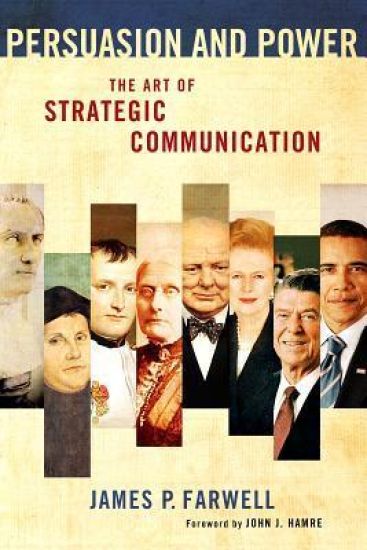
Now more than ever, in the arenas of national security, diplomacy, and military operations, effective communication strategy is of paramount importance. A 24/7 television, radio, and Internet news cycle paired with an explosion in social media demands it. According to James P. Farwell, an expert in communication strategy and cyber war who has advised the U.S. Special Operations Command and the Department of Defense, and worked nationally and internationally as a media and political consultant, this book examines how colorful figures in history from Julius Caesar to Winston Churchill, Napoleon to Hugo Chavez, Martin Luther to Barack Obama and Ronald Reagan, have forged communication strategies to influence audiences. Mark Twain said that history doesn't repeat itself, but rhymes. In showing how major leaders have moved audiences, Farwell bears out Twain's thesis. Obama and Luther each wanted to reach a mass audience. Obama used social media and the Internet. Luther used the printing press. But the strategic mindset was similar. Hugo Chavez identifies with Simon Bolivar, but his attitude towards the media more closely echoes Napoleon. Caesar used coins to build his image in ways that echo the modern use of campaign buttons. His "triumphs," enormous parades to celebrate military victories, celebrated his achievements and aimed to impress the populace with his power and greatness. Adolph Hitler employed a similar tactic with his torchlight parades. The book shows how the US government's approach to strategic communication has been misguided. It offers a colorful, incisive critical evaluation of the concepts, doctrines, and activities that the US Department of Defense and Department of State employ for psychological operations, military information support operations, propaganda, and public diplomacy. Persuasion and Power is a book about the art of communication strategy, how it is used, where, and why. Farwell's adroit use of vivid examples produce a well-researched, entertaining story that illustrates how its principles have made a critical difference throughout history in the outcomes of crises, conflicts, politics, and diplomacy across different cultures and societies.
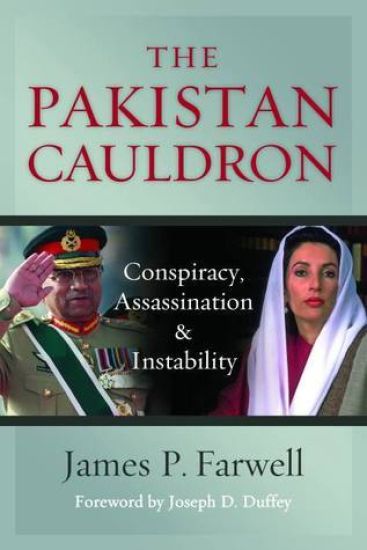
The killing of Osama bin Laden spotlighted Pakistan's unpredictable political dynamics, which are often driven by conspiracy theory, paranoia, and a sense of betrayal. In Pakistan, the late prime minister Benazir Bhutto famously declared, there is "always the story behind the story." In The Pakistan Cauldron, James P. Farwell explains what makes Pakistani politics tick. Farwell has advised the Department of Defense on terrorism, sovereignty, and the political issues in the Middle East, Africa, and Pakistan. Here he reveals how key Pakistani political players have inconsistently employed the principles of strategic communication to advance their agendas and undercut their enemies. Pakistan is an enigma to many. Only by understanding the complex forces that shape Pakistani leaders can we uncover their shifting political agendas and how they affect America and the West. Farwell explains how and why former president Pervez Musharraf clamped down on nuclear scientist A. Q. Kahn and isolated him. He assesses Benazir Bhutto's unique legacy and analyzes how Musharraf handled the aftermath of her assassination. He explains Pakistan's current instability and demonstrates how the country's emotional reaction to bin Laden's death is best understood as the outcome of long-standing political dynamics. The Pakistan Cauldron is for anyone who needs to know why Pakistan continues to pose increasingly difficult challenges for the United States and the West.