Kirjojen hintavertailu. Mukana 12 390 323 kirjaa ja 12 kauppaa.

Kirjailija

James P. Lantolf

Kirjat ja teokset yhdessä paikassa: 7 kirjaa, julkaisuja vuosilta 1994-2026, suosituimpien joukossa Sociocultural Theory. Vertaile teosten hintoja ja tarkista saatavuus suomalaisista kirjakaupoista.

7 kirjaa

Kirjojen julkaisuhaarukka 1994-2026.

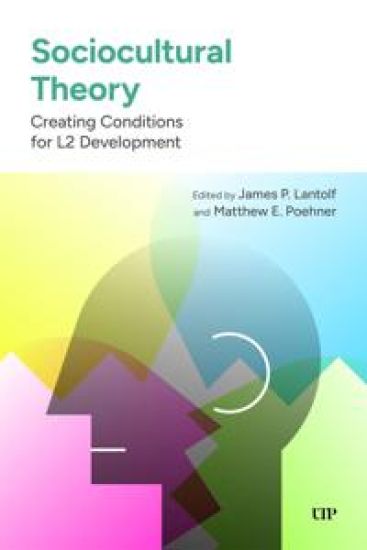
Sociocultural Theory

Sociocultural Theory

James P. Lantolf; Matthew E. Poehner

UNIVERSITY OF TORONTO PRESS
2026
sidottu
This book is a unique and up-to-date look at a series of empirical projects organized around the principles and concepts of sociocultural theory. Applied linguistics professors James P. Lantolf and Matthew E. Poehner address three broader topics framed within the principles and concepts of Vygotskian sociocultural theory: concept-based language instruction, dynamic assessment, and teacher education. The chapters report on empirical studies focusing on learner development of abilities in English, Spanish, Japanese, and French. Specific sections also investigate grammar instruction, literacy, translanguaging, a hidden dimension of oral proficiency assessment, computerized assessment, the role of emotion in teacher development, use of drama and play to promote language development, pragmatics, and more. An innovative analysis of sociocultural theory and its implications, the book will also be of interest to those exploring applied linguistics, language development, language pedagogy and assessment, and teacher development.
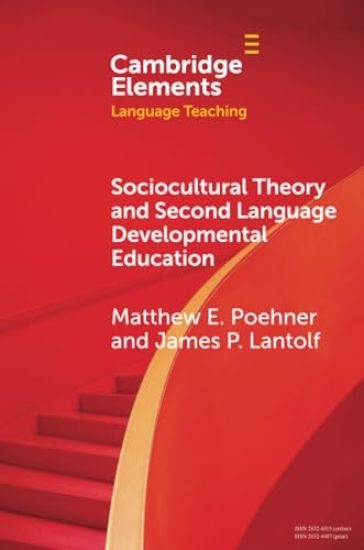
Sociocultural Theory and Second Language Developmental Education

Sociocultural Theory and Second Language Developmental Education

Matthew E. Poehner; James P. Lantolf

Cambridge University Press
2024
pokkari
Sociocultural Theory (SCT), as formulated by Russian psychologist L. S. Vygotsky nearly a century ago, is distinct among traditions in the field of second language (L2) studies in its commitment to praxis. According to this view, theory and research provide the orienting basis for practice, which in turn serves as a testing ground for theory (Vygotsky, 1997). This Element offers a synthesis of foundational concepts and principles of SCT and an overview of two important areas of praxis in L2 education: Concept-Based Language Instruction, which organizes language curricula around linguistic concepts, and Dynamic Assessment, a framework that integrates teaching and diagnosing learner L2 abilities. Leading approaches to L2 teacher education informed by SCT are also discussed. Examples from studies with L2 teachers and learners showcase praxis in action, and emerging questions and directions are considered.
Sociocultural Theory and Second Language Developmental Education

Sociocultural Theory and Second Language Developmental Education

Matthew E. Poehner; James P. Lantolf

Cambridge University Press
2024
sidottu
Sociocultural Theory (SCT), as formulated by Russian psychologist L. S. Vygotsky nearly a century ago, is distinct among traditions in the field of second language (L2) studies in its commitment to praxis. According to this view, theory and research provide the orienting basis for practice, which in turn serves as a testing ground for theory (Vygotsky, 1997). This Element offers a synthesis of foundational concepts and principles of SCT and an overview of two important areas of praxis in L2 education: Concept-Based Language Instruction, which organizes language curricula around linguistic concepts, and Dynamic Assessment, a framework that integrates teaching and diagnosing learner L2 abilities. Leading approaches to L2 teacher education informed by SCT are also discussed. Examples from studies with L2 teachers and learners showcase praxis in action, and emerging questions and directions are considered.
Sociocultural Theory and the Pedagogical Imperative in L2 Education

Sociocultural Theory and the Pedagogical Imperative in L2 Education

James P. Lantolf; Matthew E. Poehner

Routledge
2014
sidottu
Explicating clearly and concisely the full implication of a praxis-oriented language pedagogy, this book argues for an approach to language teaching grounded in a significant scientific theory of human learning—a stance that rejects the consumer approach to theory and the dichotomy between theory and practice that dominates SLA and language teaching. This approach is based on Vygotsky’s sociocultural theory, according to which the two activities are inherently connected so that each is necessarily rooted in the other; practice is the research laboratory where the theory is tested. From the perspective of language education, this is what is meant by the ‘pedagogical imperative.’ Sociocultural Theory and the Pedagogical Imperative in L2 Education• Elaborates a new approach to dealing with the relationship between theory and practice—an approach grounded in praxis—the dialectical unity of theory and practice• Presents an analysis of empirical research illustrating praxis-based principles in real language classrooms • Brings together cognitive linguistics and sociocultural theory - the former provides the theoretical knowledge of language required of praxis and the latter furnishes the theoretical principles of learning and development also called for in a praxis approach• Offers recommendations for redesigning teacher education programs Its timely focus on the theory-practice gap in language education and its original approach to bridging it put this book at the cutting edge of thinking about Vygotskian sociocultural theory in applied linguistics and SLA.
Sociocultural Theory and the Pedagogical Imperative in L2 Education

Sociocultural Theory and the Pedagogical Imperative in L2 Education

James P. Lantolf; Matthew E. Poehner

Routledge
2014
nidottu
Explicating clearly and concisely the full implication of a praxis-oriented language pedagogy, this book argues for an approach to language teaching grounded in a significant scientific theory of human learning—a stance that rejects the consumer approach to theory and the dichotomy between theory and practice that dominates SLA and language teaching. This approach is based on Vygotsky’s sociocultural theory, according to which the two activities are inherently connected so that each is necessarily rooted in the other; practice is the research laboratory where the theory is tested. From the perspective of language education, this is what is meant by the ‘pedagogical imperative.’ Sociocultural Theory and the Pedagogical Imperative in L2 Education• Elaborates a new approach to dealing with the relationship between theory and practice—an approach grounded in praxis—the dialectical unity of theory and practice• Presents an analysis of empirical research illustrating praxis-based principles in real language classrooms • Brings together cognitive linguistics and sociocultural theory - the former provides the theoretical knowledge of language required of praxis and the latter furnishes the theoretical principles of learning and development also called for in a praxis approach• Offers recommendations for redesigning teacher education programs Its timely focus on the theory-practice gap in language education and its original approach to bridging it put this book at the cutting edge of thinking about Vygotskian sociocultural theory in applied linguistics and SLA.
Vygotskian Approaches to Second Language Research

Vygotskian Approaches to Second Language Research

James P. Lantolf; Gabriela Appel

Praeger Publishers Inc
1994
nidottu
In many ways, this edited volume can be read as a showcase for the state of affairs in SLA research. It exemplifies what makes current SLA work so energetic and vibrant, topically and methodologically innovative, insightful in its results, and intellectually and episteologically expansive in its implications and significance beyond second language acquisition. - Applied Linguistics This text brings together the work of scholars attempting to extend Vygotsky's theory to second language research. The papers included, are organized according to three of the major topics of interest in Vygotskian research: zone of proximal development, inner and private speech, and activity theory. All of the papers report on the results of empirical research carried on in these three areas. Readers will recognize the potential sociocultural theory and research has for developing a fuller understanding of L2 learning and use.
Vygotskian Approaches to Second Language Research

Vygotskian Approaches to Second Language Research

James P. Lantolf; Gabriela Appel

Praeger Publishers Inc
1994
sidottu
In many ways, this edited volume can be read as a showcase for the state of affairs in SLA research. It exemplifies what makes current SLA work so energetic and vibrant, topically and methodologically innovative, insightful in its results, and intellectually and episteologically expansive in its implications and significance beyond second language acquisition. - Applied Linguistics This text brings together the work of scholars attempting to extend Vygotsky's theory to second language research. The papers included, are organized according to three of the major topics of interest in Vygotskian research: zone of proximal development, inner and private speech, and activity theory. All of the papers report on the results of empirical research carried on in these three areas. Readers will recognize the potential sociocultural theory and research has for developing a fuller understanding of L2 learning and use.