

Kirjailija
James P Lynch
Kirjat ja teokset yhdessä paikassa: 7 kirjaa, julkaisuja vuosilta 2003-2013, suosituimpien joukossa Understanding Crime Incidence Statistics. Vertaile teosten hintoja ja tarkista saatavuus suomalaisista kirjakaupoista.
Mukana myös kirjoitusasut: James P. Lynch
7 kirjaa
Kirjojen julkaisuhaarukka 2003-2013.


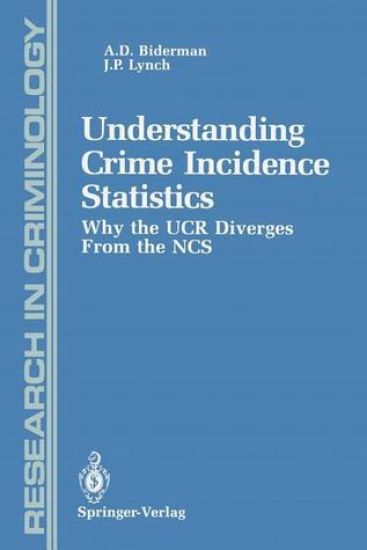
Understanding Crime Incidence Statistics
Albert D. Biderman; James P. Lynch
Springer-Verlag New York Inc.
2011
nidottu
The prominence achieved by the novel measure of "households touched by crime" when it was introduced into the National Crime Survey (NCS) in 1981 was responsible for renewed attention to comparisons between the crime rates reported by the NCS and the Uniform Crime Reports (UCR). The new NCS measure suggested that crime was declining; this at a time of widespread awareness that the UCR Index was at all-time highs. Com parisons of the NCS and UCR in The New York Times (1981) and the Washington Post (1981) had the unfortunate consequence of reviving old and usually ill-informed arguments about which is the "better" measure of "trends in crime. " More recent discrepant changes of the two measures in 1986 and 1987 rekindled the debate, although with somewhat diminished stridency. The efforts of criminological statisticians to develop an appreciation for the two statistical systems as quite different but complementary measures have suffered a setback in these debates, but an opportunity is also afforded to improve the understanding of crime statistics by officials, the media, and the public. The need remains for the Bureau of Justice Statistics (BJS) , the Federal Bureau of Investigation (FBI), and the research community to explain in quantitative terms the ways in which the two systems attend to different, albeit overlapping, aspects of the crime problem.

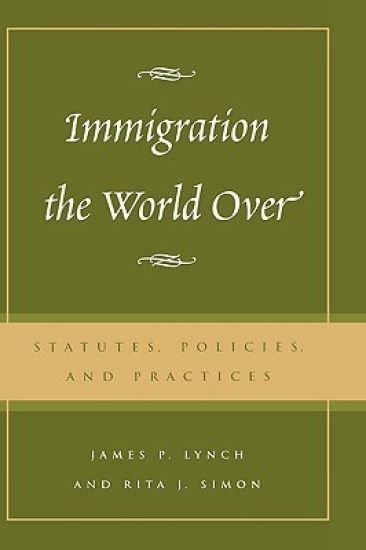
With the opening of borders and the aging of populations in industrialized states immigration takes on new importance. More younger workers are needed to support the social contract established with the baby boom generation, and immigration offers one practical solution. Many countries, however, have little experience with large scale immigration and, especially in the current political and economic climate, a strong resistance to it. Immigration the World Over examines immigration statutes and policies and the societal reactions to immigrants in seven industrialized nations. Comparing the experiences of these nations demonstrates how policies differ and how those policies have facilitated or complicated the accommodation of immigrant populations. Using public opinion data, crime rates, and measures of social integration, the authors go on to show how some countries absorb immigrants to positive effect by addressing worker shortages and enhancing social diversity, while others resist immigration to their detriment.
With the opening of borders and the aging of populations in industrialized states immigration takes on new importance. More younger workers are needed to support the social contract established with the baby boom generation, and immigration offers one practical solution. Many countries, however, have little experience with large scale immigration and, especially in the current political and economic climate, a strong resistance to it. Immigration the World Over examines immigration statutes and policies and the societal reactions to immigrants in seven industrialized nations. Comparing the experiences of these nations demonstrates how policies differ and how those policies have facilitated or complicated the accommodation of immigrant populations. Using public opinion data, crime rates, and measures of social integration, the authors go on to show how some countries absorb immigrants to positive effect by addressing worker shortages and enhancing social diversity, while others resist immigration to their detriment.