Kirjojen hintavertailu. Mukana 12 595 353 kirjaa ja 12 kauppaa.

Kirjailija

James Paul Gee

Kirjat ja teokset yhdessä paikassa: 30 kirjaa, julkaisuja vuosilta 2004-2026, suosituimpien joukossa Multimodalities and Chinese Students’ L2 Practices. Vertaile teosten hintoja ja tarkista saatavuus suomalaisista kirjakaupoista.

30 kirjaa

Kirjojen julkaisuhaarukka 2004-2026.

Multimodalities and Chinese Students’ L2 Practices

Multimodalities and Chinese Students’ L2 Practices

Min Wang; James Paul Gee

Lexington Books
2020
sidottu
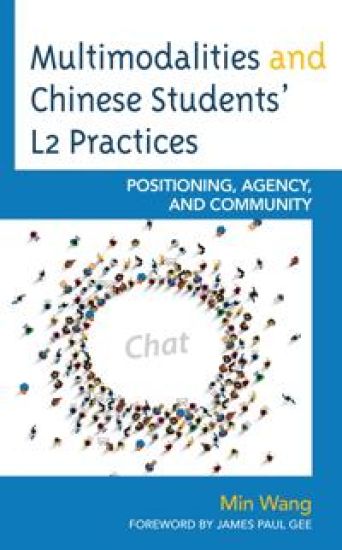
Multimodalities and Chinese Students' L2 Practices: Identity, Community, and Literacy explores the complex relations and interactions among multimodality, positioning, and agency in increasingly digitized, multilingual, and multicultural contexts. Min Wang uses interview narratives, WeChat exchanges, and class observations and field notes of three Chinese international students’ lived experiences of English learning and use in their everyday environments to show that these L2 learners recognized, appreciated, and appropriated affordances of multiple modes and digital tools for their L2 literacies practices. Through these tools and modes, they positioned themselves as confident, able, and competent L2 users, but sometimes also struggling and ambivalent. The practice of meaning-making, remaking, designing, and redesigning demonstrated their agency as L2 learners, which motivated and inspired them to (re)produce and (re)create meanings through discourses for the purpose of presenting desired and anticipated positionings. Positioned as cultural and social beings, these L2 learners presented their self-understandings and self-representations through symbolic and material artifacts, interactions with local and non-local people, and engagement in WeChat discussions and ELI learning. To obtain multimembership, they assumed rights, obligations, and expectations in order to become legitimate community members. In the process of becoming, their agency was promoted, negotiated, or sometimes limited by micro-social structures and ongoing interactions.
An Introduction to Discourse Analysis

An Introduction to Discourse Analysis

James Paul Gee

TAYLOR FRANCIS LTD
2025
nidottu
This bestselling textbook provides a comprehensive guide to conducting discourse analysis. The book outlines Gee’s approach, which involves examining how language is used in context to construct meaning, identities, relationships, and social practices.The theoretical framework is built around seven "building tasks" that language performs: significance, practices, identities, relationships, politics, connections, and sign systems and knowledge. Gee introduces six "tools of inquiry" for analyzing these tasks: situated meanings, social languages, figured worlds, intertextuality, Discourses, and Conversations.Methodologically, Gee emphasizes the importance of context and the reciprocal relationship between language and context. He discusses transcription, outlines the components of an "ideal" discourse analysis, and addresses issues of validity.The book provides practical guidance on analyzing various aspects of language, such as intonation units, stanzas, and the overall organization of oral and written texts. Gee uses interview data to demonstrate how identities and socially situated meanings are constructed through language.This new edition is updated throughout with new examples and a new chapter on multimodal discourse analysis, demonstrating how Gee’s approach can be applied to texts that combine language with other modes of communication, like images or video. Overall, the book equips readers with a robust toolkit for systematically analyzing discourse.An Introduction to Discourse Analysis can be used as a stand-alone textbook or ideally used in conjunction with the practical companion title How to do Discourse Analysis: A Toolkit. Together they provide the complete resource for students studying discourse analysis.
An Introduction to Discourse Analysis

An Introduction to Discourse Analysis

James Paul Gee

TAYLOR FRANCIS LTD
2025
sidottu
This bestselling textbook provides a comprehensive guide to conducting discourse analysis. The book outlines Gee’s approach, which involves examining how language is used in context to construct meaning, identities, relationships, and social practices.The theoretical framework is built around seven "building tasks" that language performs: significance, practices, identities, relationships, politics, connections, and sign systems and knowledge. Gee introduces six "tools of inquiry" for analyzing these tasks: situated meanings, social languages, figured worlds, intertextuality, Discourses, and Conversations.Methodologically, Gee emphasizes the importance of context and the reciprocal relationship between language and context. He discusses transcription, outlines the components of an "ideal" discourse analysis, and addresses issues of validity.The book provides practical guidance on analyzing various aspects of language, such as intonation units, stanzas, and the overall organization of oral and written texts. Gee uses interview data to demonstrate how identities and socially situated meanings are constructed through language.This new edition is updated throughout with new examples and a new chapter on multimodal discourse analysis, demonstrating how Gee’s approach can be applied to texts that combine language with other modes of communication, like images or video. Overall, the book equips readers with a robust toolkit for systematically analyzing discourse.An Introduction to Discourse Analysis can be used as a stand-alone textbook or ideally used in conjunction with the practical companion title How to do Discourse Analysis: A Toolkit. Together they provide the complete resource for students studying discourse analysis.
How to Do Discourse Analysis

How to Do Discourse Analysis

James Paul Gee

TAYLOR FRANCIS LTD
2025
nidottu
How to Do Discourse Analysis provides a comprehensive toolkit for conducting discourse analysis, offering 26 practical tools to examine how language is used to construct meaning, enact identities, and shape social realities. Written by renowned linguist James Paul Gee, it introduces key concepts like situated meanings, social languages, and Discourses, showing how language both reflects and creates social contexts.This essential textbook takes readers through a step-by-step process of analyzing texts and talk, from examining grammar and vocabulary to uncovering underlying ideologies and power dynamics. It covers a wide range of discourse types, from everyday conversations to political speeches and social media posts. Gee draws on diverse examples from education, politics, media, and popular culture to illustrate the tools in action.While grounded in linguistic theory, the book emphasizes hands-on application. Each tool is accompanied by sample analyses and practice exercises. This new edition incorporates recent developments in digital communication and updates examples for contemporary relevance, making it an ideal resource for advanced undergraduate and postgraduate students working in the areas of applied linguistics, education, psychology, anthropology, and communication.This bestselling textbook is the ideal companion to An Introduction to Discourse Analysis: Theory and Method also by James Paul Gee.
How to Do Discourse Analysis

How to Do Discourse Analysis

James Paul Gee

TAYLOR FRANCIS LTD
2025
sidottu
How to Do Discourse Analysis provides a comprehensive toolkit for conducting discourse analysis, offering 26 practical tools to examine how language is used to construct meaning, enact identities, and shape social realities. Written by renowned linguist James Paul Gee, it introduces key concepts like situated meanings, social languages, and Discourses, showing how language both reflects and creates social contexts.This essential textbook takes readers through a step-by-step process of analyzing texts and talk, from examining grammar and vocabulary to uncovering underlying ideologies and power dynamics. It covers a wide range of discourse types, from everyday conversations to political speeches and social media posts. Gee draws on diverse examples from education, politics, media, and popular culture to illustrate the tools in action.While grounded in linguistic theory, the book emphasizes hands-on application. Each tool is accompanied by sample analyses and practice exercises. This new edition incorporates recent developments in digital communication and updates examples for contemporary relevance, making it an ideal resource for advanced undergraduate and postgraduate students working in the areas of applied linguistics, education, psychology, anthropology, and communication.This bestselling textbook is the ideal companion to An Introduction to Discourse Analysis: Theory and Method also by James Paul Gee.
What Is a Human?

What Is a Human?

James Paul Gee

Springer Nature Switzerland AG
2020
nidottu
In a sweeping synthesis of new research in a number of different disciplines, this book argues that we humans are not who we think we are. As he explores the interconnections between cutting-edge work in bioanthropology, evolutionary biology, neuroscience, human language and learning, and beyond, James Paul Gee advances, also, a personal philosophy of language, learning, and culture, informed by his decades of work across linguistics and the social sciences. Gee argues that our schools, institutions, legal systems, and societies are designed for creatures that do not exist, thus resulting in multiple, interacting crises, such as climate change, failing institutions, and the rise of nationalist nationalism. As Gee constructs an understanding of the human that takes into account our social, collective, and historical nature, as established by recent research, he inspires readers to reflect for themselves on the very question of who we are—a key consideration for anyone interested in society, government, schools, health, activism, culture and diversity, or even just survival.
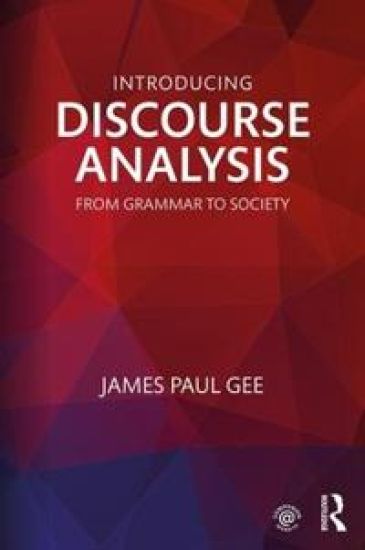
Introducing Discourse Analysis

Introducing Discourse Analysis

James Paul Gee

Routledge
2017
sidottu
Introducing Discourse Analysis: From Grammar to Society is a concise and accessible introduction by bestselling author, James Paul Gee, to the fundamental ideas behind different specific approaches to discourse analysis, or the analysis of language in use. The book stresses how grammar sets up choices for speakers and writers to make, choices which express, not unvarnished truth, but perspectives or viewpoints on reality. In turn, these perspectives are the material from which social interactions, social relations, identity, and politics make and remake society and culture. The book also offers an approach to how discourse analysis can contribute to lessening the ideological divides and echo chambers that so bedevil our world today. Organized in a user-friendly way with short numbered sections and recommended readings, Introducing Discourse Analysis is an essential primer for all students of discourse analysis within linguistics, education, communication studies, and related areas.
Introducing Discourse Analysis

Introducing Discourse Analysis

James Paul Gee

Routledge
2017
nidottu
Introducing Discourse Analysis: From Grammar to Society is a concise and accessible introduction by bestselling author, James Paul Gee, to the fundamental ideas behind different specific approaches to discourse analysis, or the analysis of language in use. The book stresses how grammar sets up choices for speakers and writers to make, choices which express, not unvarnished truth, but perspectives or viewpoints on reality. In turn, these perspectives are the material from which social interactions, social relations, identity, and politics make and remake society and culture. The book also offers an approach to how discourse analysis can contribute to lessening the ideological divides and echo chambers that so bedevil our world today. Organized in a user-friendly way with short numbered sections and recommended readings, Introducing Discourse Analysis is an essential primer for all students of discourse analysis within linguistics, education, communication studies, and related areas.
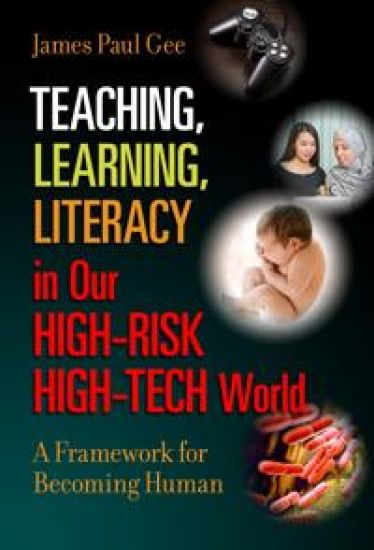
Teaching, Learning, Literacy in Our High-Risk High-Tech World
In a world beset by conflicting ideologies, Gee urges us to look to a broader set of ideas from seemingly unrelated disciplines for a viable vision of education. He proposes a framework of principles that can be used to reconceptualize education, specifically literacy, to better prepare students to be collaborators toward peace and sustainability.
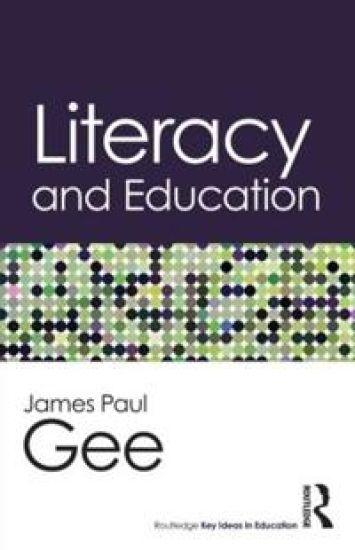
Literacy and Education

Literacy and Education

James Paul Gee

Routledge
2014
sidottu
Literacy and Education tells the story of how literacy—starting in the early 1980s—came to be seen not as a mental phenomenon, but as a social and cultural one. In this accessible introductory volume, acclaimed scholar James Paul Gee shows readers how literacy "left the mind and wandered out into the world." He traces the ways a sociocultural view of literacy melded with a social view of the mind and speaks to learning in and out of school in new and powerful ways. Gee concludes by showing how the very idea of "literacy" has broadened into new literacies with words, signs, and deeds in contexts enhanced, augmented, and transformed by new technologies.
Literacy and Education

Literacy and Education

James Paul Gee

Routledge
2014
nidottu
Literacy and Education tells the story of how literacy—starting in the early 1980s—came to be seen not as a mental phenomenon, but as a social and cultural one. In this accessible introductory volume, acclaimed scholar James Paul Gee shows readers how literacy "left the mind and wandered out into the world." He traces the ways a sociocultural view of literacy melded with a social view of the mind and speaks to learning in and out of school in new and powerful ways. Gee concludes by showing how the very idea of "literacy" has broadened into new literacies with words, signs, and deeds in contexts enhanced, augmented, and transformed by new technologies.
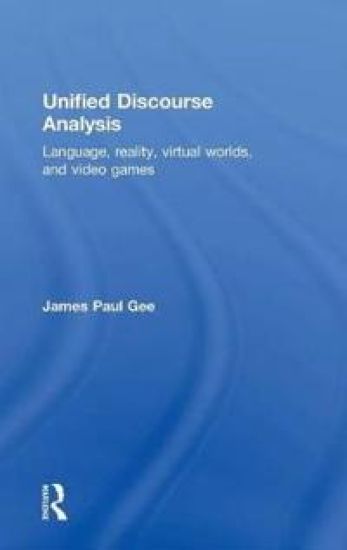
Unified Discourse Analysis

Unified Discourse Analysis

James Paul Gee

Routledge
2014
sidottu
Discourse Analysis is becoming increasingly "multimodal", concerned primarily with the interplay of language, image and sound. Video Games allow humans to create, live in and have conversations with new multimodal worlds.In this ground-breaking new textbook, best-selling author and experienced gamer, James Paul Gee, sets out a new theory and method of discourse analysis which applies to language, the real world, science and video games. Rather than analysing the language of video games, this book uses discourse analysis to study games as communicational forms. Gee argues that language, science, games and everyday life are deeply related and each is a series of conversations. Discourse analysis should not be just about language, but about human interactions with the world, with games, and with each other, interactions that make meaning and sustain lives amid risk and complexity.Written in a highly accessible style and drawing on a wide range of video games from World of Warcraft and Chibi-Robo to Tetris, this engaging textbook is essential reading for students in discourse analysis, new media and digital culture.
Unified Discourse Analysis

Unified Discourse Analysis

James Paul Gee

Routledge
2014
nidottu
Discourse Analysis is becoming increasingly "multimodal", concerned primarily with the interplay of language, image and sound. Video Games allow humans to create, live in and have conversations with new multimodal worlds.In this ground-breaking new textbook, best-selling author and experienced gamer, James Paul Gee, sets out a new theory and method of discourse analysis which applies to language, the real world, science and video games. Rather than analysing the language of video games, this book uses discourse analysis to study games as communicational forms. Gee argues that language, science, games and everyday life are deeply related and each is a series of conversations. Discourse analysis should not be just about language, but about human interactions with the world, with games, and with each other, interactions that make meaning and sustain lives amid risk and complexity.Written in a highly accessible style and drawing on a wide range of video games from World of Warcraft and Chibi-Robo to Tetris, this engaging textbook is essential reading for students in discourse analysis, new media and digital culture.
How to do Discourse Analysis

How to do Discourse Analysis

James Paul Gee

Routledge
2014
nidottu
This bestselling textbook is the ideal companion to An Introduction to Discourse Analysis: Theory and Method, by leading author, James Paul Gee. Using a practical how-to approach, Gee provides the tools necessary to work with discourse analysis, with engaging step-by-step tasks featured throughout the book. Each tool is clearly explained, along with guidance on how to use it, and authentic data is provided for readers to practice using the tools. Readers from all fields will gain both a practical and theoretical background in how to do discourse analysis and knowledge of discourse analysis as a distinctive research methodology. Updated throughout, this second edition also includes a new tool- ‘The Big C Conversation Tool’. A new companion website www.routledge.com/cw/gee features a frequently asked questions section, additional tasks to support understanding, a glossary and free access to journal articles by James Paul Gee. How to do Discourse Analysis: A Toolkit is an essential book for advanced undergraduate and postgraduate students working in the areas of applied linguistics, education, psychology, anthropology and communication.
Reading the Visual

Reading the Visual

Frank Serafini; James Paul Gee

Teachers' College Press
2013
sidottu
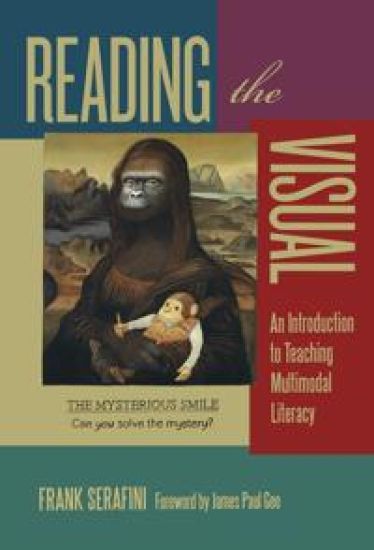
Today’s teachers need up-to-the-minute information to help their students make sense of the multimodal texts they encounter daily in and out of school. Reading the Visual is an essential introduction that focuses on what teachers should know about multimodal literacy and how to teach it.This engaging book provides theoretical, curricular, and pedagogical frameworks for teaching a wide-range of visual and multimodal texts, including historical fiction, picture books, advertisements, websites, comics, graphic novels, news reports, and film. Each unit of study presented contains suggestions for selecting cornerstone texts and visual images and launching the unit, as well as lesson plans, text sets, and analysis guides. These units are designed to be readily adapted to fit the needs of a variety of settings and grade levels. Book Features: An accessible introduction to visual literacy and multimodality.Classroom strategies and demonstrations for analyzing and interpreting multimodal texts.Hands-on examples of units of study for ten types of multimodal texts.Resources for developing and adapting units, including suggested texts, analysis guides, and learning objectives.
Reading the Visual

Reading the Visual

Frank Serafini; James Paul Gee

Teachers' College Press
2013
nidottu
Today’s teachers need up-to-the-minute information to help their students make sense of the multimodal texts they encounter daily in and out of school. Reading the Visual is an essential introduction that focuses on what teachers should know about multimodal literacy and how to teach it.This engaging book provides theoretical, curricular, and pedagogical frameworks for teaching a wide-range of visual and multimodal texts, including historical fiction, picture books, advertisements, websites, comics, graphic novels, news reports, and film. Each unit of study presented contains suggestions for selecting cornerstone texts and visual images and launching the unit, as well as lesson plans, text sets, and analysis guides. These units are designed to be readily adapted to fit the needs of a variety of settings and grade levels. Book Features: An accessible introduction to visual literacy and multimodality.Classroom strategies and demonstrations for analyzing and interpreting multimodal texts.Hands-on examples of units of study for ten types of multimodal texts.Resources for developing and adapting units, including suggested texts, analysis guides, and learning objectives.
Good Video Games and Good Learning

Good Video Games and Good Learning

James Paul Gee

Peter Lang Publishing Inc
2013
nidottu
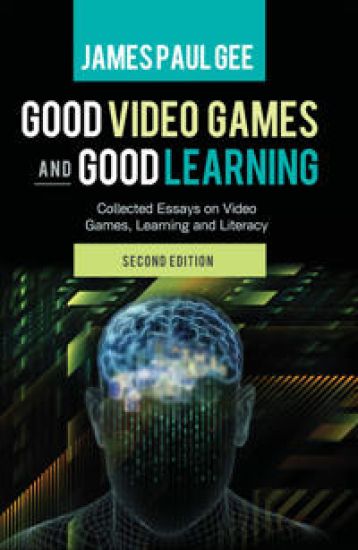
Good Video Games and Good Learning presents the most important essays by James Paul Gee devoted to the ways in which good video games create good learning. The chapters in this book argue that good games teach through well-designed problem-solving experiences. They also prove that game-based learning must involve more than software and technology and engage with the design of passionate-affinity spaces where people mentor each other’s learning and engagement. In the end, the book offers a model of collaborative, interactive, and embodied learning centered on problem solving, a model that can be enhanced by games, but which can be accomplished in many different ways with or without games.