Kirjailija
James Phelan
Kirjat ja teokset yhdessä paikassa: 46 kirjaa, julkaisuja vuosilta 2004-2026, suosituimpien joukossa Narrative Knows No Boundaries. Vertaile teosten hintoja ja tarkista saatavuus suomalaisista kirjakaupoista.
46 kirjaa
Kirjojen julkaisuhaarukka 2004-2026.
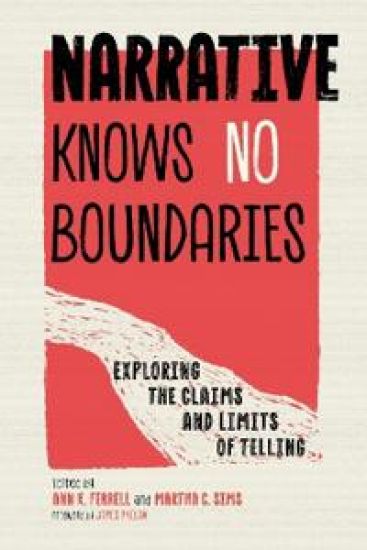
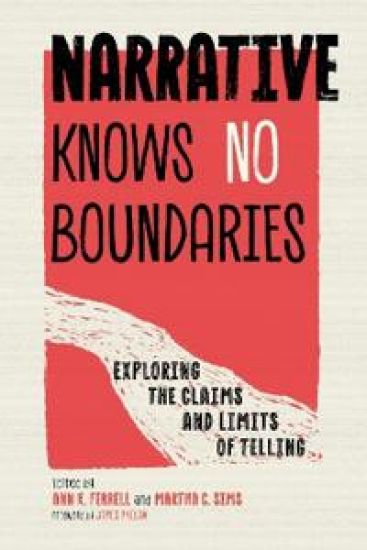
Contributions by Sheila Bock, Olivia Caldeira, Claudia Chiang-Frost, Cynthia Cox, Ann K. Ferrell, Kate Parker Horigan, Stewart Jobrack, Eleanor Paynter, James Phelan, Susan Ritchie, Martha C. Sims, Jasmine Stork, Sydney K. Varajon, and Jason Whitesel In Narrative Knows No Boundaries: Exploring the Claims and Limits of Telling, the contributors examine uses of clearly recognizable narratives, as well as narratives that are implied, assumed, or even absent because they are untellable. The essays in this collection apply key concepts from the work of acclaimed narrative scholar Amy Shuman to a broad array of narrative contexts. Since her first publications in the early 1980s, Shuman has been a much-cited force, not only within the realm of folklore studies (her home discipline), but also in a myriad of other fields, including narrative studies, critical theory, literacy studies, performance, disability studies, human rights and asylum, gender and feminist theory, and identity studies. In the tradition of Shuman’s work, and in honor of her encouragement to her students to push boundaries, the contributors to this volume illustrate varied ways of thinking about and approaching the study of narrative. The range of contexts considered here includes migrants, refugees, and farmers; storytelling in an indigenous community, on a true crime podcast, and during disaster; sexuality education with persons with disabilities and parenting a child with a disability; master narratives about fatness and asexuality in fanfiction; and Gothic literature and tattoos. The volume’s organization emphasizes surprising connections between these subjects, grounded in concepts like narrative promises, entitlement, tellability, and hypervisibility.

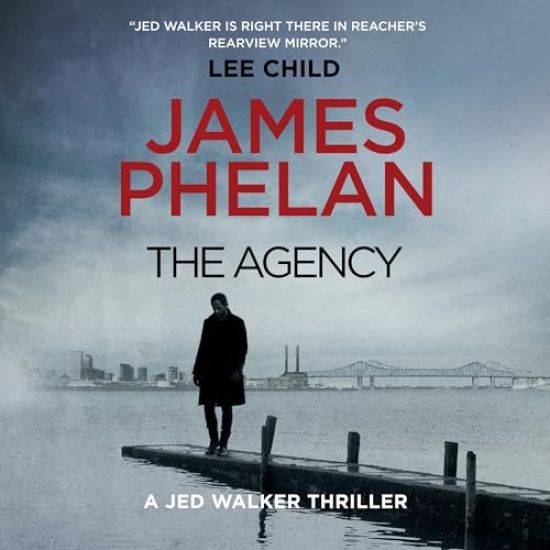
From bestselling and award-winning author James Phelan, the thrilling Jed Walker series continues in The Agency.It's 2005, New Orleans, pre-Katrina, and Jed Walker has just started at the CIA. He's sent on a mission by Harold Richter, CIA field operations legend and trainer of agents provocateur. The task is a one-way ticket--survive and succeed at all costs--and Walker is an off-the-grid, solo, deniable asset.As Katrina comes to town to forever change a city and a country, it's clear to Walker that his life as a spy has the potential to shape global events. From Langley to Louisiana, Washington to Moscow, The Agency moves like a hurricane through a treacherous landscape of double crosses, false identities, and enemies old and new.
From bestselling and award-winning author James Phelan, Jed Walker is back in another heart-stopping thriller--Dark Heart.In war-torn Syria, the lone survivor of a massacre is pulled from beneath a pile of bodies. She is given one instruction: "Find Jed Walker."Ex-CIA, Walker is a man who thought he was long out of the game. Discovering a terror outfit is smuggling people from the Middle East into the United States, he is drawn back in. At first Walker thinks these human traffickers are driven purely by profit and greed, but soon learns their motives are much worse--and they have ties to the highest levels of power.As the body count rises and deadly enemies stalk from the shadows, Walker uncovers the shocking truth behind an operation intended to bring America to its knees. He must work against time, and powerful adversaries, to uncover the truth behind the operation and prevent a global catastrophe from being unleashed.If he lives, Jed Walker will learn the true cost of life ... and the knowledge will change him forever.
In 2011, Seal Team Six killed Osama Bin Laden. Now, four years later, someone is eliminating Team Six--one by one.Jed Walker, ex-CIA, is an outsider back in the game. He's been chasing down a sinister group code-named Zodiac that the big guns--MI5, CIA, the Pentagon--have failed to eradicate. But as Walker follows the trail of bodies, uncovering secrets and making connections he's not supposed to make, he finds the answers are closer to home than he ever imagined.Revenge is the obvious motive--but nothing is ever that simple in love and war.Can Walker find who's responsible before the body count grows? Can he stop another terror attack before more innocents suffer?When the line between the good and the bad becomes blurred, when the hunters become the hunted, only one man can save us all.
Jed Walker is the man you want watching your back.A sinister group--code-named Zodiac--has launched a series of devastating global attacks. Twelve targets across the world, twelve code-named missions. Operating distinct sleeper cells, they are the ultimate terrorist organization, watching and waiting for a precise moment to activate the next group. It's a frightening and deadly efficient way to stay one step ahead ... and cause the most chaos.For ex-CIA operative Jed Walker, chaos is his profession. Burned by his former agency, he is determined to clear his name. Stopping Zodiac is the only way. Desperate to catch the killers and find the mastermind, he can't afford to lose the next lead--but that means that sometimes the terrorists have to win.Ultimately, it all comes down to Walker: he's the only one who can break the chain and put the group to sleep ... permanently. And he's got exactly eighty-one hours until deadline.
Black Women’s Stories of Everyday Racism
Simone Drake; James Phelan; Robyn Warhol; Lisa Zunshine
TAYLOR FRANCIS LTD
2024
sidottu
Black Women’s Stories of Everyday Racism puts literary narrative theory to work on an urgent real-world problem. The book calls attention to African American women’s everyday experiences with systemic racism and demonstrates how four types of narrative theory can help generate strategies to explain and dismantle that racism. This volume presents fifteen stories told by eight midwestern African American women about their own experiences with casual and structural racism, followed by four detailed narratological analyses of the stories, each representing a different approach to narrative interpretation. The book makes a case for the need to hear the personal stories of these women and others like them as part of a larger effort to counter the systemic racism that prevails in the United States today.Readers will find that the women’s stories offer powerful evidence that African Americans experience racism as an inescapable part of their day-to-day lives—and sometimes as a force that radically changes their lives. The stories provide experience-based demonstrations of how pervasive systemic racism is and how it perpetuates power differentials that are baked into institutions such as schools, law enforcement, the health care system, and business. Containing countless signs of the stress and trauma that accompany and follow from experiences of racism, the stories reveal evidence of the women’s resilience as well as their unending need for it, as they continue to feel the negative effects of experiences that occurred many years ago. The four interpretive chapters note the complex skill involved in the women’s storytelling. The analyses also point to the overall value of telling these stories: how they are sometimes cathartic for the tellers; how they highlight the importance of listening—and the likelihood of misunderstanding—and how, if they and other stories like them were heard more often, they would be a force to counteract the structural racism they so graphically expose.The Open Access version of this book, available at http://www.taylorfrancis.com, has been made available under a Creative Commons Attribution (CC-BY) 4.0 license.
Black Women’s Stories of Everyday Racism
Simone Drake; James Phelan; Robyn Warhol; Lisa Zunshine
TAYLOR FRANCIS LTD
2024
nidottu
Black Women’s Stories of Everyday Racism puts literary narrative theory to work on an urgent real-world problem. The book calls attention to African American women’s everyday experiences with systemic racism and demonstrates how four types of narrative theory can help generate strategies to explain and dismantle that racism. This volume presents fifteen stories told by eight midwestern African American women about their own experiences with casual and structural racism, followed by four detailed narratological analyses of the stories, each representing a different approach to narrative interpretation. The book makes a case for the need to hear the personal stories of these women and others like them as part of a larger effort to counter the systemic racism that prevails in the United States today.Readers will find that the women’s stories offer powerful evidence that African Americans experience racism as an inescapable part of their day-to-day lives—and sometimes as a force that radically changes their lives. The stories provide experience-based demonstrations of how pervasive systemic racism is and how it perpetuates power differentials that are baked into institutions such as schools, law enforcement, the health care system, and business. Containing countless signs of the stress and trauma that accompany and follow from experiences of racism, the stories reveal evidence of the women’s resilience as well as their unending need for it, as they continue to feel the negative effects of experiences that occurred many years ago. The four interpretive chapters note the complex skill involved in the women’s storytelling. The analyses also point to the overall value of telling these stories: how they are sometimes cathartic for the tellers; how they highlight the importance of listening—and the likelihood of misunderstanding—and how, if they and other stories like them were heard more often, they would be a force to counteract the structural racism they so graphically expose.The Open Access version of this book, available at http://www.taylorfrancis.com, has been made available under a Creative Commons Attribution (CC-BY) 4.0 license.
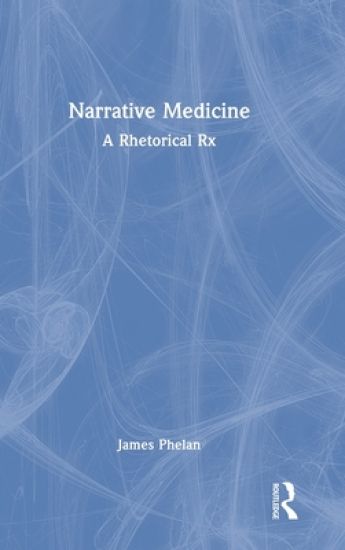
Narrative Medicine: A Rhetorical Rx rests on the principles that storytelling is central to medical encounters between caregivers and patients and that narrative competence enhances medical competence. Thus, the book's goal is to develop the narrative competence of its reader. Grounded in the rhetorical theory of narrative that Phelan has been constructing over the course of his career, this volume utilizes a three-step method: Offering a jargon-free explication of core concepts of narrative such as character, progression, perspective, time, and space. Demonstrating how to use those concepts to interpret a diverse group of medical narratives, including two graphic memoirs. Pointing to the relevance of those demonstrations for caregiver-patient interactions. Narrative Medicine: A Rhetorical Rx is the ideal volume for undergraduate students interested in pursuing careers in healthcare, students in medical and allied health professional schools, and graduate students in the health humanities and social sciences.
Debating Rhetorical Narratology
Matthew Clark; James Phelan
Ohio State University Press
2020
sidottu
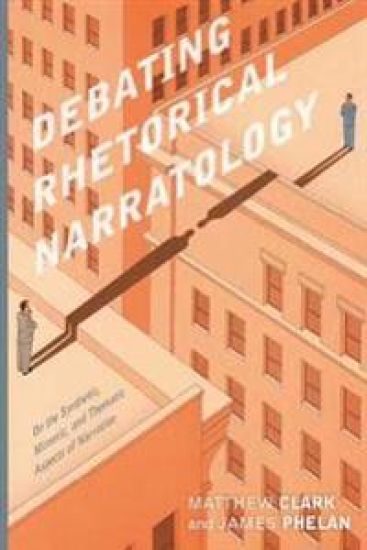
In Debating Rhetorical Narratology: On the Synthetic, Mimetic, and Thematic Aspects of Narrative, Matthew Clark and James Phelan provide a model of lively, sharp, and good-natured scholarly exchange. Clark proposes "friendly amendments" to Phelan's theorizing of the synthetic, mimetic, and thematic aspects of narrative, and Phelan responds, often by explaining why he finds Clark's amendments less-than-friendly. Clark rounds off the debate by offering a brief rejoinder. Clark and Phelan consistently ground their theoretical arguments in their analyses of particular narratives, drawing on a corpus that ranges from Homer's Iliad to Tobias Wolff's In Pharaoh's Army and includes, among many others, Jane Austen's Emma, George Orwell's 1984, and Toni Morrison's Beloved. Clark and Phelan's deep dive into the synthetic, mimetic, and thematic leads them to explore many other aspects of narrative and narrative theory: style, audiences, the mimetic illusion, fictionality, and more. Their investigation also leads them into questions about rhetorical narratology's relation to other projects in narrative theory, especially unnatural narratology, and, indeed, about how to assess the explanatory power of competing theories. Ultimately, their debate is compelling testimony about the power of both narrative theory and narrative itself.
Debating Rhetorical Narratology
Matthew Clark; James Phelan
Ohio State University Press
2020
pokkari
In Debating Rhetorical Narratology: On the Synthetic, Mimetic, and Thematic Aspects of Narrative, Matthew Clark and James Phelan provide a model of lively, sharp, and good-natured scholarly exchange. Clark proposes "friendly amendments" to Phelan's theorizing of the synthetic, mimetic, and thematic aspects of narrative, and Phelan responds, often by explaining why he finds Clark's amendments less-than-friendly. Clark rounds off the debate by offering a brief rejoinder. Clark and Phelan consistently ground their theoretical arguments in their analyses of particular narratives, drawing on a corpus that ranges from Homer's Iliad to Tobias Wolff's In Pharaoh's Army and includes, among many others, Jane Austen's Emma, George Orwell's 1984, and Toni Morrison's Beloved. Clark and Phelan's deep dive into the synthetic, mimetic, and thematic leads them to explore many other aspects of narrative and narrative theory: style, audiences, the mimetic illusion, fictionality, and more. Their investigation also leads them into questions about rhetorical narratology's relation to other projects in narrative theory, especially unnatural narratology, and, indeed, about how to assess the explanatory power of competing theories. Ultimately, their debate is compelling testimony about the power of both narrative theory and narrative itself.
'An absolute must-read for fans of Clancy, Ludlum et al' Bookseller & Publisher.An international crisis. An ex-navy hero. Time's running out.It's hard to bury a past. Lachlan Fox is about to discover it's ever harder to dig it back up.While most of the world's intelligence resources have been tied up in Afghanistan and Iraq, the President of Chechnya has been making plans -- and the clock is ticking.A world away, disillusioned ex-navy operative Lachlan Fox is on a diving trip with his best friend. From the moment they lift a mysterious metallic object off the sea floor, the two men set in motion a chain of events that will drag them into the corrupt world of international politics and arms races.From East Timor to Grozny, Washington to New York and Venice to Iran, Lachlan Fox is forced into an adrenaline-fuelled quest to save his friend, himself . . . and the world. 'A rollicking post-Cold War terrorism tale' Sun HeraldThe Lachlan Fox SeriesFox HuntPatriot ActBlood OilLiquid GoldRed IcePraise for James Phelan:'James Phelan has produced a big, juicy, rollicking tale in the spirit of Robert Ludlum. We haven't seen an international thriller like this for a long time' Jeffery Deaver'A fast and furious ride through a complicated maze of timely political intrigue. James Phelan has earned a new avid fan' Steve Berry'A corker ... Phelan writes in swift, gritty prose, never wasting a word' Sydney Morning Herald
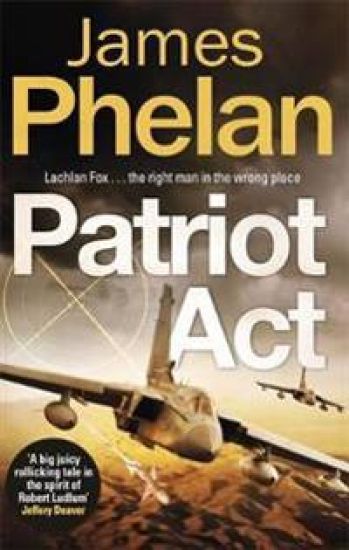
'An absolute must-read for fans of Clancy, Ludlum et al' Bookseller & PublisherLachlan Fox . . . the right man in the wrong placeLachlan Fox heard his name over the PA system at JFK. At the airline service counter, a typed note was waiting for him. 'Go to the third payphone near the first set of toilets ahead of you. It will ring at 9.45pm. Answer it.'September 11 changed everything. The US Patriot Act has given the UK & USA treaty countries free rein to use the ECHELON surveillance program to monitor every spoken or written word transmitted throughout the world. In the wrong hands it could bring down governments and threaten the safety of millions. Ex-navy operative and investigative journalist Lachlan Fox has information hinting at the true reach of ECHELON, and he starts to suspect someone is ruthlessly trying to access its power . . .Can he uncover the answers before the course of history is altered forever?The Lachlan Fox SeriesFox HuntPatriot ActBlood OilLiquid GoldRed IcePraise for James Phelan:'James Phelan has produced a big, juicy, rollicking tale in the spirit of Robert Ludlum. We haven't seen an international thriller like this for a long time' Jeffery Deaver'A fast and furious ride through a complicated maze of timely political intrigue. James Phelan has earned a new avid fan' Steve Berry'A corker ... Phelan writes in swift, gritty prose, never wasting a word' Sydney Morning Herald