

Kirjailija
James Prothero
Kirjat ja teokset yhdessä paikassa: 10 kirjaa, julkaisuja vuosilta 2012-2026, suosituimpien joukossa The Wind and the Blood. Vertaile teosten hintoja ja tarkista saatavuus suomalaisista kirjakaupoista.
10 kirjaa
Kirjojen julkaisuhaarukka 2012-2026.
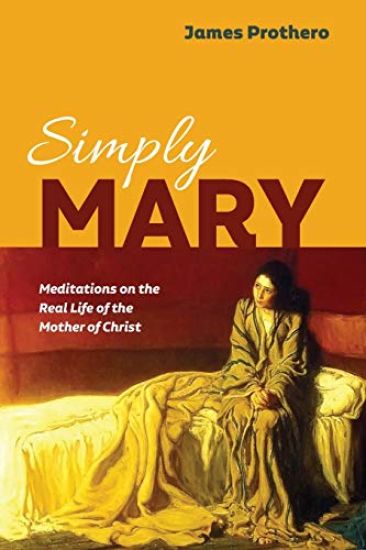
The Virgin Mary has appeared to thousands and performed miracles from the early fifth century until now. Millions around the world are devoted to her. But have we wrapped so much elevating imagery around her that we've lost the real woman who gave birth to Our Lord? Was Mary of Nazareth a pain-free, perpetual virgin, a spiritual superwoman, even something of a goddess, floating calmly above the storms of her life? Or was she a woman who experienced the agony of childbirth, the dirt and grit of everyday existence, and ultimately witnessed her Son being tortured to death? What do we really know about her from Scripture, and how have we made this first-century peasant woman into a sort of glowing, semi-goddess? And while we're at it, how has the divinity of her Son obscured our clear sight of her? Simply Mary: Meditations on the Real Life of the Mother of Christ answers these questions in a combination of reflection and biography, exploring things we can know and can surmise from the record that have not been brought up before now. With both the eyes of faith and of a realistic, historical appraisal, this book addresses the most important question that has never been answered: who was the woman, Mary of Nazareth? Before she can be the Mother of God, she has to be a woman.
The Virgin Mary has appeared to thousands and performed miracles from the early fifth century until now. Millions around the world are devoted to her. But have we wrapped so much elevating imagery around her that we've lost the real woman who gave birth to Our Lord? Was Mary of Nazareth a pain-free, perpetual virgin, a spiritual superwoman, even something of a goddess, floating calmly above the storms of her life? Or was she a woman who experienced the agony of childbirth, the dirt and grit of everyday existence, and ultimately witnessed her Son being tortured to death? What do we really know about her from Scripture, and how have we made this first-century peasant woman into a sort of glowing, semi-goddess? And while we're at it, how has the divinity of her Son obscured our clear sight of her? Simply Mary: Meditations on the Real Life of the Mother of Christ answers these questions in a combination of reflection and biography, exploring things we can know and can surmise from the record that have not been brought up before now. With both the eyes of faith and of a realistic, historical appraisal, this book addresses the most important question that has never been answered: who was the woman, Mary of Nazareth? Before she can be the Mother of God, she has to be a woman.
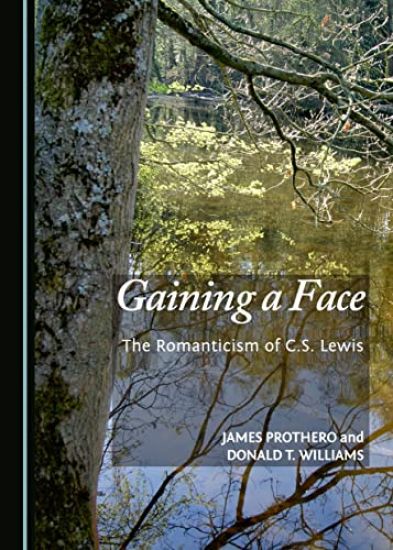
Contrary to the popular perception that C.S. Lewis was merely a religious writer, there is a good case to be made for Lewis being one of the major British writers of the twentieth century if we look at him as a prime member of a resurgent Romantic movement after the Second World War. Much has been written on Lewis’s thoughts on joy, a central aspect of his Romanticism. However, Lewis was at the same time a rationalist, and managed to merge his Rationalism with his Romanticism in a unique and original manner. And his Romanticism likewise was complex and owed much to both George MacDonald and, through the medium of MacDonald’s thought, to the Romanticism of William Wordsworth.This study traces the aspects of Lewis’s romantic thought as it is drawn from MacDonald, Wordsworth and other influences, and traces how, beyond his fascination with joy, Lewis constructed a consistent romantic vision that allowed for a balance with reason and stood in contradiction to the literary movements of his time.
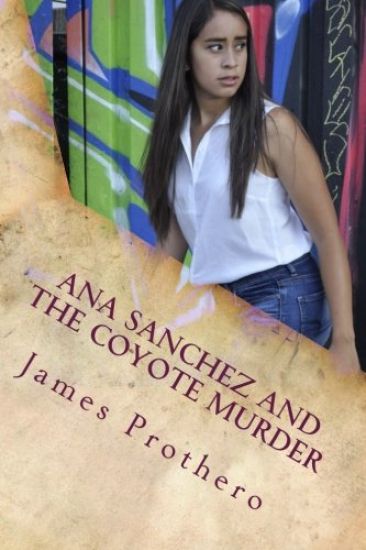
Ana Sanchez and the Coyote Murder
James Prothero
Createspace Independent Publishing Platform
2017
nidottu
Ana Sanchez would like her senior year at Aztlan High to go smoothly. But her twin brother, Eduardo, who dropped out and was thinking about joining the Los Rios gang, is found dead on the tracks across from the high school. The only clue he scratches in the dirt as he dies: the word "coyote." Though her teacher warns her against investigating when the police drop the matter, Ana must find out. A bullet through her car window raises the stakes, as does the handsome gringo son of the teacher she's in hiding with. When the police arrest Leo Chacon, the leader of Los Rios, Ana knows he didn't do it, and that the real killer is out there still, hunting her. Ana must uncover the real killer and prove Leo Chacon not guilty if she hopes to survive and finish school, not to mention get into college.

Contrary to the popular perception that C.S. Lewis was merely a religious writer, there is a good case to be made for Lewis being one of the major British writers of the twentieth century if we look at him as a prime member of a resurgent Romantic movement after the Second World War. Much has been written on Lewis's thoughts on joy, a central aspect of his Romanticism. However, Lewis was at the same time a rationalist, and managed to merge his Rationalism with his Romanticism in a unique and original manner. And his Romanticism likewise was complex and owed much to both George MacDonald and, through the medium of MacDonald's thought, to the Romanticism of William Wordsworth.This study traces the aspects of Lewis's romantic thought as it is drawn from MacDonald, Wordsworth and other influences, and traces how, beyond his fascination with joy, Lewis constructed a consistent romantic vision that allowed for a balance with reason and stood in contradiction to the literary movements of his time.
Popular anthologies hold that the Romantic Era in Great Britain ended promptly in 1832 and that the early Twentieth Century was the time of Modernism and the rejection of the Romantic in British letters. However, in Wales, just the opposite was true. This study traces the work of poets and novelists in Wales in the early- to mid-Twentieth Century who all found their poetic master to be William Wordsworth.In the early part of the century, W. H. Davies, John Cowper Powys and Huw Menai – a tramp, a mystic novelist and a coal miner – produce novels and poetry with Wordsworth as their acknowledged master. By mid-century, Idris Davies, a coal miner turned teacher, R. S. Thomas, an Anglican priest, and Leslie Norris, another teacher, are writing in the "mountainous shadow of William Wordsworth."While the literary lights of London are leading the Modernist revolution, in Wales, the inspiration is still the English poet, Wordsworth. This study will illuminate this flare up of Romanticism, and show the way in which Romanticism re-emerges from unexpected quarters.
The Sun is but a Morning Star
James Prothero
Createspace Independent Publishing Platform
2012
nidottu