Kirjojen hintavertailu. Mukana 12 595 353 kirjaa ja 12 kauppaa.
Kirjailija
James R. Anderson
Kirjat ja teokset yhdessä paikassa: 4 kirjaa, julkaisuja vuosilta 2011-2022, suosituimpien joukossa Roads to Renewal. Vertaile teosten hintoja ja tarkista saatavuus suomalaisista kirjakaupoista.
This publication makes available to historians and general readers a little-known document mapping the achievement of a crucial initiative in the plans for recovery from the harshest blows of the Great Depression, in one of America’s hardest-hit states. It presents a historically unique case history of the Federal Civil Works Administration, established by Franklin D. Roosevelt’s New Deal. The CWA addressed the issues of unemployment and destitution brought on by the Depression, specifically in Michigan. With a contextualizing introduction and afterword by historian James R. Anderson, the republication of this report—with its wealth of data and statistics, and its compelling information about the extent of the crisis and of the government’s initiatives—brings to light fascinating aspects of how critical (and impactful) such interventions were in the context of unprecedented economic challenges.
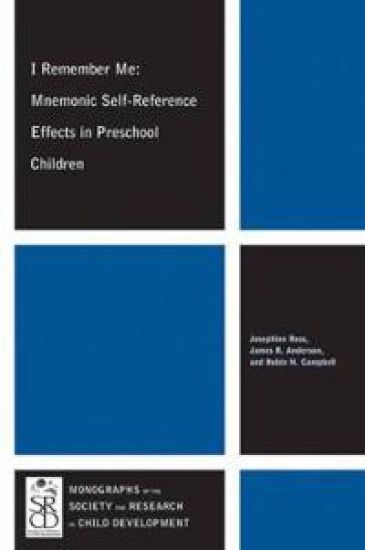
It is well established that children recognize themselves in mirrors by the end of infancy, showing awareness of the self as an object in the environment. However, the cognitive impact of objective self-awareness requires further elucidation. This gap in the literature is addressed in a series of 7 experiments exploring the role of self in 3- and 4-year-olds' event memory. A mnemonic bias for self-relevant material has been described in adults. This effect is thought to be based on the organizational properties of a highly elaborated self-concept, and so offers a clear route to study the child's developing sense of self. However, very few studies have investigated the ontogeny of this effect. New evidence is provided to suggest that preschool children, like adults, show a mnemonic advantage for material that has been physically linked with the self through performance of a depicted action (Experiment 1). Moreover, 3- and 4-year olds show a bias for material that has been visually and linguistically processed with the self-image (Experiments 2, 3, 4), and material that has been socio-cognitively linked to the self in terms of ownership (Experiments 5, 6, 7). The data imply that both bottom-up (kinesthetic feedback, self-concept) and top-down (attention) aspects of self reflection may play a supporting role in early event memory, perhaps representing a nascent form of autobiographical processing. Importantly, this research highlights a promising methodology for elucidating the executive role of the self in cognition. Following William James's (1890) influential conception of the self, it seems that in typical development, "I" is primed to remember "me."