
Kirjailija
James R. Carey
Kirjat ja teokset yhdessä paikassa: 5 kirjaa, julkaisuja vuosilta 1993-2024, suosituimpien joukossa The Wisdom Theory. Vertaile teosten hintoja ja tarkista saatavuus suomalaisista kirjakaupoista.
Mukana myös kirjoitusasut: James R Carey
5 kirjaa
Kirjojen julkaisuhaarukka 1993-2024.
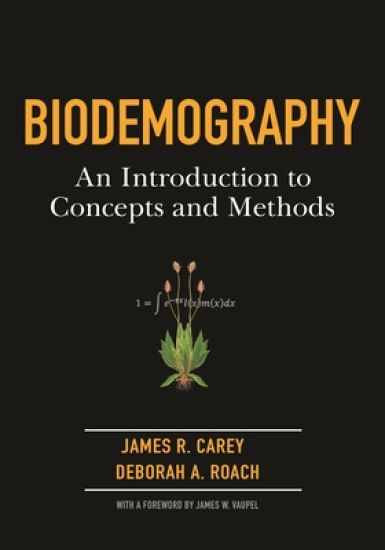
Biodemography
James R. Carey; Deborah Roach; James W. Vaupel
Princeton University Press
2020
sidottu
An authoritative overview of the concepts and applications of biological demographyThis book provides a comprehensive introduction to biodemography, an exciting interdisciplinary field that unites the natural science of biology with the social science of human demography. Biodemography is an essential resource for demographers, epidemiologists, gerontologists, and health professionals as well as ecologists, population biologists, entomologists, and conservation biologists. This accessible and innovative book is also ideal for the classroom.James Carey and Deborah Roach cover everything from baseline demographic concepts to biodemographic applications, and present models and equations in discrete rather than continuous form to enhance mathematical accessibility. They use a wealth of real-world examples that draw from data sets on both human and nonhuman species and offer an interdisciplinary approach to demography like no other, with topics ranging from kinship theory and family demography to reliability engineering, tort law, and demographic disasters such as the Titanic and the destruction of Napoleon's Grande Armée.Provides the first synthesis of demography and biologyCovers baseline demographic models and concepts such as Lexis diagrams, mortality, fecundity, and population theoryFeatures in-depth discussions of biodemographic applications like harvesting theory and mark-recaptureDraws from data sets on species ranging from fruit flies and plants to elephants and humansUses a uniquely interdisciplinary approach to demography, bringing together a diverse range of concepts, models, and applicationsIncludes informative "biodemographic shorts," appendixes on data visualization and management, and more than 150 illustrations of models and equations
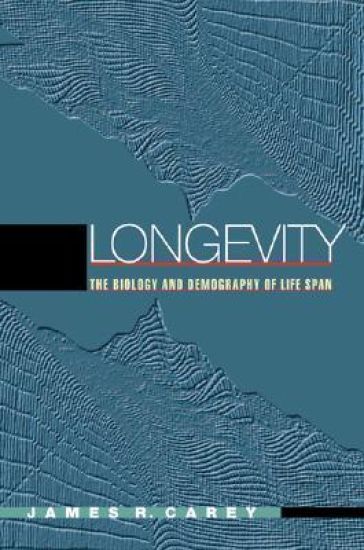
Despite our deep interest in mortality, little is known about why some individuals live to middle age and others to extreme old age. Life span, mortality, and aging present some of the most profound mysteries in biology. In Longevity, James Carey draws on unprecedented data to develop a biological and demographic framework for identifying the key factors that govern aging, life span, and mortality in humans and other animals. Carey presents the results of a monumental, twelve-year, National Institute on Aging-funded research project on the determinants of longevity using data from the life tables of five million Mediterranean fruit flies, the most comprehensive set of life table studies ever on the mortality dynamics of a single species. He interprets the fruit fly data within the context of human aging and the aging process in general to identify the determinants of mortality. Three key themes emerge: the absence of species-specific life span limits, the context-specific nature of the mortality rate, and biodemographic linkages between longevity and reproduction. A powerful foundation for the emerging field of biodemography and a rich framework for considering the future of human life span, Longevity will be an indispensable resource for readers from a range of fields including population biology, demography, gerontology, ecology, evolutionary biology, and medical research.
Many important biological problems are concerned with birth, death, and population change - the basis of classical demographic research. Yet few biologists are aware that the well-developed principles of human demography can be applied to biological problems. This book introduces biologists to population studies and shows how to apply demographic principles and techniques in research. It outlines general principles - life tables, growth models, stable population theory - and provides examples from entomology. The book is based on the author's insect demography course at the University of California, Davis. It is intended as a reference handbook for ecologists, population biologists, and entomologists, and as a graduate text in basic demography for advanced biology and ecology students.