Kirjojen hintavertailu. Mukana 12 390 323 kirjaa ja 12 kauppaa.

Kirjailija

James R. Lehning

Kirjat ja teokset yhdessä paikassa: 6 kirjaa, julkaisuja vuosilta 1995-2013, suosituimpien joukossa The Melodramatic Thread. Vertaile teosten hintoja ja tarkista saatavuus suomalaisista kirjakaupoista.

6 kirjaa

Kirjojen julkaisuhaarukka 1995-2013.

European Colonialism since 1700

European Colonialism since 1700

James R. Lehning

Cambridge University Press
2013
pokkari
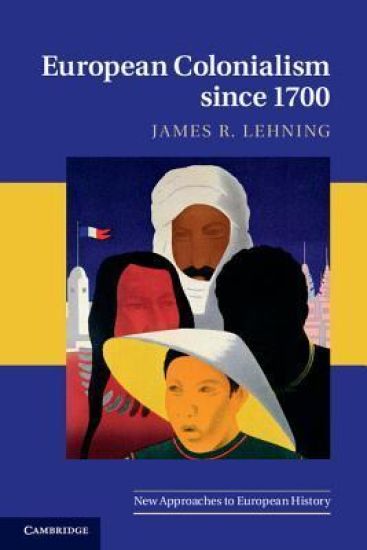
This masterful synthesis provides a much-needed, complete survey of European colonialism from 1700 to decolonization in the twentieth century. Written by an award-winning author, this advanced undergraduate and graduate level textbook bridges, for the first time, the early modern Atlantic empires and the later Asian and African empires of 'high imperialism'. Viewing colonialism as a phenomenon of contact between Europe and the rest of the world, the author takes an 'entangled histories' approach, considering the surprising ways in which the imperial powers of Spain, Portugal, Great Britain, France and the Netherlands displayed their identities in colonial settings, as much as in their imperial capitals. The author illuminates for students the common themes of colonial government, economic development and cultural contact across empires, and reveals the ways in which these themes played out, through contrast of the differing development, structure and impact of each empire.
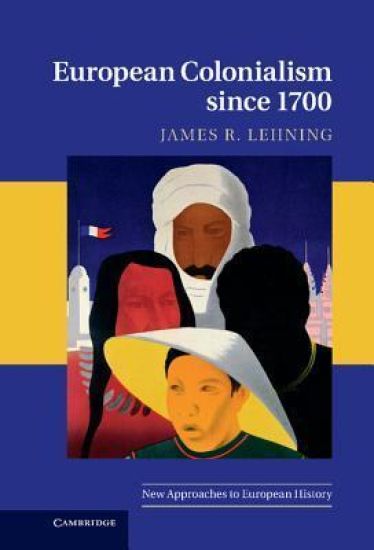
European Colonialism since 1700

European Colonialism since 1700

James R. Lehning

Cambridge University Press
2013
sidottu
This masterful synthesis provides a much-needed, complete survey of European colonialism from 1700 to decolonization in the twentieth century. Written by an award-winning author, this advanced undergraduate and graduate level textbook bridges, for the first time, the early modern Atlantic empires and the later Asian and African empires of 'high imperialism'. Viewing colonialism as a phenomenon of contact between Europe and the rest of the world, the author takes an 'entangled histories' approach, considering the surprising ways in which the imperial powers of Spain, Portugal, Great Britain, France and the Netherlands displayed their identities in colonial settings, as much as in their imperial capitals. The author illuminates for students the common themes of colonial government, economic development and cultural contact across empires, and reveals the ways in which these themes played out, through contrast of the differing development, structure and impact of each empire.
The Melodramatic Thread

The Melodramatic Thread

James R. Lehning

Indiana University Press
2007
pokkari
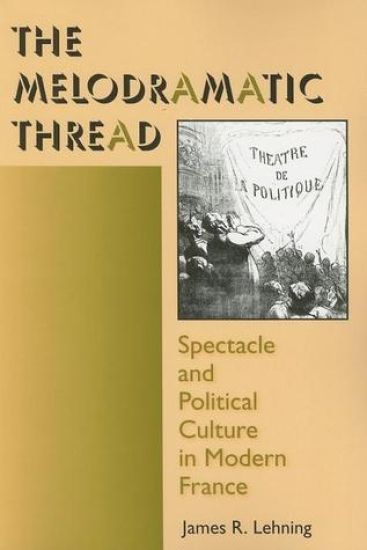
In France, both political culture and theatrical performances have drawn upon melodrama. This "melodramatic thread" helped weave the country's political life as it moved from monarchy to democracy. By examining the relationship between public ceremonies and theatrical performance, James R. Lehning sheds light on democratization in modern France. He explores the extent to which the dramatic forms were present in the public performance of political power. By concentrating on the Republic and the Revolution and on theatrical performance, Lehning affirms the importance of examining the performative aspects of French political culture for understanding the political differences that have marked France in the years since 1789.
To Be a Citizen

To Be a Citizen

James R. Lehning

Cornell University Press
2001
sidottu
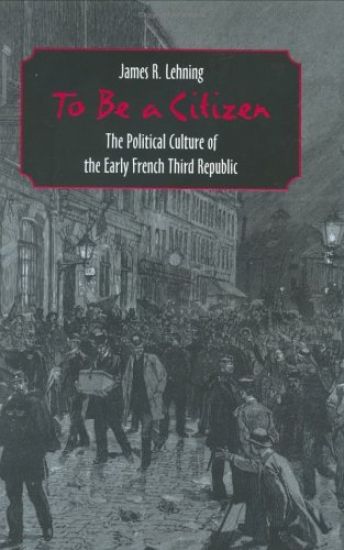
France's Third Republic confronts historians and political scientists with what seems a paradox: it is at once France's most long-lived experiment with republicanism and a regime remembered primarily for chronic instability and spectacular scandal. From its founding in the wake of France's humiliation at the hands of Prussia to its collapse in the face of the Nazi Blitzkrieg, the Third Republic struggled to consolidate the often contradictory impulses of the French revolutionary tradition into a set of stable democratic institutions. To Be a Citizen is not an institutional history of the regime, but an exploration of the political culture gradually formed by the moderate republicans who steered it. In James R. Lehning's view, that culture was forced to reconcile conflicting views of the degree of citizen participation a republican form of government should embrace. The moderate republicans called upon the entire nation to act as citizens of the Republic even as they limited the ability of many, including women, Catholics, and immigrants, to assume this identity and to participate in political life. This participation, based on universal male suffrage alone, was at odds with the notion of universal citizenship—the tradition of direct democracy as expressed in 1789, 1793, 1830, and 1848. Lehning examines a series of events and issues that reveal both the tensions within the republican tradition and the regime's success. It forged a political culture that supported the moderate republican synthesis and blunted the ideal of direct democracy. To Be a Citizen not only does much to illuminate an important chapter in the history of modern France, but also helps the reader understand the dilemmas that arise as political elites attempt to accommodate a range of citizens within ostensibly democratic systems.
Peasant and French

Peasant and French

James R. Lehning

Cambridge University Press
1995
pokkari
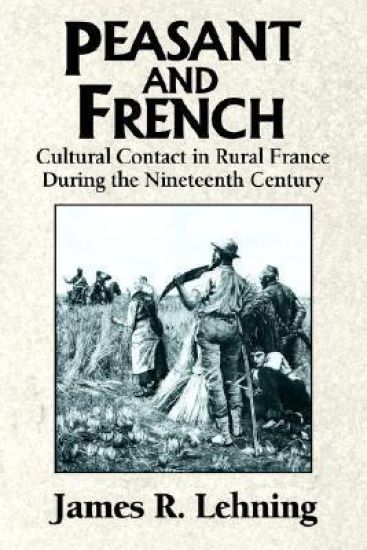
Peasant and French examines the relationship between French peasants and the development of the French national identity during the nineteenth century. Drawing on methods from cultural studies and social history and a broad range of literary and archival sources, Lehning argues that modern France has in part defined itself as different from the peasantry. Rather than seeing rural French history as a process in which peasants lose their identities and become French, he views it as an ongoing process of cultural contact in which both peasants and the French nation negotiate their identities in relation to the other. The book suggests a new kind of rural history that places the countryside in its national context rather than in isolation.
Peasant and French

Peasant and French

James R. Lehning

Cambridge University Press
1995
sidottu
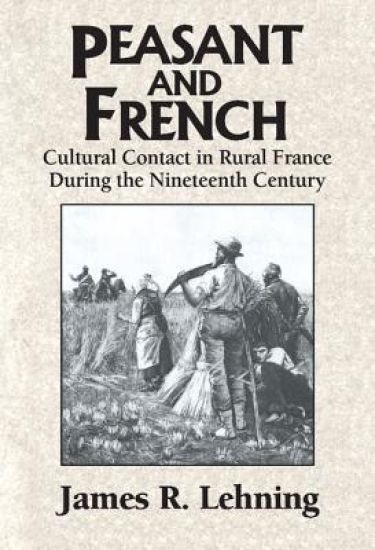
Peasant and French examines the relationship between French peasants and the development of the French national identity during the nineteenth century. Drawing on methods from cultural studies and social history and a broad range of literary and archival sources, Lehning argues that modern France has in part defined itself as different from the peasantry. Rather than seeing rural French history as a process in which peasants lose their identities and become French, he views it as an ongoing process of cultural contact in which both peasants and the French nation negotiate their identities in relation to the other. The book suggests a new kind of rural history that places the countryside in its national context rather than in isolation.