
Kirjojen hintavertailu. Mukana 12 390 323 kirjaa ja 12 kauppaa.

Kirjailija

James R. McGovern

Kirjat ja teokset yhdessä paikassa: 4 kirjaa, julkaisuja vuosilta 2000-2013, suosituimpien joukossa Black Eagle. Vertaile teosten hintoja ja tarkista saatavuus suomalaisista kirjakaupoista.

4 kirjaa

Kirjojen julkaisuhaarukka 2000-2013.

Anatomy of a Lynching

Anatomy of a Lynching

James R. McGovern; Manfred Berg

Louisiana State University Press
2013
nidottu
A sensitive and forthright analysis of one of the most gruesome episodes in Florida history... McGovern has produced a richly detailed case study that should enhance our general understanding of mob violence and vigilantism."" -- Florida Historical Quarterly""[McGovern] has succeeded in writing more than a narrative account of this bloodcurdling story; he has explored its causes and ramifications."" -- American Historical Review""A finely crafted historical case study of one lynching, its antecedents, and its aftermath."" -- Contemporary SociologyFirst published in 1982, James R. McGovern's Anatomy of a Lynching unflinchingly reconstructs the grim events surrounding the death of Claude Neal, one of the estimated three thousand blacks who died at the hands of southern lynch mobs in the six decades between the 1880s and the outbreak of World War II.Neal was accused of the brutal rape and murder of Lola Cannidy, a young white woman he had known since childhood. On October 26, 1934, a well-organized mob took Neal from his jail cell. The following night, the mob tortured Neal and hanged him to the point of strangulation, repeating the process until the victim died. A large crowd of men, women, and children who gathered to witness, celebrate, and assist in the lynching further mutilated Neal's body. Finally, the battered corpse was put on display, suspended as a warning from a tree in front of the Jackson County, Florida, courthouse.Based on extensive research as well as on interviews with both blacks and whites who remember Neal's death, Anatomy of a Lynching sketches the social background of Jackson County, Florida -- deeply religious, crushed by the Depression, accustomed to violence, and proud of its role in the Civil War -- and examines which elements in the county's makeup contributed to the mob violence. McGovern offers a powerful dissection of an extraordinarily violent incident.
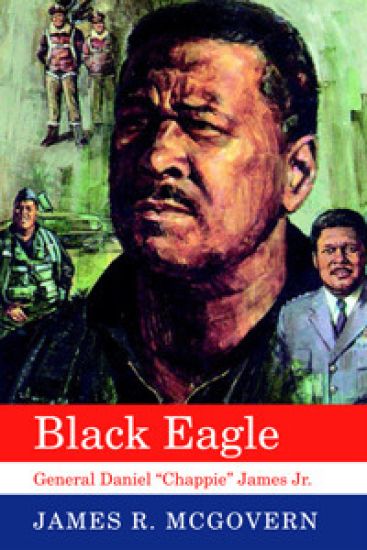
Black Eagle

Black Eagle

James R. McGovern

The University of Alabama Press
2002
nidottu
Born in Pensacola, Florida, the youngest of seventeen children in a relatively poor family, ""Chappie"" James (1920-1978) rose to attain the rank of four-star general - the highest rank of the peacetime American military. His parents had early on imbued him with personal and national pride and a singular drive that motivated him his whole life. At Tuskegee Institute, James enrolled in the Army Air Corps unit formed to train black pilots. After combat service in World War II, James became the leader of a fighter group in the Korean War, during which he developed innovative tactics for providing close air support for advancing ground forces. He served with distinction in Vietnam and then became a public affairs officer in the Department of Defense. Between 1970 and 1974. James served as the Pentagon's chief spokesman to youth and civic organizations. General James's importance transcends his unprecedented achievements as an African American in the military and his role as a spokesman for the patriotic community. He was an early and important proponent of black self-improvement through education, training, and the tireless pursuit of excellence. He became the very embodiment of the American dream. First published in 1985 in hardcover this reissue of Black Eagle in paperback makes the inspiring story of a notable Tuskegee airman available again.
And a Time for Hope

And a Time for Hope

James R. McGovern

Praeger Publishers Inc
2001
nidottu
Creating a broad, new vision of the 1930s, this highly readable social history shows that despite the hard times, Americans faced the Depression years with a characteristic resilience and optimism. Though more seriously affected by the Depression than Europe, Americans weathered hardship while European societies floundered, accepted dictatorships, or were caught in bitter ideological conflicts. Existing depictions of the era emphasize the negatives and overlook the diverse strengths of the American people, their ability to cope with temporary deprivation, and their triumphant retention of hope for themselves and the future of their society. Restoring perspective on the era, this book looks at Americans' solid value systems, their diverse support systems, their religious life, and the role of FDR and the New Deal.Although the New Deal helped undeniably, social and cultural resources played a major role in the stability of American society and the resiliency with which Americans withstood the severity of the Great Depression. Confirming this interpretation, McGovern takes a close look at numerous facets of American life--rural areas, great cities, the Okie Odyssey, labor, African Americans, ethnic organizations, radio and films, technology and design. All reveal sources of confidence, abundant energy, and robust action, typical of a hopeful people. This study attempts to explain the successes and achievements of Americans in the 1930s.
And a Time for Hope

And a Time for Hope

James R. McGovern

Praeger Publishers Inc
2000
sidottu
Creating a broad, new vision of the 1930s, this highly readable social history shows that despite the hard times, Americans faced the Depression years with a characteristic resilience and optimism. Though more seriously affected by the Depression than Europe, Americans weathered hardship while European societies floundered, accepted dictatorships, or were caught in bitter ideological conflicts. Existing depictions of the era emphasize the negatives and overlook the diverse strengths of the American people, their ability to cope with temporary deprivation, and their triumphant retention of hope for themselves and the future of their society. Restoring perspective on the era, this book looks at Americans' solid value systems, their diverse support systems, their religious life, and the role of FDR and the New Deal.Although the New Deal helped undeniably, social and cultural resources played a major role in the stability of American society and the resiliency with which Americans withstood the severity of the Great Depression. Confirming this interpretation, McGovern takes a close look at numerous facets of American life—rural areas, great cities, the Okie Odyssey, labor, African Americans, ethnic organizations, radio and films, technology and design. All reveal sources of confidence, abundant energy, and robust action, typical of a hopeful people. This study attempts to explain the successes and achievements of Americans in the 1930s.