Kirjojen hintavertailu. Mukana 12 621 854 kirjaa ja 12 kauppaa.

Kirjailija

James R. Mensch

Kirjat ja teokset yhdessä paikassa: 10 kirjaa, julkaisuja vuosilta 1996-2015, suosituimpien joukossa Embodiments. Vertaile teosten hintoja ja tarkista saatavuus suomalaisista kirjakaupoista.

Mukana myös kirjoitusasut: James R. Mensch

10 kirjaa

Kirjojen julkaisuhaarukka 1996-2015.

Levinas’s Existential Analytic

Levinas’s Existential Analytic

James R. Mensch

Northwestern University Press
2015
sidottu
By virtue of the originality and depth of its thought, Emmanuel Levinas's masterpiece, Totality and Infinity: An Essay on Exteriority, is destined to endure as one of the great works of philosophy. It is an essential text for understanding Levinas's discussion of ""the Other,"" yet it is known as a ""difficult"" book.Modeled after Norman Kemp Smith's commentary on Kant's Critique of Pure Reason, Levinas's Existential Analytic guides both new and experienced readers through Levinas's text. James R. Mensch explicates Levinas's arguments and shows their historical referents, particularly with regard to Heidegger, Husserl, and Derrida. Students using this book alongside Totality and Infinity will be able to follow its arguments and grasp the subtle phenomenological analyses that fill it.
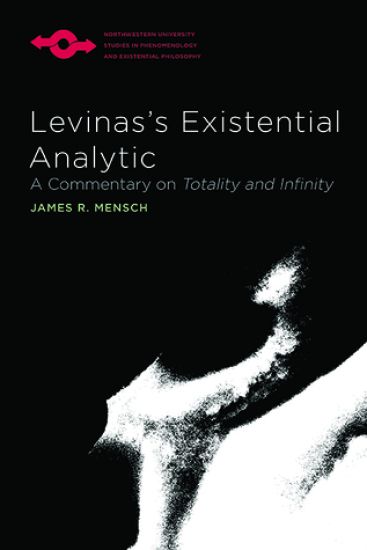
Levinas's Existential Analytic

Levinas's Existential Analytic

James R. Mensch

Northwestern University Press
2015
nidottu
By virtue of the originality and depth of its thought, Emmanuel Levinas's masterpiece, Totality and Infinity: An Essay on Exteriority, is destined to endure as one of the great works of philosophy. It is an essential text for understanding Levinas's discussion of ""the Other,"" yet it is known as a ""difficult"" book.Modeled after Norman Kemp Smith's commentary on Kant's Critique of Pure Reason, Levinas's Existential Analytic guides both new and experienced readers through Levinas's text. James R. Mensch explicates Levinas's arguments and shows their historical referents, particularly with regard to Heidegger, Husserl, and Derrida. Students using this book alongside Totality and Infinity will be able to follow its arguments and grasp the subtle phenomenological analyses that fill it.
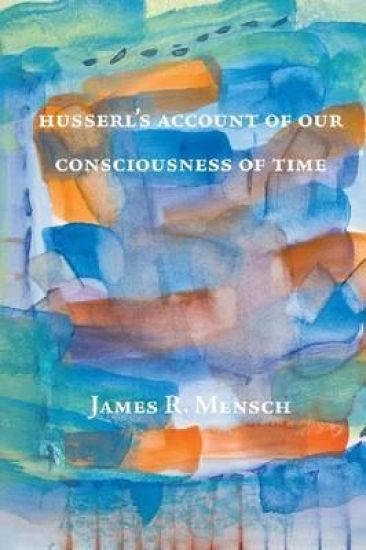
Husserl's Account of Our Consciousness of Time

Husserl's Account of Our Consciousness of Time

James R. Mensch

Marquette University Press
2011
nidottu
Having asked, What, then, is time? Augustine admitted, I know well enough what it is, provided that nobody asks me; but if I am asked what it is and try to explain, I am baffled. We all have a sense of time, but the description and explanation of it remain remarkably elusive.Through a series of detailed descriptions, Husserl attempted to clarify this sense of time. This book traces the development of his account of our temporal self-awareness, starting with his early 1905-1909 lectures on time consciousness and proceeding through the 1917-18 Bernau Manuscripts, the Analyses of Passive Syntheses of the 1920s and ending with the C, B and E manuscripts on time and instincts of the 1930s.Although it covers all the stages of Husserls account of temporality, the book is nonetheless systematic in its approach. It is organized about a number of basic topics in the theory of time and presents and critically appraises Husserls positions on the issues pertaining to each.
Embodiments

Embodiments

James R. Mensch

Northwestern University Press
2009
sidottu
How does the body politic reflect the nature of human embodiment? To pursue this question in a new and productive way, James Mensch employs a methodology consistent with the fact of our embodiment; he uses Merleau-Ponty's concept of 'intertwining' - the presence of one's self in the world and of the world in one's self - to understand the ideas that define political life. Mensch begins his inquiry by developing a philosophical anthropology based on this concept. He then applies the results of his investigation to the relations of power, authority, freedom, and sovereignty in public life. This involves confronting a line of interpretation, stretching from Hobbes to Agamben, which sees violence as both initiating and preserving the social contract. To contest this interpretation, Mensch argues against its presupposition, which is to equate freedom with sovereignty over others. He does so by understanding political freedom in terms of embodiment - in particular, in terms of the finitude and interdependence that our embodiment entails. Freedom, conceived in these terms, is understood as the gift of others. As a function of our dependence on others, it cannot exist apart from them. To show how public space and civil society presuppose this interdependence is the singular accomplishment of Embodiments. It accomplishes a phenomenological grounding for a new type of political philosophy.
Embodiments

Embodiments

James R. Mensch

Northwestern University Press
2009
nidottu
How does the body politic reflect the nature of human embodiment? To pursue this question in a new and productive way, James Mensch employs a methodology consistent with the fact of our embodiment; he uses Merleau-Ponty's concept of 'intertwining' - the presence of one's self in the world and of the world in one's self - to understand the ideas that define political life. Mensch begins his inquiry by developing a philosophical anthropology based on this concept. He then applies the results of his investigation to the relations of power, authority, freedom, and sovereignty in public life. This involves confronting a line of interpretation, stretching from Hobbes to Agamben, which sees violence as both initiating and preserving the social contract. To contest this interpretation, Mensch argues against its presupposition, which is to equate freedom with sovereignty over others. He does so by understanding political freedom in terms of embodiment - in particular, in terms of the finitude and interdependence that our embodiment entails. Freedom, conceived in these terms, is understood as the gift of others. As a function of our dependence on others, it cannot exist apart from them. To show how public space and civil society presuppose this interdependence is the singular accomplishment of Embodiments. It accomplishes a phenomenological grounding for a new type of political philosophy.
Ethics and Selfhood

Ethics and Selfhood

James R. Mensch

State University of New York Press
2003
pokkari
Argues that a coherent theory of ethics requires an account of selfhood.According to James R. Mensch, a minimal requirement for ethics is that of guarding against genocide. In deciding which races are to live and which to die, genocide takes up a standpoint outside of humanity. To guard against this, Mensch argues that we must attain the critical distance required for ethical judgment without assuming a superhuman position. His description of how to attain this distance constitutes a genuinely new reading of the possibility of a phenomenological ethics, one that involves reassessing what it means to be a self. Selfhood, according to Mensch, involves both embodiment and the self-separation brought about by our encounter with others-the very others who provide us with the experiential context needed for moral judgment. Buttressing his position with documented accounts of those who hid Jews during the Holocaust, Mensch shows how the self-separation that occurs in empathy opens the space within which moral judgment can occur and obligation can find its expression. He includes a reading of the major moral philosophers-Plato, Aristotle, Kant, Mill, Arendt, Levinas-even as he develops a phenomenological account of the necessity of reading literature to understand the full extent of ethical responsibility. Mensch's work offers an original and provocative approach to a topic of fundamental importance.
Postfoundational Phenomenology

Postfoundational Phenomenology

James R. Mensch

Pennsylvania State University Press
2003
pokkari
This book offers a fresh look at Edmund Husserl’s philosophy as a nonfoundational approach to understanding the self as an embodied presence.Contrary to the conventional view of Husserl as carrying on the Cartesian tradition of seeking a trustworthy foundation for knowledge in the "pure" observations of a disembodied ego, James Mensch introduces us to the Husserl who, anticipating the later investigations of Merleau-Ponty, explored how the body functions to determine our self-presence, our freedom, and our sense of time. The result is a concept of selfhood that allows us to see how consciousness’s arising from sensuous experiences follows from the temporal features of embodiment.From this understanding of what is crucial to Husserl’s phenomenology, the book draws the implications for language and ethics, comparing Husserl’s ideas with those of Derrida on language and with those of Heidegger and Levinas on responsibility. Paradoxically, it is these postmodernists who are shown to be extending the logic of foundationalism to its ultimate extreme, whereas Husserl can be seen as leading the way beyond modernity to a nonfoundational account of the self and its world.
Postfoundational Phenomenology

Postfoundational Phenomenology

James R. Mensch

Pennsylvania State University Press
2000
sidottu
This book offers a fresh look at Edmund Husserl’s philosophy as a nonfoundational approach to understanding the self as an embodied presence.Contrary to the conventional view of Husserl as carrying on the Cartesian tradition of seeking a trustworthy foundation for knowledge in the "pure" observations of a disembodied ego, James Mensch introduces us to the Husserl who, anticipating the later investigations of Merleau-Ponty, explored how the body functions to determine our self-presence, our freedom, and our sense of time. The result is a concept of selfhood that allows us to see how consciousness’s arising from sensuous experiences follows from the temporal features of embodiment.From this understanding of what is crucial to Husserl’s phenomenology, the book draws the implications for language and ethics, comparing Husserl’s ideas with those of Derrida on language and with those of Heidegger and Levinas on responsibility. Paradoxically, it is these postmodernists who are shown to be extending the logic of foundationalism to its ultimate extreme, whereas Husserl can be seen as leading the way beyond modernity to a nonfoundational account of the self and its world.
Knowing and Being

Knowing and Being

James R. Mensch

Pennsylvania State University Press
1996
pokkari
Everyone knows that "postmodernism" implies pluralism, anti-foundationalism, and, generally,a postnormative view of the self and reality. While many embrace it, few bother to tell us what is wrong with modernity. What are the problems that brought about its crisis and ultimate demise as a philosophical and cultural movement? What are the lessons for the postmodern movement that can he drawn from them?James Mensch here explains why modernism failed as a viable philosophical enterprise and how postmodernism must be understood if it is to serve as a defensible intellectual project in its stead. The heart of Mensch's argument is a reversal of the modernist view of the unitary subject as a ground of epistemological and ethical normativity. He substitutes for modernism a view, beholden to Aristotle but adapted to for our present age, that sees subjectivity as temporality in a world where subject and object are interactive. The result is a pluralism of forms of subjectivity corresponding to the different modes of temporality brought about by the world. In a series of analyses on the nature knowing, Mensch shows how we can embrace both the perspectivism of postmodernism while avoiding the skepticism and relativism that have constantly threatened to undermine its insights.
Knowing and Being

Knowing and Being

James R. Mensch

Pennsylvania State University Press
1996
sidottu
Everyone knows that "postmodernism" implies pluralism, anti-foundationalism, and, generally,a postnormative view of the self and reality. While many embrace it, few bother to tell us what is wrong with modernity. What are the problems that brought about its crisis and ultimate demise as a philosophical and cultural movement? What are the lessons for the postmodern movement that can he drawn from them?James Mensch here explains why modernism failed as a viable philosophical enterprise and how postmodernism must be understood if it is to serve as a defensible intellectual project in its stead. The heart of Mensch's argument is a reversal of the modernist view of the unitary subject as a ground of epistemological and ethical normativity. He substitutes for modernism a view, beholden to Aristotle but adapted to for our present age, that sees subjectivity as temporality in a world where subject and object are interactive. The result is a pluralism of forms of subjectivity corresponding to the different modes of temporality brought about by the world. In a series of analyses on the nature knowing, Mensch shows how we can embrace both the perspectivism of postmodernism while avoiding the skepticism and relativism that have constantly threatened to undermine its insights.