Kirjojen hintavertailu. Mukana 12 390 323 kirjaa ja 12 kauppaa.

Kirjailija

James Raymond Vreeland

Kirjat ja teokset yhdessä paikassa: 9 kirjaa, julkaisuja vuosilta 2003-2018, suosituimpien joukossa Information, Democracy, and Autocracy. Vertaile teosten hintoja ja tarkista saatavuus suomalaisista kirjakaupoista.

9 kirjaa

Kirjojen julkaisuhaarukka 2003-2018.

The International Monetary Fund

The International Monetary Fund

James Raymond Vreeland

Routledge
2018
sidottu
This is a clear and concise introduction to the International Monetary Fund (IMF) and an overview of its debates and controversies. Where did the IMF come from? What does it do? Why do so many governments participate in its programs and what are their effects? How can we best reform this key global institution? These are some of the key questions addressed. In our age of thinking global, the IMF is a crucial institution and central to understanding international relations and current affairs. Founded in the aftermath of the Second World War, its basic purposes were to facilitate world trade and promote national prosperity. The founders hoped that never again would the world experience the trade policies that led up to the Great Depression. This book outlines and questions these targets and assesses actual achievements. It also details how despite originally focusing on Europe, the Fund has gradually shifted to involvement with poorer developing countries, but to what ends and with how much success? This study both poses and tackles the tough questions facing our global community today.

Information, Democracy, and Autocracy

Information, Democracy, and Autocracy

James R. Hollyer; B. Peter Rosendorff; James Raymond Vreeland

Cambridge University Press
2018
sidottu
Advocates for economic development often call for greater transparency. But what does transparency really mean? What are its consequences? This breakthrough book demonstrates how information impacts major political phenomena, including mass protest, the survival of dictatorships, democratic stability, as well as economic performance. The book introduces a new measure of a specific facet of transparency: the dissemination of economic data. Analysis shows that democracies make economic data more available than do similarly developed autocracies. Transparency attracts investment and makes democracies more resilient to breakdown. But transparency has a dubious consequence under autocracy: political instability. Mass-unrest becomes more likely, and transparency can facilitate democratic transition - but most often a new despotic regime displaces the old. Autocratic leaders may also turn these threats to their advantage, using the risk of mass-unrest that transparency portends to unify the ruling elite. Policy-makers must recognize the trade-offs transparency entails.
Information, Democracy, and Autocracy

Information, Democracy, and Autocracy

James R. Hollyer; B. Peter Rosendorff; James Raymond Vreeland

Cambridge University Press
2018
pokkari
Advocates for economic development often call for greater transparency. But what does transparency really mean? What are its consequences? This breakthrough book demonstrates how information impacts major political phenomena, including mass protest, the survival of dictatorships, democratic stability, as well as economic performance. The book introduces a new measure of a specific facet of transparency: the dissemination of economic data. Analysis shows that democracies make economic data more available than do similarly developed autocracies. Transparency attracts investment and makes democracies more resilient to breakdown. But transparency has a dubious consequence under autocracy: political instability. Mass-unrest becomes more likely, and transparency can facilitate democratic transition - but most often a new despotic regime displaces the old. Autocratic leaders may also turn these threats to their advantage, using the risk of mass-unrest that transparency portends to unify the ruling elite. Policy-makers must recognize the trade-offs transparency entails.
The Political Economy of the United Nations Security Council

The Political Economy of the United Nations Security Council

James Raymond Vreeland; Axel Dreher

Cambridge University Press
2014
sidottu
Trades of money for political influence persist at every level of government. Not surprisingly, governments themselves trade money for political support on the international stage. Strange, however, is the tale of this book. For, in this study, legitimacy stands as the central political commodity at stake. The book investigates the ways governments trade money for favors at the United Nations Security Council - the body endowed with the international legal authority to legitimize the use of armed force to maintain or restore peace. With a wealth of quantitative data, the book shows that powerful countries, such as the United States, Japan, and Germany, extend financial favors to the elected members of the Security Council through direct foreign aid and through international organizations, such as the International Monetary Fund and the World Bank. In return, developing countries serving on the Security Council must deliver their political support … or face the consequences.
The Political Economy of the United Nations Security Council

The Political Economy of the United Nations Security Council

James Raymond Vreeland; Axel Dreher

Cambridge University Press
2014
pokkari
Trades of money for political influence persist at every level of government. Not surprisingly, governments themselves trade money for political support on the international stage. Strange, however, is the tale of this book. For, in this study, legitimacy stands as the central political commodity at stake. The book investigates the ways governments trade money for favors at the United Nations Security Council - the body endowed with the international legal authority to legitimize the use of armed force to maintain or restore peace. With a wealth of quantitative data, the book shows that powerful countries, such as the United States, Japan, and Germany, extend financial favors to the elected members of the Security Council through direct foreign aid and through international organizations, such as the International Monetary Fund and the World Bank. In return, developing countries serving on the Security Council must deliver their political support … or face the consequences.
The International Monetary Fund (IMF)

The International Monetary Fund (IMF)

James Raymond Vreeland

Routledge
2014
nidottu
This is a clear and concise introduction to the International Monetary Fund (IMF) and an overview of its debates and controversies. Where did the IMF come from? What does it do? Why do so many governments participate in its programs and what are their effects? How can we best reform this key global institution? These are some of the key questions addressed. In our age of thinking global, the IMF is a crucial institution and central to understanding international relations and current affairs. Founded in the aftermath of the Second World War, its basic purposes were to facilitate world trade and promote national prosperity. The founders hoped that never again would the world experience the trade policies that led up to the Great Depression. This book outlines and questions these targets and assesses actual achievements. It also details how despite originally focusing on Europe, the Fund has gradually shifted to involvement with poorer developing countries, but to what ends and with how much success? This study both poses and tackles the tough questions facing our global community today.

The International Monetary Fund (IMF)

The International Monetary Fund (IMF)

James Raymond Vreeland

Routledge
2006
sidottu
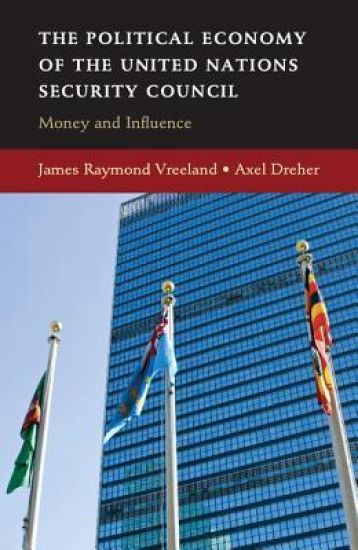
This is a clear and concise introduction to the International Monetary Fund (IMF) and an overview of its debates and controversies. Where did the IMF come from? What does it do? Why do so many governments participate in its programs and what are their effects? How can we best reform this key global institution? These are some of the key questions addressed. In our age of thinking global, the IMF is a crucial institution and central to understanding international relations and current affairs. Founded in the aftermath of the Second World War, its basic purposes were to facilitate world trade and promote national prosperity. The founders hoped that never again would the world experience the trade policies that led up to the Great Depression. This book outlines and questions these targets and assesses actual achievements. It also details how despite originally focusing on Europe, the Fund has gradually shifted to involvement with poorer developing countries, but to what ends and with how much success? This study both poses and tackles the tough questions facing our global community today.
The International Monetary Fund (IMF)

The International Monetary Fund (IMF)

James Raymond Vreeland

Routledge
2006
nidottu
This is a clear and concise introduction to the International Monetary Fund (IMF) and an overview of its debates and controversies. Where did the IMF come from? What does it do? Why do so many governments participate in its programs and what are their effects? How can we best reform this key global institution? These are some of the key questions addressed. In our age of thinking global, the IMF is a crucial institution and central to understanding international relations and current affairs. Founded in the aftermath of the Second World War, its basic purposes were to facilitate world trade and promote national prosperity. The founders hoped that never again would the world experience the trade policies that led up to the Great Depression. This book outlines and questions these targets and assesses actual achievements. It also details how despite originally focusing on Europe, the Fund has gradually shifted to involvement with poorer developing countries, but to what ends and with how much success? This study both poses and tackles the tough questions facing our global community today.
The IMF and Economic Development

The IMF and Economic Development

James Raymond Vreeland

Cambridge University Press
2003
sidottu
Why do governments turn to the International Monetary Fund (IMF) and with what effects? This book argues that governments enter IMF programs for economic and political reasons, and finds that the effects are negative on economic growth and income distribution. By bringing in the IMF, governments gain political leverage - via conditionality - to push through unpopular policies. Note that if governments desiring conditions are more likely to participate, estimating program effects is not straightforward: one must control for the potentially unobserved political determinants of selection. This book addresses the selection problem using a dynamic bivariate version of the Heckman model analyzing cross-national time-series data. The main finding is that the negative effects of IMF programs on economic growth are mitigated for certain constituencies since programs also have distributional consequences. But IMF programs doubly hurt the least well off in society: they lower growth and shift the income distribution upward.