Kirjojen hintavertailu. Mukana 12 235 624 kirjaa ja 12 kauppaa.

Kirjailija

James Robertson

Kirjat ja teokset yhdessä paikassa: 102 kirjaa, julkaisuja vuosilta 1840-2026, suosituimpien joukossa General View of the Agriculture in the Southern Districts of the County of Perth. With Observations on the Means of Their Improvement. By James Robertson, D.D. ... Drawn up for the Consideration of the Board of Agriculture and Internal Improvement. Vertaile teosten hintoja ja tarkista saatavuus suomalaisista kirjakaupoista.

Mukana myös kirjoitusasut: & James Robertson

102 kirjaa

Kirjojen julkaisuhaarukka 1840-2026.

General View of the Agriculture in the Southern Districts of the County of Perth. With Observations on the Means of Their Improvement. By James Robertson, D.D. ... Drawn up for the Consideration of the Board of Agriculture and Internal Improvement
The 18th century was a wealth of knowledge, exploration and rapidly growing technology and expanding record-keeping made possible by advances in the printing press. In its determination to preserve the century of revolution, Gale initiated a revolution of its own: digitization of epic proportions to preserve these invaluable works in the largest archive of its kind. Now for the first time these high-quality digital copies of original 18th century manuscripts are available in print, making them highly accessible to libraries, undergraduate students, and independent scholars.Medical theory and practice of the 1700s developed rapidly, as is evidenced by the extensive collection, which includes descriptions of diseases, their conditions, and treatments. Books on science and technology, agriculture, military technology, natural philosophy, even cookbooks, are all contained here.++++The below data was compiled from various identification fields in the bibliographic record of this title. This data is provided as an additional tool in helping to insure edition identification: ++++British LibraryT040601With a half-title.London: printed by J. Nichols, 1794. 140p.; 4
The Ladies Help to Spelling. By James Robertson, School-master in Glasgow
The 18th century was a wealth of knowledge, exploration and rapidly growing technology and expanding record-keeping made possible by advances in the printing press. In its determination to preserve the century of revolution, Gale initiated a revolution of its own: digitization of epic proportions to preserve these invaluable works in the largest archive of its kind. Now for the first time these high-quality digital copies of original 18th century manuscripts are available in print, making them highly accessible to libraries, undergraduate students, and independent scholars.Western literary study flows out of eighteenth-century works by Alexander Pope, Daniel Defoe, Henry Fielding, Frances Burney, Denis Diderot, Johann Gottfried Herder, Johann Wolfgang von Goethe, and others. Experience the birth of the modern novel, or compare the development of language using dictionaries and grammar discourses. ++++The below data was compiled from various identification fields in the bibliographic record of this title. This data is provided as an additional tool in helping to insure edition identification: ++++British LibraryT194590Glasgow: printed by James Duncan: and sold by the author in Gibson's Closs, 1722. 8],112p.; 8
Forensic Botany

Forensic Botany

James Robertson

TAYLOR FRANCIS LTD
2026
sidottu
Forensic Botany: From Crime Scene to Court outlines a history of the discipline and field to provide current forensic operational context, real-world applications to cases, and how we arrived at this point. Written by a leading expert, the book presents forensic botany in a realistic and practical framework, offering a schema—a four-stage classification model—for how to manage botanical evidence in a contemporary case management context. Across twelve chapters, Robertson discusses aspects vital to forensic botany, from the central role of crime scene investigators and specialists (in ensuring that data is not mishandled or ignored) to how to handle a range of botanical materials in a triage environment so that they are properly preserved for detailed examination by suitable experts. This book shines a spotlight on the many approaches and forensic applications to plant science that are not traditionally considered, such as conservation, art fraud, and archaeology. In doing so, the coverage presents a novel and useful blueprint to employ a forensic approach in non-traditional areas. Forensic Botany will assist investigators and crime scene examiners in recognising the potential for forensic botanical evidence. It outlines a framework, for forensic professionals of varying levels of expertise to effectively manage botanical evidence and serves as an invaluable guide for those botany professionals undertaking forensic roles as subject matter experts.
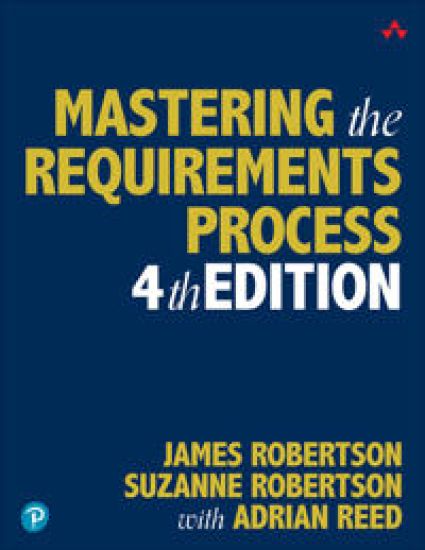
Mastering the Requirements Process

Mastering the Requirements Process

James Robertson; Suzanne Robertson; Adrian Reed

PEARSON EDUCATION (US)
2024
nidottu
One of the joys of product development, whether it be software, service, or hardware, is getting it right. The way to get it right is to uncover the real business problem, and to write the requirements for the solution that best solves that problem. Without the right requirements it is impossible to build the right solution. Mastering the Requirements Process, Fourth Edition, gives you an industry-proven process for getting to the essence of the business problem and then writing unambiguous and testable requirements for its solution. This fourth edition is an almost complete rewrite that brings requirements discovery into today's world--it is the book for today's business analyst. Product owners and project leaders will also find it valuable as it explains how to discover precisely what the customer needs and wants, and to do it effectively in any business or project environment. The book tells you how to: Use the Volere requirements process to discover requirements in both traditional and agile environmentsIncorporate off-the-shelf (OTS) solutions into your requirements discoveryUse artificial intelligence (AI) as part of your requirements discovery, and as part of your business solutionUse quickly sketched prototypes to explore the problem spaceUnderstand functional and non-functional requirementsWrite better agile storiesMake your requirements and stories measurable and testable using fit criteriaUse business events as the heartbeat of business analysisDiscover requirements in agile, commercial, and milspec project environmentsFind and prioritize your customer segmentsLeverage systems thinking when discovering requirementsUse story maps and other requirements repository techniquesKnow which trawling techniques are the most effective for requirements discoverySynchronize your requirements discovery with agile development teamsMake better decisions in the early days of a project to increase your chances of successEmploy the Volere requirements specification template (downloaded 10,000+ times) as the basis for your own requirement specifications "One of the most valuable things about this book is that it provides a process to follow that will get people asking the right questions and expand their perspective on the problem." --Kevin Brennan Register your book for convenient access to downloads, updates, and/or corrections as they become available. See inside book for details.
The Old Red Sandstone

The Old Red Sandstone

Hugh Miller; James Robertson

NMSE - Publishing Ltd
2023
nidottu
WINNER OF THE RESEARCH CATEGORY IN SCOTLAND'S NATIONAL BOOK AWARDS 2023 This edition of The Old Red Sandstone is the first truly new one for a century. It comes in two volumes: Volume 2 reprints the original, and now rare, first edition in facsimile with notes and glossary. Volume 1 explores how Miller wrote his book and why it was so important. Ross-shire born polymath Hugh Miller (1802-56), self-taught stonemason, geologist and writer, was famous in his lifetime across the English-speaking world. On one level, The Old Red Sandstone is a description of the geology of Cromarty, Ross-shire, with diversions into its scenery, history and folklore, but it is also an autobiographical memoir and work of literature. It was enormously popular on its first publication in 1841. The editors have combined their expertise – in history, English literature, Celtic languages and culture (Ralph O’ Connor) and palaeontology, museums, history of geology (Michael A Taylor) – to annotate the text of this most idiosyncratic book for a new generation of readers, and to provide a critical study. In a pre-Darwinian era, Hugh Miller reconciled his geological knowledge with his religious beliefs and his reader-friendly writings encouraged in others an interest in fossils. His writings are, as novelist James Robertson says in the Foreword, still very readable and relevant today.
History of the Christian Church

History of the Christian Church

James Robertson

Hansebooks
2023
pokkari
History of the Christian Church - Volume VI is an unchanged, high-quality reprint of the original edition of 1874. Hansebooks is editor of the literature on different topic areas such as research and science, travel and expeditions, cooking and nutrition, medicine, and other genres. As a publisher we focus on the preservation of historical literature. Many works of historical writers and scientists are available today as antiques only. Hansebooks newly publishes these books and contributes to the preservation of literature which has become rare and historical knowledge for the future.