Kirjailija
James Russell
Kirjat ja teokset yhdessä paikassa: 88 kirjaa, julkaisuja vuosilta 1980-2026, suosituimpien joukossa The Art of the Chalk Downs. Vertaile teosten hintoja ja tarkista saatavuus suomalaisista kirjakaupoista.
88 kirjaa
Kirjojen julkaisuhaarukka 1980-2026.

The Secret And True History Of The Church Of Scotland From The Restoration To The Year 1678
James Kirkton; James Russell
KESSINGER PUBLISHING, LLC
2010
sidottu


Apostasy Devotional - A Daily Guide Exposing False Shepherds
James Russell
James Russell
2009
pokkari



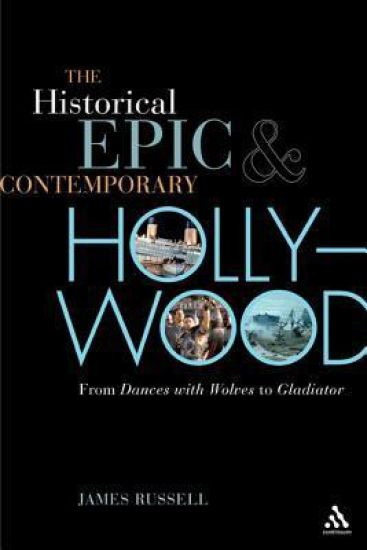
The Historical Epic and Contemporary Hollywood
James Russell
Continuum International Publishing Group Ltd.
2007
nidottu
"The Historical Epic in Contemporary Hollywood" seeks to document and explain a recent revival of historical epic films in Hollywood. Rather than relying on abstract theoretical approaches, James Russell employs empirical historical techniques to explore how industrial conditions and the agendas of key directors, writers and producers led to the increased production of historical epics such as "Dances With Wolves" (1990), "Titanic" (1997), "Gladiator" (2000) and "The Passion of the Christ" (2004). The book begins by exploring the careers of filmmakers like Steven Spielberg, James Cameron and Mel Gibson during the 1990s. Russell looks in detail at their agendas, the production of their films and at the content of the films themselves. As the book progresses, he goes on to address the activities of the major studios, in terms of production and marketing, and looks at changing industrial conditions, such as the emergence of DVD. Finally, Russell examines social trends, particularly increasing levels of religious commitment and political division in America. "The Historical Epic in Contemporary Hollywood", which has been thoroughly researched in archival collections in Los Angeles and New York, deliberately focuses on the activities of individuals working in the Hollywood film industry the result is an original and interesting account of the ways that contemporary epic films get made, and speak to modern audiences. Ultimately, the book argues that historical epics reappeared in the 1990s partly as a result of changing industrial conditions, but mainly because a generation of filmmakers, all born during the so-called 'baby boom,' began to seek out meaningful ways of passing on historical knowledge to younger generations as they grew older. The epics released in the 1950s and 1960s, when Spielberg, Cameron, et al were children, constitute a key reference point in this process of renewal and reinvention in Hollywood.
The Secret and True History of the Church of Scotland from the Restoration to the Year 1678
James Kirkton; James Russell; Charles Kirkpatrick (EDT) Sharpe
Kessinger Pub
2007
pokkari


How to Change the Oil on Your Twin Cam Harley Davidson Motorcycle
James Russell
James Russell
2006
pokkari

Language development is one of the major battle grounds within the humanities and sciences. This is the first time that the three major theories in language development research have been fully described and compared within the covers of a single book. The three approaches: (1) The rationalism of Chomsky and the syntactic nativism that it entails; (2) The empiricism instinct in connectionist modelling of syntactic development; (3) The pragmatism of those who see the child as actively 'constructing' a grammatical 'inventory' piece-by-piece through recruiting general learning abilities and socio-cognitive knowledge. The book is unique in striking a balance between broad philosophical assessment of these three theories and fine-grain, fairly technical, accounts of how they fare at the empirical and linguistic 'coal faces'. In Part 1, the kind of psychology to which rationalism, empiricism, and pragmatism give rise are described with reference to philosophers such as Fodor, Hume, and the American pragmatists from Peirce, to Rorty and Brandom. After an introduction to the syntactic analysis of the sentence, Part 2 continues with an account of the evolution of Chomskyan theory from its inception to the present day, followed by a review of developmental research inspired by it. Part 3 takes a sceptical look at connectionist modelling of syntactic development. Part 4 describes the kind of linguistic theories that the socio-cognitive approach finds sympathetic, reviewing its empirical progress (e.g. the work of Tomasello), ending with a comparison of how the generativists and functionalists tackle the evolution of syntax. Clearly and accessibly written, the book will be an important text for developmental psychologists, linguists, and philosophers working on language.