Kirjojen hintavertailu. Mukana 12 595 353 kirjaa ja 12 kauppaa.

Kirjailija

James S. Williams

Kirjat ja teokset yhdessä paikassa: 10 kirjaa, julkaisuja vuosilta 2007-2024, suosituimpien joukossa Jean Cocteau. Vertaile teosten hintoja ja tarkista saatavuus suomalaisista kirjakaupoista.

10 kirjaa

Kirjojen julkaisuhaarukka 2007-2024.

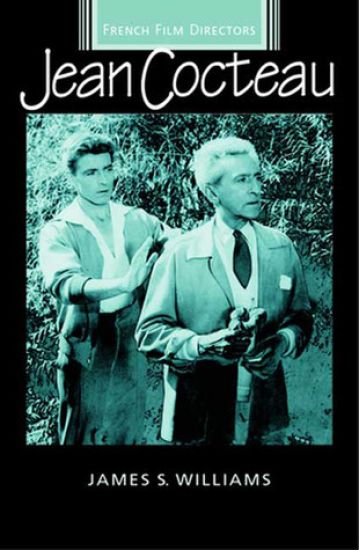
Jean Cocteau

Jean Cocteau

James S. Williams

Manchester University Press
2010
nidottu
This is a comprehensive, original and accessible account of all aspects of Jean Cocteau's work in the cinema. It is the first major study in English to appear for over forty years and casts new light on Cocteau's most celebrated films as well as those often neglected or little known.Jean Cocteau is not only one of French cinema's greatest and most influential auteurs whose work covered all the major genres but also an experimenter, collaborator, theorist and all-round ambassador of film. This lucid account provides a complete introduction to Cocteau's cinematic project in the context of his entire oeuvre, detailed analysis of individual films, and a thematic engagement with all his cinema from a range of interdisciplinary perspectives. The Cocteau that emerges is at once a materialist filmmaker and visionary who is committed to realism in all its guises and reveals the wonder and mystery of what he called 'the cinematograph'.
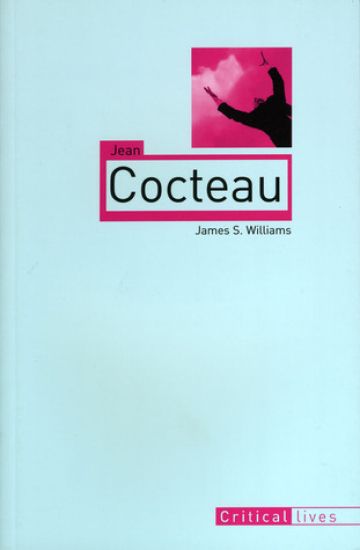
Jean Cocteau

Jean Cocteau

James S. Williams

Reaktion Books
2007
nidottu
From the magical Beauty and the Beast to the surreal Orpheus films, Jean Cocteau is renowned as a leading figure in European cinema as well as a creative force collaborating with artists as diverse as Picasso, Diaghilev and Edith Piaf. Yet Cocteau’s work and life have rarely been examined together. Evaluating Cocteau’s career and his fascinating personal life on equal terms, James S. Williams offers here a groundbreaking analysis that sets them both within highly revealing historical and artistic contexts. James S. Williams’s biographical investigation of this poet, dramatist, novelist, designer, and filmmaker centres around Cocteau’s constant self-questioning and how it permeated his work. From Cocteau’s work in fashion and photography to his formal experimentation, to his extensive collaborations with male friends and lovers, the book charts the complex and unpredictable evolution of his work and aesthetic. Williams argues that Cocteau’s body of work is best viewed as an ethical, erotic project of aesthetics that carries important ramifications for our contemporary understanding of being and subjectivity. An engaging and wholly accessible account, Jean Cocteau is essential reading for all those fascinated by the man and his unforgettable work.
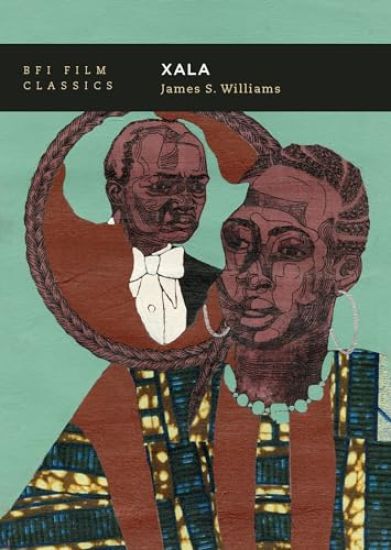
Xala

Xala

James S. Williams

BLOOMSBURY PUBLISHING PLC
2024
nidottu
Xala (1974) by the pioneering Senegalese director Ousmane Sembene, was acclaimed on its release for its scorching critique of postcolonial African society, and it cemented Sembene’s status as a wholly new kind of politically engaged, pan-African, auteur film-maker. Centring on the story of businessman El Hadji and the impotence that afflicts him on his marriage to a young third wife, Xala vividly captures the cultural and political upheaval of 1970s Senegal, while suggesting the radical potential of dissent, solidarity and collective action, embodied by El Hadji’s student daughter Rama and the group of urban ‘undesirables’ who act as a kind of raw chorus to the affairs of the neocolonial elite.James S. Williams’s lucid study traces Xala’s difficult production history and analyses its daring combination of political and domestic drama, oral narrative, social realism, symbolism, satire, documentary, mysticism and Marxist analysis. Yet from its dazzling extended opening sequence of revolution as performance to its suspended climax of redemption through ritualised spitting, Xala presents a series of conceptual and formal challenges that resist a simple reading of the film as allegory.Highlighting often overlooked elements of Sembene’s intricate, experimental film-making, including provocative shifts in mood and poetic, even subversively erotic, moments, Williams reveals Xala as a visionary work of both African cinema and Third Cinema that extended the parameters of postcolonial film practice and still resounds today with its searing inventive power.
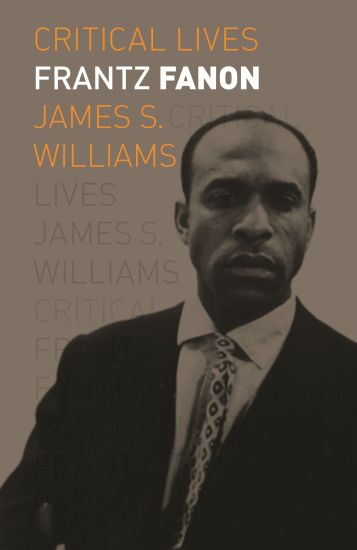
Frantz Fanon

Frantz Fanon

James S. Williams

REAKTION BOOKS
2023
nidottu
Doctor, militant, political essayist, teacher, journalist, diplomat, pan-Africanist: Frantz Fanon represented a new model of multi-engaged intellectual who sought to decolonize mid-twentieth-century thought, society and culture and move beyond the ideology of race. Born Black in colonial Martinique, he fought for France during the Second World War but later renounced his native land and aspired to be Algerian during the Algerian War of Independence. Foregrounding Fanon’s gift for self-invention and performance, James S. Williams charts the major turning points in the short, extraordinary life of this visionary figure, and reveals how Fanon’s pioneering work in psychiatry influenced his revolutionary writing and philosophy.
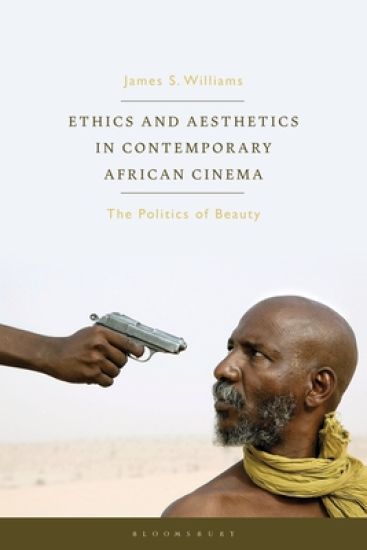
Ethics and Aesthetics in Contemporary African Cinema

Ethics and Aesthetics in Contemporary African Cinema

James S. Williams

Bloomsbury Academic
2020
nidottu
Shortlisted for the R. Gapper Book Prize 2020Since the beginnings of African cinema, the realm of beauty on screen has been treated with suspicion by directors and critics alike. James S. Williams explores an exciting new generation of African directors, including Abderrahmane Sissako, Mahamat-Saleh Haroun, Fanta Régina Nacro, Alain Gomis, Newton I. Aduaka, Jean-Pierre Bekolo and Mati Diop, who have begun to reassess and embrace the concept of cinematic beauty by not reducing it to ideological critique or the old ideals of pan-Africanism. Locating the aesthetic within a range of critical fields - the rupturing of narrative spectacle and violence by montage, the archives of the everyday in the ‘afropolis’, the plurivocal mysteries of sound and language, male intimacy and desire, the borderzones of migration and transcultural drift - this study reveals the possibility for new, non-conceptual kinds of beauty in African cinema: abstract, material, migrant, erotic, convulsive, queer. Through close readings of key works such as Life on Earth (1998), The Night of Truth (2004), Bamako (2006), Daratt (Dry Season) (2006), A Screaming Man (2010), Tey (Today) (2012), The Pirogue (2012), Mille soleils (2013) and Timbuktu (2014), Williams argues that contemporary African filmmakers are proposing propitious, ethical forms of relationality and intersubjectivity. These stimulate new modes of cultural resistance and transformation that serve to redefine the transnational and the cosmopolitan as well as the very notion of the political in postcolonial art cinema.
Ethics and Aesthetics in Contemporary African Cinema

Ethics and Aesthetics in Contemporary African Cinema

James S. Williams

Bloomsbury Academic
2019
sidottu
Shortlisted for the R. Gapper Book Prize 2020Since the beginnings of African cinema, the realm of beauty on screen has been treated with suspicion by directors and critics alike. James S. Williams explores an exciting new generation of African directors, including Abderrahmane Sissako, Mahamat-Saleh Haroun, Fanta Régina Nacro, Alain Gomis, Newton I. Aduaka, Jean-Pierre Bekolo and Mati Diop, who have begun to reassess and embrace the concept of cinematic beauty by not reducing it to ideological critique or the old ideals of pan-Africanism. Locating the aesthetic within a range of critical fields - the rupturing of narrative spectacle and violence by montage, the archives of the everyday in the ‘afropolis’, the plurivocal mysteries of sound and language, male intimacy and desire, the borderzones of migration and transcultural drift - this study reveals the possibility for new, non-conceptual kinds of beauty in African cinema: abstract, material, migrant, erotic, convulsive, queer. Through close readings of key works such as Life on Earth (1998), The Night of Truth (2004), Bamako (2006), Daratt (Dry Season) (2006), A Screaming Man (2010), Tey (Today) (2012), The Pirogue (2012), Mille soleils (2013) and Timbuktu (2014), Williams argues that contemporary African filmmakers are proposing propitious, ethical forms of relationality and intersubjectivity. These stimulate new modes of cultural resistance and transformation that serve to redefine the transnational and the cosmopolitan as well as the very notion of the political in postcolonial art cinema.
Encounters with Godard

Encounters with Godard

James S. Williams

State University of New York Press
2017
pokkari
A wide-ranging and accessible approach to Godard's later work, and a major intervention in the study of film and ethics.Encounters with Godard takes the reader on a personal voyage into the sensory pleasures and polyphonic rhythms of Jean-Luc Godard's multimedia work since the late 1970s, from his feature films and video essays to his published writings, art books, and media performances. Godard, suggests James S. Williams, lays ethical claim to the cinematic, defined in the broadest terms as relationality and artistic resistance. An introductory chapter on the extended history of La Chinoise (1967), a film explicitly of montage, is followed by seven different types of critical encounters with Godard, encompassing the fields of art and photography, music and literature, and foregrounding themes of gender and sexuality, race and violence, mystery and emotion. The Godard who emerges here is a restless and radical experimenter who establishes new cinematic thresholds through new technology and expands the creative potential and free exchange of the archives. Williams examines works including Nouvelle vague (1990), Film socialisme (2010), Hélas pour moi (1993), and the magnum opus Histoire(s) du cinéma (1988–98). Wide-ranging and accessible, Encounters with Godard marks a major intervention in the study of film aesthetics and ethics while forging a vital dialogue with literature, history and politics, art and art history, music and musicology, philosophy, and aesthetics.
Encounters with Godard

Encounters with Godard

James S. Williams

State University of New York Press
2016
sidottu
A wide-ranging and accessible approach to Godard's later work, and a major intervention in the study of film and ethics.Encounters with Godard takes the reader on a personal voyage into the sensory pleasures and polyphonic rhythms of Jean-Luc Godard's multimedia work since the late 1970s, from his feature films and video essays to his published writings, art books, and media performances. Godard, suggests James S. Williams, lays ethical claim to the cinematic, defined in the broadest terms as relationality and artistic resistance. An introductory chapter on the extended history of La Chinoise (1967), a film explicitly of montage, is followed by seven different types of critical encounters with Godard, encompassing the fields of art and photography, music and literature, and foregrounding themes of gender and sexuality, race and violence, mystery and emotion. The Godard who emerges here is a restless and radical experimenter who establishes new cinematic thresholds through new technology and expands the creative potential and free exchange of the archives. Williams examines works including Nouvelle vague (1990), Film socialisme (2010), Hélas pour moi (1993), and the magnum opus Histoire(s) du cinéma (1988–98). Wide-ranging and accessible, Encounters with Godard marks a major intervention in the study of film aesthetics and ethics while forging a vital dialogue with literature, history and politics, art and art history, music and musicology, philosophy, and aesthetics.
Space and Being in Contemporary French Cinema

Space and Being in Contemporary French Cinema

James S. Williams

Manchester University Press
2016
nidottu
This book brings together for the first time five French directors who have established themselves as among the most exciting and significant working today: Bruno Dumont, Robert Guédiguian, Laurent Cantet, Abdellatif Kechiche, and Claire Denis. Whatever their chosen habitats or shifting terrains, each of these highly distinctive auteurs has developed unique strategies of representation and framing that reflect a profound investment in the geophysical world. The book proposes that we think about cinematographic space in its many different forms simultaneously (screenspace, landscape, narrative space, soundscape, spectatorial space). Through a series of close and original readings of selected films, it posits a new ‘space of the cinematic subject’. Accessible and wide-ranging, this volume opens up new areas of critical enquiry in the expanding interdisciplinary field of space studies. It will be of immediate interest to students and researchers working not only in film studies and film philosophy, but also in French/Francophone studies, postcolonial studies, gender and cultural studies.Listen to James S. Williams speaking about his book http://bit.ly/13xCGZN. (Copy and paste the link into your browser)
Space and Being in Contemporary French Cinema

Space and Being in Contemporary French Cinema

James S. Williams

Manchester University Press
2013
sidottu
This book brings together for the first time five French directors who have established themselves as among the most exciting and significant working today: Bruno Dumont, Robert Guédiguian, Laurent Cantet, Abdellatif Kechiche, and Claire Denis. Whatever their chosen habitats or shifting terrains, each of these highly distinctive auteurs has developed unique strategies of representation and framing that reflect a profound investment in the geophysical world. The book proposes that we think about cinematographic space in its many different forms simultaneously (screenspace, landscape, narrative space, soundscape, spectatorial space). Through a series of close and original readings of selected films, it posits a new ‘space of the cinematic subject’. Accessible and wide-ranging, this volume opens up new areas of critical enquiry in the expanding interdisciplinary field of space studies. It will be of immediate interest to students and researchers working not only in film studies and film philosophy, but also in French/Francophone studies, postcolonial studies, gender and cultural studies.Listen to James S. Williams speaking about his book http://bit.ly/13xCGZN. (Copy and paste the link into your browser)