Kirjojen hintavertailu. Mukana 12 245 937 kirjaa ja 12 kauppaa.

Kirjailija

James T. Bartis

Kirjat ja teokset yhdessä paikassa: 14 kirjaa, julkaisuja vuosilta 2002-2013, suosituimpien joukossa Emergency Responder Injuries and Fatalities. Vertaile teosten hintoja ja tarkista saatavuus suomalaisista kirjakaupoista.

Mukana myös kirjoitusasut: James T Bartis

14 kirjaa

Kirjojen julkaisuhaarukka 2002-2013.

Emergency Responder Injuries and Fatalities

Emergency Responder Injuries and Fatalities

Ari N. Houser; Brian A. Jackson; James T. Bartis; D.J. Peterson

RAND
2004
pokkari
Summarizes the results of an analysis of available data sources concerning the hazards facing firefighters, police, and emergency medical responders. Collects and synthesizes available data on casualties experienced by the emergency responder population. The authors examined data separately for firefighters, police officers, and emergency medical technicians. These data can provide a route for identifying combinations of kinds and causes of injury, body parts involved, and types of responder activity where injury reduction efforts might be most effectively applied.
Managing Spent Nuclear Fuel

Managing Spent Nuclear Fuel

Tom LaTourrette; Thomas Light; Debra Knopman; James T. Bartis

RAND
2011
pokkari
Nuclear power is receiving renewed interest because of its low greenhouse gas emissions. However, if nuclear power is to be sustainable option for the United States, methods for managing spent fuel that meet stringent safety and environmental standards must be implemented. This report examines technical and institutional approaches to spent fuel management and highlights policy implications of pursuing alternative strategies.
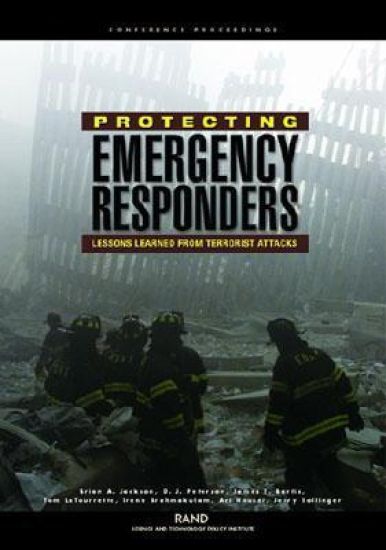
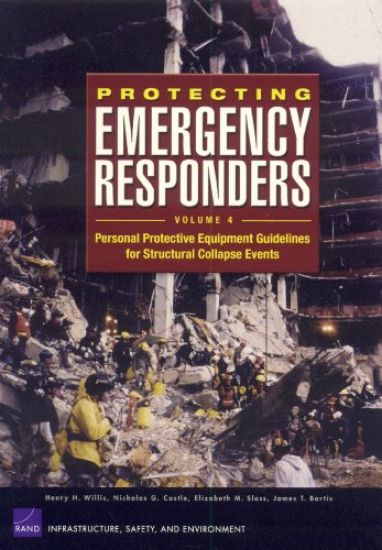
Protecting Emergency Responders

Protecting Emergency Responders

Brian A. Jackson; D.J. Peterson; James T. Bartis

RAND
2002
pokkari
Protecting emergency-response workers following large-scale terrorist attacks In December 2001, a conference held in New York City brought together individuals with firsthand knowledge of emergency responses to terrorist attacks to discuss ways to improve the health and safety of emergency workers who respond to large-scale disasters. The meeting considered the responses to the September 11, 2001 attacks at the World Trade Center and the Pentagon and the 1995 attack at the Alfred P. Murrah Federal Building in Oklahoma City, Oklahoma, as well as the emergency responses to the anthrax incidents that occurred through Autumn 2001. This book is intended to help managers and decisiomakers understand the unique working and safety environment associated with terrorist incidents, understand the equipment needs of emergency workers, and improve education and training programs and activities directed at the health and safety of emergency responders.
Federal Financial Incentives to Induce Early Experience Producing Unconventional Liquid Fuels
The government, as a principal, may seek to induce a private investor, as an agent, to build and operate an unconventional-oil production plant to promote early production experience with such plants. Facing significant uncertainty about the future, it also wants to limit the cost to the public of doing this. This report offers an analytic way to design and assess packages of policy instruments that the government can use to achieve its goal.
Constraints on JP-900 Jet Fuel Production Concepts

Constraints on JP-900 Jet Fuel Production Concepts

James T Bartis; Torrance G Flint

RAND
2007
pokkari
Recent work on alternative methods of producing jet fuel for military applications has included coprocessing coal or coal-derived products with low-value liquid intermediates and co-coking, which uses a mixture of solid coal and decant oil. But the limited availability of coal tar and decant oil and limited marketability, as high value products, of the coke coproducts will severely constrain jet fuel production from these process concepts.
Oil Shale Development in the United States

Oil Shale Development in the United States

James T. Bartis; Tom LaTourrette; Lloyd Dixon; D.J. Peterson; Gary Cecchine

RAND
2005
pokkari
Public and private institutions in the United States have long been home to a variety of art works, antiquities, and ethnological materials. For years, these collections have been seen as important archives that allow present and future generations to enjoy, appreciate, and value the art of all cultures. In the past decade, however, questions have been raised as to exactly what constitutes legal and ethical ownership of art and other cultural property. Some observers believe that art and ethnological materials should remain in source countries, and have lobbied for an end to art trading. Recent changes to U.S. law may curtail both private and public collecting. Contributors to "Who Owns the Past?" include legal scholars, museum professionals, anthropologists, archaeologists, and collectors. In clear, nontechnical language, they provide a comprehensive overview of the development of cultural property law and practices, as well as recent case law affecting the ability of museums and private collectors to own art from other countries.Topics covered include rights to property, ethical ownership, the public responsibilities of museums, threats to art from war and development, and international cooperation to preserve collections in the developing world. Engaging all perspectives on this debate, "Who Owns the Past?" challenges all who care about the arts to work together toward policies that consider traditional American interests in securing cultural resources, and respect international concerns over loss of heritage.
Long-range Energy Research and Development
Determining energy research needs for the distant future A process for evaluating technology-development options to meet future energy needs. The process evaluates threats to continued reliance on current energy sources, establishes strategic R&D goals, determines how a technology addresses threats and strategic goals, identifies uncertainties and affordability risks, determines technical problems, and establishes R&D needs and opportunities. A case study of fuel cells and coal gasification for electricity generation illustrates the application and advantages of the approach.