Kirjojen hintavertailu. Mukana 12 390 323 kirjaa ja 12 kauppaa.

Kirjailija

James T. Kloppenberg

Kirjat ja teokset yhdessä paikassa: 6 kirjaa, julkaisuja vuosilta 1988-2026, suosituimpien joukossa Toward Democracy. Vertaile teosten hintoja ja tarkista saatavuus suomalaisista kirjakaupoista.

Mukana myös kirjoitusasut: James T Kloppenberg

6 kirjaa

Kirjojen julkaisuhaarukka 1988-2026.

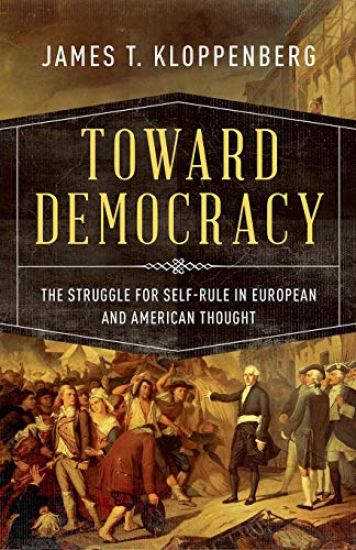
Toward Democracy

Toward Democracy

James T. Kloppenberg

Oxford University Press Inc
2019
nidottu
In this magnificent and encyclopedic overview, James T. Kloppenberg presents the history of democracy from the perspective of those who struggled to envision and achieve it. The story of democracy remains one without an ending, a dynamic of progress and regress that continues to our own day. In the classical age "democracy" was seen as the failure rather than the ideal of good governance. Democracies were deemed chaotic and bloody, indicative of rule by the rabble rather than by enlightened minds. Beginning in the 16th and 17th centuries, however, first in Europe and then in England's North American colonies, the reputation of democracy began to rise, resulting in changes that were sometimes revolutionary and dramatic, sometimes gradual and incremental. Kloppenberg offers a fresh look at how concepts and institutions of representative government developed and how understandings of self-rule changed over time on both sides of the Atlantic. Notions about what constituted true democracy preoccupied many of the most influential thinkers of the Western world, from Montaigne and Roger Williams to Milton and John Locke; from Rousseau and Jefferson to Wollstonecraft and Madison; and from de Tocqueville and J. S. Mill to Lincoln and Frederick Douglass. Over three centuries, explosive ideas and practices of democracy sparked revolutions--English, American, and French--that again and again culminated in civil wars, disastrous failures of democracy that impeded further progress. Comprehensive, provocative, and authoritative, Toward Democracy traces self-government through three pivotal centuries. The product of twenty years of research and reflection, this momentous work reveals how nations have repeatedly fallen short in their attempts to construct democratic societies based on the principles of autonomy, equality, deliberation, and reciprocity that they have claimed to prize. Underlying this exploration lies Kloppenberg's compelling conviction that democracy was and remains an ethical ideal rather than merely a set of institutions, a goal toward which we continue to struggle.
Toward Democracy

Toward Democracy

James T. Kloppenberg

Oxford University Press Inc
2016
sidottu
The history of democracy, in addition to being a tale of social movements and political and economic developments, is also a story of ideas. In Toward Democracy, James T. Kloppenberg explores this story of ideas, focusing on the evolution of democracy in Britain's North American colonies and then in the United States. By concentrating on historical figures whose pivotal texts and framed arguments helped form the concept of democracy, he examines how American ideas and practices both descended and diverged from earlier European, and particularly English, models. Kloppenberg also shows how American thought, in return, profoundly influenced European ideas about democracy--both negatively and positively. Toward Democracy presents the history of democracy from the perspective of those who helped to form its principles. Kloppenberg neither condemns nor endorses these thinkers, but rather offers a fresh look at how these initial democratic ideals have shifted over time. He argues that democracy has remained an ethical model rather than a mere set of institutions, and sheds light on the many failures faced by democracy and its advocates. This discrepancy--between intentions and results--constitutes the tragic irony of democracy. From the beginnings of democracy in the ancient world, through the Enlightenment, and past the French Revolution, James T. Kloppenberg's authoritative work traces the transformation of democracy over centuries, and reveals how nations have repeatedly failed in their attempts to construct democratic societies based on the autonomy and reciprocity they so prized.
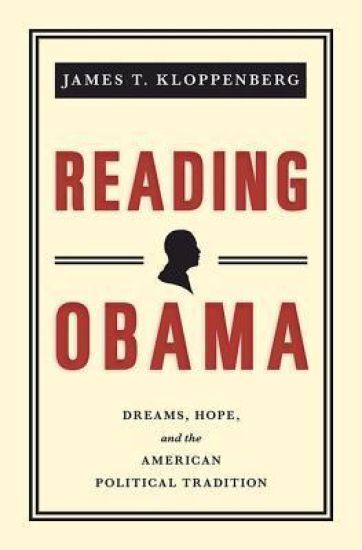
Reading Obama

Reading Obama

James T. Kloppenberg

Princeton University Press
2012
pokkari
Derided by the Right as dangerous and by the Left as spineless, Barack Obama puzzles observers. In Reading Obama, James T. Kloppenberg reveals the sources of Obama's ideas and explains why his principled aversion to absolutes does not fit contemporary partisan categories. Obama's commitments to deliberation and experimentation derive from sustained engagement with American democratic thought. In a new preface, Kloppenberg explains why Obama has stuck with his commitment to compromise in the first three years of his presidency, despite the criticism it has provoked. Reading Obama traces the origins of his ideas and establishes him as the most penetrating political thinker elected to the presidency in the past century. Kloppenberg demonstrates the influences that have shaped Obama's distinctive worldview, including Nietzsche and Niebuhr, Ellison and Rawls, and recent theorists engaged in debates about feminism, critical race theory, and cultural norms. Examining Obama's views on the Constitution, slavery and the Civil War, the New Deal, and the civil rights movement, Kloppenberg shows Obama's sophisticated understanding of American history. Obama's interest in compromise, reasoned public debate, and the patient nurturing of civility is a sign of strength, not weakness, Kloppenberg argues. He locates its roots in Madison, Lincoln, and especially in the philosophical pragmatism of William James and John Dewey, which nourished generations of American progressives, black and white, female and male, through much of the twentieth century, albeit with mixed results. Reading Obama reveals the sources of Obama's commitment to democratic deliberation: the books he has read, the visionaries who have inspired him, the social movements and personal struggles that have shaped his thinking. Kloppenberg shows that Obama's positions on social justice, religion, race, family, and America's role in the world do not stem from a desire to please everyone but from deeply rooted--although currently unfashionable--convictions about how a democracy must deal with difference and conflict.
Reading Obama

Reading Obama

James T. Kloppenberg

Princeton University Press
2010
sidottu
Derided by the Right as dangerous and by the Left as spineless, Barack Obama puzzles observers. In Reading Obama, James T. Kloppenberg reveals the sources of Obama's ideas and explains why his principled aversion to absolutes does not fit contemporary partisan categories. Obama's commitments to deliberation and experimentation derive from sustained engagement with American democratic thought. Reading Obama traces the origins of his ideas and establishes him as the most penetrating political thinker elected to the presidency in the past century. Kloppenberg demonstrates the influences that have shaped Obama's distinctive worldview, including Nietzsche and Niebuhr, Ellison and Rawls, and recent theorists engaged in debates about feminism, critical race theory, and cultural norms. Examining Obama's views on the Constitution, slavery and the Civil War, the New Deal, and the civil rights movement, Kloppenberg shows Obama's sophisticated understanding of American history. Obama's interest in compromise, reasoned public debate, and the patient nurturing of civility is a sign of strength, not weakness, Kloppenberg argues. He locates its roots in Madison, Lincoln, and especially in the philosophical pragmatism of William James and John Dewey, which nourished generations of American progressives, black and white, female and male, through much of the twentieth century, albeit with mixed results. Reading Obama reveals the sources of Obama's commitment to democratic deliberation: the books he has read, the visionaries who have inspired him, the social movements and personal struggles that have shaped his thinking. Kloppenberg shows that Obama's positions on social justice, religion, race, family, and America's role in the world do not stem from a desire to please everyone but from deeply rooted--although currently unfashionable--convictions about how a democracy must deal with difference and conflict.
Uncertain Victory

Uncertain Victory

James T. Kloppenberg

Oxford University Press Inc
1988
nidottu
This is the first comparative study of ideas and politics in France, Germany, the US, and Great Britain between 1870 and 1920 - a period when two generations of European and American intellectuals created a transatlantic community of philosophical and political discourse. In particular, it demonstrates how a number of thinkers from different traditions converged to create the theoretical foundations for new programmes of social democracy and progressivism. 'finely researched and imaginative survey ... an interesting and important contribution to the history of political philosophy.' Journal of American History