Kirjojen hintavertailu. Mukana 12 240 539 kirjaa ja 12 kauppaa.
Kirjailija
James T. Murphy
Kirjat ja teokset yhdessä paikassa: 9 kirjaa, julkaisuja vuosilta 1993-2023, suosituimpien joukossa Skip Bombing. Vertaile teosten hintoja ja tarkista saatavuus suomalaisista kirjakaupoista.
Murphy was one of a very small number of volunteer pilots who, with their flight crews, started bombing at low altitudes in B-17 flying fortresses in the Southwest Pacific. The aircraft were flown at a 200-foot altitude and at 250 miles per hour at night. One-thousand pound bombs, equipped with four-to-five second fuses, were dropped from the B-17s. On March 3, 1943, the Japanese made a desperate move to re-supply their forces on New Guinea. Twenty-two cargo, transport, and war ships proceeded toward New Guinea using bad weather for cover. They were found in the Bismarck Sea. The Allied Air Forces--using skip bombing--sank all twenty-two Japanese ships. Murphy was credited with sinking nine Japanese ships during his year of combat, including one in the Bismarck Sea battle. Skip bombing became a tactic that helped the U.S. win the war in the South Pacific.
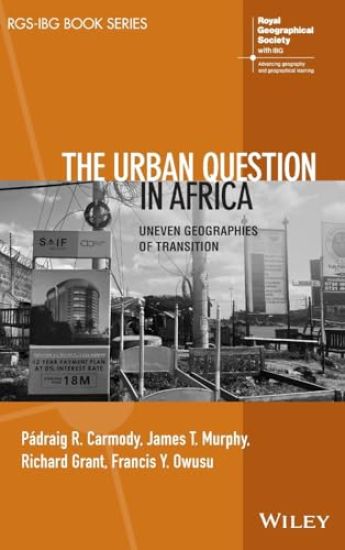
Illuminates the path to more generative urban transitions in Africa's cities and developing rural areas Africa is the world's most rapidly urbanizing region. The predominantly rural continent is currently undergoing an “urban revolution” unlike any other, generally taking place without industrialization and often characterized by polarization, poverty, and fragmentation. While many cities have experienced construction booms and real estate speculation, others are marked by expanding informal economies and imploding infrastructures. The Urban Question in Africa: Uneven Geographies of Transition examines the imbalanced and contested nature of the ongoing urban transition of Africa. Edited and authored by leading experts on the subject, this unique volume develops an original theory conceptualizing cities as sociotechnical systems constituted by production, consumption, and infrastructure regimes. Throughout the book, in-depth chapters address the impacts of current meta-trends—global geopolitical shifts, economic changes, the climate crisis, and others—on Africa's cities and the broader development of the continent. Presents a novel framework based on extensive fieldwork in multiple countries and regions of the continentExamines geopolitical and socioeconomic topics such as manufacturing in African cities, the green economy in Africa, and the impact of China on urban AfricaDiscusses the prospects for generative urbanism to produce and sustain long-term development in AfricaFeatures high-quality maps, illustrations, and photographsThe Urban Question in Africa: Uneven Geographies of Transition is essential reading for undergraduate and postgraduate students in geography, urban planning, and African studies, academic researchers, geographers, urban planners, and policymakers.
Illuminates the path to more generative urban transitions in Africa's cities and developing rural areas Africa is the world's most rapidly urbanizing region. The predominantly rural continent is currently undergoing an “urban revolution” unlike any other, generally taking place without industrialization and often characterized by polarization, poverty, and fragmentation. While many cities have experienced construction booms and real estate speculation, others are marked by expanding informal economies and imploding infrastructures. The Urban Question in Africa: Uneven Geographies of Transition examines the imbalanced and contested nature of the ongoing urban transition of Africa. Edited and authored by leading experts on the subject, this unique volume develops an original theory conceptualizing cities as sociotechnical systems constituted by production, consumption, and infrastructure regimes. Throughout the book, in-depth chapters address the impacts of current meta-trends—global geopolitical shifts, economic changes, the climate crisis, and others—on Africa's cities and the broader development of the continent. Presents a novel framework based on extensive fieldwork in multiple countries and regions of the continentExamines geopolitical and socioeconomic topics such as manufacturing in African cities, the green economy in Africa, and the impact of China on urban AfricaDiscusses the prospects for generative urbanism to produce and sustain long-term development in AfricaFeatures high-quality maps, illustrations, and photographsThe Urban Question in Africa: Uneven Geographies of Transition is essential reading for undergraduate and postgraduate students in geography, urban planning, and African studies, academic researchers, geographers, urban planners, and policymakers.
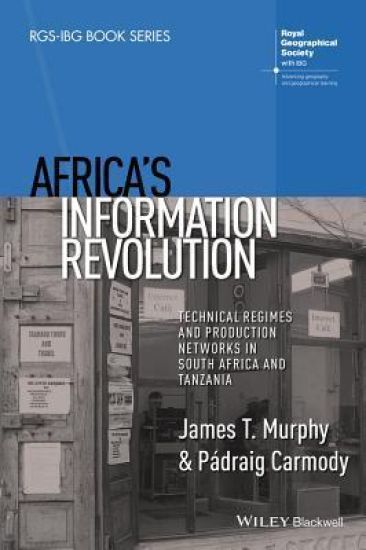
Africa’s Information Revolution was recently announced as the 2016 prizewinner of the Royal Academy for Overseas Sciences - congratulations to the authors James T. Murphy and Padraig Carmody! Africa’s Information Revolution presents an in-depth examination of the development and economic geographies accompanying the rapid diffusion of new ICTs in Sub-Saharan Africa. Represents the first book-length comparative case study ICT diffusion in Africa of its kindConfronts current information and communication technologies for development (ICT4D) discourse by providing a counter to largely optimistic mainstream perspectives on Africa’s prospects for m- and e-developmentFeatures comparative research based on more than 200 interviews with firms from a manufacturing and service industry in Tanzania and South AfricaRaises key insights regarding the structural challenges facing Africa even in the context of the continent’s recent economic growth spurtCombines perspectives from economic and development geography and science and technology studies to demonstrate the power of integrated conceptual-theoretical frameworksInclude maps, photos, diagrams and tables to highlight the concepts, field research settings, and key findings
Africa’s Information Revolution was recently announced as the 2016 prizewinner of the Royal Academy for Overseas Sciences - congratulations to the authors James T. Murphy and Padraig Carmody! Africa’s Information Revolution presents an in-depth examination of the development and economic geographies accompanying the rapid diffusion of new ICTs in Sub-Saharan Africa. Represents the first book-length comparative case study ICT diffusion in Africa of its kindConfronts current information and communication technologies for development (ICT4D) discourse by providing a counter to largely optimistic mainstream perspectives on Africa’s prospects for m- and e-developmentFeatures comparative research based on more than 200 interviews with firms from a manufacturing and service industry in Tanzania and South AfricaRaises key insights regarding the structural challenges facing Africa even in the context of the continent’s recent economic growth spurtCombines perspectives from economic and development geography and science and technology studies to demonstrate the power of integrated conceptual-theoretical frameworksInclude maps, photos, diagrams and tables to highlight the concepts, field research settings, and key findings
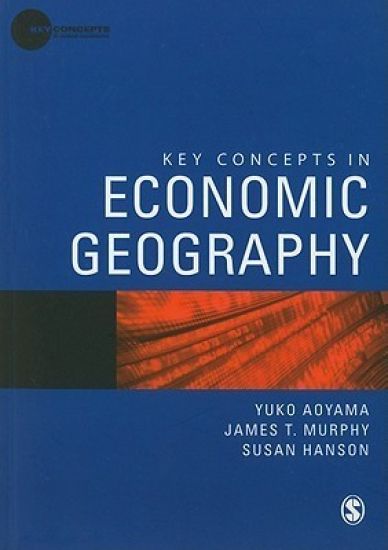
"A comprehensive and highly readable review of the conceptual underpinnings of economic geography. Students and professional scholars alike will find it extremely useful both as a reference manual and as an authoritative guide to the numerous theoretical debates that characterize the field." - Allen J. Scott, University of California "Guides readers skilfully through the rapidly changing field of economic geography... The key concepts used to structure this narrative range from key actors and processes within global economic change to a discussion of newer areas of research including work on financialisation and consumption. The result is a highly readable synthesis of contemporary debates within economic geography that is also sensitive to the history of the sub-discipline." - Sarah Hall, University of Nottingham "The nice thing about this text is that it is concise but with depth in its coverage. A must have for any library, and a useful desk reference for any serious student of economic geography or political economy." - Adam Dixon, Bristol University Organized around 20 short essays, Key Concepts in Economic Geography provides a cutting edge introduction to the central concepts that define contemporary research in economic geography. Involving detailed and expansive discussions, the book includes: An introductory chapter providing a succinct overview of the recent developments in the field.Over 20 key concept entries with comprehensive explanations, definitions and evolutions of the subject.Extensive pedagogic features that enhance understanding including figures, diagrams and further reading. An ideal companion text for upper-level undergraduate and postgraduate students in economic geography, the book presents the key concepts in the discipline, demonstrating their historical roots and contemporary applications to fully understand the processes of economic change, regional growth and decline, globalization, and the changing locations of firms and industries. Written by an internationally recognized set of authors, the book is an essential addition to any geography student's library.
"A comprehensive and highly readable review of the conceptual underpinnings of economic geography. Students and professional scholars alike will find it extremely useful both as a reference manual and as an authoritative guide to the numerous theoretical debates that characterize the field." - Allen J. Scott, University of California "Guides readers skilfully through the rapidly changing field of economic geography... The key concepts used to structure this narrative range from key actors and processes within global economic change to a discussion of newer areas of research including work on financialisation and consumption. The result is a highly readable synthesis of contemporary debates within economic geography that is also sensitive to the history of the sub-discipline." - Sarah Hall, University of Nottingham "The nice thing about this text is that it is concise but with depth in its coverage. A must have for any library, and a useful desk reference for any serious student of economic geography or political economy." - Adam Dixon, Bristol University Organized around 20 short essays, Key Concepts in Economic Geography provides a cutting edge introduction to the central concepts that define contemporary research in economic geography. Involving detailed and expansive discussions, the book includes: An introductory chapter providing a succinct overview of the recent developments in the field.Over 20 key concept entries with comprehensive explanations, definitions and evolutions of the subject.Extensive pedagogic features that enhance understanding including figures, diagrams and further reading. An ideal companion text for upper-level undergraduate and postgraduate students in economic geography, the book presents the key concepts in the discipline, demonstrating their historical roots and contemporary applications to fully understand the processes of economic change, regional growth and decline, globalization, and the changing locations of firms and industries. Written by an internationally recognized set of authors, the book is an essential addition to any geography student's library.