Kirjojen hintavertailu. Mukana 12 152 606 kirjaa ja 12 kauppaa.

Kirjailija

James T. Palmer

Kirjat ja teokset yhdessä paikassa: 8 kirjaa, julkaisuja vuosilta 2001-2026, suosituimpien joukossa Charlemagne's Dream: The Rise and Fall of the Carolingian Empire. Vertaile teosten hintoja ja tarkista saatavuus suomalaisista kirjakaupoista.

Mukana myös kirjoitusasut: James T Palmer

8 kirjaa

Kirjojen julkaisuhaarukka 2001-2026.

Charlemagne's Dream: The Rise and Fall of the Carolingian Empire
A sweeping, definitive history of the dynamic, expansionist dynasty that forged the Middle Ages--and Europe--as we know it Today, the Carolingians are best known as the dynasty of Charlemagne. In a few remarkable decades spanning the late eighth and early ninth centuries, Charlemagne united much of modern-day Europe through conquest and diplomacy, establishing the continent's first empire since the fall of Rome. In Charlemagne's Dream, historian James T. Palmer looks beyond Charlemagne alone to tell the full story of the rise and fall of the massively consequential Carolingian dynasty--the men and women who laid the foundations for his achievements, and the colorful heirs who squandered his legacy. Carolingian rulers established the royal court as a place of learning, attracting scholars and philosophers and driving a cultural and intellectual renaissance. They fought and traded with power centers as far-flung as C rdoba, Constantinople, and Baghdad. In allying with the pope, they forever changed the relationship between church and state in the West. And they dispatched the first missionaries to northern Europe, expanding Christendom's reach farther than ever before. Charlemagne's Dream details the powerfully human stories of the Carolingians, showing how their pursuit of ever-greater power built one of the world's great empires.
Merovingian Worlds

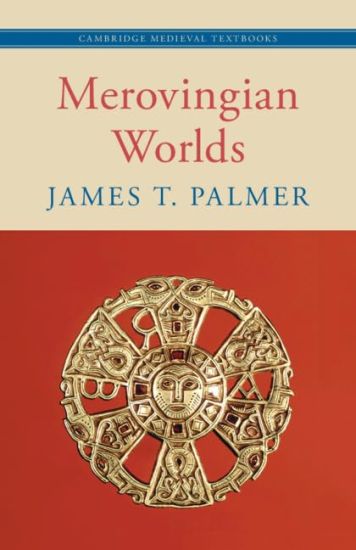
Merovingian Worlds

James T. Palmer

Cambridge University Press
2024
sidottu
The Merovingian Kingdoms (c. 450–751) dominated much of what is now France, Belgium, and Germany, and were the most powerful and long-lived of the states that transformed the inheritance of Rome after the Crisis of the Fifth Century. Yet they often remain representative of an imagined 'Dark Age', in which civility was eroded by migration, violence, illiteracy, superstition, and a retreat from globality. Through a deep exploration of manuscripts, charters, and burials, Merovingian Worlds offers a fresh account of the period, outlining its complexities, diversity and creativity. This was a world built on dynamic political, socio-economic, cultural, and religious interactions, and shaped by its wide-ranging connections from Britain and Ireland to Byzantium and beyond. The book provides a critical introduction to the rich source material and the modern debates that shaped our perception of Western Europe after the Fall of Rome.
Merovingian Worlds

Merovingian Worlds

James T. Palmer

Cambridge University Press
2024
pokkari
The Merovingian Kingdoms (c. 450–751) dominated much of what is now France, Belgium, and Germany, and were the most powerful and long-lived of the states that transformed the inheritance of Rome after the Crisis of the Fifth Century. Yet they often remain representative of an imagined 'Dark Age', in which civility was eroded by migration, violence, illiteracy, superstition, and a retreat from globality. Through a deep exploration of manuscripts, charters, and burials, Merovingian Worlds offers a fresh account of the period, outlining its complexities, diversity and creativity. This was a world built on dynamic political, socio-economic, cultural, and religious interactions, and shaped by its wide-ranging connections from Britain and Ireland to Byzantium and beyond. The book provides a critical introduction to the rich source material and the modern debates that shaped our perception of Western Europe after the Fall of Rome.
Viking Kings

Viking Kings

James T. Palmer

Createspace Independent Publishing Platform
2015
nidottu
This is an historical novel about a Norwegian king, Harald III, who is renowned in Scandinavia but almost unknown elsewhere. He was popularised in a saga written some 150 years after his death, by Snorri Sturluson, which is considered as history by many Scandinavians. I have based this novel on historical facts, which I have embroidered extensively. The dates are correct for the campaigns and events, and all of the major characters existed and made their contribution to history. What sparked my interest in the first place was that if Harald had not invaded just three weeks before William the Conqueror in 1066, the English language would probably be totally different today. Harald decimated Earl Morcar's English northern army and inflicted a lethal blow on Harold II's army of the south. The army that faced William was a shadow of what it would have been without Harald III's untimely invasion.One of my aims is to rebalance people's view of history. For example most people even the Greeks haven't heard of the Varangian Guard, of five thousand Norsemen (and Anglo-Saxons after 1066), who formed the core of the Byzantine army for over five centuries. The Russians and Ukrainians think of themselves as Slavic and tend to ignore their Scandinavian heritage. The British also tend to forget their Scandinavian heritage. Half of England was Danish throughout the 9th, 10th and 11th centuries, and all the Scottish islands until the 15th century. English has a large number of Danish words, for example: happy, call, window. Furthermore, the beneficiary of Harald's failed invasion of England, William the Conqueror, was himself of Danish descent.Part One of the novel covers the period from 1026, when Harald was eleven years old, to 1045 when he decides to leave behind Byzantium and Kiev and return to Scandinavia, to claim his throne. During this period of his warrior life he gained the epithet "Thunderbolt", due to his enormous physique and his courageous leadership. Part Two of the novel continues until his death in September 1066, in the battle near Stamford Bridge, Yorkshire. During this second period of his life he became known as Harald Hardrada, which translates as Harald the Ruthless. Perhaps "The Unrelenting", would be a better epithet, as he certainly was persistent in his claim to all of Cnut's lands, including England.Part 3 deals with the accession of William the Conqueror to the English throne and the subsequent rebellions and invasions.I trust you will agree that it is a story worth retelling.
Through Polish Tears

Through Polish Tears

James T. Palmer

Createspace Independent Publishing Platform
2015
nidottu
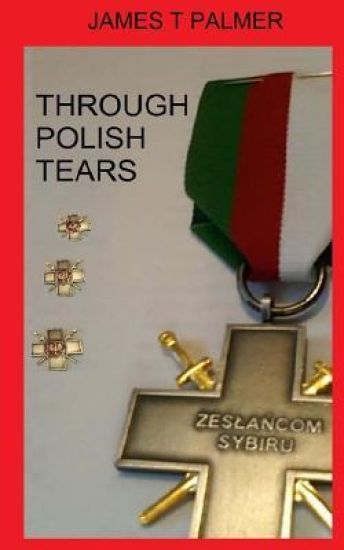
This is a novel or creative non-fiction, whichever you prefer, about war, the Second World War. It is based on facts and eye-witness accounts. The vast majority of the characters existed and did do what the novel details. If an exact date is given, the event is factual. All of the peripheral characters are fictional as is the vast majority of the dialogue. The main exceptions being many of Winston Churchill's speeches, anecdotes and comments, plus Chapter 42 which is based on the Hansard transcription of the Parliamentary debate. The cover photo shows the medal awarded to Alina Margareta Kibilski, nee Andrzejewska, in August 2014. It was awarded at a small ceremony at the Polish Embassy in London, and recognises her suffering in the camps of Siberia from 1940 to 1942. The other side of the family, who lived throughout the war in Poland, experienced equally harrowing times. I was born in England, the son of an Irish immigrant, and was interested to hear the stories of Polish immigrants, who arrived in England like my father, but on a far more complicated journey. I had missed the war by just a few years, but with my friends I played in the bombed out buildings, which didn't get replaced until the 1960's. We were fascinated by the conflict that we had only just missed. With my friends I collected a series of war comics from a second-hand shop, until we had them almost right up to date. By then we were twelve years old and decided to grow up. However the fascination has never left me. The book deals in particular with the contrasting experiences of the Polish families of my wife Irena, or Irenka as her aunt still calls her. Both of her grandfathers served in the Polish Army, were captured and sent to the Gulags and subsequently served as part of the Polish Corps assigned to the British 8th Army. How could that be? Well, read on. I have contrasted the experiences of ordinary people with that of the politicians and the senior military leaders, such as Felix Steiner a Waffen SS General, who was born in Stallupoenen (now Nesterov and part of Russian enclave on the Baltic), and Marshal Konstantin Rokossovski, born to a Polish father and a Russian mother, who grew up in Warsaw when it was the capital of a region of Russia. The borders of Poland had always been fluid and yet again proved to be so in the 20th Century. In the war years Poland suffered the loss of over six million citizens, over 90% of whom were civilians. It was a battlefield in 1939, 1941, 1944 and 1945 and the country where horrific crimes were committed against the Jews of Europe. In all over ten million people died in Poland between 1939 and 1945, and it didn't stop then due to the partisan wars. It is a tragedy, which I will try to explain, but no one could ever justify. The award of the medal in 2014 gave me the impetus to write this novel, which I hope you will thoroughly enjoy.