Kirjojen hintavertailu. Mukana 12 595 353 kirjaa ja 12 kauppaa.

Kirjailija

James V. Hoffman

Kirjat ja teokset yhdessä paikassa: 8 kirjaa, julkaisuja vuosilta 2000-2026, suosituimpien joukossa Balancing Principles for Teaching Elementary Reading. Vertaile teosten hintoja ja tarkista saatavuus suomalaisista kirjakaupoista.

8 kirjaa

Kirjojen julkaisuhaarukka 2000-2026.

Balancing Principles for Teaching Elementary Reading

Balancing Principles for Teaching Elementary Reading

James V. Hoffman; Peter Afflerbach; Ann M. Duffy-Hester; Sarah J. McCarthey; James F. Baumann

Routledge Member of the Taylor and Francis Group
2000
nidottu
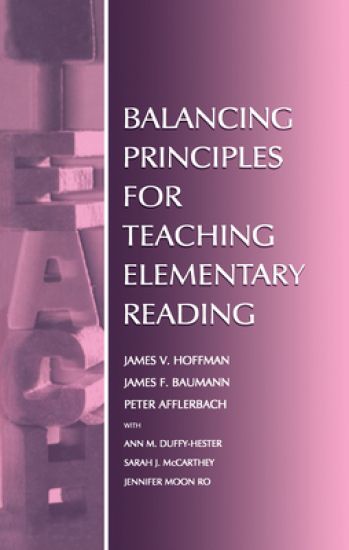
This book appears at a time when the crisis rhetoric about schools, teaching, and learning to read is extremely high. There is a rising call within the profession for a balanced perspective on reading. Balancing Principles for Teaching Elementary Reading aspires to help set the agenda for improving the quality of literacy instruction in the United States--by recentering the debate from "What's better, 'whole language' or 'phonics'?" to "What can we do in reading instruction to prepare all children for the literacy demands of the next century?" The authors, all members of the professional community of reading educators, work on a daily basis with teachers in classrooms, prospective teachers, clinicians, and tutors. Their goal for this book is to represent what they have learned about effective teaching and learning as members of this community. It is written with four purposes in mind: * to offer a principled conception of reading and learning to read that is considerate of both the personal dimensions of literacy acquisition as well as the changes that are taking place in society, * to summarize key findings from the research that relate specifically to effective teaching practices, * to describe current practices in reading instruction with specific comparisons to the principles of effective practice that are identified, and * to suggest an action agenda that is school-based and designed to promote positive changes in the quality of instruction. This text offers a perspective for teaching that provokes members of the reading education community to think about their underlying beliefs about teaching and their shared commitment to making schools more effective for the students they serve. It is envisioned as a resource to be used in building a community of learners--to be read with professional colleagues in a course of study, in a teacher-researcher book club, or in some type of in-service setting. Readers are encouraged to debate the ideas presented, to challenge the authors' conceptions with their own reality, to make sense within a community about what action is desirable. Some specific suggestions and strategies are provided as springboards for further exploration and action.
Balancing Principles for Teaching Elementary Reading

Balancing Principles for Teaching Elementary Reading

James V. Hoffman; Peter Afflerbach; Ann M. Duffy-Hester; Sarah J. McCarthey; James F. Baumann

Routledge Member of the Taylor and Francis Group
2000
sidottu
This book appears at a time when the crisis rhetoric about schools, teaching, and learning to read is extremely high. There is a rising call within the profession for a balanced perspective on reading. Balancing Principles for Teaching Elementary Reading aspires to help set the agenda for improving the quality of literacy instruction in the United States--by recentering the debate from "What's better, 'whole language' or 'phonics'?" to "What can we do in reading instruction to prepare all children for the literacy demands of the next century?" The authors, all members of the professional community of reading educators, work on a daily basis with teachers in classrooms, prospective teachers, clinicians, and tutors. Their goal for this book is to represent what they have learned about effective teaching and learning as members of this community. It is written with four purposes in mind: * to offer a principled conception of reading and learning to read that is considerate of both the personal dimensions of literacy acquisition as well as the changes that are taking place in society, * to summarize key findings from the research that relate specifically to effective teaching practices, * to describe current practices in reading instruction with specific comparisons to the principles of effective practice that are identified, and * to suggest an action agenda that is school-based and designed to promote positive changes in the quality of instruction. This text offers a perspective for teaching that provokes members of the reading education community to think about their underlying beliefs about teaching and their shared commitment to making schools more effective for the students they serve. It is envisioned as a resource to be used in building a community of learners--to be read with professional colleagues in a course of study, in a teacher-researcher book club, or in some type of in-service setting. Readers are encouraged to debate the ideas presented, to challenge the authors' conceptions with their own reality, to make sense within a community about what action is desirable. Some specific suggestions and strategies are provided as springboards for further exploration and action.
Literacy Theory As Practice

Literacy Theory As Practice

Lara J. Handsfield; James V. Hoffman

TEACHERS' COLLEGE PRESS
2026
nidottu
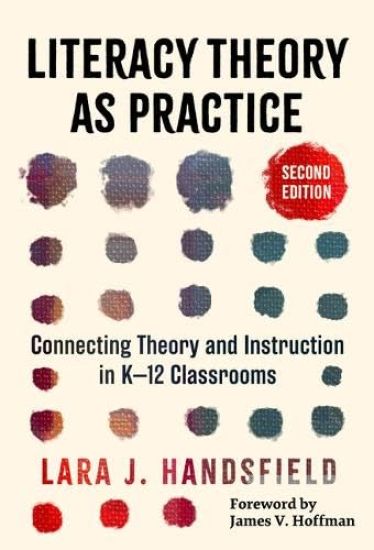
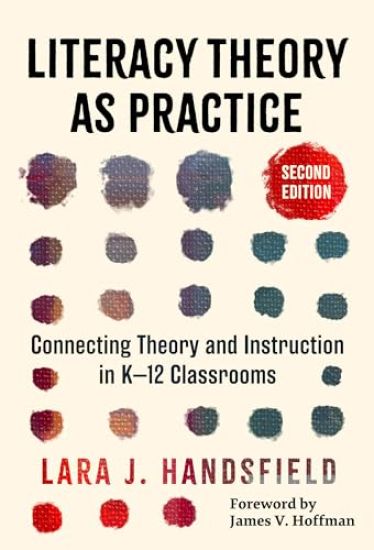
This is both a comprehensive overview of major theoretical developments in literacy AND a teaching guide with in-depth classroom examples of how literacy can be used in daily classroom practice. In this expanded and completely updated second edition, Handsfield introduces the most influential theories and models of reading and literacy—from cognitive and information-processing theories that underpin foundational skills to social constructionist and critical theories that support socially just instructional practices in today’s post-digital landscape. Focusing on how these theories connect with different curricular approaches (K–12), the book shows how they both shape and are shaped by everyday literacy practices in classrooms. Readers will find detailed vignettes offering a practice-based view of theory as they are brought to life in the classroom, which are then explored from various theoretical standpoints. Substantial attention is devoted to multilingual classrooms and communities, engaging with current sociopolitical issues in literacy curricula, and literacy teaching in the post-digital age. Chapters contain key questions for further exploration and user-friendly inset discussions that explore complex terminology and connect literacy theory to current debates and world events. New for the Second Edition! Examination of theories and practices related to the Science of Reading movement. Addition of the Active View of Reading and Positioning Theory. New and revised vignettes focused on translanguaging practices and student and teacher uses of generative AI in literacy teaching and learning across the disciplines. New and revised inset discussions highlighting recent insights from neuroscience, knowledge-building, and intersections between literacy instruction and social-emotional learning.
Literacy Theory As Practice

Literacy Theory As Practice

Lara J. Handsfield; James V. Hoffman

TEACHERS' COLLEGE PRESS
2026
sidottu
This is both a comprehensive overview of major theoretical developments in literacy AND a teaching guide with in-depth classroom examples of how literacy can be used in daily classroom practice. In this expanded and completely updated second edition, Handsfield introduces the most influential theories and models of reading and literacy—from cognitive and information-processing theories that underpin foundational skills to social constructionist and critical theories that support socially just instructional practices in today’s post-digital landscape. Focusing on how these theories connect with different curricular approaches (K–12), the book shows how they both shape and are shaped by everyday literacy practices in classrooms. Readers will find detailed vignettes offering a practice-based view of theory as they are brought to life in the classroom, which are then explored from various theoretical standpoints. Substantial attention is devoted to multilingual classrooms and communities, engaging with current sociopolitical issues in literacy curricula, and literacy teaching in the post-digital age. Chapters contain key questions for further exploration and user-friendly inset discussions that explore complex terminology and connect literacy theory to current debates and world events. New for the Second Edition! Examination of theories and practices related to the Science of Reading movement. Addition of the Active View of Reading and Positioning Theory. New and revised vignettes focused on translanguaging practices and student and teacher uses of generative AI in literacy teaching and learning across the disciplines. New and revised inset discussions highlighting recent insights from neuroscience, knowledge-building, and intersections between literacy instruction and social-emotional learning.
The Power of Practice-Based Literacy Research

The Power of Practice-Based Literacy Research

Misty Sailors; James V. Hoffman

Routledge
2019
nidottu
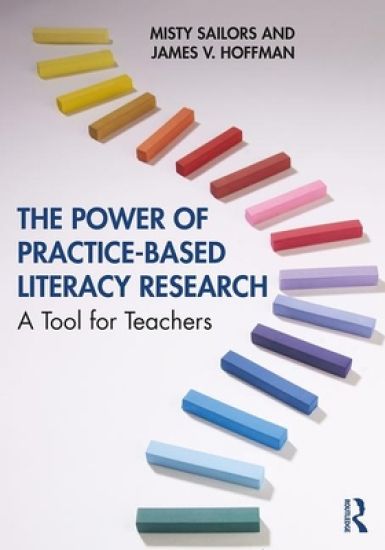
Accessible and inviting, this book showcases how teachers and literacy coaches can use research as a tool to teach literacy effectively and with intention. Sailors and Hoffman invite literacy specialists and practicing and preservice teachers into a conversation about how they can use research as means for professional learning, mentorship, and empowerment.Chapters feature a wealth of tools, examples, and strategies that make key concepts in literacy research refreshing and practical. This book invites the reader to pause and reflect on the practical knowledge through special features in the book and available online as eResources, including:"Points to Consider" boxes to encourage reflection and deeper thinking "Pause and Reflect" boxes to give the reader space to apply concepts to their own work as practice-based researchers eResources with recommended readings and "Meet the Teacher" exemplars of teachers’ stories to provoke further reflection, available on the book’s webpage: www.routledge.com/9780367177607 Perfect for literacy specialists, coaches and consultants in literacy, ELA/literacy teachers, as well as preservice teachers, this book is a comprehensive and engaging guide to using research as a means to transform classrooms.
The Power of Practice-Based Literacy Research

The Power of Practice-Based Literacy Research

Misty Sailors; James V. Hoffman

Routledge
2019
sidottu
Accessible and inviting, this book showcases how teachers and literacy coaches can use research as a tool to teach literacy effectively and with intention. Sailors and Hoffman invite literacy specialists and practicing and preservice teachers into a conversation about how they can use research as means for professional learning, mentorship, and empowerment.Chapters feature a wealth of tools, examples, and strategies that make key concepts in literacy research refreshing and practical. This book invites the reader to pause and reflect on the practical knowledge through special features in the book and available online as eResources, including:"Points to Consider" boxes to encourage reflection and deeper thinking "Pause and Reflect" boxes to give the reader space to apply concepts to their own work as practice-based researchers eResources with recommended readings and "Meet the Teacher" exemplars of teachers’ stories to provoke further reflection, available on the book’s webpage: www.routledge.com/9780367177607 Perfect for literacy specialists, coaches and consultants in literacy, ELA/literacy teachers, as well as preservice teachers, this book is a comprehensive and engaging guide to using research as a means to transform classrooms.
Mentoring Preservice Teachers Through Practice

Mentoring Preservice Teachers Through Practice

Melissa Mosley Wetzel; James V. Hoffman; Beth Maloch

Routledge
2017
nidottu
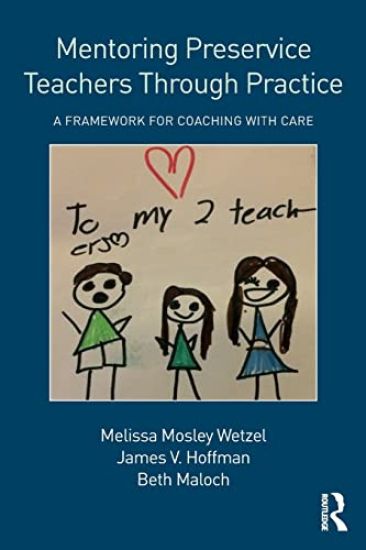
Supporting and challenging cooperating teachers to grow in their mentoring and coaching practices with preservice teachers and also in their own work as classroom teachers, this practical guide presents and illustrates the Coaching with CARE model—a framework for reflection and action that helps cultivate a perspective on teaching that puts students at the center of teacher preparation and places value on apprenticeship and participation in learning. The CARE model takes a turn away from traditional evaluation-based "training" approaches, offering a way for cooperating teachers, and facilitators and university teacher educators who work with them, to come together to shape innovative coaching and mentoring experiences for preservice teachers. Mentoring Preservice Teachers Through Practice, building on the authors’ own work with cooperating teachers, is based on the most recent research on learning to teach and supporting preservice teachers and grounded in the realities of teacher education today. Each chapter includes questions for discussion and suggested readings that can be used to explore the focus of the chapter more deeply as well as relevant research reports published by the authors.
Mentoring Preservice Teachers Through Practice

Mentoring Preservice Teachers Through Practice

Melissa Mosley Wetzel; James V. Hoffman; Beth Maloch

Routledge
2017
sidottu
Supporting and challenging cooperating teachers to grow in their mentoring and coaching practices with preservice teachers and also in their own work as classroom teachers, this practical guide presents and illustrates the Coaching with CARE model—a framework for reflection and action that helps cultivate a perspective on teaching that puts students at the center of teacher preparation and places value on apprenticeship and participation in learning. The CARE model takes a turn away from traditional evaluation-based "training" approaches, offering a way for cooperating teachers, and facilitators and university teacher educators who work with them, to come together to shape innovative coaching and mentoring experiences for preservice teachers. Mentoring Preservice Teachers Through Practice, building on the authors’ own work with cooperating teachers, is based on the most recent research on learning to teach and supporting preservice teachers and grounded in the realities of teacher education today. Each chapter includes questions for discussion and suggested readings that can be used to explore the focus of the chapter more deeply as well as relevant research reports published by the authors.