Kirjojen hintavertailu. Mukana 12 595 353 kirjaa ja 12 kauppaa.

Kirjailija

James W. Ceaser

Kirjat ja teokset yhdessä paikassa: 11 kirjaa, julkaisuja vuosilta 1979-2019, suosituimpien joukossa Epic Journey. Vertaile teosten hintoja ja tarkista saatavuus suomalaisista kirjakaupoista.

11 kirjaa

Kirjojen julkaisuhaarukka 1979-2019.

Defying the Odds

Defying the Odds

James W. Ceaser; Andrew E. Busch; John J. Pitney

Rowman Littlefield
2019
nidottu
As they have every four years since 1992, James W. Ceaser and Andrew E. Busch—now joined by John J. Pitney, Jr.—once again provide the most comprehensive and authoritative account of the presidential election.
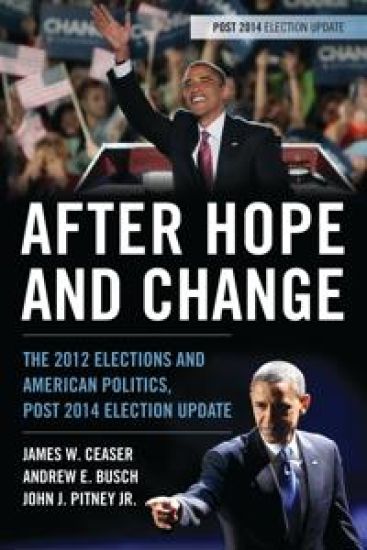
After Hope and Change

After Hope and Change

James W. Ceaser; Andrew E. Busch; John J. Pitney

Rowman Littlefield
2015
nidottu
Now updated to include the 2014 midterms and preview the coming 2016 election cycle, After Hope and Change provides the most comprehensive and authoritative account of the national election, including the presidential nomination process and election and congressional elections. As they have for every national election since 1992, James W. Ceaser and Andrew E. Busch, now joined by John J. Pitney, Jr., combine a concise account of the elections as well as the broader context for American politics and institutions. Previous books in the series After Hope and Change: The 2012 Elections and American Politics Epic Journey: The 2008 Elections and American Politics Red Over Blue: The 2004 Elections and American Politics The Perfect Tie: The True Story of the 2000 Presidential Election Losing to Win: The 1996 Elections and American Politics Upside Down and Inside Out: The 1992 Elections and American Politics
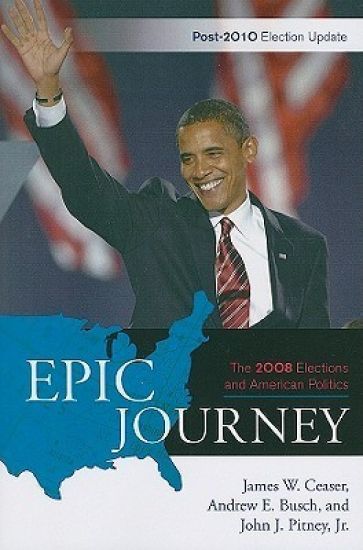
Epic Journey

Epic Journey

James W. Ceaser

Rowman Littlefield
2011
nidottu
Noted campaign scholars James W. Ceaser, Andrew E. Busch, and John J. Pitney Jr. take readers along on the longest, most expensive, and in many ways most dramatic presidential campaign in American history. Drawing on their extensive knowledge of political history and deep resources of current political science, the authors capture the astonishing twists of fate, uncanny detours, and remarkable surprises that made the 2008 election truly historic. With President George W. Bush's approval ratings at record lows, the 2008 election was a contest that Democrats were predicted to win. And with Barack Obama's victory over John McCain, they did. But it was the highly unlikely journey to this likely destination that set this presidential election apart from others. As they have every four years since 1992, James W. Ceaser and Andrew E. Busch once again provide the most comprehensive and authoritative account of the presidential election. Joined on this book by John J. Pitney Jr., the authors chronicle the epic journey—culminating in the election of the first African American president—of a group of extraordinary candidates and a nation. Epic Journey Authors' Blog: www.epicjourney2008.com
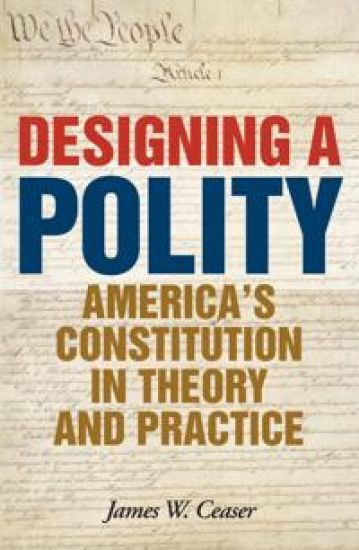
Designing a Polity

Designing a Polity

James W. Ceaser

Rowman Littlefield
2010
sidottu
In Designing a Polity, James W. Ceaser, one of our leading scholars of American political development, argues for the continuing central role of the Founding within the study of American government. Drawing on essays published over the past 10 years, extensively updated and revised to reflect current politics, Ceaser engages the Founding Fathers, particularly James Madison, emphasizes Alexis de Tocqueville as a model of political inquiry, critiques current and recent theorists such as Richard Rorty and Jacques Derrida, and explores the varieties of contemporary conservative thought. Designing a Polity offers a rich exploration of the core values of political sciences that will be of special interest to scholars and students of American political development, Constitutional thought, and contemporary political thought.
Nature and History in American Political Development

Nature and History in American Political Development

James W. Ceaser; Theda Skocpol

Harvard University Press
2008
nidottu
In this inaugural volume of the Alexis de Tocqueville Lectures, political scientist James Ceaser traces the way certain ideas, including nature, history, and religion—which he calls foundational ideas—have been understood and used by statesmen and public intellectuals over the course of American history, from the Puritans to the current day. Ceaser treats these ideas not as pure concepts of philosophy or theology, but rather as elements of political discourse that provide the ground or ultimate appeal for other political ideas, such as liberty or equality. At times, they have critically influenced the course of American political development, offering various opportunities and constraints for political leaders. Ceaser traces the histories of these ideas and their relation to other ideas, to practices, and to the fortunes of successive partisan regimes. Three critical commentators—historian Jack Rakove and political theorists Nancy Rosenblum and Rogers Smith—challenge Ceaser’s arguments in several ways. They suggest that other ideas may be considered foundational, and they prod him to clarify further how foundational ideas work politically. Ceaser responds with vigor, and the result is a spirited debate about large and enduring questions in American politics.
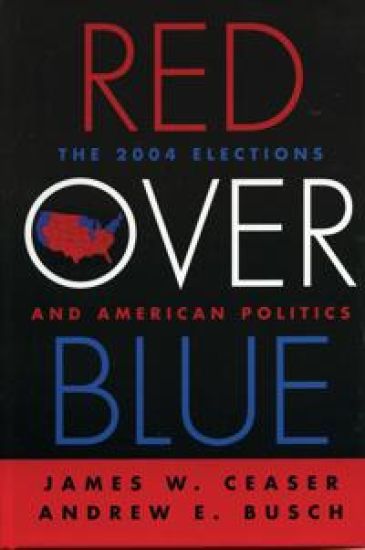
Red Over Blue

Red Over Blue

James W. Ceaser; Andrew E. Busch

Rowman Littlefield Publishers
2005
nidottu
From moral values to weapons of mass destruction, from exit polls to Swift Boat Veterans, from red states to blue states, the 2004 Presidential election left an indelible mark on American politics. In Red over Blue: The 2004 Election and American Politics, James W. Ceaser and Andrew E. Busch go beyond headlines and soundbites to explore the events, outcomes, and effects of the most recent exercise in American democracy. Beginning with an analysis of George W. Bush's first term and continuing through the primaries, general election, and aftermath, the authors share their insight and analysis through a clear and engaging narrative. Ceaser & Busch also look beyond the Presidential contest to examine important house, senate and gubernatorial races, as well as controversial state initiatives that played an important role in the 2004 election season. Building on Ceaser & Busch's studies of the 1992, 1996, and 2000 elections, this volume is essential reading for courses in American Government, Campaigns and Elections, and Presidential Politics, as well as for any American interested in the real and lasting importance of the 2004 elections.
Red Over Blue

Red Over Blue

James W. Ceaser; Andrew E. Busch

Rowman Littlefield Publishers
2005
sidottu
From moral values to weapons of mass destruction, from exit polls to Swift Boat Veterans, from red states to blue states, the 2004 Presidential election left an indelible mark on American politics. In Red over Blue: The 2004 Election and American Politics, James W. Ceaser and Andrew E. Busch go beyond headlines and soundbites to explore the events, outcomes, and effects of the most recent exercise in American democracy. Beginning with an analysis of George W. Bush's first term and continuing through the primaries, general election, and aftermath, the authors share their insight and analysis through a clear and engaging narrative. Ceaser & Busch also look beyond the Presidential contest to examine important house, senate and gubernatorial races, as well as controversial state initiatives that played an important role in the 2004 election season. Building on Ceaser & Busch's studies of the 1992, 1996, and 2000 elections, this volume is essential reading for courses in American Government, Campaigns and Elections, and Presidential Politics, as well as for any American interested in the real and lasting importance of the 2004 elections.
The Perfect Tie

The Perfect Tie

James W. Ceaser; Andrew E. Busch

Rowman Littlefield Publishers
2001
nidottu
In The Perfect Tie: The True Story of the 2000 Presidential Election, James W. Ceaser and Andrew E. Busch continue their study of national elections and their broader implications for American politics and society. With groundbreaking research of electoral politics and penetrating discussions of divided government, independent candidates, party platforms, realignment theory, the electoral college, and campaign strategies, Ceaser and Busch attempt to make sense of the 2000 presidential election. By separating myth from fact in presidential contests and by emphasizing the significance of frequently overlooked issues, such as foreign policy, this book is essential reading for courses in American Government, Campaigns and Elections, and Presidential Politics, as well as for any American interested in the real and lasting importance of the 2000 elections.
Reconstructing America

Reconstructing America

James W. Ceaser

Yale University Press
2000
pokkari
For too many people, America has become the primary symbol of all that is grotesque, deadening, and oppressive—or, as Heidegger once put it, the "emerging monstrousness of modern times." This image of a degenerate America, constructed by European intellectuals, has been gradually accepted within the United States, for America is now under siege by its own philosophers, literary critics, and postmodern thinkers. It is time, says James Ceaser in this provocative book, to take America back, to reaffirm confidence in our principles, and to remind ourselves that the real Americas opposed to the symbolic one has forged a system of liberal democratic government that has shaped the destiny of the modern world.With wit and passion, Ceaser traces the origins of the negative images of America, beginning with French scientists in the middle of the eighteenth century who viewed the country as a land of racial and physical degeneracy, and continuing with German thinkers from Hegel to Nietzsche, Spengler, and Heidegger, who viewed America as culturally inferior and a technological wasteland. Ceaser puts these critics of America in a dialogue with the country’s defenders—among them Alexander Hamilton, Alexis de Tocqueville, and Leo Strauss. By revealing the sources of the hostility to America, Ceaser undermines the position of its present attackers. He contends that only if we reassert political science rather than cultural and literary criticism as the proper intellectual discipline to direct politics will we free the real America from the symbolic America and vindicate its name.
Liberal Democracy and Political Science

Liberal Democracy and Political Science

James W. Ceaser

Johns Hopkins University Press
1992
pokkari
Do political scientists in a liberal democracy bear a special responsibility that goes beyond their academic pursuits? Ceaser, a scholar of American political parties, argues that they do, and he challenges colleagues and students to reexamine what they do as political scientists. He observes that liberal democracy is a compound of two elements not easily wed: constitutionalism and republicanism. The role of political science is to perform the "superintendent" function of keeping these parts together.
Presidential Selection

Presidential Selection

James W. Ceaser

Princeton University Press
1979
pokkari
Examining the development of the process of presidential selection from the founding of the republic to the present day, James Ceaser contends that many of the major purposes of the selection system as it was formerly understood have been ignored by current reformers and modern scholars. In an attempt to reverse this trend, Professor Ceaser discusses the theories of selection offered by leading American statesmen from the Founders and Thomas Jefferson to Martin Van Buren and Woodrow Wilson. From these theories he identifies a set of criteria for a sound selection system that he then uses to analyze and evaluate the recent changes in the selection process. Five normative functions of a presidential selection system comprise the author's criteria: it should minimize the harmful effects of ambitious contenders for the office, promote responsible executive leadership and power, help secure an able president, ensure a legitimate accession, and provide for an appropriate amount of choice and change. Professor Ceaser finds that the present system is characterized by weak parties and candidate-centered campaigns that lead to the problems of "image" politics and demagogic leadership appeals. He therefore argues for a more republican selection system in which political parties would be strengthened to serve as a restraining force on popular authority, public opinion, and individual aspirations for executive power.