Kirjojen hintavertailu. Mukana 12 595 353 kirjaa ja 12 kauppaa.

Kirjailija

James W. Johnson

Kirjat ja teokset yhdessä paikassa: 11 kirjaa, julkaisuja vuosilta 2004-2021, suosituimpien joukossa Pickin Up the Pieces of Your Life. Vertaile teosten hintoja ja tarkista saatavuus suomalaisista kirjakaupoista.

Mukana myös kirjoitusasut: James W Johnson

11 kirjaa

Kirjojen julkaisuhaarukka 2004-2021.

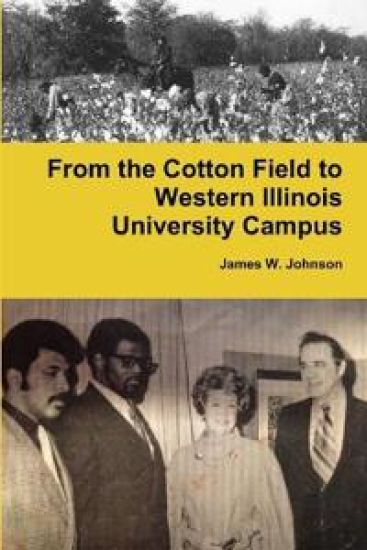
From the Cotton Field to Western Illinois University Campus
Gwendolyn Brooks encouraged us all to stand up for ourselves and be dignified and active. I wanted the Cultural Center for Black Students to be named after Gwendolyn Brooks. I succeeded in that. That was in 1970. Rudy Womack was instrumental to the Cultural Center's opening up to all on-campus and the community. Ms. Brooks would make an annual visit to Western Illinois University. She never came alone. She would bring all kinds of cultural artist. She would not accept any fee; she would take her people and whoever I deemed out to eat. That was one of the perks of being a student leader. Ms. Brooks would also bring people from Johnson's Publication, but never wanted to be made anything special, although she was very special to us. If you were in Chicago would stop by to see her.
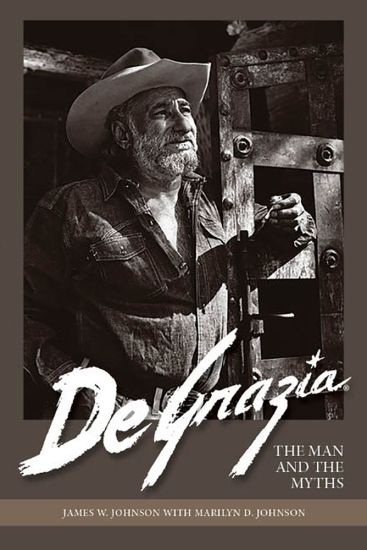
De Grazia

De Grazia

James W. Johnson; Marilyn D. Johnson

University of Arizona Press
2015
nidottu
Artist Ted De Grazia (1909–1982) lived life with passion and verve, embracing risk and romance, becoming a legend in Arizona and gaining international acclaim. De Grazia: The Man and the Myths is a biography that reveals the eccentric, colorful man behind the myths. This highly entertaining book by James W. Johnson with Marilyn D. Johnson looks at De Grazia's life from his early years until his death. Born in Arizona Territory to Italian immigrant parents, De Grazia, who was also known as Ted DeGrazia, had a humble childhood as a copper miner's son influenced his famous persona later. De Grazia often held forth at his gallery in Tucson's Catalina foothills dressed in a pseudo prospector's getup of scraggly beard, jeans, flannel shirt, boots, and beat-up cowboy hat. Outrageous stories of womanizing, scores of children, and drinking binges created an eclectic image that fueled stories of mythic proportions, along with global sales of his colorful paintings inspired by the Southwest and Mexico. He made millions through his paintings and the licensing of his art for greeting cards and trinkets. Critics called his work kitsch or commercial, yet thousands of admirers continue to love it. Calling De Grazia a complicated man doesn't begin to explain him. He once described himself as ""not saint nor devil, but both."" The first book of its kind, De Grazia: The Man and the Myths tells the story of a life remarkably lived.
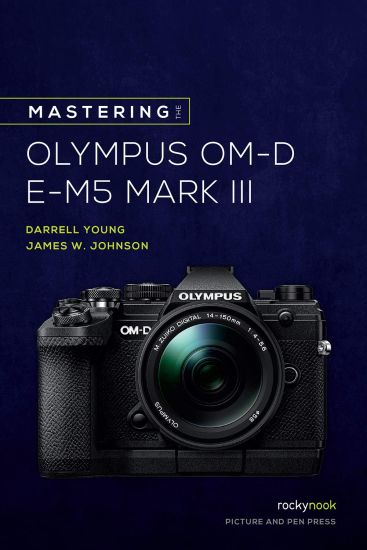
Mastering the Olympus OM-D E-M5 Mark III

Mastering the Olympus OM-D E-M5 Mark III

James W. Johnson; Darrell Young

Rocky Nook
2021
nidottu
A friendly and informative camera guide that allows readers to easily follow directions.Olympus launched the OM-D E-M5 Mark III camera with a specific purpose in mind: to create a Micro Four Thirds camera for advanced enthusiast and professional photographers who prefer a smaller, yet very powerful mirrorless camera. The E-M5 Mark III is a true system camera for those who demand the best in cameras, lenses, and image quality. Darrell Young and Jim Johnson's Mastering the Olympus OM-D E-M5 Mark III explores the features and capabilities of the camera in a way that far surpasses the user's manual. It is designed to guide readers through the camera's features with step-by-step setting adjustments; color illustrations; and detailed how, when, and why explanations for each option. Every button, dial, switch, lever, and menu configuration setting is explored in a user-friendly manner, with suggestions for setup according to various shooting styles. The learning experience for new E-M5 III users goes beyond just the camera itself and covers basic photography technique.
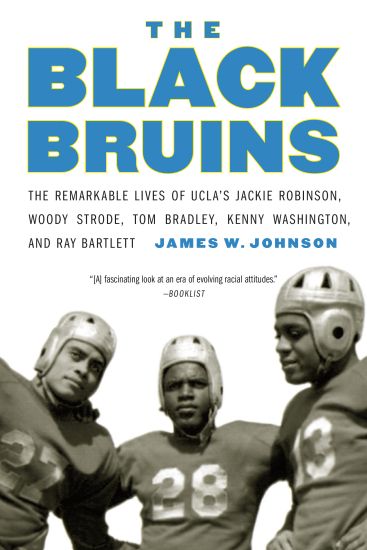
The Black Bruins

The Black Bruins

James W. Johnson

University of Nebraska Press
2019
pokkari
The Black Bruins chronicles the inspirational lives of five Black athletes who faced racial discrimination as teammates at UCLA in the late 1930s. Best known among them was Jackie Robinson, a four-star athlete for the Bruins who went on to break the color barrier in Major League Baseball and become a leader in the civil rights movement after his retirement. Joining him were Kenny Washington, Woody Strode, Ray Bartlett, and Tom Bradley-the four played starring roles in an era when fewer than a dozen major colleges had black players on their rosters. This rejection of the “gentleman’s agreement,” which kept teams from fielding black players against all-white teams, inspired black Angelinos and the African American press to adopt the teammates as their own. Kenny Washington became the first African American player to sign with an NFL team in the post–World War II era and later became a Los Angeles police officer and actor. Woody Strode, a Bruins football and track star, broke into the NFL with Washington in 1946 as a Los Angeles Ram and went on to act in at least fifty-seven full-length feature films. Ray Bartlett, a football, basketball, baseball, and track athlete, became the second African American to join the Pasadena Police Department, later donating his time to civic affairs and charity. Tom Bradley, a runner for the Bruins’ track team, spent twenty years fighting racial discrimination in the Los Angeles Police Department before being elected the first black mayor of Los Angeles.
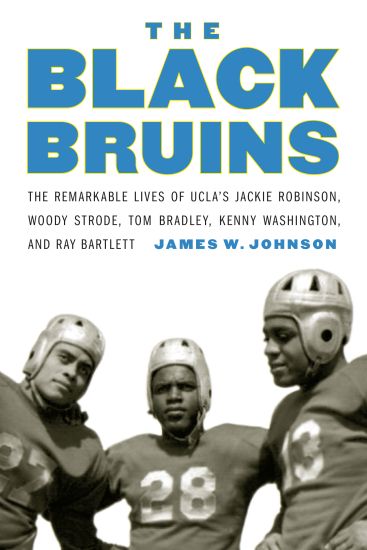
The Black Bruins

The Black Bruins

James W. Johnson

University of Nebraska Press
2018
sidottu
The Black Bruins chronicles the inspirational lives of five Black athletes who faced racial discrimination as teammates at UCLA in the late 1930s. Best known among them was Jackie Robinson, a four-star athlete for the Bruins who went on to break the color barrier in Major League Baseball and become a leader in the civil rights movement after his retirement. Joining him were Kenny Washington, Woody Strode, Ray Bartlett, and Tom Bradley-the four played starring roles in an era when fewer than a dozen major colleges had black players on their rosters. This rejection of the “gentleman’s agreement,” which kept teams from fielding black players against all-white teams, inspired black Angelinos and the African American press to adopt the teammates as their own. Kenny Washington became the first African American player to sign with an NFL team in the post–World War II era and later became a Los Angeles police officer and actor. Woody Strode, a Bruins football and track star, broke into the NFL with Washington in 1946 as a Los Angeles Ram and went on to act in at least fifty-seven full-length feature films. Ray Bartlett, a football, basketball, baseball, and track athlete, became the second African American to join the Pasadena Police Department, later donating his time to civic affairs and charity. Tom Bradley, a runner for the Bruins’ track team, spent twenty years fighting racial discrimination in the Los Angeles Police Department before being elected the first black mayor of Los Angeles.
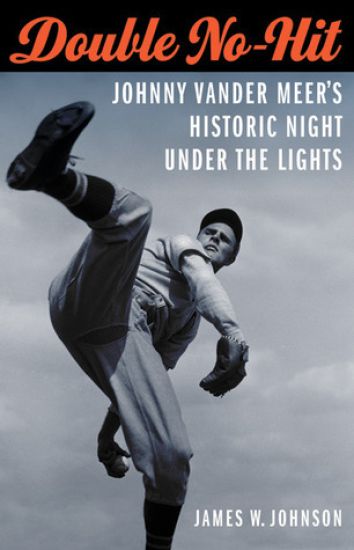
Double No-Hit

Double No-Hit

James W. Johnson

University of Nebraska Press
2012
pokkari
The average pitcher has about a .000645 chance of throwing a no-hitter. In the spring of 1938, Cincinnati Reds rookie pitcher Johnny Vander Meer pitched two, back to back. The feat has never been duplicated, which comes as no surprise to sports professionals and aficionados alike. Decade after decade, in one poll after another (from Sport magazine, Sports Illustrated, and ESPN),Vander Meer's consecutive no-hitters turn up as one of baseball's greatest and most untouchable achievements. Double No-Hit offers an inning-by-inning account of that historic second consecutive no-hitter accomplished during the first night game in New York City, with the Cincinnati Reds facing the Brooklyn Dodgers in Ebbets Field. James W. Johnson sets the stage and assembles the colorful cast of characters. Highlighting the story with recollections and observations from owners, managers, and players past and present, he fills in the details of Vander Meer's accomplishment—and his baseball career, which never lived up to expectations heightened by his sensational performance. In the end, Double No-Hit brings to life a bygone era of the national pastime and one shining spring night, June 15, 1938, when a twenty-two-year-old fireballing left-hander with lousy control pitched his way into the top tier of baseball's record book.
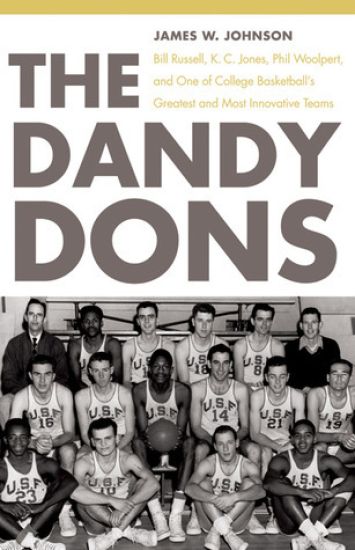
The Dandy Dons

The Dandy Dons

James W. Johnson

Bison Books
2009
pokkari
In the mid-1950s three unrecruited black basketball players, coached by a white former prison guard who had never before coached a college team, led a small Jesuit university in San Francisco to two national titles. The Dandy Dons describes for the first time how the unprecedented accomplishment of the Dons, led by coach Phil Woolpert and future hall-of-famers Bill Russell and K. C. Jones, paved the way for black talent in major college basketball and transformed the sport.James W. Johnson traces the backgrounds of the coach and players, chronicles the heart-stopping games on the road to the championships, and details the Dons' novel techniques: a more vertical game, more central defense, and intimidation as part of game strategy. He also gives a textured picture of life on an integrated basketball team amid a culture of racism and Jim Crow in mid-twentieth-century America.
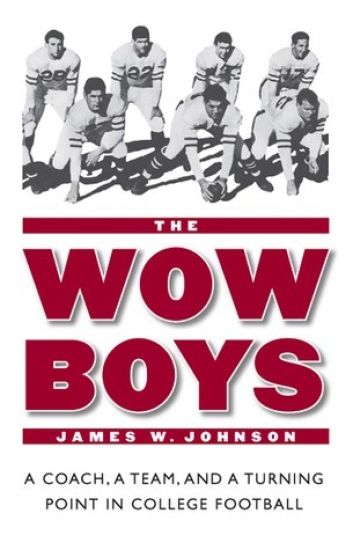
The Wow Boys

The Wow Boys

James W. Johnson

Bison Books
2006
pokkari
In 2002 ESPN rated football's shift to the modern T-formation offense as the second best sports innovation of all time—just behind baseball's free agency. The story behind the move to the T-formation is also the story of a season unparalleled in the annals of college football—the year Stanford's new coach, fresh from seven dismal seasons with the University of Chicago, deployed an out-of-favor offense to take a team of talented underdogs to a Rose Bowl victory. The Wow Boys (the title refers to the nickname the team earned at its very first game) chronicles Stanford's miraculous 1940 season, from the surprise hiring of coach Clark Shaughnessy and his marshalling of the previously untapped talents of left-handed quarterback Frankie Albert, runners Hugh Gallarneau and Pete Kmetovic, and fullback Norm Standlee, to his reintroduction of the T-formation and its profound and enduring effect on football. James W. Johnson gives a game-by-game rundown of this dramatic season as well as an in-depth account of Shaughnessy's accomplishment in the face of overwhelming criticism and skepticism. This story is one of tenacity, character, and radical ideas prevailing against formidable odds—a sports revolution engineered one play at a time.
Mo

Mo

Donald W. Carson; James W. Johnson

University of Arizona Press
2004
nidottu
Everybody liked Mo. Throughout his political life and especially during his bid for the Democratic presidential nomination in 1976 thousands of people were drawn to Arizona congressman Morris K. Udall by his humor, humanity, and courage. This biography traces the remarkable career of the candidate who was "too funny to be president" and introduces readers to Mo the politician, Mo the environmentalist, and Mo the man. Journalists Donald Carson and James Johnson interviewed more than one hundred of Udall's associates and family members to create an unusually rich portrait. They recall Udall's Mormon boyhood in Arizona when he lost an eye at age six, his service during World War II, his brief career in professional basketball, and his work as a lawyer and county prosecutor, which earned him a reputation for fairness and openness. Mo provides the most complete record of Udall's thirty-year congressional career ever published. It reveals how he challenged the House seniority system and turned the House Interior Committee into a powerful panel that did as much to protect the environment as any organization in the twentieth century. It shows Udall to have been a consensus builder for environmental issues who paved the way for the Alaska Lands Act of 1980, helped set aside 2.4 million acres of wilderness in Arizona, and fought for the Central Arizona Project, one of the most ambitious water projects in U.S. history. Carson and Johnson record Udall's early opposition to the Vietnam War at a time when that conflict was largely perceived as a just cause, as well as his early advocacy of campaign finance reform. They also provide a behind-the-scenes account of his run for the presidency the first House member to seek the office in nearly a century which gained him an intensely loyal national following. Mo explores the paradoxes that beset Udall: He was a man able to accomplish things politically because people genuinely liked and respected him, yet he was a loner and workaholic whose focus on politics overshadowed his personal life. Carson and Johnson devote a chapter to the famous Udall sense of humor. They also look sensitively at his role as a husband and father and at his proud and stubborn bout with Parkinson's disease. Mo Udall will long be remembered for his contributions to environmental legislation, for his unflagging efforts in behalf of Arizona, and for the gentle humor with which he conducted his life. This book secures his legacy.