Kirjojen hintavertailu. Mukana 12 390 323 kirjaa ja 12 kauppaa.

Kirjailija

James Wierzbicki

Kirjat ja teokset yhdessä paikassa: 10 kirjaa, julkaisuja vuosilta 2005-2023, suosituimpien joukossa Music in the Age of Anxiety. Vertaile teosten hintoja ja tarkista saatavuus suomalaisista kirjakaupoista.

10 kirjaa

Kirjojen julkaisuhaarukka 2005-2023.

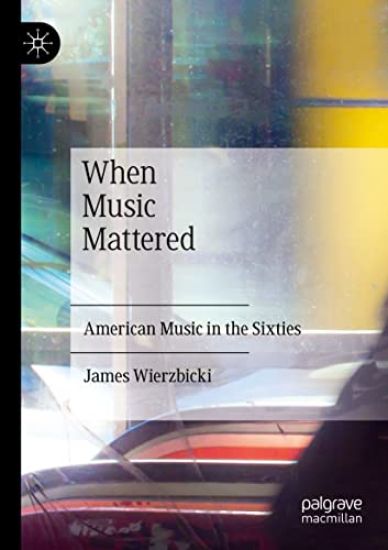
When Music Mattered

When Music Mattered

James Wierzbicki

Springer Nature Switzerland AG
2023
nidottu
This book examines the American Sixties, and how that period’s socio-political essence was reflected and refracted in certain forms of the period’s music. Its five main chapters bear the names of familiar musical categories: ’Folk,’ ‘Rock,’ ‘Jazz,’ ‘Avant-Garde,’ ‘Classical.’ But the book’s real subject matter—treated at length in the Prologue and the Epilogue but spread throughout all that comes between—is the Sixties’ tangled mess of hopes and frustrations, of hungers as much for self-identity as for self-indulgence, of crises of conscience that bothered Americans of almost all ages and regardless of political persuasion.
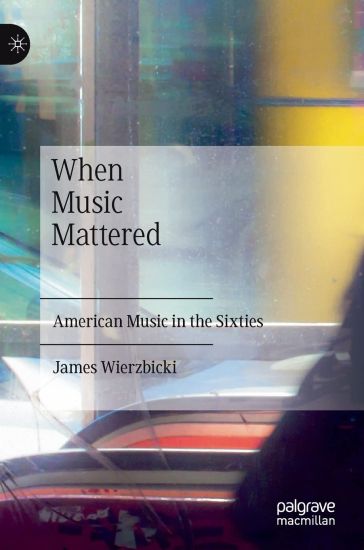
When Music Mattered

When Music Mattered

James Wierzbicki

Springer Nature Switzerland AG
2022
sidottu
This book examines the American Sixties, and how that period’s socio-political essence was reflected and refracted in certain forms of the period’s music. Its five main chapters bear the names of familiar musical categories: ’Folk,’ ‘Rock,’ ‘Jazz,’ ‘Avant-Garde,’ ‘Classical.’ But the book’s real subject matter—treated at length in the Prologue and the Epilogue but spread throughout all that comes between—is the Sixties’ tangled mess of hopes and frustrations, of hungers as much for self-identity as for self-indulgence, of crises of conscience that bothered Americans of almost all ages and regardless of political persuasion.
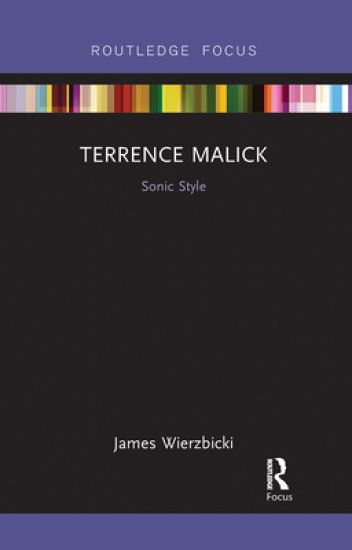
Terrence Malick: Sonic Style

Terrence Malick: Sonic Style

James Wierzbicki

Routledge
2020
nidottu
In the course of a decades-spanning career as a filmmaker, Terrence Malick has carved out a distinctive cinematic aesthetic. Central to this style is the use of sound. James Wierzbicki offers the first comprehensive study of Malick's soundtracks, arguing that they create a distinctive sonic style throughout his oeuvre and exploring how that style functions. Considering voice, noise, and music as elements in the soundtrack, this concise book enriches our understanding of one of our most philosophical filmmakers, and of the interplay between the sonic and visual elements in film.
Terrence Malick: Sonic Style

Terrence Malick: Sonic Style

James Wierzbicki

Routledge
2019
sidottu
In the course of a decades-spanning career as a filmmaker, Terrence Malick has carved out a distinctive cinematic aesthetic. Central to this style is the use of sound. James Wierzbicki offers the first comprehensive study of Malick's soundtracks, arguing that they create a distinctive sonic style throughout his oeuvre and exploring how that style functions. Considering voice, noise, and music as elements in the soundtrack, this concise book enriches our understanding of one of our most philosophical filmmakers, and of the interplay between the sonic and visual elements in film.
Music in the Age of Anxiety

Music in the Age of Anxiety

James Wierzbicki

University of Illinois Press
2016
sidottu
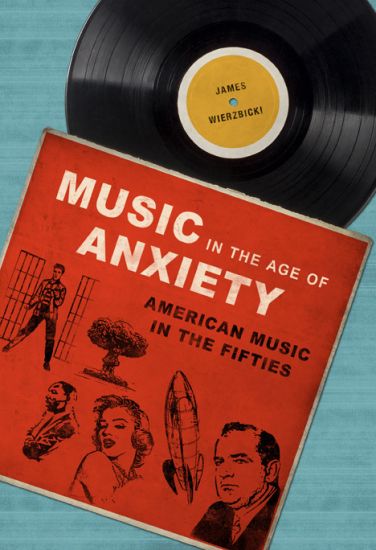
Derided for its conformity and consumerism, 1950s America paid a price in anxiety. Prosperity existed under the shadow of a mushroom cloud. Optimism wore a Bucky Beaver smile that masked worry over threats at home and abroad. But even dread could not quell the revolutionary changes taking place in virtually every form of mainstream music. Music historian James Wierzbicki sheds light on how the Fifties' pervasive moods affected its sounds. Moving across genres established--pop, country, opera--and transfigured--experimental, rock, jazz--Wierzbicki delves into the social dynamics that caused forms to emerge or recede, thrive or fade away. Red scares and white flight, sexual politics and racial tensions, technological progress and demographic upheaval--the influence of each rooted the music of this volatile period to its specific place and time. Yet Wierzbicki also reveals the host of underlying connections linking that most apprehensive of times to our own uneasy present.
Music in the Age of Anxiety

Music in the Age of Anxiety

James Wierzbicki

University of Illinois Press
2016
nidottu
Derided for its conformity and consumerism, 1950s America paid a price in anxiety. Prosperity existed under the shadow of a mushroom cloud. Optimism wore a Bucky Beaver smile that masked worry over threats at home and abroad. But even dread could not quell the revolutionary changes taking place in virtually every form of mainstream music. Music historian James Wierzbicki sheds light on how the Fifties' pervasive moods affected its sounds. Moving across genres established--pop, country, opera--and transfigured--experimental, rock, jazz--Wierzbicki delves into the social dynamics that caused forms to emerge or recede, thrive or fade away. Red scares and white flight, sexual politics and racial tensions, technological progress and demographic upheaval--the influence of each rooted the music of this volatile period to its specific place and time. Yet Wierzbicki also reveals the host of underlying connections linking that most apprehensive of times to our own uneasy present.
Elliott Carter

Elliott Carter

James Wierzbicki

University of Illinois Press
2011
nidottu
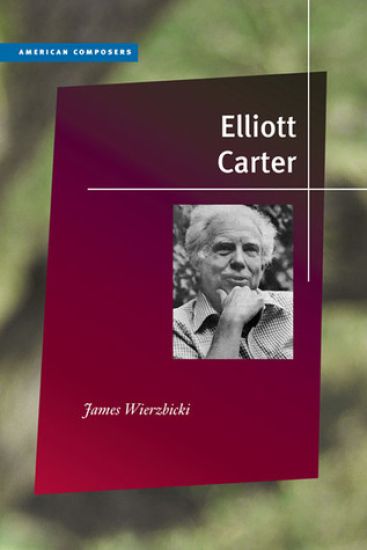
This compact introduction to the life and works of composer Elliott Carter provides a fresh perspective on one of the most significant American composers of the twentieth and twenty-first centuries. A leading voice of the American classical music tradition and a two-time winner of the Pulitzer Prize for Music, Carter was initially encouraged to become a composer by Charles Ives, and he went on to learn from Walter Piston at Harvard University and Nadia Boulanger in Paris. Drawing on Carter's voluminous writings and compositions, James Wierzbicki provides a clear discussion of Carter's evolving understanding of musical time and the influence of film on his work. Celebrating his 100th birthday in 2008 by premiering a number of new compositions, Carter has been a powerful presence on the American new music scene, an important connection to American music's foundational figures, and a dynamic force in its continuing evolution.
Film Music: A History

Film Music: A History

James Wierzbicki

Routledge
2008
sidottu
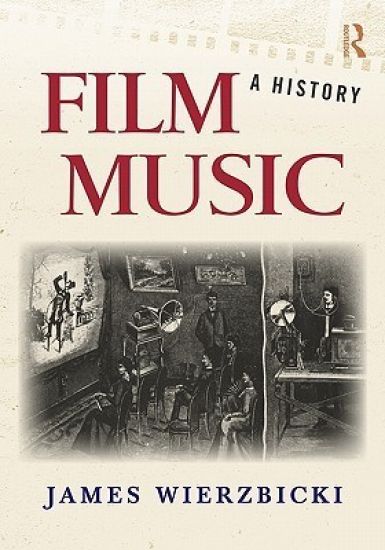
Film Music: A History explains the development of film music by considering large-scale aesthetic trends and structural developments alongside socioeconomic, technological, cultural, and philosophical circumstances. The book’s four large parts are given over to Music and the "Silent" Film (1894--1927), Music and the Early Sound Film (1895--1933), Music in the "Classical-Style" Hollywood Film (1933--1960), and Film Music in the Post-Classic Period (1958--2008). Whereas most treatments of the subject are simply chronicles of "great film scores" and their composers, this book offers a genuine history of film music in terms of societal changes and technological and economic developments within the film industry. Instead of celebrating film-music masterpieces, it deals—logically and thoroughly—with the complex ‘machine’ whose smooth running allowed those occasional masterpieces to happen and whose periodic adjustments prompted the large-scale twists and turns in film music’s path.
Film Music: A History

Film Music: A History

James Wierzbicki

Routledge
2008
nidottu
Film Music: A History explains the development of film music by considering large-scale aesthetic trends and structural developments alongside socioeconomic, technological, cultural, and philosophical circumstances. The book’s four large parts are given over to Music and the "Silent" Film (1894--1927), Music and the Early Sound Film (1895--1933), Music in the "Classical-Style" Hollywood Film (1933--1960), and Film Music in the Post-Classic Period (1958--2008). Whereas most treatments of the subject are simply chronicles of "great film scores" and their composers, this book offers a genuine history of film music in terms of societal changes and technological and economic developments within the film industry. Instead of celebrating film-music masterpieces, it deals—logically and thoroughly—with the complex ‘machine’ whose smooth running allowed those occasional masterpieces to happen and whose periodic adjustments prompted the large-scale twists and turns in film music’s path.
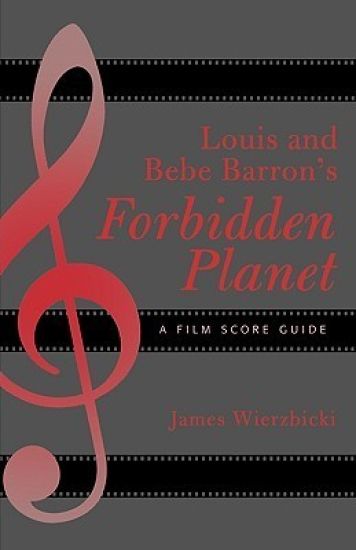
Louis and Bebe Barron's Forbidden Planet

Louis and Bebe Barron's Forbidden Planet

James Wierzbicki

Scarecrow Press
2005
nidottu
Forbidden Planet is a product of the MGM studio, which at the time of the production of this film was hardly in the business of making science-fiction films. Originally planned as a "B" picture, the 1956 Forbidden Planet was praised for its spectacular special effects and brilliant color cinematography. The plot practically tingles with sexual innuendo and the dialogue is rich in references to Freudian psychology. However, in spite of all this, the film was marketed to a juvenile audience. Notwithstanding its uncommon look and "feel," perhaps the most unusual aspect of the film is the way it sounds. Never before had a major Hollywood effort utilized a score generated entirely by electronic means, yet seldom does one find commentary on how Louis and Bebe Barron's score again and again challenges Hollywood norms. In addition to placing the composers and film in historical context, James Wierzbicki's study offers a deep and thorough analysis of not only the music as used in the film, but also of the decontextualized music as presented by the Barrons on the 1977 "original soundtrack album." The text is generously illustrated with transcriptions and graphs, and can serve as a model for the examination of other extended works of electronic music for which no written score has ever existed.