

Kirjailija
Jamgon Mipham
Kirjat ja teokset yhdessä paikassa: 22 kirjaa, julkaisuja vuosilta 2000-2025, suosituimpien joukossa Speech of Delight. Vertaile teosten hintoja ja tarkista saatavuus suomalaisista kirjakaupoista.
Mukana myös kirjoitusasut: Jamgön Mipham
22 kirjaa
Kirjojen julkaisuhaarukka 2000-2025.

A selection of 52 short prayers and practices devoted to Tibet's cultural hero Gesar of Ling as an enlightened tantric deity to generate positive circumstances and increase one's experiences and realization in Buddhist practice. Gesar of Ling is widely known as the hero of Tibet's national oral epic, considered the longest epic in the world. But he is also the focus of Buddhist practices in which his enlightened form, known as King Gesar the Jewel, becomes one of the numerous spiritual methods offered by Tibetan Vajrayana Buddhism to progress toward buddhahood. This work contains the complete selection of practice texts compiled by the early modern Tibetan polymath Jamgon Mipham and included in his Collected Works. Gesar personifies the ideal of the spiritual warrior, who tames negative forces which obstruct the Buddhist path. The practices presented here detail poetic imagery of offerings and their recipients, including Gesar, his court, and the spirits who dwell in his personal belongings. Vajrayana practices such as these are considered mind treasures, meaning rather than being composed, they appeared fully formed as a transmission with the mind of a Vajrayana master.
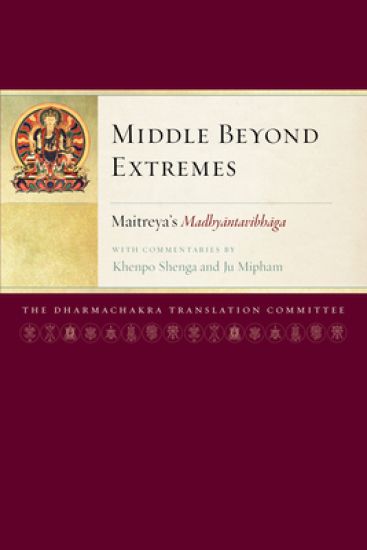
Unraveling the subtle processes that condition our thinking and experience, Maitreya's teaching reveals a powerful path of compassionate vision and spiritual transformation. Middle Beyond Extremes contains a translation of the Buddhist masterpiece Distinguishing the Middle from Extremes. This famed text, often referred to by its Sanskrit title, Madhyāntavibhāga, is part of a collection known as the Five Maitreya Teachings. Maitreya is held to have entrusted these profound and vast instructions to the master Asaṅga in the heavenly realm of Tuṣita.Distinguishing the Middle from Extremes employs the principle of the three natures to explain the way things seem to be as well as the way they actually are. It is presented here alongside commentaries by two outstanding masters of Tibet's nonsectarian Rim movement, Khenpo Shenga and Ju Mipham.
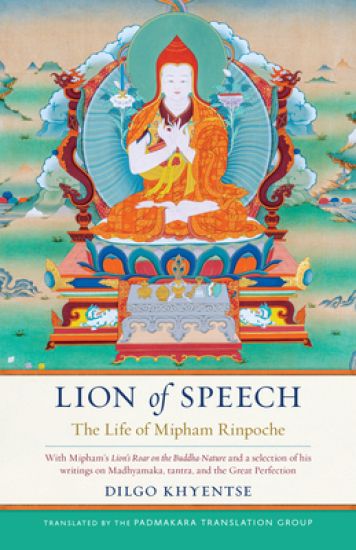
A traditional biography on the life of Mipham Rinpoche--one of the greatest 19th-century masters--from Dilgo Khyentse Rinpoche, one of the greatest 20th-century masters. The first half of this volume comprises the first-ever English translation of the biography of Mipham Rinpoche written by Dilgo Khyentse Rinpoche, a teacher to His Holiness the Dalai Lama as well as an entire generation of other teachers and students throughout the Himalayan region and the West. Composed in 1939, it was left behind in Tibet in 1959 when Khyentse Rinpoche went into exile and was lost for fifty-one years before its discovery in 2010 by an extraordinary stroke of good luck. Reverential in tone, it is informed by both oral accounts preserved in notes kept by Khyentse Rinpoche's elder brother and the recollections of Mipham's devoted personal attendant of thirty-seven years. In keeping with the identification of Mipham as an emanation of Manjushri, the lion of speech, the second half comprises a selection of Mipham's writings, designed to give the reader an experience of Mipham's eloquent speech and incisive thought. It includes both a new translation of The Lion's Roar: A Comprehensive Discourse on the Buddha-Nature and A Lamp to Dispel the Dark, a teaching of the Great Perfection, as well as excerpts from previously published translations of his works on Madhyamaka and tantra.
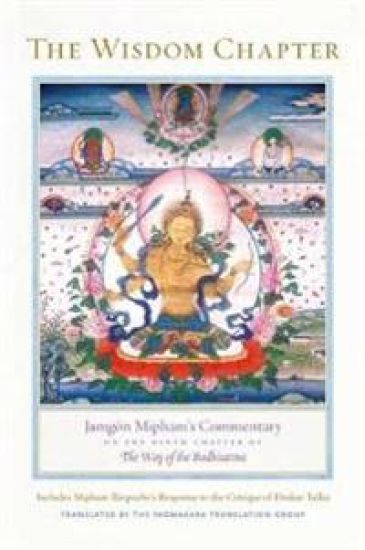
The first English translation of Mipham Rinpoche's commentary on the "wisdom" chapter of Shantideva's classic text, in which Mipham explains Madhyamaka philosophy from the perspective of the Dzogchen tradition of Tibetan Buddhism. Shāntideva's guide to the training of a Bodhisattva is one of the most important and beloved texts in the Tibetan tradition. The ninth chapter, however, dealing with Madhyamaka, the Middle Way, the most profound wisdom view of Mahayana Buddhism, has always posed unique challenges to readers. This commentary by the great scholar Mipham Rinpoche presents in quite straightforward terms Shāntideva's exposition of emptiness, the essential foundation of all Buddhist doctrine, demonstrating that it is not only compatible with, but in fact crucial to, the correct understanding of other important Buddhist teachings such as karma, rebirth, and the practice of compassion. Mipham interprets Shāntideva according to the view of the Nyingma school, which in some respects was at variance with the religiously and politically dominant interpretation of the text in Tibet at that time. As a result, his commentary stirred up a furious debate. With the addition of a critique of Mipham Rinpoche's view by a prominent scholar of the time, along with Mipham's response, that debate is beautifully captured in this volume.
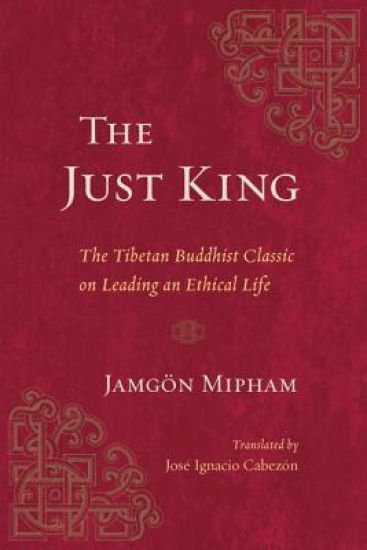
A translation of a popular Buddhist work on worldly ethics by Tibet's most famous philosopher. Leadership. Power. Responsibility. From Sun Tzu to Plato to Machiavelli, sages east and west have advised kings and rulers on how to lead. Their motivations and techniques have varied, but one thing they all have had in common is that their advice has been as relevant to the millions who have read their works as it has been to the few kings and princes they were, on the surface, addressed to. The nineteenth-century Buddhist monk and luminary Jamg n Mipham's letter to the king of Derg , whose small kingdom straddled China and Tibet during a particularly turbulent period, is similar in the universality of its message. This work, however, is unique in that it stresses compassion, impartiality, self-control, and virtue as essential for long-lasting success--whether as a leader or an individual trying to live a meaningful life. Mipham's historic contribution to ethics and governance, until now little studied outside of Buddhist circles, teaches us the importance of protecting life, fair taxation, environmental sustainability, aiding the poor, and freedom of religion. Both present day leaders and those they lead will find this classic work, finally available in English, profoundly illuminating on political, societal, and personal levels.
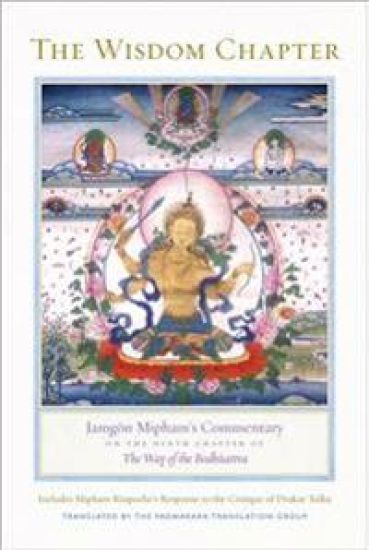
The first English translation of Mipham Rinpoche's commentary on the "wisdom" chapter of Shantideva's classic text, in which Mipham explains Madhyamaka philosophy from the perspective of the Dzogchen tradition of Tibetan Buddhism. Shāntideva's guide to the training of a Bodhisattva is one of the most important and beloved texts in the Tibetan tradition. The ninth chapter, however, dealing with Madhyamaka, the Middle Way, the most profound wisdom view of Mahayana Buddhism, has always posed unique challenges to readers. This commentary by the great scholar Mipham Rinpoche presents in quite straightforward terms Shāntideva's exposition of emptiness, the essential foundation of all Buddhist doctrine, demonstrating that it is not only compatible with, but in fact crucial to, the correct understanding of other important Buddhist teachings such as karma, rebirth, and the practice of compassion. Mipham interprets Shāntideva according to the view of the Nyingma school, which in some respects was at variance with the religiously and politically dominant interpretation of the text in Tibet at that time. As a result, his commentary stirred up a furious debate. With the addition of a critique of Mipham Rinpoche's view by a prominent scholar of the time, along with Mipham's response, that debate is beautifully captured in this volume.
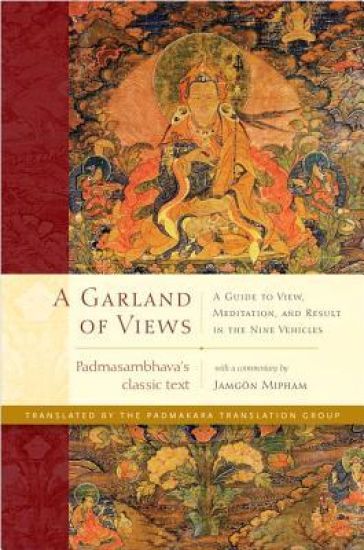
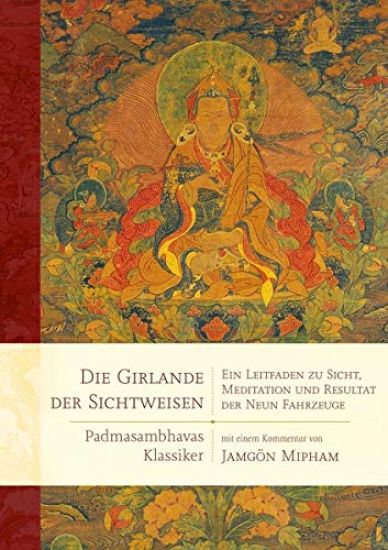
A core text of the Nyingma tradition of Tibetan Buddhism, presented in English for the first time, with commentary by Jamg n Mipham, one of the Nyingma tradition's most lucid and brilliant minds. A concise commentary by the eighth-century Indian Buddhist master Padmasambhava on a chapter from the Guhyagarbha Tantra, which gives an overview of the different Buddhist and non-Buddhist philosophical views, including the Great Perfection (Dzogchen), with an explicative commentary by the nineteenth-century scholar Jamg n Mipham (1846-1912). Padmasambhava's text is a core text of the Nyingma tradition because it provides the basis for the system of nine vehicles (three sutra vehicles and six tantra vehicles) that subsequently became the accepted way of classifying the different Buddhist paths in the Nyingma tradition. Mipham's commentary is the one most commonly used to explain Padmasambhava's teaching. Mipham is well known for his prolific, lucid, and original writings on many subjects, including science, medicine, and philosophy, in addition to Tibetan Buddhist practice and theory.
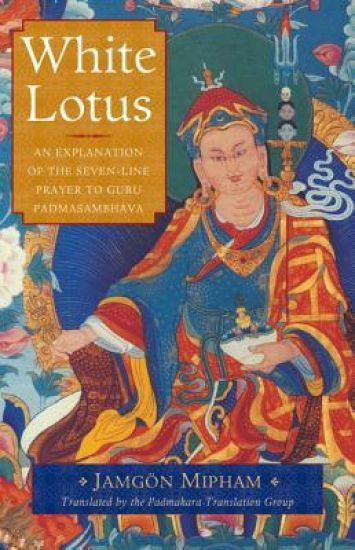
The commentary translated in these pages is unusual and rare. But if the commentary is a rarity, its subject matter--the seven-line invocation of Padmasambhava--is one of the best-known prayers in the Tibetan Buddhist world. The overall significance of the Seven-Line Prayer is perhaps best appreciated in relation to a practice called guru-yoga, or "union with the nature of the guru." The purpose of guru-yoga is to purify and deepen the student's relationship with his or her teacher. It is introduced as one of the preliminary practices, and it remains crucial--in fact, its importance increases--as one progresses through the more advanced levels of the tantric path. The cultivation of devotion to the guru and the blending of one's mind with his or her enlightened mind is, in the words of Dilgo Khyentse Rinpoche, "the most vital and necessary of all practices and is in itself the surest and fastest way to reach the goal of enlightenment." Regarding the origin of this commentary, Mipham refers in the colophon to an event that triggered the abrupt appearance in his mind of the hidden meaning of the prayer. It is interesting to note that the language Mipham uses suggests that the commentary itself is not an ordinary composition but perhaps a treasure teaching, specifically a "mind-treasure" or gongter.
This concise handbook of Tibetan Buddhist teachings, designed for Western students, is centered on a sitting practice called Contemplative Meditation. This practice can be used as a way to change troublesome habits, even by someone with little knowledge of Buddhism. Although the teachings are based it on a nineteenth-century text by Lama Mipham, they are presented in a non-scholarly way, with examples drawn from modern life and everyday experience. In particular, the author addresses the unique attitudes and questions of twenty-first-century Westerners who are exploring Buddhism. The practice taught in the book consists of a reflection on four subjects, known as the Four Seals of the Buddha's teaching: multiplicity, impermanence, suffering, and emptiness. Khenpo Gawang Rinpoche explains how to investigate each of these topics in a way that helps you recognize your innate wisdom mind, which is your ultimate teacher. Once you learn how to examine your own mind and your life with this method, you will start to look at everything differently. By helping to dissolve negative thoughts and habits, the practice can increase your focus, confidence, self-esteem, and happiness. Along with exercises and questions, short readings, a glossary, and checklists for study, this book provides a complete handbook, with simple instructions for additional practices: - the Ninefold Exhalation, a breathing method for expelling stale air before meditation - visualization of buddhas and great teachers to inspire practice - the practice of bodhichitta, or generating love and compassion for all beings - the seven-branch offering, seven devotional thoughts to strengthen efforts - dedication of merit--the positive energy from the meditation--for the benefit of all beings Finally, the appendix gives translations of two short readings: The Wheel of Analytical Meditation by Lama Mipham, which is the source of this book's teaching, and the Heart Sutra, a famous brief teaching on emptiness, along with a traditional commentary.
Jamgon Mipam
Douglas Duckworth; Jamgon Mipham; Mipam Rinpoche
Shambhala Publications Inc
2011
pokkari
Jamg n Mipam (1846-1912) is one of the most extraordinary figures in the history of Tibet. Monk, mystic, and brilliant philosopher, he shaped the trajectory of Tibetan Buddhism's Nyingma school. This introduction provides a most concise entr e to this great luminary's life and work. The first section gives a general context for understanding this remarkable individual who, though he spent the greater part of his life in solitary retreat, became one of the greatest scholars of his age. Part Two gives an overview of Mipam's interpretation of Buddhism, examining his major themes, and devoting particular attention to his articulation of the Buddhist conception of emptiness. Part Three presents a representative sampling of Mipam's writings.
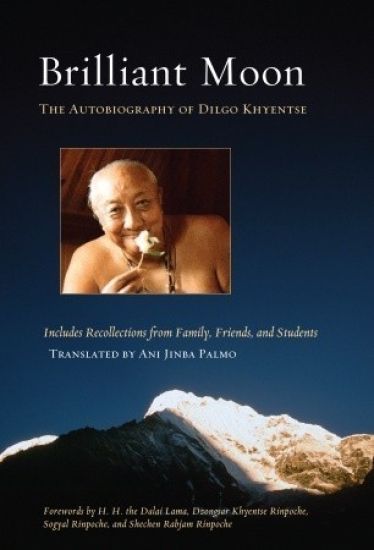
Brilliant Moon
Dilgo Khyentse; Sogyal Rinpoche; Dzongsar Jamyang Khyentse; Jamgon Mipham
Shambhala Publications Inc
2010
pokkari
A Cascading Waterfall of Nectar
Thinley Norbu; Jamgon Mipham
Shambhala Publications Inc
2009
pokkari
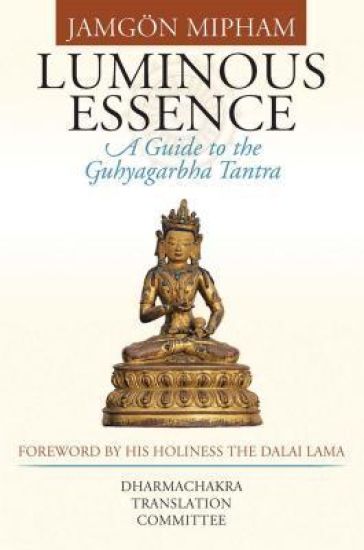
Luminous Essence is a complete introduction to the world of tantric thought and practice. Composed by the renowned Tibetan master Jamgon Mipham (1846-1912), the text provides an overview of the theory and experiential assimilation of a seminal tantric scripture, the Tantra of the Secret Essence (Guhyagarbha Tantra). Embodying the essence of tantric practice, this text has been a central scripture in Tibetan Buddhism for well over a thousand years. Mipham's explanation of this text, here translated for the first time, is one of the most celebrated commentaries on the Tantra of the Secret Essence, which today occupies an important place in the tantric curriculum of Tibetan monastic colleges.Luminous Essence is a specialized guide meant for initiated tantric practitioners. To fully appreciate and assimilate its message, it should be studied under the guidance of a qualified teacher by those who have received the appropriate empowerments, reading transmissions, and oral instructions.
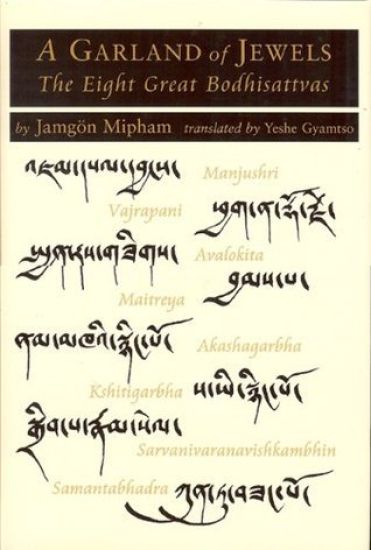
This book is a translation of a collection of stories about the eight great bodhisattvas. These stories are all taken from sutras and tantras taught by the Buddha, such as the Avatamsaka and the Lotus Sutras. They were collected and edited by the great Buddhist teacher Mipham Namgyal (1846-1912). Mipham was one of the greatest teachers in Tibet of his time, and his writings remain the basis for much of the study conducted by his own tradition, the Nyingma school of Buddhism, and by other traditions such as the Karma Kagyu. In writing his book, Mipham combined edited extracts from his sources with his own writing about his subject. Although we typically think of Buddhist sutras as teachings accompanied by sparing narrative, we discover in this book that the great sutras of the mahayana are repositories of extraordinary accounts of miracles and great deeds performed by buddhas and bodhisattvas.
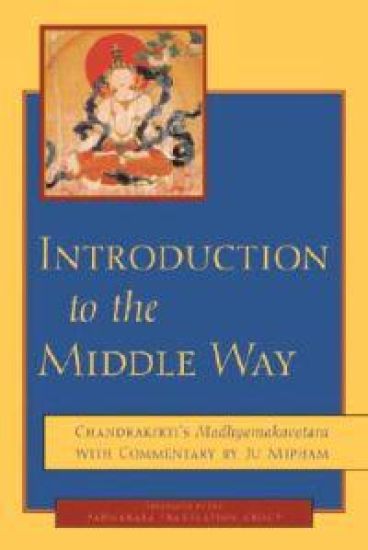
"Introduction to the Middle Way combines the timeless devotional-scholarly poetry of Indian master Chandrakirti (ca. seventh century) with the exhaustive explanation of its meaning by Jamgon Mipham (1846-1912), whose commentary was composed eleven centuries after Chandrakirti lived. Chandrakirti is one of several Indian thinkers whose treatises were brought to Tibet and whose realized teachings about the nature of the mind are the foundation of Tibetan Buddhist thought. Hidden in his verses are the guideposts to enlightenment, composed in this way to help those students who have received instruction to commit it to memory. Mipham's commentary, presented in thorough outline form, offers a point-by-point explanation of Chandrakirti's meaning.
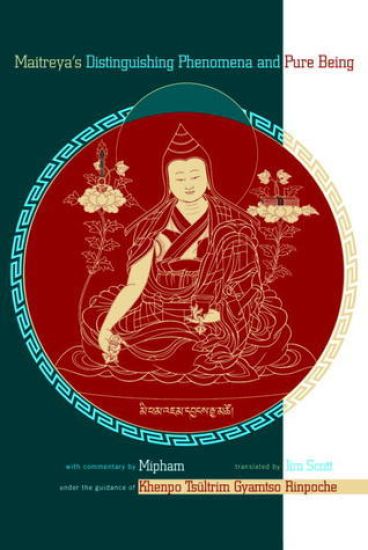
Maitreya's Distinguishing Phenomena and Pure Being
Jamgon Mipham
Snow Lion Publications
2004
pokkari
Mipham's comentary cogently supports Maitreya's text in a detailed analysis of how ordinary confused consciousness can be transformed into wisdom. Easy-to-follow instructions guide the reader through the profound meditation that gradually brings about this transformation.