Kirjojen hintavertailu. Mukana 12 546 216 kirjaa ja 12 kauppaa.

Kirjailija

Jamie Gough

Kirjat ja teokset yhdessä paikassa: 8 kirjaa, julkaisuja vuosilta 2001-2025, suosituimpien joukossa Introducing Social Geographies. Vertaile teosten hintoja ja tarkista saatavuus suomalaisista kirjakaupoista.

8 kirjaa

Kirjojen julkaisuhaarukka 2001-2025.

Introducing Social Geographies

Introducing Social Geographies

Rachel Pain; Michael Barke; Duncan Fuller; Jamie Gough; Graham Mowl; Robert MacFarlene

Hodder Education
2001
nidottu
`Introducing Social Geographies' is a major new text offering a comprehensive and up-to-date introduction to this important area of human geography. It presents a broad overview of social geography, clearly outlining the key theoretical and political positions, and making extensive use of examples to show how these frameworks can be used to analyse real social issues.The book is ideal for undergraduates first encountering social geography and includes topic overviews, summaries of key points, critiques, boxed case studies and suggestions for further reading.

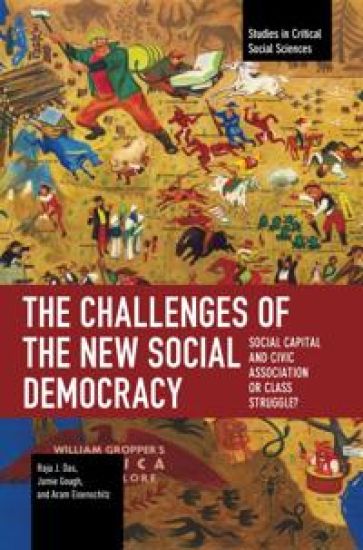
The Challenges of the New Social Democracy

The Challenges of the New Social Democracy

Raju J. Das; Aram Eisenschitz; Jamie Gough

Haymarket Books
2024
pokkari
In this important study, Raju J Das, Jamie Gough and Aram Eisenschitz provide a Marxist critique of new social democracy as the dominant contemporary strategy for local economic and social development. In both the global North and South, new social democracy seeks to develop social capital, strengthen civil society, build not-for-profit enterprises, encourage self-help, and foster community ties. It seeks participatory forms of local politics to achieve a local class consensus. It promises to improve people's economic and social conditions in the face of neoliberal capitalism, and to empower them. The authors argue that this strategy is severely limited by, and internalizes, its capitalist environment. They show that social enterprise can be developed in socialist ways, and contribute to a local politics based in class struggle. But social capital cannot replace the struggle of the exploited and oppressed against capitalism and for a socialist society, a strategy which the authors outline for the local scale.
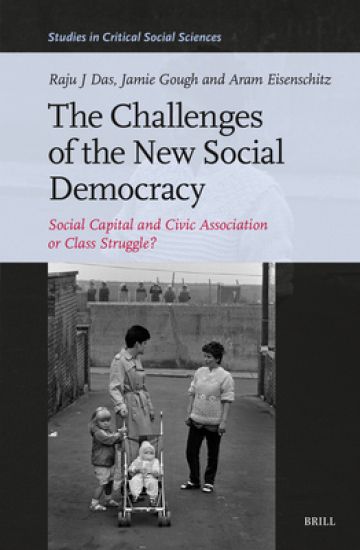
The Challenges of the New Social Democracy

The Challenges of the New Social Democracy

Raju J. Das; Jamie Gough; Aram Eisenschitz

BRILL
2023
sidottu
Raju J Das, Jamie Gough and Aram Eisenschitz provide a Marxist critique of new social democracy as the dominant contemporary strategy for local economic and social development. In both the global North and South, new social democracy seeks to develop social capital, strengthen civil society, build not-for-pro¬fit enterprises, encourage self-help, and foster community ties. It seeks participatory forms of local politics to achieve a local class consensus. It promises to improve people's economic and social conditions in the face of neoliberal capitalism, and to empower them. The authors argue that this strategy is severely limited by, and internalises, its capitalist environment. They show that social enterprise can be developed in socialist ways, and contribute to a local politics based in class struggle. But social capital cannot replace the struggle of the exploited and oppressed against capitalism and for a socialist society, a strategy which the authors outline for the local scale.
Work, Locality and the Rhythms of Capital
This theoretical and empirical study examines the relationship between the organisation of work, industrial relations, production spaces and the dynamics of capitalist investment. Jamie Gough explores the connections between labour process change, products, local economy and society, spaces and forms of competition, and firm's locational strategies. In a path-breaking analysis he shows that these are closely bound up with the business cycle and other rhythms of investment. Differences within the labour process are central to the argument. Gough explores the divisions between workers arising from these differences and from spatial flows of capital, and suggests strategies through which these divisions might be overcome.
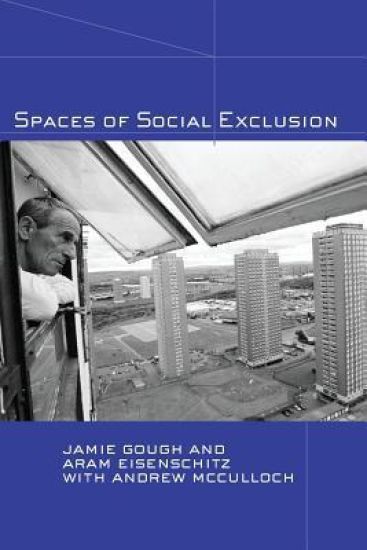
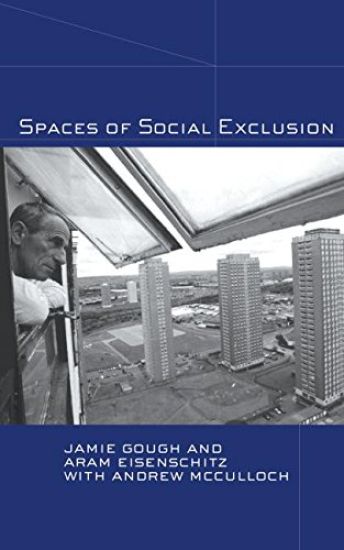
Spaces of Social Exclusion

Spaces of Social Exclusion

Jamie Gough; Aram Eisenschitz; Andrew McCulloch

Routledge
2005
nidottu
To varying extents in developed countries a minority of the population suffers from deprivation. Britain’s Labour government in particular has sought to deal with this through the notion of 'social exclusion', and similar ideas have been developed in other countries. This important text explores the various forms of this contemporary economic and social disadvantage and, in particular, investigates its social and spatial causes and the role of space in policies addressing disadvantage. Arranged in three distinct parts, it:introduces contemporary and historical conceptualizations of social exclusion and povertyanalyzes social exclusion’s origins by examining the different spheres of disadvantage and their relationsdiscusses strategies for overcoming social exclusion, and analyzes policy ideas from across the political spectrum.This book is the first to systematically analyze the role of geography in poverty and social exclusion, and deals with the roles of ‘globalization’ and localism. Though its main focus is Britain, it investigates similarities and differences in other developed countries. Spaces of Social Exclusion is a key text for researchers and students throughout the social sciences, social policy, human geography and urban studies, as well as policy makers and practitioners in social and urban policy.
Spaces of Social Exclusion

Spaces of Social Exclusion

Jamie Gough; Aram Eisenschitz; Andrew McCulloch

Routledge
2005
sidottu
To varying extents in developed countries a minority of the population suffers from deprivation. Britain’s Labour government in particular has sought to deal with this through the notion of 'social exclusion', and similar ideas have been developed in other countries. This important text explores the various forms of this contemporary economic and social disadvantage and, in particular, investigates its social and spatial causes and the role of space in policies addressing disadvantage. Arranged in three distinct parts, it:introduces contemporary and historical conceptualizations of social exclusion and povertyanalyzes social exclusion’s origins by examining the different spheres of disadvantage and their relationsdiscusses strategies for overcoming social exclusion, and analyzes policy ideas from across the political spectrum.This book is the first to systematically analyze the role of geography in poverty and social exclusion, and deals with the roles of ‘globalization’ and localism. Though its main focus is Britain, it investigates similarities and differences in other developed countries. Spaces of Social Exclusion is a key text for researchers and students throughout the social sciences, social policy, human geography and urban studies, as well as policy makers and practitioners in social and urban policy.
Work, Locality and the Rhythms of Capital
This theoretical and empirical study examines the relationship between the organisation of work, industrial relations, production spaces and the dynamics of capitalist investment. Jamie Gough explores the connections between labour process change, products, local economy and society, spaces and forms of competition, and firm's locational strategies. In a path-breaking analysis he shows that these are closely bound up with the business cycle and other rhythms of investment. Differences within the labour process are central to the argument. Gough explores the divisions between workers arising from these differences and from spatial flows of capital, and suggests strategies through which these divisions might be overcome.