Kirjojen hintavertailu. Mukana 12 390 323 kirjaa ja 12 kauppaa.

Kirjailija

Jamie Hood

Kirjat ja teokset yhdessä paikassa: 4 kirjaa, julkaisuja vuosilta 2024-2026, suosituimpien joukossa How to Be a Good Girl. Vertaile teosten hintoja ja tarkista saatavuus suomalaisista kirjakaupoista.

4 kirjaa

Kirjojen julkaisuhaarukka 2024-2026.

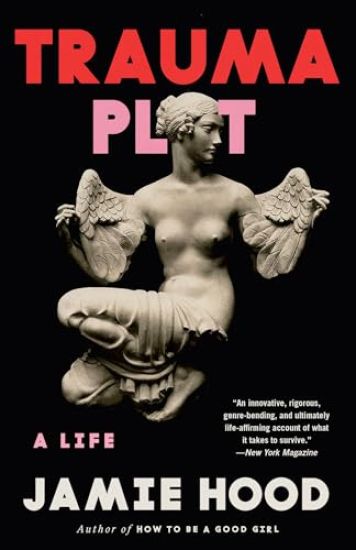
Trauma Plot: A Life

Trauma Plot: A Life

Jamie Hood

VINTAGE
2026
nidottu
From a rising literary star and the author of how to be a good girl comes a brilliant, biting, and beautifully wrought memoir of trauma and the cost of survival A VOGUE AND VULTURE BEST BOOK OF THE YEAR (SO FAR) "Piercing . . . . Trauma Plot flips the confessional memoir on its head."--The Cut "An innovative, rigorous, genre-bending, and ultimately life-affirming account of what it takes to survive."--Vulture In the thick of lockdown, 2020, poet, critic, and memoirist Jamie Hood published her debut, how to be a good girl, an interrogation of modern femininity and the narratives of love, desire, and violence yoked to it. The Rumpus praised Hood's "bold vulnerability," and Vogue named it a Best Book of 2020. In Trauma Plot, Hood draws on disparate literary forms to tell the story that lurked in good girl's margins--of three decades marred by sexual violence and the wreckage left behind. With her trademark critical remove, Hood interrogates the archetype of the rape survivor, who must perform penitence long after living through the unthinkable, invoking some of art's most infamous women to have played the role: Ovid's Philomela, David Lynch's Laura Palmer, and Artemisia Gentileschi, who captured Judith's wrath. In so doing, she asks: What do we as a culture demand of survivors? And what do survivors, in turn, owe a world that has abandoned them? Trauma Plot is a scalding work of personal and literary criticism. It is a send-up of our culture's pious disdain for "trauma porn," a dirge for the broken promises of #MeToo, and a paean to finding life after death.
Trauma Plot: A Life

Trauma Plot: A Life

Jamie Hood

Pantheon Books
2025
sidottu
From a rising literary star and the author of how to be a good girl comes a brilliant, biting, and beautifully wrought memoir of trauma and the cost of survival A VOGUE AND VULTURE BEST BOOK OF THE YEAR (SO FAR) "Piercing . . . . Trauma Plot flips the confessional memoir on its head."--The Cut "An innovative, rigorous, genre-bending, and ultimately life-affirming account of what it takes to survive."--Vulture In the thick of lockdown, 2020, poet, critic, and memoirist Jamie Hood published her debut, how to be a good girl, an interrogation of modern femininity and the narratives of love, desire, and violence yoked to it. The Rumpus praised Hood's "bold vulnerability," and Vogue named it a Best Book of 2020. In Trauma Plot, Hood draws on disparate literary forms to tell the story that lurked in good girl's margins--of three decades marred by sexual violence and the wreckage left behind. With her trademark critical remove, Hood interrogates the archetype of the rape survivor, who must perform penitence long after living through the unthinkable, invoking some of art's most infamous women to have played the role: Ovid's Philomela, David Lynch's Laura Palmer, and Artemisia Gentileschi, who captured Judith's wrath. In so doing, she asks: What do we as a culture demand of survivors? And what do survivors, in turn, owe a world that has abandoned them? Trauma Plot is a scalding work of personal and literary criticism. It is a send-up of our culture's pious disdain for "trauma porn," a dirge for the broken promises of #MeToo, and a paean to finding life after death.
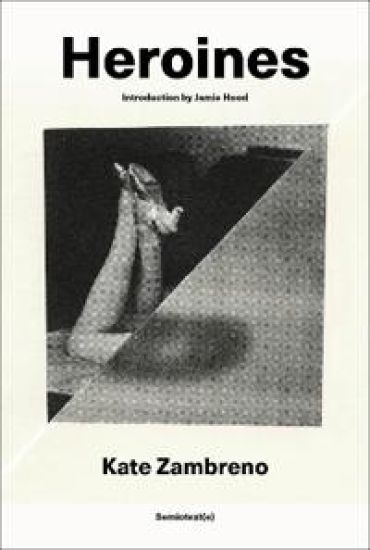
Heroines

Heroines

Kate Zambreno; Jamie Hood

Semiotext (E)
2024
nidottu
A manifesto reclaiming the wives and mistresses of literary modernism that inspired a generation of writers and scholars, reissued after more than a decade. "I am beginning to realize that taking the self out of our essays is a form of repression. Taking the self out feels like obeying a gag order--pretending an objectivity where there is nothing objective about the experience of confronting and engaging with and swooning over literature."--from Heroines On the last day of December 2009 Kate Zambreno, then an unpublished writer, began a blog called Frances Farmer Is My Sister, arising from her obsession with literary modernism and her recent transplantation to Akron, Ohio, where her partner held a university job. Widely reposted, Zambreno's blog became an outlet for her highly informed and passionate rants and melancholy portraits of the fates of the modernist "wives and mistresses," reclaiming the traditionally pathologized biographies of Vivienne Eliot, Jane Bowles, Jean Rhys, and Zelda Fitzgerald: writers and artists themselves who served as male writers' muses only to end their lives silenced, erased, and institutionalized. Over the course of two years, Frances Farmer Is My Sister helped create a community of writers and devised a new feminist discourse of writing in the margins and developing an alternative canon. In Heroines, Zambreno extends the polemic begun on her blog into a dazzling, original work of literary scholarship. Combing theories that have dictated what literature should be and who is allowed to write it--she traces the genesis of a cultural template that consistently exiles feminine experience to the realm of the "minor," and diagnoses women for transgressing social bounds. "ANXIETY: When she experiences it, it's pathological," writes Zambreno. "When he does, it's existential." With Heroines, Zambreno provided a model for a newly subjectivized criticism, prefiguring many group biographies and forms of autotheory and hybrid memoirs that were to come in the years to follow. A book that has become its own canon, Heroines was named one of the "50 Books that define the past 5 Years in Literature" by Flavorwire, an "Essential Feminist Manifesto" by Dazed, and one of the "50 Greatest Books by Women" in Buzzfeed.