Kirjojen hintavertailu. Mukana 12 390 323 kirjaa ja 12 kauppaa.

Kirjailija

Jan K. Herman

Kirjat ja teokset yhdessä paikassa: 6 kirjaa, julkaisuja vuosilta 2010-2018, suosituimpien joukossa Navy Medicine in Vietnam. Vertaile teosten hintoja ja tarkista saatavuus suomalaisista kirjakaupoista.

Mukana myös kirjoitusasut: Jan K Herman

6 kirjaa

Kirjojen julkaisuhaarukka 2010-2018.

Navy Medicine in Vietnam

Navy Medicine in Vietnam

Jan K. Herman

McFarland Co Inc
2018
pokkari
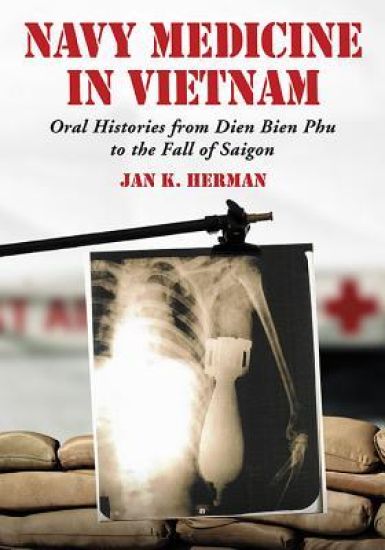
The book chronicles the Navy Medical Department's participation in Vietnam, beginning with the Navy's rescue of the French survivors of the Battle of Dien Bien Phu in 1954 and ending with the Navy's rescue of Vietnamese refugees fleeing the fall of South Vietnam in 1975. When American involvement reached its peak in 1968, the 750-bed Naval Support Activity Hospital Danang (NSAH) was in full operation, and two hospital ships--the USS Repose and the USS Sanctuary--cruised offshore. Whether the situation called for saving the lives of injured sailors aboard a burning aircraft carrier or treating a critically wounded Marine for shock in the rubble-strewn streets of Hue, Navy medical personnel were in Vietnam from the beginning of American involvement to the very end, saving thousands of lives. This book tells the story of the Navy Medical Department's involvement through stark and gripping first-person accounts by patients and the Navy physicians, dentists, nurses, and hospital corpsmen who treated them. More than 50 historic photos document their work.
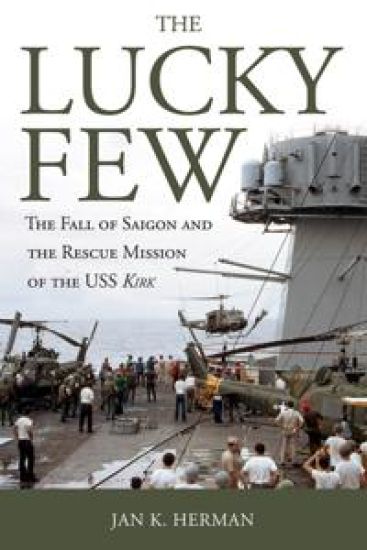
The Lucky Few

The Lucky Few

Jan K Herman

Naval Institute Press
2015
pokkari
As the Vietnam War reached its tragic climax in the last days of April 1975, a task force of U.S. Navy ships cruised off South Vietnam’s coast. Their mission was to support the evacuation of American embassy personnel and military advisers from Saigon as well as to secure the safety of the South Vietnamese whose lives were in endangered by the North Vietnamese victory. The Lucky Few recounts the role of the USS Kirk in the rescue of remnants of the South Vietnamese fleet and the refugees on board. The story of the Kirk reflects one of America’s few shining moments at the end of the Vietnam War. Now in paperback in time for the 40th anniversary of the end of the war, The Lucky Few brings to life the heroism of Captain Paul Jacobs and the crew of the USS Kirk.
Navy Medicine in Vietnam (Color)

Navy Medicine in Vietnam (Color)

Jan K. Herman; Department of the Navy

Createspace Independent Publishing Platform
2015
nidottu
In July 1953, U.S. and North Korean military officials signed an armistice at Panmunjom ending hostilities-but without a permanent peace on the Korean peninsula. Demobilization of the armed forces began almost immediately, following much the same pattern shortly after World War II. This military decrease was across the board and keenly felt by the Navy Medical Department.The authorized ratio of medical officers to active duty troop strength was cut in half. Between 1953 And 1954, the Navy lost more than 1,000 physicians-an astonishing 25 percent reduction. For the fleet, reductions meant that battleships went from two medical officers to one; aircraft carriers, from three medical officers to two; and LST (landing ship tank) squadrons, from two physicians to one. Besides personnel cuts, peacetime also meant disestablishing many naval hospitals or, at the very least, downgrading them from hospitals to infirmaries.Despite this retrograde movement in Navy medical personnel and facilities, the Cold War continued. Indochina replaced Korea as the number one hot spot. When French colonial rule in Indochina came to a chaotic end in 1954, following the climactic defeat at Dien Bien Phu, the U.S. Navy helped evacuate 721 French troops and transport them back to their homes in France and North Africa. These pitiful soldiers suffered not only from wounds but also from a variety of jungle diseases and malnutrition. The hospital ship Haven (AH 12), which had already seen action in World War II and four tours during the Korean War, was again pressed into service for the trip. When one of the Legionnaires died en route, "they off -loaded the body in a casket with the French flag draped over it," Navy nurse Anna Corcoran recalled. "That was very, very emotional to watch. Of course, at that time, we didn't know how many of our own would be going home that way from Vietnam. We couldn't have imagined back in 1954 that 10 years later we would be involved just like the French were."
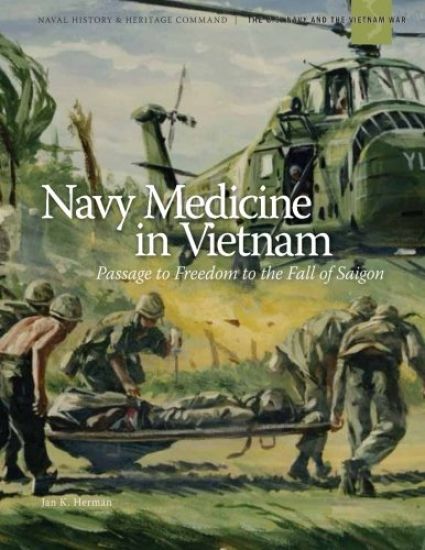
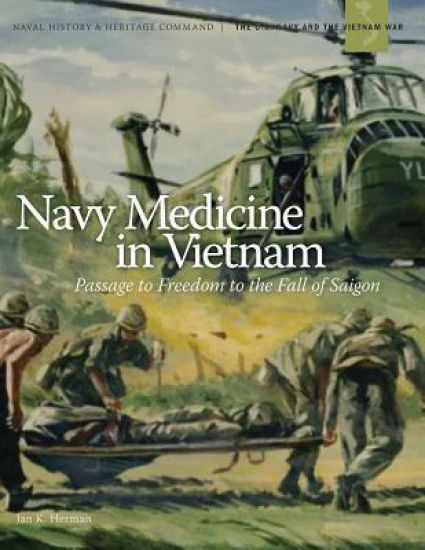
Navy Medicine in Vietnam

Navy Medicine in Vietnam

Jan K Herman

Military Bookshop
2010
pokkari
"Navy Medicine "begins and ends with a humanitarian operation---the first, in 1954, after the French were defeated, when refugees fled to South Vietnam to escape from the communist regime in the North; and the second, in 1975, after the fall of Saigon and the final stage of America's exit that entailed a massive helicopter evacuation of American staff and selected Vietnamese and their families from South Vietnam. In both cases Navy provided medical support to avert the spread of disease and tend to basic medical needs. Between those dates, Navy medical personnel responded to the buildup and intensifying combat operations by taking a multi-pronged approach in treating casualties. From medical battalions, which set up combat hospitals in the field, to a new advanced emergency hospital with specialized medicine in Danang, to the floating hospital ships offshore, and to the one individual the Marines counted on most to save them--the corpsman, this story covers them all. Helicopter medical evacuations, triaging, and a system of moving casualties from short-term to long-term care meant higher rates of survival and targeted care. Poignant recollections of the medical personnel serving in Vietnam are a reminder of the great sacrifices these men and women made for their country and their patients.