Kirjailija
Jan Morris
Kirjat ja teokset yhdessä paikassa: 66 kirjaa, julkaisuja vuosilta 1980-2026, suosituimpien joukossa Lincoln. Vertaile teosten hintoja ja tarkista saatavuus suomalaisista kirjakaupoista.
66 kirjaa
Kirjojen julkaisuhaarukka 1980-2026.
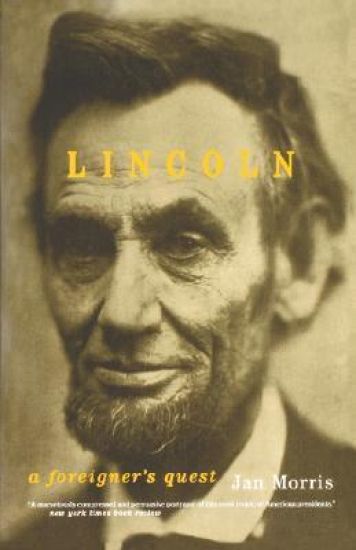
With a fresh eye and inimitable style, the peerless travel and history writer Jan Morris journeys through the life of Abraham Lincoln to sketch an insightful new portrait of America's sixteenth president, one of our greatest and most enigmatic figures. Looking past his saintly image and log-cabin legend, Morris travels from Lincoln's birthplace to the White House to the infamous Ford theatre and conjures him in public and in private, as politician and as father, as commander-in-chief and as husband. With her skepticism and humour and marvellous sense of place, Morris seamlessly blends narrative, history, and biography to reveal the man behind the myth.
The Gifts of Reading
Robert Macfarlane; William Boyd; Candice Carty-Williams; Chigozie Obioma; Philip Pullman; Imtiaz Dharker; Roddy Doyle; Pico Iyer; Andy Miller; Jackie Morris; Jan Morris; Sisonke Msimang; Dina Nayeri; Michael Ondaatje; David Pilling; Max Porter; Alice Pung; Jancis Robinson; S.F. Said; Madeleine Thien; Salley Vickers; John Wood; Markus Zusak
Weidenfeld Nicolson
2021
pokkari
With contributions by: William Boyd, Candice Carty-Williams, Imtiaz Dharker, Roddy Doyle, Pico Iyer, Robert Macfarlane, Andy Miller, Jackie Morris, Jan Morris, Sisonke Msimang, Dina Nayeri, Chigozie Obioma, Michael Ondaatje, David Pilling, Max Porter, Philip Pullman, Alice Pung, Jancis Robinson, S.F.Said, Madeleine Thien, Salley Vickers, John Wood and Markus Zusak'This story, like so many stories, begins with a gift. The gift, like so many gifts, was a book...' So begins the essay by Robert Macfarlane that inspired this collection. In this cornucopia of an anthology, you will find essays by some of the world's most beloved novelists, nonfiction writers, essayists and poets. 'You will see books taking flight in flocks, migrating around the world, landing in people's hearts and changing them for a day or a year or a lifetime. 'You will see books sparking wonder or anger; throwing open windows into other languages, other cultures, other minds; causing people to fall in love or to fight for what is right. 'And more than anything, over and over again, you will see books and words being given, received and read - and in turn prompting further generosity.' Published to coincide with the 20th anniversary of global literacy non-profit, Room to Read, The Gifts of Reading forms inspiring, unforgettable, irresistible proof of the power and necessity of books and reading.Inspired by Robert Macfarlane Curated by Jennie Orchard
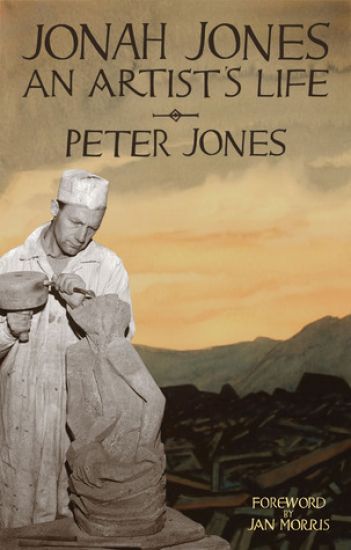
Sculptor, painter, letter cutter, stained glass artist, novelist, and academic, Jonah Jones (1919-2004) was a twentieth-century renaissance man whose life is captured in this biography by his son Peter, with a foreword by his friend Jan Morris.Born near Newcastle into a family of miners, Jonah Jones first found his passion for art during the Second World War while serving with a number of other artists and craftsmen in the non-combatant Medical Corps. After the War, he fulfilled his dream of settling in Wales and began his 'on the job' education as a sculptor and letter cutter. Much of his early work was at Clough Williams-Ellis's Portmeirion village. The two became close friends and Jones widened his circle to include Richard Hughes, Bertrand Russell, John Cowper Powys and Huw Weldon.In a varied career Jonah Jones produced intimate sculptures, monumental installations, and beautiful inscriptions, in addition to writing several novels, a biography of Clough Williams-Ellis and a well-regarded survey of the lakes of north Wales. His was a productive life which spanned much of the twentieth century, a century of 'isms' (including pacifism and Catholicism) which marked his character and work.This book is a remarkable portrait of both an artist and of art in the twentieth century."... proud, humorous, affable, patriotically Welsh, and deeply committed to his humanitarian ideals and a belief in the transforming power of art..."The GuardianPeter Jones is the son of Jonah Jones and worked with him in his studio for a number of years; latterly he was a journalist for BBC Monitoring.
Renowned and much-loved travel writer Jan Morris turns her eye to Sydney: 'not the best of the cities the British Empire created ... but the most hyperbolic, the youngest at heart, the shiniest.' Sydney takes us on the city's journey from penal colony to world-class metropolis, as lively and charming as the city it describes. With characteristic exuberance and sparkling prose, Jan Morris guides us through the history, people and geography of a fascinating and colourful city. Jan Morris's collection of travel writing and reportage spans over five decades and includes such titles as Venice, Hong Kong, Spain, Manhattan '45, A Writer's World and the Pax Britannica Trilogy. Hav, her novel, was shortlisted for the Booker Prize and the Arthur C. Clarke Award. 'Sydney should be flattered. A great portrait painter has chosen it for her recent subject . . . Few writers - a handful of novelists apart - have got so far under the city's skin as Morris . . . Few Sydneysiders could match her knowledge of their city's history and its anecdotes' The Times 'The writing is, at times, like surfing: sentences rise like vast waves above which she rides, never overbalancing into gush . . . Jan Morris convincingly explains modern Sydney through its history' Observer
When Jan Morris first visited the United States, she was overwhelmed (and irritated) by the national obsession with Abraham Lincoln: the homespun myth of the awkward six-foot-four country boy who rose to unite the nation seemed too good to be true. So she resolved to make up her own mind, visiting the landmarks of his life to do so: his log-cabin birthplace in Kentucky via Gettysburg and all the way to Washington theatre where he was assassinated. This remarkable book, blending fact, narrative and imagination, is the result.'A little jewel-box of a book ... there are passages here which are pure gold... In an astonishingly short work, Jan Morris has conveyed the gawky but kindly expansiveness of the man and his country. If you have time to read only one book about Lincoln make it this one.' Spectator
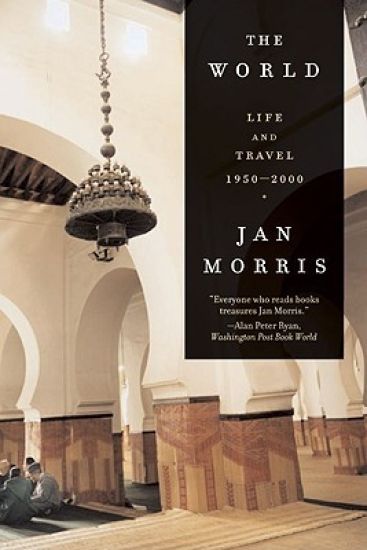
Shares the author's eyewitness accounts of such historical moments as the first successful ascent of Mount Everest, the Eichmann trial, the fall of the Berlin Wall, and the relinquishment of Hong Kong, in a collection of writings that spans the latter half of the twentieth century. Reprint.
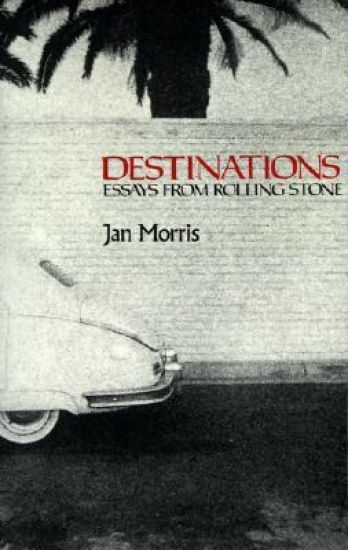
Contains ten essays that brilliantly recapture the essence of places as diverse as Washington just after Watergate, Delhi under Mrs. Gandhi, Panama, Los Angeles, Southern Africa, London, Cairo at the time of the Israeli-Egyptian talks, Istanbul, Trieste, and Manhattan.
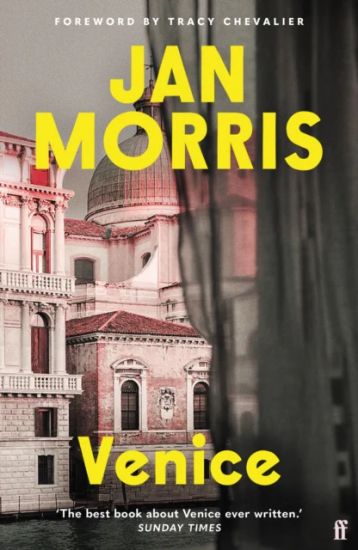
'The best book about Venice ever written' (Sunday Times) - Jan Morris' bestselling travel writing classic is an essential guide to this magical city, newly introduced by Tracy Chevalier. Whether the dappled secrets of the city's canals, churches, calles and campos, to the romantic tales behind its revered landmarks, paintings, scultpures and mosaics - the myths and history of the Venetian people or the legendary mystery of the the lagoon itself -Jan Morris explores this dream-like city in impressionistic prose you will never forget. Whether visiting in person or in the mind, as an armchair traveller or tourist, this is both not only 'the essential introduction' to Venice but a true 'work of literature in its own right' (Observer). 'One of the best travel books I have ever read. It made me want to go to Venice and when I went it made being there even better.' Michael Palin
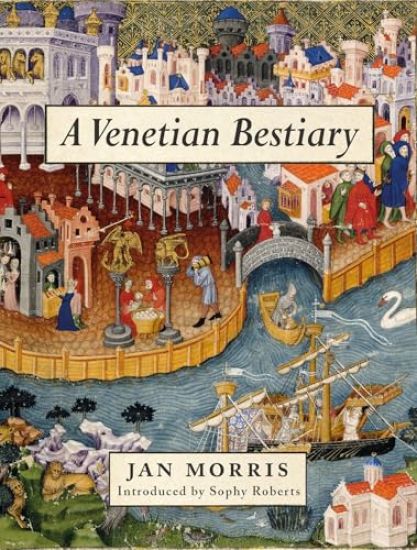
Of all the cities that the travel writer Jan Morris knew, it was Venice which held a special place in her heart, a place she knew intimately and about which she wrote with great passion and knowledge. In A Venetian Bestiary she explores the animals, real, imaginary and artistic which haunt the city of floating dreams. This new edition is a beautiful small hardback, illustrated throughout with paintings and photographs which perfectly accompany Morris' words. With a new introduction by Sophy Roberts.
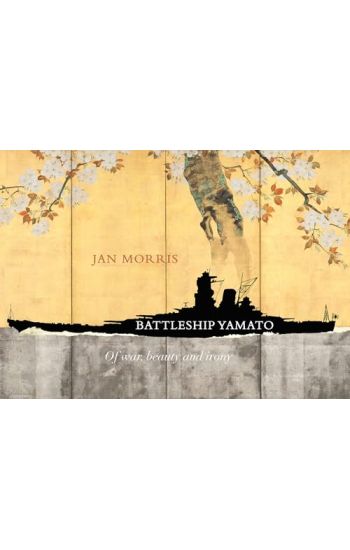
The Battleship Yamato, of the Imperial Japanese Navy, was the most powerful warship of World War II and represented the climax, as it were, of the Japanese warrior traditions of the samurai – the ideals of honour, discipline and self-sacrifice that had immemorially ennobled the Japanese national consciousness. Stoically poised for battle in the spring of 1945 – when even Japan’s last desperate technique of arms, the kamikaze, was running short – Yamato arose as the last magnificent arrow in the imperial quiver of Emperor Hirohito. Here, Jan Morris not only tells the dramatic story of the magnificent ship itself – from secret wartime launch to futile sacrifice at Okinawa – but, more fundamentally, interprets the ship as an allegorical figure of war itself, in its splendour and its squalor, its heroism and its waste. Drawing on rich naval history and rhapsodic metaphors from international music and art, Battleship Yamato is a work of grand ironic elegy. "The short, illustrated book Morris has written about the Yamato is what she calls 'a reverie' on the varied emotions that war summons up…I think it's safe to say that Morris has also written a reverie on accepting the inevitability of death… This book itself signals yet another end: Certainly, it will be one of the very last books written about World War II by an author who saw active service in that war. That sobering fact only adds to the elegiac resonance of this magnificent little book." - Maureen Corrigan, NPR's Fresh Air. Published to coincide with the 80th anniversary of the sinking of Yamato (7 April 2025).
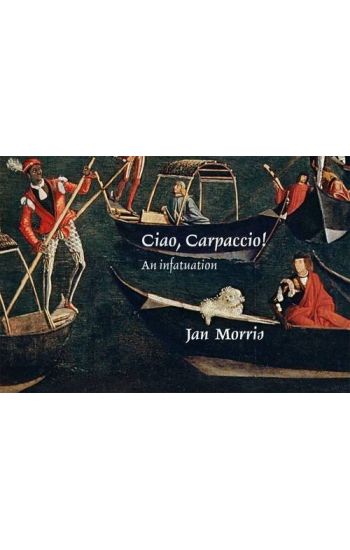
"After a good dinner one evening, with excellent company and a bottle of wine, I settled by my fire with a volume of paintings by the 15th century Venetian painter Vittore Carpaccio. For much of my life I have been under the spell of this artist. I am no connoisseur, cultural scholar or art historian. I know nothing about painterly techniques, chromatic gradations or artistic affinities, and my infatuation with him is largely affectionate fancy. I feel I know him personally, and I often sense that I am directly in touch with him across the centuries, across the continents, as one might be in touch with a living friend..." So starts Jan Morris’s latest book, which she has said will also be her last: a genial, witty, and touching journey through the endlessly evocative art of Carpaccio. Saluting the painter whose pictures remain some of the most enchanting ever made of Venice, Jan Morris makes her own last journey to a city she has written about like no other. Richly illustrated with complete paintings and eye-catching details, this book is a fitting swansong by a great writer to her favourite painter.
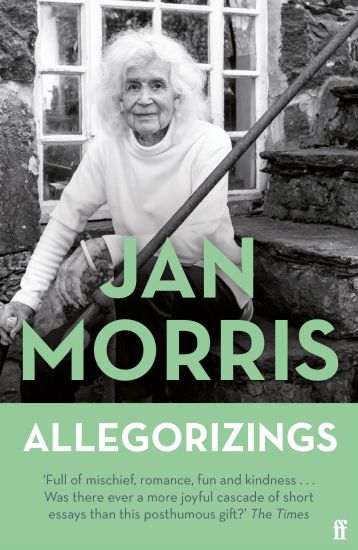
'Peerless.' Daily Telegraph 'Sprinkled with magic.' Observer'Full of mischief, romance, fun and kindness.' The TimesSoldier, journalist, historian, author of forty books, Jan Morris led an extraordinary life, witnessing such seminal moments as the first ascent of Everest, the Suez Canal Crisis, the Eichmann Trial, the Cuban Revolution and so much more.From reflections on identity and nations to the importance of good marmalade, Allegorizings is the final despatch from one of the greatest chroniclers of the twentieth century.'A precious few [writers] report with wisdom, kindness and intelligence from the end to which we shall all come - travel of a different kind. This is such a book.' Sarah Moss, New York Times'She was one of the most extraordinary people I ever had the luck to meet. Please read her.' Robert MacFarlane
Not so long ago, feeling intimations of mortality, Jan Morris embarked on a wholly novel literary enterprise. What began as a series of high-minded letters to her late daughter--in the style of Lord Chesterfield addressing his son--quickly transformed itself into a potpourri of mini-essays and vibrant reminiscences, organized around experiences both majestic and mundane, from traveling the world with her lifelong partner, Elizabeth, to sneezing and kissing and simply growing old. So Allegorizings came to be, and so Morris decided that it should only be published upon her death, not because she had anything to hide but, merely, in parting. Featuring essays largely written in the early twenty-first century, Allegorizings reflects, above all, Morris's steadfast conviction that nothing is only what it seems. In fact, she observes, everything is allegory. Indeed, in Morris's telling, even life--the whole conundrum of existence--is one long, majestically impenetrable allegory. Taking us from the separatist hippie colony of Bolinas, California, to her home country of Wales, and introducing us to Nepalese Sherpas and elderly cruise-goers alike, Morris follows the throughline of allegory throughout her works. In one essay, she lambasts the joylessness of maturity ("Maturity Did ever a heart thrill to the sound of it, still less the meaning?") and in another, decries the nonsense of nationality. With characteristic verve, she offers odes to whistling and cursing, cats, and exclamation points. Morris's travels anchor the collection, as she revisits the iconic settings of her previous works. We join her aboard the storied Orient Express, as well as tube trains passing through the purlieus of London. So too, we hike the foothills of the Himalayas--where Morris burst onto scene with her on-the-spot reportage of the first ascent of Everest--and reflect on the picaresque allure of Tournus, a dichotomized town in France where one France, bearing all the vestiges of privilege, seems to kiss another. Intimate and luminously wise, Allegorizings is as much a testament to the virtues of embracing life as it is a testament to its charming, indignant, and ever-surprising author. In her final work, Morris's writing is as erudite as ever, conveying a generosity of spirit "flavored by well-earned crankiness" (Vox). Though newly bereft of her company, readers will be reminded what "a good, wise, and witty companion" (Alexander McCall Smith) Morris has been to so many, for so long.
Necrophilia is not one of my failings, but I do like graveyards and memorial stones and such...Following the publication In My Mind's Eye, her acclaimed first volume of diaries, a Radio 4 Book of the Week in 2018, Jan Morris continued to write her daily musings. From her home in the North West of Wales, the author of classics such as Venice and Trieste cast her eye over modern life in all its stupidity and glory.From her daily thousand paces to the ongoing troubles of Brexit, from her enduring love for America to the wonders of the natural world, and from the vagaries and ailments of old age to the beauty of youth, she once again displays her determined belief in embracing life and creativity - all kindness and marmalade.
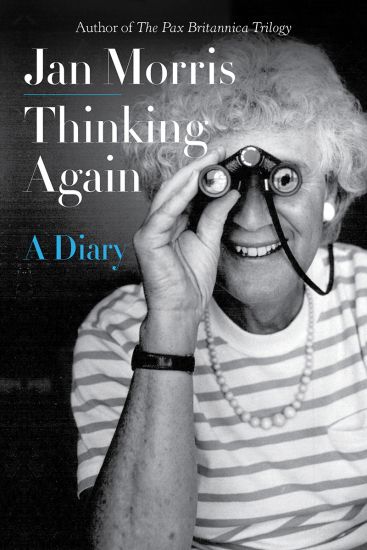
The irrepressible Jan Morris--author of such classics as Venice and Trieste--is at it again: offering a vibrant set of reminiscences that remind us "what a good, wise and witty companion Jan Morris has been for so many readers for so long" (Alexander McCall Smith, New York Times Book Review)."Like Michel de Montaigne" (Danny Heitman, Wall Street Journal), Morris waxes on the ironies of modern life in all their resonant glories and inevitable stupidities--from her daily exercise (a "statutory thousand paces of brisk walk") to the troubles of Brexit; her enduring yet complicated love for America; and honest reflections on the vagaries and ailments of aging. Both intimate and luminously wise, Thinking Again is a testament to the virtues of embracing life, creativity, and, above all, kindness.
A genial, witty, and touching journey through the endlessly evocative art of Carpaccio. Saluting the painter whose pictures remain some of the most enchanting ever made of Venice, Jan Morris makes her own last journey to a city she has written about like no other.
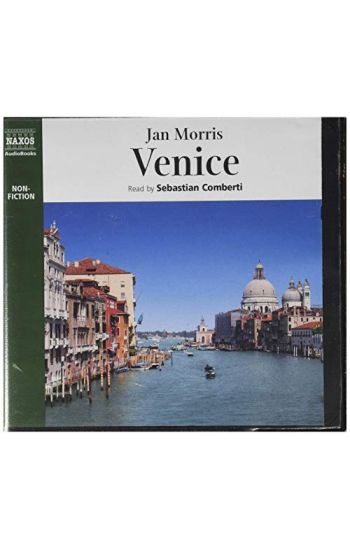
Venice stands on the frontiers of the east and west, halfway between the setting and the rising sun. Goethe calls her "the marketplace of the Morning and the Evening lands." Certainly no city on earth gives a more immediate impression of symmetry and unity or seems more patently born to greatness.So remarks Jan Morris, with graceful literary distinction, on the qualities that have made Venice a unique place among the world's great destinations. She has known it intimately for over six decades. She knows its history, its carvings, its idiosyncrasies, its weather, and all the Doges of the past. She returns even now, never tiring of this "dappled city, tremulous and flickering."She first wrote Venice in praise of it fifty years ago and has revised the book three times. To open this premiere audiobook recording, Jan Morris reads a personal introduction that perfectly distills a lifetime's fascination with La Serenissima.
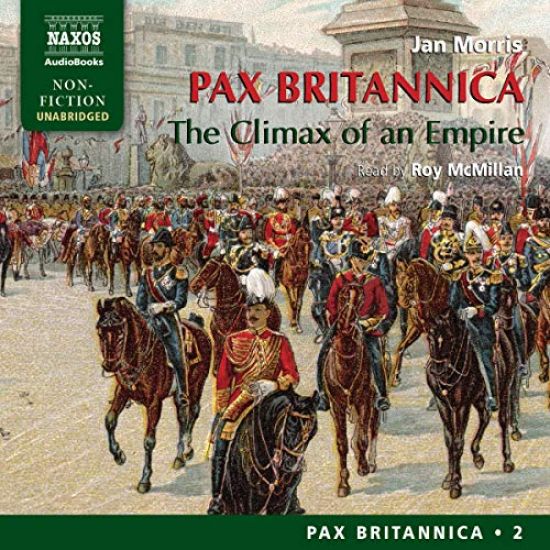
The Pax Britannica trilogy is Jan Morris' masterly telling of the British Empire from the accession of Queen Victoria to the death of Winston Churchill. It is a towering achievement: informative, accessible, entertaining, and written with all her usual bravura.Pax Britannica, the second volume, is a snapshot of the Empire at the Diamond Jubilee of 1897. It looks at what made up the Empire--from adventurers and politicians to communications and infrastructure, as well as anomalies and eccentricities. This humane overview also examines the muddle of jumbled ideologies behind it and how they affected the Empire's 370 million people.