Kirjojen hintavertailu. Mukana 12 390 323 kirjaa ja 12 kauppaa.

Kirjailija

Jan Rehmann

Kirjat ja teokset yhdessä paikassa: 7 kirjaa, julkaisuja vuosilta 2008-2023, suosituimpien joukossa Einführung in die Ideologietheorie. Vertaile teosten hintoja ja tarkista saatavuus suomalaisista kirjakaupoista.

7 kirjaa

Kirjojen julkaisuhaarukka 2008-2023.

Deconstructing Postmodernist Nietzscheanism
It is often asserted that postmodernism emerged from 'leftist' Nietzsche-interpretations, but this claim and its implications are rarely explored. Deconstructing Postmodernist Nietzscheanism investigates how Deleuze and Foucault read Nietzsche and apply a hermeneutics of innocence to his philosophy that erases the elitist, anti-democratic, and anti-socialist dimensions. In a clear and incisive analysis, Rehmann shows that this misreading also affects their own theory and impairs the ability to develop a radical critique from it. Thus the late Foucault's turn to self-care techniques merges a neo-Nietzschean approach with the ideologies of neoliberalism. Rehmann's critique is not directed against the endeavor to take suggestions from some of Nietzsche's astute intuitions, but rather against the near universal tendency to use him as a symbolic capital without admitting his hierarchical obsession and other political flaws. This book is an updated and extended version of Postmoderner Links-Nietzscheanismus: Deleuze and Foucault. Eine Dekonstruktion, originally published in German by Argument Verlag GmbH.

Deconstructing Postmodernist Nietzscheanism: Deleuze and Foucault
It is often asserted that postmodernism emerged from 'leftist' Nietzsche-interpretations, but it is rarely explored. This book investigates how Deleuze and Foucault read Nietzsche and apply a hermeneutics of innocence to his philosophy that erases the elitist, anti-democratic, and anti-socialist dimensions. This misreading also affects their own theory and impairs the claim to develop a radical critique. The late Foucault's turn to self-care techniques merges a neo-Nietzschean approach with the ideologies of neoliberalism. Rehmann's critique is not directed against the endeavor to take suggestions from some of Nietzsche's astute intuitions, but rather against the conformism to use him as a symbolic capital without revealing his hierarchical obsession. This book is an updated and extended version of Postmoderner Links-Nietzscheanismus: Deleuze & Foucault. Eine Dekonstruktion, originally published in German by Argument Verlag GmbH, 2004, 978-3-88619-298-4.
Max Weber: Modernisation As Passive Revolution: A Gramscian Analysis
Basing his research on Gramsci's theory of hegemony, Jan Rehmann provides a comprehensive socio-analysis of Max Weber's political and intellectual position in the ideological network of his time. Max Weber: Modernisation As Passive Revolution shows that, even though Weber presents his science as 'value-free', he is best understood as an organic intellectual of the bourgeoisie, who has the mission of providing his class with an intense ethico-political education.
Theories Of Ideology: The Powers Of Alienation And Subjection
The emergence of ideology theories marked a re-foundation of Marxist research into the functioning of alienation and subjection. Going beyond traditional concepts of 'manipulation' and 'false consciousness', such theories turned to the material existence of hegemonic apparatuses and focused on the mostly unconscious effects of ideological practices, rituals and discourses. Jan Rehmann reconstructs the different strands of ideology theories, and applies them variously to the 'market totalitarianism' of today's hi-tech captialist society.
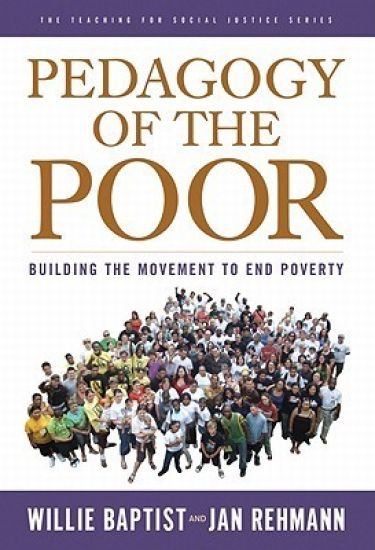
Pedagogy of the Poor

Pedagogy of the Poor

Willie Baptist; Jan Rehmann

Teachers' College Press
2011
nidottu
In this book, the authors present a new kind of interdisciplinary pedagogy that brings together antipoverty grassroots activism and relevant social theories about poverty. Closely linked to the Poverty Initiative at Union Theological Seminary, this unique book combines the oral history of a renowned antipoverty organiser with accessible introductions to relevant social theories, case studies, in-class student debates, and pedagogical reflections. This multilayered approach makes the book useful to both social activists committed to eradicating poverty and educators looking for ways to teach about the struggles for economic and social justice.Pedagogy of the Poor is an essential tool of self-education and leadership development for a broad social movement led by the poor to end poverty.Featuring a 5-part series of interviews with Willie Baptist, this important book examines:Firsthand examples of the poor organising the poor over the past three decades.The effect of neoliberalism, high-tech capitalism, and the economic crisis on poverty.Theoretical lessons drawn from the Watts Uprising, Martin Luther King Jr.’s Poor People’s Campaign, and the National Union of the Homeless.The role of religion and morality in the antipoverty movement.The relevance of hegemony theory and ideology theory for social movements. Resources, methods, and practices for teaching social justice in the secondary classroom.
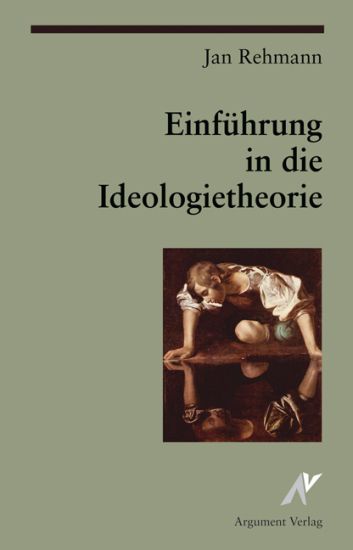
Einführung in die Ideologietheorie

Einführung in die Ideologietheorie

Jan Rehmann

Argument- Verlag GmbH
2008
nidottu
Wie erklärt man, dass der Neoliberalismus auch von Klassen und Gruppen unterstützt wird, die er mit seiner anti-sozialen Politik schwächt und verarmt? Wie gelingt es einem Backlash-Konservatismus, an den Ressentiments der Subalternen gegen "die da oben" anzuknüpfen und sie zugleich gegen Linke, Gewerkschaften und Marginalisierte zu mobilisieren? Der Begriff der Ideologietheorie steht für eine Neufundierung historisch-materialistischer Ideologieforschung, die sich sowohl gegen die Reduktion von Ideologien aufs Ökonomische als auch gegen bloße Ideologiekritik eines "verkehrten Bewusstseins" abgrenzt. Ideologietheorie fragt nach den gesellschaftlichen Konstitutionsbedingungen und zumeist unbewussten Funktions- und Wirkungsweisen des Ideologischen, das sie in seiner "Materialität" untersucht, als Ensemble von Apparaten, Intellektuellen, Ritualen und Praxisformen. Jan Rehmann rekonstruiert unterschiedliche Stränge der Ideologietheorie - von Marx zu Adorno/Horkheimer, von Gramsci zu Stuart Hall, von Althusser zu Foucault, von Bourdieu zu W. F. Haug - und prüft ihre Tauglichkeit für die Analyse gegenwärtiger Ideologien.