Kirjojen hintavertailu. Mukana 12 608 929 kirjaa ja 12 kauppaa.
Kirjailija
Jan Zalasiewicz
Kirjat ja teokset yhdessä paikassa: 15 kirjaa, julkaisuja vuosilta 2009-2025, suosituimpien joukossa The Origins of All Things. Vertaile teosten hintoja ja tarkista saatavuus suomalaisista kirjakaupoista.
David A.T. Harper; Ole Seberg; Jan Audun Liljeroth Rasmussen; Anthony D. Barnosky; Arden Roy Bashforth; Mary L. Berbee; Meredith Blackwell; Gilles Cuny; Tais W. Dahl; Danny Eibye-Jacobsen; Jon Fjeldså; M. Thomas P. Gilbert; Michael Houmark-Nielsen; Henning Haack; Eline Lorenzen; Nina Lundholm; Jesper Milàn; Gitte Petersen; Minik Rosing; Hannes Schroeder; Svend Stouge; Martin V. Sørensen; Lars Vilhelmsen; Colin N. Waters; Mark Williams; Jan Zalasiewicz
This book invites the reader to take a unique journey through the history of the Solar System, the Earth, its evolving biodiversity and ecosystems, and the current state of the planet. It is an attempt to stimulate the reader’s sense of wonder and fascination with our planet: how it was created, the eons before it was populated by ourselves, how organic life, including humans, developed and evolved, and some of the threats we face during the Late Holocene. The Origins of All Things is well suited for teaching purposes, as it offers a synoptic, well-supported overview of key issues in biology and geology, and an easy introduction to key publications that broaden the scope of each chapter. The book is relevant for students of biology, geography, geology and anyone interested in the origin of life on Earth and its evolution.
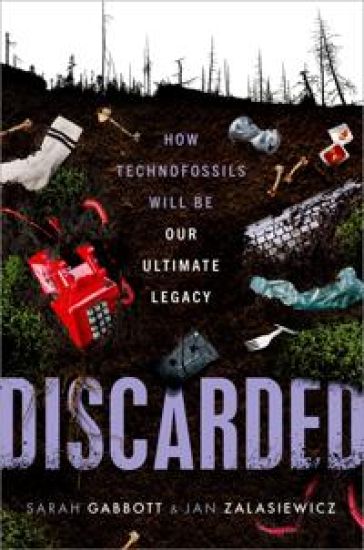
What will remain of our plastic, cans, and other junk long after humans have vanished? What kind of fossils will we leave, as relics into the far future? A blizzard of new objects has suddenly appeared on Earth: plastic bottles, ballpoint pens, concrete flyways, outsize chicken bones, aluminium cans, teabags, mobile phones, T-shirts. They're produced for our comfort and pleasure ^—^ then quickly discarded. The number of our constructions has exploded, to outweigh the whole living world. This new-made treasure chest underpins our lives. But it is also giving a completely new style of fossilization to our planet, as hyper-diverse and hyper-rapidly-evolving technofossils spin out of our industrialized economy. Designed to resist sun, wind, rain, corrosion and decay, and buried in soils, seafloor muds and the gigantic middens of our landfill sites, many will remain, petrified, as future geology. What will these technofossils look like, in future rock? How long will they last and how will they change, as they lie underground for decades, then millennia, then millions of years? Discarded describes how they transform as they are attacked by bacteria, baked by the Earth's inner heat, squashed by overlying rock, permeated by subterranean fluids, crumpled by mountain-building movements ^—^ and what will be left of them. These new fossils also have meaning for our lives today. For we live on a world increasingly buried under our growing waste. As our discarded artefacts begin to change into fossils, they may be swallowed by birds, entangle fish, alter microbial communities and release toxins. Even deeply buried in rock, technofossils may break down into new-formed oil and gas, change the composition of groundwater, and attract new mineral growths. They will have a lasting impact. It is a new planetary phenomenon, now unfolding around us. Scientists are only just beginning to grasp its scale, and get to grips with how it functions. This book describes, for the general reader, the kind of science that is emerging to show the far-future human footprint on Earth. It offers a different perspective upon fossils and fossilization, one that expands the idea of what people think of as fossils, and what they can tell us.
Rocks are time machines and the keepers of our history. This guide is a geological field trip through Earth's incredible rock formations and the stories they hold Like rings on a tree stump hold the history of the tree, the history of Earth is written in its rocks. How to Read a Rock: Our Planet's Hidden Stories teaches readers to decipher the rocks all around us, from backyard stones to mountain ranges, and trace Earth's history layer by layer. Spanning from prehistoric Earth's shifting continents, to contemporary human impact, to the future surfaces of space exploration, the book reviews a remarkable array of topics, including: diamond volcanoes ancient coastlines, rivers, deserts, and coral reefs how animals have changed rocks making of mud urban rock strata human-made rocks and minerals current limestone rock crisis technofossils (the footprints humans will leave behind through their material goods) How to Read a Rock's brilliant imagery captures the power, majesty, and history of the planet. Rocks carry the memories of dinosaur landscapes and vanished oceans; show evidence of the greening of the planet and the effect of natural forces; and convey clues on climate and energy consumption. The book unearths the most fascinating stories rocks can tell us, not only about our past, but how the past can help imagine the future.
Alone in the known universe the Earth glows bright with life, a unique cosmic oasis of biodiversity which is now under threat from our own actions. The Earth is a unique as a living planet, a cosmic oasis drifting in the vastness of barren space. It is strikingly and obviously different from our nearest heavenly neighbours, the Moon, Venus and Mars, in its thin skin of biology, extending from the surface for a few kilometres into the crust, and for a few tens of kilometres into the air. But how did this remarkable abundance and diversity of life arise? How has life survived over the enormous time frame of Earth's history? And does it continue to flourish now, especially with the growing pressure for space from humans? The Cosmic Oasis examines life on Earth, from our earliest interactions with animals and plants to our absolute domination of biology. It follows our developing understanding of life's origins, its remarkable complexity, and its interactions with the air, oceans and land. It also shows how patterns of diversity across the surface of the planet evolved, and how humans are now homogenising these, degrading both biodiversity and the space in which life can exist. Within this overall trend of loss there are some remarkable examples of survival, from the beneficial relationships between the gelada monkeys and wolves of the Ethiopian highlands, and the people and brown howler monkeys of Porte Allegre in Brazil, to interactions between you and your gut microbiome. Thoughout, the authors ask what these interactions can teach us about building a better relationship with nature, and consider how we might become stewards, rather than destructive exploiters, of the life around us.
Volcanoes are some of the most dramatic expressions of the powerful tectonic forces at work in the Earth beneath our feet. But volcanism, a profoundly important feature of Earth, and indeed of other planets and moons too, encompasses much more than just volcanoes themselves. On a planetary scale, volcanism is an indispensable heat release mechanism, which on Earth allows the conditions for life. IIt releases gases into the atmosphere and produces enormous volumes of rock, and spectacular landscapes - landscapes which, during major eruptions, can be completely reshaped in a matter of hours. Through geological time volcanism has shaped both climate and biological evolution, and volcanoes can affect human life, too, for both good and ill. Yet, even after much study, some of the fundamental aspects of volcanicity remain mysterious. This Very Short Introduction takes the readers into the inferno of a racing pyroclastic current, and the heart of a moving lava flow, as understood through the latest scientific research. Exploring how volcanologists forensically decipher how volcanoes work, Michael Branney and Jan Zalasiewicz explain what we do (and don't) understood about the fundamental mechanisms of volcanism, and consider how volcanoes interact with other physical processes on the Earth, with life, and with human society. ABOUT THE SERIES: The Very Short Introductions series from Oxford University Press contains hundreds of titles in almost every subject area. These pocket-sized books are the perfect way to get ahead in a new subject quickly. Our expert authors combine facts, analysis, perspective, new ideas, and enthusiasm to make interesting and challenging topics highly readable.
Humans rank with the powerful forces of nature transforming Earth. Since the mid-20th century, population growth, industrialization, and globalization have had such deep and wide-ranging impacts that our planet no longer functions as it did during the previous eleven millennia. So distinctive is this collective human intervention that a new geological interval has been proposed; it is called the Anthropocene. The Anthropocene is intriguing scientifically, fascinating intellectually, and deeply disturbing politically, socially, economically, and ethically. We must learn how to co-exist sustainably with the rest of nature in what is emerging as a new planetary state. To do so, we must first understand what "Anthropocene" means in all its dimensions. This book adopts a multidisciplinary approach, starting with an exploration of the Anthropocene as a geological concept: ranging across the physical changes to the landscape, to the rapidly heating climate, to a biosphere undergoing transformation. And what of the "anthropos" in the Anthropocene? While geoscience does not normally address political and ethical issues of justice and equity, or economics and culture, Anthropocene studies in the humanities and social sciences investigate the complexities of the human activity driving global change. Here the book looks at human history, both in the deep past and more recently, the politics and economics of growth spurring the Anthropocene, and potential ways of mitigating its cruel effects. Our fragile, still beautiful, planet is finite. The new realities of the Anthropocene will need our best efforts, across disciplinary divides, at effective hope and action.
Ranging across the 4.6 billion year history of the planet, geology is the subject that encompasses almost all that we see around us, in one way or another, and also much that we cannot see, beneath our feet, and on other planets. The fruits of geology provide most of the materials that give us shelter, and most of the energy that drives our modern lives. Within the study of geology lie some of the clues to the extraordinary impact our species is going to play out on the planet, in centuries and millennia to come. In this Very Short Introduction Jan Zalasiewicz gives a brief introduction to the fascinating field of geology. Describing how the science developed from its early beginnings, he looks at some of the key discoveries that have transformed it, before delving into its various subfields, such as sedimentology, tectonics, and stratigraphy. Analysing the geological foundations of the Earth, Zalasiewicz explains the interlocking studies of tectonics, geophysics, and igneous and metamorphic petrology and geochemistry; and describes how rocks are dated by radiometric dating. Considering the role and importance of geology in the finding and exploitation of resources (including fracking), he also discusses its place in environmental issues, such as foundations for urban structures and sites for landfill, and in tackling issues associated with climate change. Zalasiewicz concludes by discussing the exciting future and frontiers of the field, such as the exploration of the geology of Mars. ABOUT THE SERIES: The Very Short Introductions series from Oxford University Press contains hundreds of titles in almost every subject area. These pocket-sized books are the perfect way to get ahead in a new subject quickly. Our expert authors combine facts, analysis, perspective, new ideas, and enthusiasm to make interesting and challenging topics highly readable.
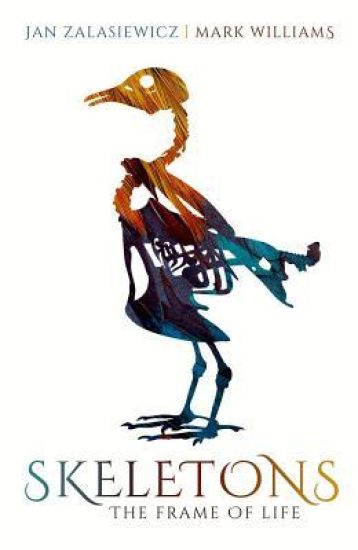
Over half a billion years ago life on earth took an incredible step in evolution, when animals learned to build skeletons. Using many different materials, from calcium carbonate and phosphate, and even silica, to make shell and bone, they started creating the support structures that are now critical to most living forms, providing rigidity and strength. Manifesting in a vast variety of forms, they provided the framework for sophisticated networks of life that fashioned the evolution of Earth's oceans, land, and atmosphere. Within a few tens of millions of years, all of the major types of skeleton had appeared. Skeletons enabled an unprecedented array of bodies to evolve, from the tiniest seed shrimp to the gigantic dinosaurs and blue whales. The earliest bacterial colonies constructed large rigid structures - stromatolites - built up by trapping layers of sediment, while the mega-skeleton that is the Great Barrier Reef is big enough to be visible from space. The skeletons of millions of coccolithophores that lived in the shallow seas of the Mesozoic built the white cliffs of Dover. These, and insects, put their scaffolding on the outside, as an exoskeleton, while vertebrates have endoskeletons. Plants use tubes of dead tissue for rigidity and transport of liquids - which in the case of tall trees need to be strong enough to extend 100 m or more from the ground. Others simply stitch together a coating from mineral grains on the seabed. In Skeletons, Jan Zalasiewicz and Mark Williams explore the incredible variety of the skeleton innovations that have enabled life to expand into a wide range of niches and lifestyles on the planet. Discussing the impact of climate change, which puts the formation of some kinds of skeleton at risk, they also consider future skeletons, including the possibility that we might increasingly incorporate metal and plastic elements into our own, as well as the possible materials for skeleton building on other planets.
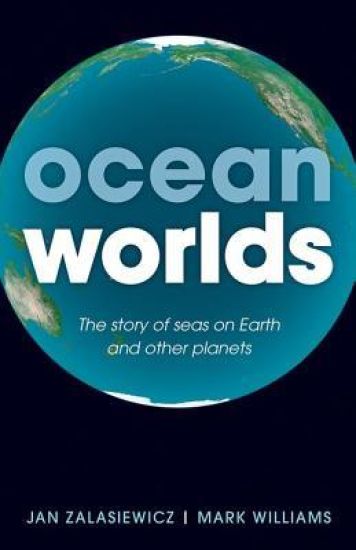
Oceans make up most of the surface of our blue planet. They may form just a sliver on the outside of the Earth, but they are very important, not only in hosting life, including the fish and other animals on which many humans depend, but in terms of their role in the Earth system, in regulating climate, and cycling nutrients. As climate change, pollution, and over-exploitation by humans puts this precious resource at risk, it is more important than ever that we understand and appreciate the nature and history of oceans. There is much we still do not know about the story of the Earth's oceans, and we are only just beginning to find indications of oceans on other planets. In this book, geologists Jan Zalasiewicz and Mark Williams consider the deep history of oceans, how and when they may have formed on the young Earth -- topics of intense current research -- how they became salty, and how they evolved through Earth history. We learn how oceans have formed and disappeared over millions of years, how the sea nurtured life, and what may become of our oceans in the future. We encounter some of the scientists and adventurers whose efforts led to our present understanding of oceans. And we look at clues to possible seas that may once have covered parts of Mars and Venus, that may still exist, below the surface, on moons such as Europa and Callisto, and the possibility of watery planets in other star systems.
Rocks, more than anything else, underpin our lives. They make up the solid structure of the Earth and of other rocky planets, and are present at the cores of gas giant planets. We live on the rocky surface of the planet, grow our food on weathered debris derived from rocks, and we obtain nearly all of the raw materials with which we found our civilization from rocks. From the Earth's crust to building bricks, rocks contain our sense of planetary history, and are a guide to our future. In this Very Short Introduction Jan Zalasiewicz looks at the nature and variety of rocks, and the processes by which they are formed. Starting from the origin of rocks and their key role in the formation of the Earth, he considers what we know about the deep rocks of the mantle and core, and what rocks can tell us about the evolution of the Earth, and looks at those found in outer space and on other planets. ABOUT THE SERIES: The Very Short Introductions series from Oxford University Press contains hundreds of titles in almost every subject area. These pocket-sized books are the perfect way to get ahead in a new subject quickly. Our expert authors combine facts, analysis, perspective, new ideas, and enthusiasm to make interesting and challenging topics highly readable.
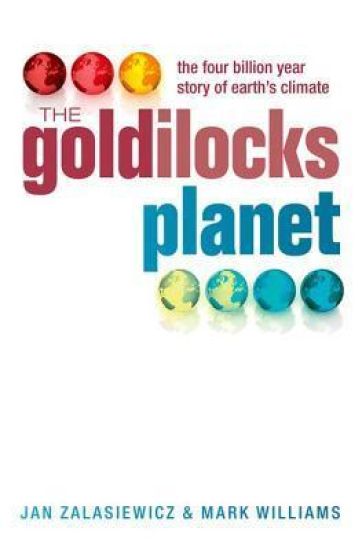
Climate change is a major topic of concern today, scientifically, socially, and politically. It will undoubtedly continue to be so for the foreseeable future, as predicted changes in global temperatures, rainfall, and sea level take place, and as human society adapts to these changes. In this remarkable new work, Jan Zalasiewicz and Mark Williams demonstrate how the Earth's climate has continuously altered over its 4.5 billion-year history. The story can be read from clues preserved in the Earth's strata - the evidence is abundant, though always incomplete, and also often baffling, puzzling, infuriating, tantalizing, seemingly contradictory. Geologists, though, are becoming ever more ingenious at interrogating this evidence, and the story of the Earth's climate is now being reconstructed in ever-greater detail - maybe even providing us with clues to the future of contemporary climate change. The history is dramatic and often abrupt. Changes in global and regional climate range from bitterly cold to sweltering hot, from arid to humid, and they have impacted hugely upon the planet's evolving animal and plant communities, and upon its physical landscapes of the Earth. And yet, through all of this, the Earth has remained consistently habitable for life for over three billion years - in stark contrast to its planetary neighbours. Not too hot, not too cold; not too dry, not too wet, it is aptly known as 'the Goldilocks planet'.
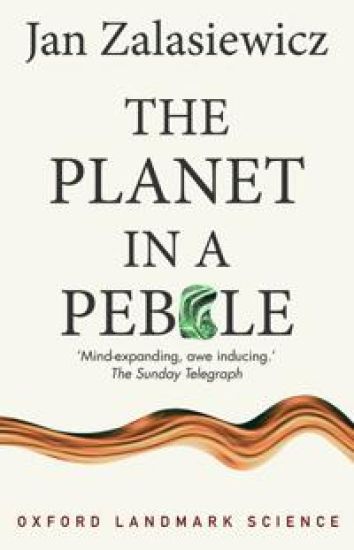
This is the story of a single pebble. It is just a normal pebble, as you might pick up on holiday - on a beach in Wales, say. Its history, though, carries us into abyssal depths of time, and across the farthest reaches of space. This is a narrative of the Earth's long and dramatic history, as gleaned from a single pebble. It begins as the pebble-particles form amid unimaginable violence in distal realms of the Universe, in the Big Bang and in supernova explosions and continues amid the construction of the Solar System. Jan Zalasiewicz shows the almost incredible complexity present in such a small and apparently mundane object. Many events in the Earth's ancient past can be deciphered from a pebble: volcanic eruptions; the lives and deaths of extinct animals and plants; the alien nature of long-vanished oceans; and transformations deep underground, including the creations of fool's gold and of oil. Zalasiewicz demonstrates how geologists reach deep into the Earth's past by forensic analysis of even the tiniest amounts of mineral matter. Many stories are crammed into each and every pebble around us. It may be small, and ordinary, this pebble - but it is also an eloquent part of our Earth's extraordinary, never-ending story.
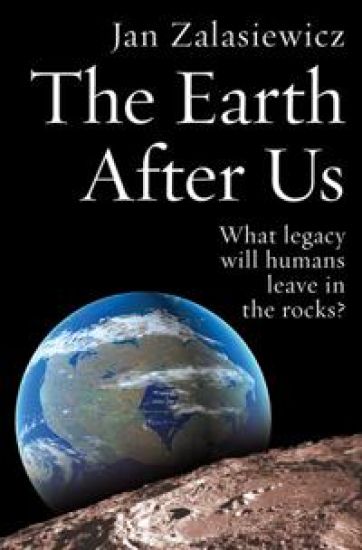
What would alien visitors in the far future, piecing together the history of earth, find of our brief reign? What clues will we leave? What fossils? Just as we have gained knowledge of the past, of ancient climates and the activities of creatures long dead, so too might they decode the rocks. The Earth After Us takes a novel approach to show how geologists unravel the information in the rocks. As the alien scientists start investigating the strata, what story will they tell of us? What kind of fossils will humans leave behind? What will happen to cities, cars, and plastic cups? How thick a layer will the 'human stratum' be? And will it be obvious which species dominated the planet?