Kirjojen hintavertailu. Mukana 12 595 353 kirjaa ja 12 kauppaa.

Kirjailija

Jane Holgate

Kirjat ja teokset yhdessä paikassa: 5 kirjaa, julkaisuja vuosilta 2012-2025, suosituimpien joukossa Changemakers. Vertaile teosten hintoja ja tarkista saatavuus suomalaisista kirjakaupoista.

5 kirjaa

Kirjojen julkaisuhaarukka 2012-2025.

Changemakers

Changemakers

Jane Holgate; John Page

Bristol University Press
2025
nidottu
Crafted for those who dare to challenge the status quo, this is a radical guide for activists. Drawing from frontline experiences in trade unions, environmentalism, animal rights, and social justice movements, the book explores essential themes from leadership to the art of negotiation. It asks crucial questions about organising and social movements in the 21st century. Avoiding easy prescriptions, the authors uniquely guide readers to where theory meets practice. Written by two experts in activist education and community organising, this is a refreshing take on movement building, empowering changemakers of today to forge new paths towards a more just world.
Arise

Arise

Jane Holgate

Pluto Press
2021
sidottu
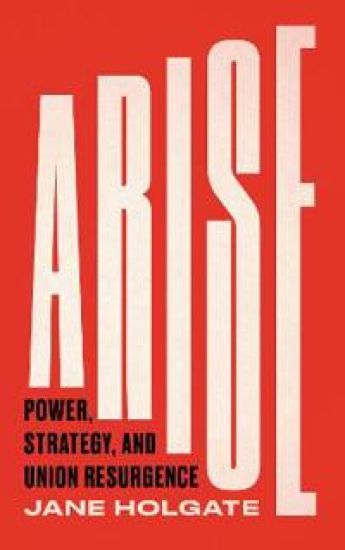
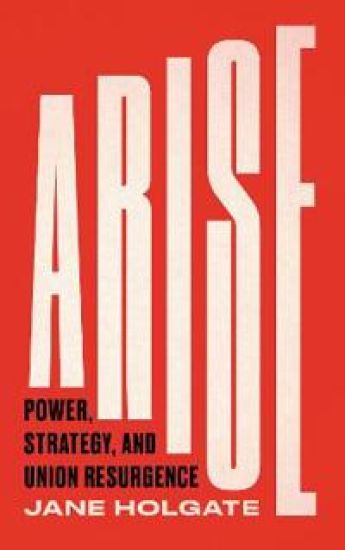
'Jane Holgate is a brilliant thinker' - Jane McAlevey In Arise, Jane Holgate argues that unions must revisit their understanding of power in order to regain influence and confront capital. Drawing on two decades of research and organising experience, Holgate examines the structural inertia of today’s unions from a range of perspectives: from strategic choice, leadership and union democracy to politics, tactics and the agency afforded to rank-and-file members. In the midst of a neoliberal era of economic crisis and political upheaval, the labour movement stands at a crossroads. Union membership is on the rise, but the ‘turn to organising’ has largely failed to translate into meaningful gains for workers. There is considerable discussion about the lack of collectivism among workers due to casualisation, gig work and precarity, yet these conditions were standard in the UK when workers built the foundations of the 19th-century trade union movement. Drawing on history and case studies of unions developing and using power effectively, this book offers strategies for moving beyond the pessimism that prevails in much of today’s union movement. By placing power analysis back at the heart of workers' struggle, Holgate shows us that transformational change is not only possible, but within reach.
Arise

Arise

Jane Holgate

Pluto Press
2021
pokkari
'Jane Holgate is a brilliant thinker' - Jane McAlevey In Arise, Jane Holgate argues that unions must revisit their understanding of power in order to regain influence and confront capital. Drawing on two decades of research and organising experience, Holgate examines the structural inertia of today’s unions from a range of perspectives: from strategic choice, leadership and union democracy to politics, tactics and the agency afforded to rank-and-file members. In the midst of a neoliberal era of economic crisis and political upheaval, the labour movement stands at a crossroads. Union membership is on the rise, but the ‘turn to organising’ has largely failed to translate into meaningful gains for workers. There is considerable discussion about the lack of collectivism among workers due to casualisation, gig work and precarity, yet these conditions were standard in the UK when workers built the foundations of the 19th-century trade union movement. Drawing on history and case studies of unions developing and using power effectively, this book offers strategies for moving beyond the pessimism that prevails in much of today’s union movement. By placing power analysis back at the heart of workers' struggle, Holgate shows us that transformational change is not only possible, but within reach.
Union Voices

Union Voices

Melanie Simms; Jane Holgate; Edmund Heery

ILR Press
2012
pokkari
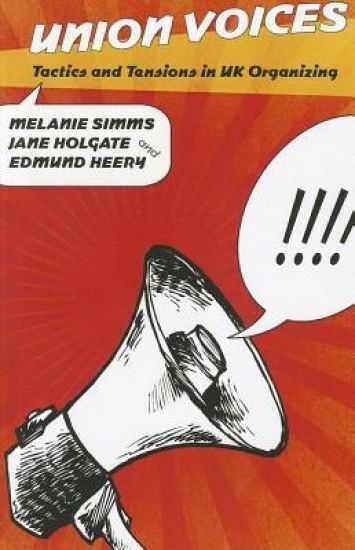
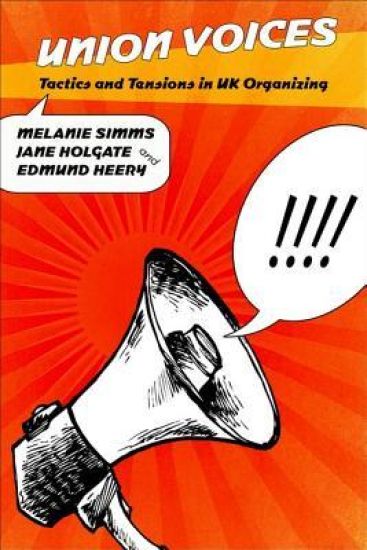
In Union Voices, the result of a thirteen-year research project, three industrial relations scholars evaluate how labor unions fared in the political and institutional context created by Great Britain's New Labour government, which was in power from 1997 to 2010. Drawing on extensive empirical evidence, Melanie Simms, Jane Holgate, and Edmund Heery present a multilevel analysis of what organizing means in the UK, how it emerged, and what its impact has been. Although the supportive legislation of the New Labour government led to considerable optimism in the late 1990s about the prospects for renewal, Simms, Holgate, and Heery argue that despite considerable evidence of investment, new practices, and innovation, UK unions have largely failed to see any significant change in their membership and influence. The authors argue that this is because of the wider context within which organizing activity takes place and also reflects the fundamental tensions within these initiatives. Even without evidence of any significant growth in labor influence across UK society more broadly, organizing campaigns have given many of the participants an opportunity to grow and flourish. The book presents their experiences and uses them to show how their personal commitment to organizing and trade unionism can sometimes be undermined by the tensions and tactics used during campaigns.
Union Voices

Union Voices

Melanie Simms; Jane Holgate; Edmund Heery

ILR Press
2012
sidottu
In Union Voices, the result of a thirteen-year research project, three industrial relations scholars evaluate how labor unions fared in the political and institutional context created by Great Britain's New Labour government, which was in power from 1997 to 2010. Drawing on extensive empirical evidence, Melanie Simms, Jane Holgate, and Edmund Heery present a multilevel analysis of what organizing means in the UK, how it emerged, and what its impact has been. Although the supportive legislation of the New Labour government led to considerable optimism in the late 1990s about the prospects for renewal, Simms, Holgate, and Heery argue that despite considerable evidence of investment, new practices, and innovation, UK unions have largely failed to see any significant change in their membership and influence. The authors argue that this is because of the wider context within which organizing activity takes place and also reflects the fundamental tensions within these initiatives. Even without evidence of any significant growth in labor influence across UK society more broadly, organizing campaigns have given many of the participants an opportunity to grow and flourish. The book presents their experiences and uses them to show how their personal commitment to organizing and trade unionism can sometimes be undermined by the tensions and tactics used during campaigns.