Kirjojen hintavertailu. Mukana 12 595 353 kirjaa ja 12 kauppaa.

Kirjailija

Jane M Gaines

Kirjat ja teokset yhdessä paikassa: 4 kirjaa, julkaisuja vuosilta 2001-2018, suosituimpien joukossa Pink-Slipped. Vertaile teosten hintoja ja tarkista saatavuus suomalaisista kirjakaupoista.

Mukana myös kirjoitusasut: Jane M. Gaines

4 kirjaa

Kirjojen julkaisuhaarukka 2001-2018.

Pink-Slipped

Pink-Slipped

Jane M Gaines

University of Illinois Press
2018
nidottu
Women held more positions of power in the silent film era than at any other time in American motion picture history. Marion Leonard broke from acting to cofound a feature film company. Gene Gauntier, the face of Kalem Films, also wrote the first script of Ben-Hur. Helen Holmes choreographed her own breathtaking on-camera stunt work. Yet they and the other pioneering filmmaking women vanished from memory. Using individual careers as a point of departure, Jane M. Gaines charts how women first fell out of the limelight and then out of the film history itself. A more perplexing event cemented their obscurity: the failure of 1970s feminist historiography to rediscover them. Gaines examines how it happened against a backdrop of feminist theory and her own meditation on the limits that historiography imposes on scholars. Pondering how silent era women have become absent in the abstract while present in reality, Gaines sees a need for a theory of these artists' pasts that relates their aspirations to those of contemporary women. A bold journey through history and memory, Pink-Slipped pursues the still-elusive fate of the influential women in the early years of film.
Pink-Slipped

Pink-Slipped

Jane M Gaines

University of Illinois Press
2018
sidottu
Women held more positions of power in the silent film era than at any other time in American motion picture history. Marion Leonard broke from acting to cofound a feature film company. Gene Gauntier, the face of Kalem Films, also wrote the first script of Ben-Hur. Helen Holmes choreographed her own breathtaking on-camera stunt work. Yet they and the other pioneering filmmaking women vanished from memory. Using individual careers as a point of departure, Jane M. Gaines charts how women first fell out of the limelight and then out of the film history itself. A more perplexing event cemented their obscurity: the failure of 1970s feminist historiography to rediscover them. Gaines examines how it happened against a backdrop of feminist theory and her own meditation on the limits that historiography imposes on scholars. Pondering how silent era women have become absent in the abstract while present in reality, Gaines sees a need for a theory of these artists' pasts that relates their aspirations to those of contemporary women. A bold journey through history and memory, Pink-Slipped pursues the still-elusive fate of the influential women in the early years of film.
Fire and Desire

Fire and Desire

Jane M. Gaines

University of Chicago Press
2001
sidottu
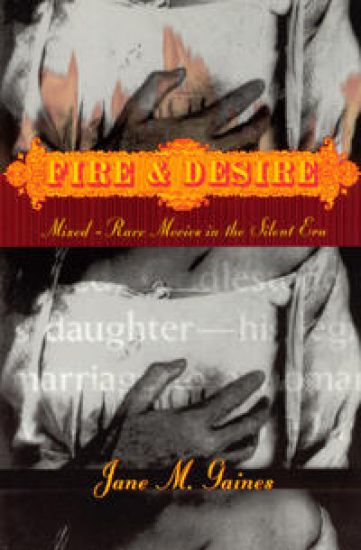
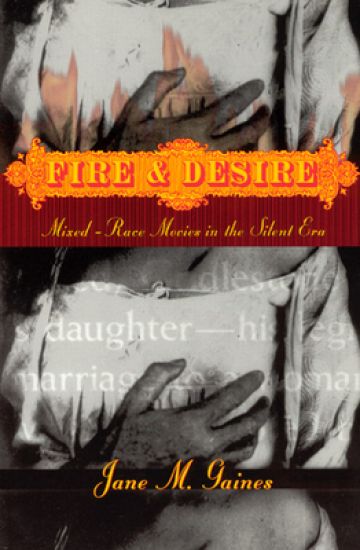
In the silent era, American cinema was defined by two separate and parallel industries, with white and black companies producing films for their respective, segregated audiences. Jane Gaines's highly anticipated new book reconsiders the race films of this era with an ambitious historical and theoretical agenda.Fire and Desire offers a penetrating look at the black independent film movement during the silent period. Gaines traces the profound influence that D. W. Griffith's racist epic The Birth of a Nation exerted on black filmmakers such as Oscar Micheaux, the director of the newly recovered Within Our Gates. Beginning with What Happened in the Tunnel, a movie that played with race and sex taboos by featuring the first interracial kiss in film, Gaines also explores the cinematic constitution of self and other through surprise encounters: James Baldwin sees himself in the face of Bette Davis, family resemblance is read in Richard S. Robert's portrait of an interracial family, and black film pioneer George P. Johnson looks back on Micheaux. Given the impossibility of purity and the co-implication of white and black, Fire and Desire ultimately questions the category of "race movies" itself.
Fire and Desire

Fire and Desire

Jane M. Gaines

University of Chicago Press
2001
nidottu
In the silent era, American cinema was defined by two separate and parallel industries, with white and black companies producing films for their respective, segregated audiences. Jane Gaines's highly anticipated new book reconsiders the race films of this era with an ambitious historical and theoretical agenda.Fire and Desire offers a penetrating look at the black independent film movement during the silent period. Gaines traces the profound influence that D. W. Griffith's racist epic The Birth of a Nation exerted on black filmmakers such as Oscar Micheaux, the director of the newly recovered Within Our Gates. Beginning with What Happened in the Tunnel, a movie that played with race and sex taboos by featuring the first interracial kiss in film, Gaines also explores the cinematic constitution of self and other through surprise encounters: James Baldwin sees himself in the face of Bette Davis, family resemblance is read in Richard S. Robert's portrait of an interracial family, and black film pioneer George P. Johnson looks back on Micheaux. Given the impossibility of purity and the co-implication of white and black, Fire and Desire ultimately questions the category of "race movies" itself.