Kirjojen hintavertailu. Mukana 12 390 323 kirjaa ja 12 kauppaa.

Kirjailija

Janet Burton

Kirjat ja teokset yhdessä paikassa: 16 kirjaa, julkaisuja vuosilta 1994-2023, suosituimpien joukossa Monastic and Religious Orders in Britain, 1000–1300. Vertaile teosten hintoja ja tarkista saatavuus suomalaisista kirjakaupoista.

16 kirjaa

Kirjojen julkaisuhaarukka 1994-2023.

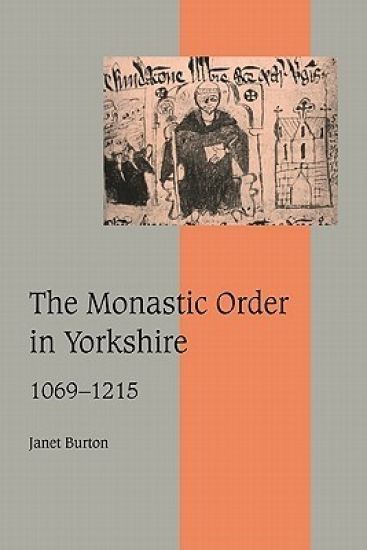
The Monastic Order in Yorkshire, 1069–1215

The Monastic Order in Yorkshire, 1069–1215

Janet Burton

Cambridge University Press
2006
pokkari
This 1999 book explores the dramatic growth of the monastic order in Yorkshire from the foundation of the first post-Conquest abbey at Selby in 1069 to 1215. The first half examines the dynamics of monastic expansion, discussing the influences on both its chronological development and its geographical pattern. It demonstrates that the monastic expansion owed much to the particular political and tenurial conditions which existed in the century after 1069: the establishment of Norman political ascendancy, the extension of central government under Henry I, and the civil war of the reign of King Stephen. The second part of the book explores recruitment, patronage, economy and cultural life. Particular attention is paid to the role of women in the religious life. Nunneries, so often regarded as second-class or failed monasteries, are here shown to have had a distinctive function in society, in terms both of recruitment and of interaction with the local community.
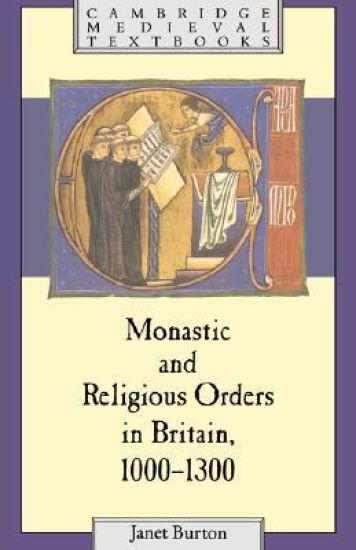
Monastic and Religious Orders in Britain, 1000–1300

Monastic and Religious Orders in Britain, 1000–1300

Janet Burton

Cambridge University Press
1994
pokkari
This book traces the development of monasticism in England, Scotland and Wales from the last half century of Anglo-Saxon England to 1300. It explores the nature of the impact of the Norman settlement on monastic life, and how Britain responded to new, European ideas on monastic life. In particular, it examines Britain’s response to the needs of religious women. It covers every aspect of the life and work of the religious orders: their daily life, the buildings in which they lived, their contribution to intellectual developments and to the economy. Particular attention is paid to the relationship between religious houses and their founders and patrons. This shows the degree of dependence of religious houses on local patrons. Indeed, one major theme which emerges from the book is the constant tension between the ideals of monastic communities and the demands of the world.
Monastic and Religious Orders in Britain, 1000–1300

Monastic and Religious Orders in Britain, 1000–1300

Janet Burton

Cambridge University Press
1994
sidottu
This book traces the development of monasticism in England, Scotland and Wales from the last half century of Anglo-Saxon England to 1300. It explores the nature of the impact of the Norman settlement on monastic life, and how Britain responded to new, European ideas on monastic life. In particular, it examines Britain’s response to the needs of religious women. It covers every aspect of the life and work of the religious orders: their daily life, the buildings in which they lived, their contribution to intellectual developments and to the economy. Particular attention is paid to the relationship between religious houses and their founders and patrons. This shows the degree of dependence of religious houses on local patrons. Indeed, one major theme which emerges from the book is the constant tension between the ideals of monastic communities and the demands of the world.
Medieval Monasticism

Medieval Monasticism

C.H. Lawrence; Janet Burton

TAYLOR FRANCIS LTD
2023
sidottu
Medieval Monasticism traces the Western Monastic tradition from its fourth-century origins in the deserts of Egypt and Syria through the many and varied forms of religious life it assumed during the Middle Ages. It explores the relationship between monasteries and the secular world around them.For a thousand years, the great monastic houses and religious orders were a prominent feature of the social landscape of the West, and their leaders figured as much in the political as on the spiritual map of the medieval world. In this book many of them, together with their supporters and critics, are presented to us and speak their minds to us. We are shown, for instance, the controversy between the Benedictines and the reformed monasticism of the twelfth century and the problems that confronted women in religious life. A detailed glossary offers readers a helpful vocabulary of the subject. This fifth edition has been revised by Janet Burton to include an updated bibliography and an introduction which discusses recent trends in monastic studies, including reinterpretations of issues of reform and renewal, new scholarship on religious women, and interdisciplinary and multidisciplinary approaches. This book is essential reading for both students and scholars of the medieval world.
Medieval Monasticism

Medieval Monasticism

C.H. Lawrence; Janet Burton

TAYLOR FRANCIS LTD
2023
nidottu
Medieval Monasticism traces the Western Monastic tradition from its fourth-century origins in the deserts of Egypt and Syria through the many and varied forms of religious life it assumed during the Middle Ages. It explores the relationship between monasteries and the secular world around them.For a thousand years, the great monastic houses and religious orders were a prominent feature of the social landscape of the West, and their leaders figured as much in the political as on the spiritual map of the medieval world. In this book many of them, together with their supporters and critics, are presented to us and speak their minds to us. We are shown, for instance, the controversy between the Benedictines and the reformed monasticism of the twelfth century and the problems that confronted women in religious life. A detailed glossary offers readers a helpful vocabulary of the subject. This fifth edition has been revised by Janet Burton to include an updated bibliography and an introduction which discusses recent trends in monastic studies, including reinterpretations of issues of reform and renewal, new scholarship on religious women, and interdisciplinary and multidisciplinary approaches. This book is essential reading for both students and scholars of the medieval world.
The Cistercians in the Middle Ages

The Cistercians in the Middle Ages

Janet Burton; Julie Kerr

The Boydell Press
2016
pokkari
A full and comprehensive survey of the development of the Cistercian Order which emerged from the tumultuous intellectual and religious fervour of the eleventh and twelfth centuries. The Cistercians (White Monks) were the most successful monastic experiment to emerge from the tumultuous intellectual and religious fervour of the eleventh and twelfth centuries. By around 1150 they had established houses the length and breadth of Western Christendom and were internationally renowned. They sought to return to a simple form of monastic life, as set down in the Rule of St Benedict, and preferred rural locations "far from the haunts of men".But, as recent research has shown, they were by no means isolated from society but influenced, and were influenced by, the world around them; they moved with the times. This book explores the phenomenon that was the Cistercian Order, drawing on recent research from various disciplines to consider what it was that made the Cistercians distinctive and how they responded to developments. The book addresses current debates regarding the origins and evolution of the Order; discusses the key primary sources for knowledge; and covers architecture, administration, daily life, spirituality, the economy and the monks' ties with the world. Professor Janet Burton teaches at theSchool of Archaeology, History and Anthropology, University of Wales Trinity Saint David; Dr Julie Kerr is Honorary Research Fellow in the School of History, University of St Andrews.
Abbeys and Priories of Medieval Wales

Abbeys and Priories of Medieval Wales

Janet Burton; Karen Stöber

University of Wales Press
2015
nidottu
Abbeys and Priories of Medieval Wales is the first comprehensive, illustrated guide to the religious houses of Wales from the twelfth to sixteenth centuries. It offers a thorough introduction to the history of the monastic orders in Wales (the Benedictines, Cluniacs, Augustinians, Premonstratensians, Cistercians, the military orders and the friars), and to life inside medieval Welsh monasteries and nunneries, in addition to providing the histories of almost sixty communities of religious men and women, with descriptions of the standing remains of their buildings. As well as a being a scholarly book, a number of maps, ground plans and practical information make this an indispensable guide for visitors to Wales’s monastic heritage.
Abbeys and Priories of Medieval Wales

Abbeys and Priories of Medieval Wales

Janet Burton; Karen Stöber

University of Wales Press
2015
sidottu
Abbeys and Priories of Medieval Wales is the first comprehensive, illustrated guide to the religious houses of Wales from the twelfth to sixteenth centuries. It offers a thorough introduction to the history of the monastic orders in Wales (the Benedictines, Cluniacs, Augustinians, Premonstratensians, Cistercians, the military orders and the friars), and to life inside medieval Welsh monasteries and nunneries, in addition to providing the histories of almost sixty communities of religious men and women, with descriptions of the standing remains of their buildings. As well as a being a scholarly book, a number of maps, ground plans and practical information make this an indispensable guide for visitors to Wales’s monastic heritage.
The Cistercians in the Middle Ages

The Cistercians in the Middle Ages

Janet Burton; Julie Kerr

The Boydell Press
2011
sidottu
A full and comprehensive survey of the development of the Cistercian Order which emerged from the tumultuous intellectual and religious fervour of the eleventh and twelfth centuries. The Cistercians (White Monks) were the most successful monastic experiment to emerge from the tumultuous intellectual and religious fervour of the eleventh and twelfth centuries. By around 1150 they had established houses the length and breadth of Western Christendom and were internationally renowned. They sought to return to a simple form of monastic life, as set down in the Rule of St Benedict, and preferred rural locations "far from the haunts of men".But, as recent research has shown, they were by no means isolated from society but influenced, and were influenced by, the world around them; they moved with the times. This book seeks to explore the phenomenon that was the Cistercian Order, drawing on recent research from various disciplines to consider what it was that made the Cistercians distinctive and how they responded to developments. The book addresses current debates regarding the origins and evolution of the Order; discusses the key primary sources for knowledge; and covers architecture, administration, daily life, spirituality, the economy and the monks' ties with the world. Professor Janet Burton teaches at the School of Archaeology, History and Anthropology, University of Wales Trinity Saint David; Dr Julie Kerr is Honorary Research Fellow in the School of History, University of St Andrews.
The Monastic Order in Yorkshire, 1069–1215

The Monastic Order in Yorkshire, 1069–1215

Janet Burton

Cambridge University Press
1999
sidottu
This 1999 book explores the dramatic growth of the monastic order in Yorkshire from the foundation of the first post-Conquest abbey at Selby in 1069 to 1215. The first half examines the dynamics of monastic expansion, discussing the influences on both its chronological development and its geographical pattern. It demonstrates that the monastic expansion owed much to the particular political and tenurial conditions which existed in the century after 1069: the establishment of Norman political ascendancy, the extension of central government under Henry I, and the civil war of the reign of King Stephen. The second part of the book explores recruitment, patronage, economy and cultural life. Particular attention is paid to the role of women in the religious life. Nunneries, so often regarded as second-class or failed monasteries, are here shown to have had a distinctive function in society, in terms both of recruitment and of interaction with the local community.