Kirjojen hintavertailu. Mukana 12 209 267 kirjaa ja 12 kauppaa.

Kirjailija

Janet Catherine Berlo

Kirjat ja teokset yhdessä paikassa: 14 kirjaa, julkaisuja vuosilta 1984-2023, suosituimpien joukossa Miguel Covarrubias. Vertaile teosten hintoja ja tarkista saatavuus suomalaisista kirjakaupoista.

14 kirjaa

Kirjojen julkaisuhaarukka 1984-2023.

Miguel Covarrubias

Miguel Covarrubias

Alicia Inez Guzmán; Khristaan D. Villela; Janet Catherine Berlo;

University of Texas Press
2014
sidottu
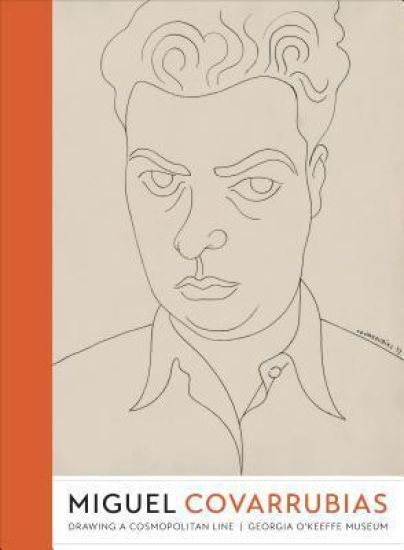
Miguel Covarrubias enjoyed transcultural encounters and exchanges in the cosmopolitan centers of Mexico City, New York, and Europe, where he met and exchanged ideas in a global network of modernists such as Georgia O’Keeffe. Famous for his caricature studies, he was also an accomplished painter, set designer, and book illustrator. Less well known are his consummate skills as an art historian, curator, cartographer, ethnographer, and documentary filmmaker, as well as his direction of programs in museum studies, dance, and the excavation of cultural sites in Mexico.Miguel Covarrubias: Drawing a Cosmopolitan Line, the catalogue of an exhibition at the Georgia O’Keeffe Museum, establishes the importance of Covarrubias’s broad-ranging and significant contributions to modern art. The book includes an extensive selection of this prolific artist’s compositions in graphite, watercolor, and oil paint, as well as illustrations from his scholarly publications. Four accompanying essays consider Covarrubias’s artistic practice and contributions to the richness of modern art. They discuss his lifelong habit of moving between modern cities and remote sites of ancient cultures, which engendered a strong cosmopolitanism in his work; his role in promoting the art of the Americas, from ancient Olmec works to contemporary pieces, through curatorial efforts in New York and Mexico City; the large-scale mural maps Covarrubias made for the 1939 San Francisco World’s Fair that bring his anthropological, ethnographic, and geographic interests together with cartography and blur lines between landscape and culture; and his substantial scholarship on the indigenous arts of North America.
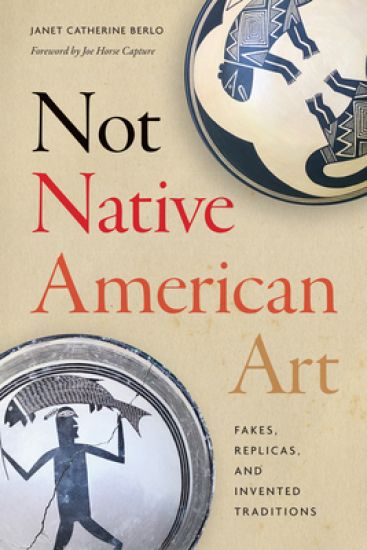
Not Native American Art

Not Native American Art

Janet Catherine Berlo; Joe Horse Capture

UNIVERSITY OF WASHINGTON PRESS
2023
sidottu
Explores the making and meaning of so-called Native American artThe faking of Native American art objects has proliferated as their commercial value has increased, but even a century ago experts were warning that the faking of objects ranging from catlinite pipes to Chumash sculpture was rampant. Through a series of historical and contemporary case studies, Janet Catherine Berlo engages with troubling and sometimes confusing categories of inauthenticity.Based on decades of research as well as interviews with curators, collectors, restorers, replica makers, reenactors, and Native artists and cultural specialists, Not Native American Art examines the historical and social contexts within which people make replicas and fakes or even invent new objects that then become "traditional." Berlo follows the unexpected trajectories of such objects, including Northwest Coast carvings, "Navajo" rugs made in Mexico, Zuni mask replicas, Lakota-style quillwork, and Mimbres bowl forgeries. With engaging anecdotes, the book offers a rich and nuanced understanding of a surprisingly wide range of practices that makers have used to produce objects that are "not Native American art."
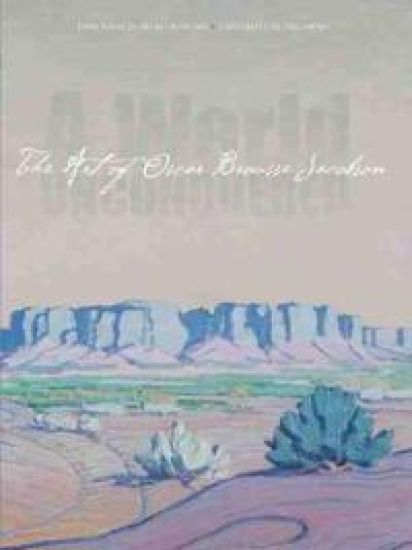
A World Unconquered

A World Unconquered

Anne Allbright; Janet Catherine Berlo; Mark Andrew White

Fred Jones Jr. Museum of Art
2015
nidottu
Oscar Brousse Jacobson (1882-1966) was a prolific artist who devoted much of his career to the depiction of the wilderness of the American West, especially Arizona, Colorado, New Mexico, and Oklahoma. He also became a passionate supporter of the visual arts in the Southwest and an enthusiastic promoter of Native American fine artists, such as the early Kiowa artists, Acee Blue Eagle, and others. Over the course of his forty-year career at the University of Oklahoma, he oversaw the dramatic expansion of the School of Art and the creation of an art museum in 1936 that would eventually become the Fred Jones Jr. Museum of Art.A World Unconquered: The Art of Oscar Brousse Jacobson surveys the career of this important yet often overlooked artist. Following his study at Bethany College in Lindsborg, Kansas, with Birger Sandz n, Jacobson became an advocate for modernism and embraced the wilderness as his primary subject. Drawn to the seemingly inhospitable and desolate, Jacobson favored the desert, which eventually led him to paint the Sahara in 1925-26. He balanced a productive painting career with an inexorable desire to promote appreciation for and knowledge of world cultures in the new state of Oklahoma. Jacobson organized exhibits of Asian, Native American, and North African art and culture at OU and played an important role in facilitating New Deal post office murals in the state. Published in conjunction with a retrospective exhibition of Jacobson's career, A World Unconquered offers the first critical analysis of his work as both an artist and a cultural figure and coincides with the centennial of his arrival in Oklahoma in 1915.
Native North American Art

Native North American Art

Janet Catherine Berlo; Ruth B. Phillips

Oxford University Press
2014
nidottu
This lively introductory survey of indigenous North American arts from ancient times to the present explores both the shared themes and imagery found across the continent and the distinctive traditions of each region. Focusing on the richness of artwork created in the US and Canada, Native North American Art, Second Edition, discusses 3,000 years of architecture, wood and rock carvings, basketry, dance masks, clothing and more. The expanded text discusses twentieth- and twenty-first-century arts in all media including works by James Luna, Kent Monkman, Nadia Myre, Jaune Quick-to-See Smith, Will Wilson, and many more. Authors Berlo and Phillips incorporate new research and scholarship, examining such issues as art and ethics, gender, representation, and the colonial encounter. By bringing into one conversation the seemingly separate realms of the sacred and the secular, the political and the domestic, and the ceremonial and the commercial, Native North American Art shows how visual arts not only maintain the integrity of spiritual and social systems within Native North American societies, but have long been part of a cross-cultural experience as well.
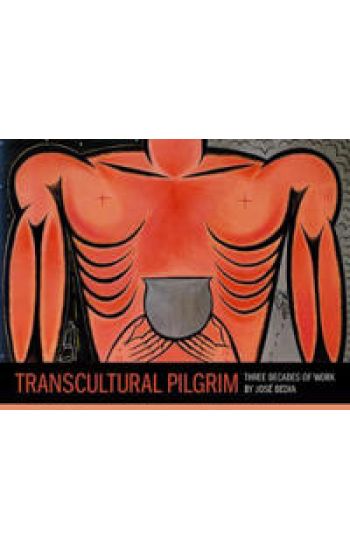
Transcultural Pilgrim

Transcultural Pilgrim

Judith Bettelheim; Janet Catherine Berlo

Fowler Museum of Cultural History,U.S.
2011
pokkari
Jose Bedia is an artist, practitioner, and devotee whose work emanates from his diverse and often systematic religious journeys, experiences, and encounters. Transcultural Pilgrim invites the reader into Bedia's spiritual worlds, which range from his Cuban birthplace to Central Africa and to the indigenous Americas, as revealed in his distinctive and frequently autobiographical visual language.The power and immediacy of Bedia's large-scale paintings and drawings and the material complexity of his installations immediately draw the viewer into his work. Judith Bettelheim and Janet Catherine Berlo have worked closely with Bedia for years, studying his journeys and their complex representations in his art, as well as the ethnographic collections which inspire him.
Quilting Lessons

Quilting Lessons

Janet Catherine Berlo

University of Nebraska Press
2004
pokkari
In the middle of a successful academic career, art historian Janet Catherine Berlo found herself literally at a loss for words. A severe case of writer's block forced her to abandon a book manuscript midstream; she found herself quilting instead. Scorning the logic, planning, and order of scholarship and writing, she immersed herself in freewheeling patterns and vivid colors. For eighteen months she spent all day, every day, quilting. This book penetrates to the very heart of women's lives, focusing on their relationships to family and friends, to work, to daily tasks. It is a search for meaning at midlife, a search for an integration of career and creativity.
Wild by Design

Wild by Design

Janet Catherine Berlo; Patricia Cox Crews

University of Washington Press
2003
pokkari
Wild by Design explores the American tradition of freewheeling, improvisational, often asymmetrical quilts, whose makers experimented boldly with design, color, and pictorial motifs. It examines both the aesthetics and the social history of quilts from the early nineteenth century to the present, including Amish, African American, and modern art quilts.From the state fair to the clothesline, women have sought ways to exhibit the beauty and optical effects of their quilts. The "quilting frolic" of the nineteenth century was for many women an alternative to the art academy and the salon. Janet Berlo reminds us that quilts were a valued form of artistic expression, meant to be shared and admired among the company of other women.Over fifty applique and pieced quilts are illustrated, chosen from the collections of the International Quilt Study Center for their outstanding visual qualities. Each is accompanied by a lively dialogue among quilt experts that illustrates the varied dimensions of quilts as aesthetic objects of the highest order and as reflections of the lives and societies of their makers. This multifaceted analysis of quilts sheds light on the histories of women, textiles, and American art and culture.
Quilting Lessons

Quilting Lessons

Janet Catherine Berlo

University of Nebraska Press
2001
sidottu
Gradually, over the past few months, the desk and writing table have grown dusty and lifeless, while the other side of the room has been transformed into a quilt studio. Here, my stacks of fabric comfort me. Sorted and piled according to color, they await my touch to animate them, turn them into the controlled chaos of what I call my 'serendipity quilts'. Here the only language is color and pattern. It is January, 1993. I am in the sixth month of my quilting depression...I don't answer the phone or the door bell. My job is all-day, intensive color and pattern therapy. I am piecing for cover. I am quilting to save my life. In the middle of a successful academic career, art historian Janet Catherine Berlo finds herself literally at a loss for words. A severe case of writer's block forces her to abandon a book manuscript mid-stream; she finds herself quilting instead. Scorning the logic, planning, and order of scholarship and writing, she immerses herself in free-wheeling patterns and vivid colors. For eighteen months she spends all day, every day, quilting. In the midst of what she calls her 'quilt madness' Berlo questions why her successful career is momentarily halted at mid-life. This book penetrates to the very heart of women's lives, focusing on their relationships to family and friends, to work, to daily tasks. It is a search for meaning at mid-life, a search for an integration of career and creativity. Janet Catherine Berlo is an art historian who specializes in Native American art, a creative writer, and a quilter. She is Susan B. Anthony Professor of Gender and Women's Studies and a professor of art history at the University of Rochester. Her books include "Spirit Beings" and "Sun Dancers: Black Hawk's Vision of the Lakota World" and "Native North American Art" (with coauthor Ruth Phillips).
Transforming Images

Transforming Images

Robert G. Donnelley; Candace S. Greene; Janet Catherine Berlo

University of Chicago Press
2001
nidottu
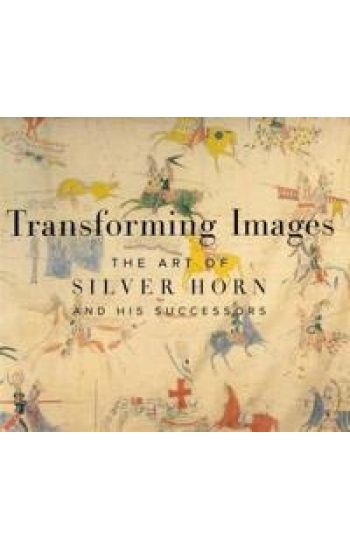
Silver Horn's lifespan (1860-1940) placed him in the midst of extreme cultural transformations: by the time of his death, highways, silos, and gas stations dominated the land that had, at his birth, been the domain of buffalo herds and Plains Indians. Silver Horn's art documents these changes in the lives of the Kiowa Indians, as well as changes in Kiowa art itself. From the traditional hide paintings, themes of warfare, and two-dimensional perspectives, Silver Horn progressed through ledger drawings, scenes of domesticity, and experiments with more naturalistic styles. The bridge he created between ancient Kiowa aesthetics and modern forms of expression had dramatic impact, serving as models for younger Native American artists such as the Kiowa Five of the 1930s, and influencing contemporary artists such as Sharron Ahtone Jarjo, T.C. Cannon, and Sherman Chaddlesone. Works by each of these artists appeared at the Alfred Smart Museum of Art for Transforming Images, a comprehensive exhibition of Silver Horn's work. This volume, illustrated with 75 colour plates and 15 black and white photographs, collects art and commentary from the exhibit.
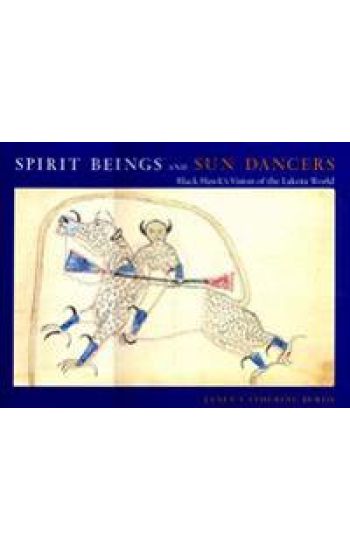
Spirit Beings and Sun Dancers: Black Hawk's Vision of the Lakota World
During the winter of 1880-81, Black Hawk, a Lakota artist living on the Cheyenne River Sioux reservation, drew seventy-six vivid images depicting complex scenes of ceremonial activity, personal visions, historical events, and nature studies. Having recently emerged from obscurity, Black Hawk's drawing book now stands as the most complete visual record extant of Lakota art of the early reservation period (1875-95). It is published here in full, for the first time, with fine quality color plates of each drawing. Detailed commentary accompanies the drawings, providing insight into Lakota religion, art, and culture in the nineteenth century. Some of Black Hawk's illustrations are the only known drawings of ceremonies described in ethnographic works such as Black Elk Speaks, the famous account of visions experienced by Lakota holy man Black Elk. The ceremonies depicted in Black Hawk's drawings include the Sun Dance, buffalo transformation ceremonies, and ceremonies honoring the sacred pipe. He also recorded scenes of Lakota encounters with the Crow, of buffalo hunting, and of wildlife. An invaluable contribution to our knowledge of Native American history and art, Black Hawk's drawing book is a window unto a complex and eloquent world. 76 color illustrations, 20 b/w illustrations.
Native North American Art

Native North American Art

Janet Catherine Berlo; Ruth B. Phillips

Oxford University Press
1998
nidottu
An innovative survey of Native North American art history which fully incorporates substantive new research and scholarship, and examines such issues as gender, representation, the colonial encounter, and contemporary arts. By encompassing both the sacred and secular, political and domestic, the ceremonial and commercial, it shows the importance of the visual arts in maintaining the integrity of spiritual, social , political, and economic systems within Native North American societies. This exciting new investigation explores the indigenous arts of the US and Canada from the early pre-contact period to the present day, stressing the conceptual and iconographic continuities over five centuries and across an immensely diverse range of regions. The richness of Native American art is emphasized through discussions of basketry, wood and rock carvings, dance masks, and beadwork, alongside the contemporary vitality of paintings and installations by modern artists such as Robert Davidson, Emmi Whitehorse, and Alex Janvier. 'the best guide yet to understanding the complexities of Native North American art . . . a solidly ground, sophisticated history, combining art history, anthropology, and cultural studies . . . splendidly well-written . . . useful and timely.' Gerald McMaster, Curator of Art, Canadian Museum of Civilization
The Early Years of Native American Art History

The Early Years of Native American Art History

Janet Catherine Berlo

University of British Columbia Press
1992
sidottu
The field of Native American art history, and our idea of whatcomprises Indian art itself, were molded largely by the policies of themuseums and institutions that established their ethnologicalcollections in the second half of the nineteenth century. Objects housed in the great natural history museums -- collected andseen first as natural history specimens and later as 'primitiveart' -- have long been considered to be normative Native Americanart, rather than as representative of a long and changing history.Collectors' biases against Euro-American influenced work, touristitems, and contemporary art have further distorted our understanding ofthe field. Such attitudes and practices have led to accusations that animperialistic Native American art history not only developed, but alsomaintains, the fictions of a colonizer/colonized relationship. This collection of essays deals with the development of NativeAmerican art history as a discipline rather than with particular artworks or artists. It focuses on the early anthropologists, museumcurators, dealers, and collectors, and on the multiple levels ofunderstanding and misunderstanding, appropriation and reappropriationwhich characterized their transactions. The essays examine majorfigures, art forms, institutions, and events of the early years whenNative American artworks were first collected, studied, anddisplayed.