Kirjojen hintavertailu. Mukana 12 390 323 kirjaa ja 12 kauppaa.

Kirjailija

Janet Collins

Kirjat ja teokset yhdessä paikassa: 5 kirjaa, julkaisuja vuosilta 1996-2017, suosituimpien joukossa Teaching and Learning with Multimedia. Vertaile teosten hintoja ja tarkista saatavuus suomalaisista kirjakaupoista.

5 kirjaa

Kirjojen julkaisuhaarukka 1996-2017.

Teaching and Learning with Multimedia

Teaching and Learning with Multimedia

Janet Collins; Michael Hammond; Jerry Wellington

Routledge
2017
sidottu
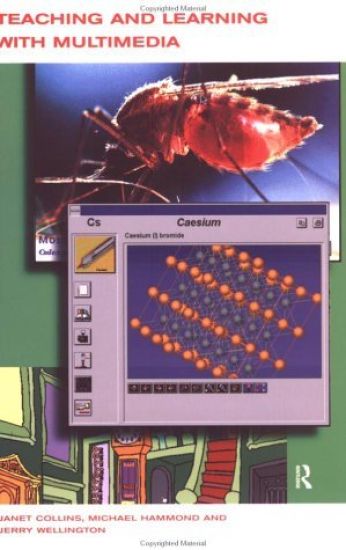
This book is an introduction to the issues and practicalities of using multimedia in classrooms - both primary and secondary, and across a range of subject areas. The book draws on material from a range of case studies and focuses on areas of concern for teachers and researchers. Using IT effectively continues to be a problem for many teachers, and there is still a long way to go toward organising this properly. The book takes a thorough look at IT in the school, discussing and examining issues such as: IT and the National Curriculum foreign language teaching differing curricular needs opportunities and constraints of groupwork talking books and primary reading ways in which multimedia supports readers. The book also looks at some of the more philosophical issues such as the implications of home-computers and the limits of independent learning, and the notion of "edutainment" - the relationship of motivation and enjoyment to learning. Finally, the book makes comparisons across the curriculum and between primary and secondary sectors and raises questions about the future of IT in schools, arguing that teachers should make a significant contribution to decisions about future development.
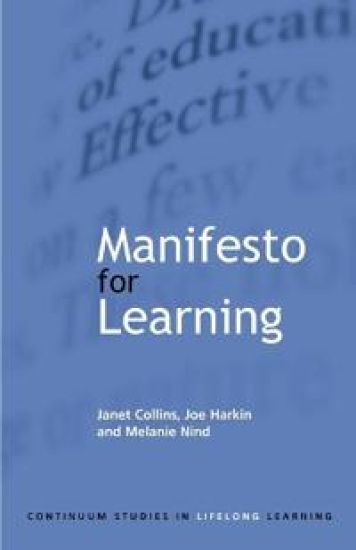
Manifesto for Learning

Manifesto for Learning

Janet Collins; Joe Harkin; Melanie Nind

Continuum International Publishing Group Ltd.
2002
sidottu
What makes people learn effectively? What can we do to promote more effective learning?Innumerable researchers have studied these important and urgent questions, yet their findings tend to be fragmentary and disparate. Now Janet Collins, Joe Harkin and Melanie Nind provide the big picture. Drawing on research from all sectors of education the authors show that effective learning depends crucially on a few easily understood principles. These principles hold true regardless of the age or nature of the learner or the context in which the learner is working.Manifesto for Learning explains those principles and how to apply them, showing in the process how to make the vision of an effective learning society a reality.
Manifesto for Learning

Manifesto for Learning

Janet Collins; Joe Harkin; Melanie Nind

Continuum International Publishing Group Ltd.
2002
nidottu
What makes people learn effectively? What can we do to promote more effective learning? Innumerable researchers have studied these questions, yet their findings tend to be fragmentary and disparate. This book aims to provide the big picture. Drawing on research from all sectors of education, the authors show how effective learning depends crucially on a few easily understood principles. These hold good regardless of the age or nature of the learner or the context in which the learner is working. The book explains those principles and how to apply them, showing in the process how to make the vision of an effective learning society a reality.
Teaching and Learning with Multimedia

Teaching and Learning with Multimedia

Janet Collins; Michael Hammond; Jerry Wellington

Routledge
1997
nidottu
This book is an introduction to the issues and practicalities of using multimedia in classrooms - both primary and secondary, and across a range of subject areas. The book draws on material from a range of case studies and focuses on areas of concern for teachers and researchers. Using IT effectively continues to be a problem for many teachers, and there is still a long way to go toward organising this properly. The book takes a thorough look at IT in the school, discussing and examining issues such as: * IT and the National Curriculum * foreign language teaching * differing curricular needs * opportunities and constraints of groupwork * talking books and primary reading * ways in which multimedia supports readers. The book also looks at some of the more philosophical issues such as the implications of home-computers and the limits of independent learning, and the notion of "edutainment" - the relationship of motivation and enjoyment to learning. Finally, the book makes comparisons across the curriculum and between primary and secondary sectors and raises questions about the future of IT in schools, arguing that teachers should make a significant contribution to decisions about future development.
The Quiet Child

The Quiet Child

Janet Collins

Continuum International Publishing Group Ltd.
1996
nidottu
Based on the most up-to-date research, The Quiet Child is an in-depth study of habiutally quiet or withdrawn pupils during their transition from primary to secondary school. It establishes the importance of talk in learning and explores the ways in which quiet pupils are educationally disadvantaged through their inability or unwillingness to talk, both to teachers and fellow pupils. Secondly, it examines the factors, such as diminished sense of self-worth or a difficulty in forming and sustaining relationships, which may have contributed to the child's reluctance to participate in lessons. Finally, the book suggests teaching strategies to enable teachers to develop their pupils' self-esteem through fostering positive relationships, thus empowering them to play an active role in their education. Janet Collins is a Research Fellow in the Centre for Language and Communication, School of Education, The Open Universtity. As a primary school teacher, she has had extensive experience working in mainstream schools with children with special educational needs.Philip Hills, the Series Editor, is Head of the Centre for Research into Human Communication and Learning at the University of Cambridge. He has written extensively on education, information technology and communication.