Kirjojen hintavertailu. Mukana 12 218 930 kirjaa ja 12 kauppaa.

Kirjailija

Janet Gonzalez-Mena

Kirjat ja teokset yhdessä paikassa: 13 kirjaa, julkaisuja vuosilta 2006-2023, suosituimpien joukossa Learning from the Bumps in the Road. Vertaile teosten hintoja ja tarkista saatavuus suomalaisista kirjakaupoista.

13 kirjaa

Kirjojen julkaisuhaarukka 2006-2023.

ISE INFANTS TODDLERS & CAREGIVERS:CURRICULUM RELATIONSHIP

ISE INFANTS TODDLERS & CAREGIVERS:CURRICULUM RELATIONSHIP

Janet Gonzalez-Mena; Dianne Widmeyer Eyer

McGraw-Hill Education
2020
nidottu
The major theme of this textbook - the idea of respectful, responsive, and reciprocal adult-infant-toddler interactions has been consistent with each edition. The underlying framework for the textbook is founded in the “Ten Principles” which is initially discussed in Chapter 1. Respectful behaviors on the part of the caregivers are the basis of the Ten Principles. The textbook refers to these in every chapter, and a “Principles in Action” feature in each chapter uses a scenario to further explain individual principles.Respect is a key component of the curriculum that Infants, Toddlers, and Caregivers advocates. Curriculum has to do with respecting and responding to each child’s needs in sensitive ways that promote attachment. Curriculum for infants and toddlers embraces everything that happens during the day. This textbook consistently outlines well-established practices related to sensitive care and program planning that are designed to promote well-being and identity formation in infants and toddlers. The focus of Infants, Toddlers, and Caregivers is on action - putting theory into practice. Knowing “about” is different from knowing “how to.” The authors appreciate that even people with considerable understanding of early development may have trouble acting on that understanding unless they have also learned to apply theory. The caregiver role incorporates that of teach and education. Appreciating diversity, cultural and linguistic difference, and inclusion have grown in significance with each edition, and are reflected in positive, non-biased terminology throughout the textbook.
INFANTS TODDLERS & CAREGIVERS:CURRICULUM RELATIONSHIP

INFANTS TODDLERS & CAREGIVERS:CURRICULUM RELATIONSHIP

Janet Gonzalez-Mena; Dianne Widmeyer Eyer

McGraw-Hill Education
2017
nidottu
Infants, Toddlers, and Caregivers is an ideal introduction to care and education in the first three years of life, featuring a respectful approach inspired by field pioneers Magda Gerber and Dr. Emmi Pikler. The program provides practical information based on theoretical and research foundations that students can implement in a variety of infant and toddler settings. With the impacts of school readiness and technology in early childhood education today, this program focuses on the value of free play, the development of self-reliance, and the importance of responsive, respectful interactions. The Connect course for this offering includes SmartBook, an adaptive reading and study experience which guides students to master, recall, and apply key concepts while providing automatically-graded assessments.McGraw-Hill Connect® is a subscription-based learning service accessible online through your personal computer or tablet. Choose this option if your instructor will require Connect to be used in the course. Your subscription to Connect includes the following:• SmartBook® - an adaptive digital version of the course textbook that personalizes your reading experience based on how well you are learning the content.• Access to your instructor’s homework assignments, quizzes, syllabus, notes, reminders, and other important files for the course.• Progress dashboards that quickly show how you are performing on your assignments and tips for improvement.• The option to purchase (for a small fee) a print version of the book. This binder-ready, loose-leaf version includes free shipping.Complete system requirements to use Connect can be found here: http://www.mheducation.com/highered/platforms/connect/training-support-students.html
Bridging Cultures in Early Care and Education

Bridging Cultures in Early Care and Education

Marlene Zepeda; Janet Gonzalez-Mena; Carrie Rothstein-Fisch; Elise Trumbull

Routledge
2016
sidottu
Bridging Cultures in Early Care and Education: A Training Module is a resource designed to help pre-service and in-service early childhood educators, including infant-toddler caregivers, understand the role of culture in their programs. It is also intended for professionals who work with children and their families in a variety of other roles, such as social workers, special educators, and early interventionists, and for use in college courses focused on early childhood education and child development.The module explains and illustrates how early childhood educators can use the organizing concepts of individualism and collectivism as a means of understanding cultural conflict and difference. These concepts have been shown to be highly useful in improving home-school understanding across cultures. Based on real-life examples of cultural dilemmas in early care and education settings, participants engage the concepts of individualism and collectivism to solve a variety of scenarios in a dynamic and engaging manner.*Chapter 1 introduces the Bridging Cultures for Early Care and Education approach, provides a brief history, and explains the training module. It presents the conceptual framework of individualism and collectivism, which is at the heart of the training.*Chapter 2 provides the information needed for a two-hour workshop, including a script and notes to the facilitator. The script is not meant to be read word for word. Rather, it is offered as a guide, based on a pilot-tested approach. Appendices at the end of the book contain transparency masters for the overheads referenced in the script, and masters for suggested handouts.*Chapter 3 offers ideas for augmenting the basic two-hour training by expanding it over a longer time period. It also identifies additional diversity resources that can complement the Bridging Cultures training.*Appendices providing additional information, data, and bibliographic resources are included. This module originated as part of the Bridging Cultures Project at WestEd--a nonprofit research, development, and service agency working with education and other communities to promote excellence, achieve equity, and improve learning for children, youth, and adults.
Child, Family, and Community

Child, Family, and Community

Janet Gonzalez-Mena

Pearson
2016
lisenssiavain
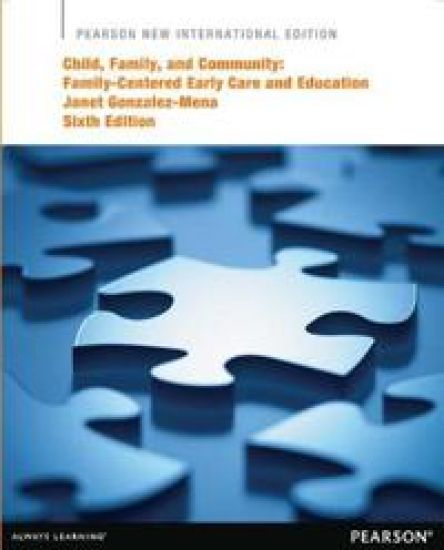
Child, Family, and Community illuminates early childhood socialization in a variety of contexts, including the family and community settings. The text serves as a guide to provide the support needed for children and their families, and the guidance and child rearing strategies presented can be put to immediate use. Pearson eText is an easy-to-use digital textbook that you can purchase on your own or instructors can assign for their course. The mobile app lets you keep on learning, no matter where your day takes you -- even offline. You can also add highlights, bookmarks, and notes in your Pearson eText to study how you like. NOTE: This ISBN is for the Pearson eText access card. Pearson eText is a fully digital delivery of Pearson content. Before purchasing, check that you have the correct ISBN. To register for and use Pearson eText, you may also need a course invite link, which your instructor will provide. Follow the instructions provided on the access card to learn more.
Child, Family, and Community

Child, Family, and Community

Janet Gonzalez-Mena

Pearson
2016
nidottu
Note: This is the bound book only and does not include access to the Enhanced Pearson eText. To order the Enhanced Pearson eText packaged with a bound book, use ISBN 0134290046. With its focus on the socialization of the child, this book helps readers understand how the child develops in a variety of contexts, including the family, community, and early childhood institutions. Child, Family, and Community gives readers the tools they need to work effectively with both children and parents in ways that support children to be healthy, secure, and socialized members of their families, and eventually society. Guidance strategies are presented, as well as child rearing strategies that parents, parent educators and other professionals and practitioners can put to immediate use. The author relates the many contexts in which the child exists–family, school, and community–to Bronfenbrenner’s ecological systems theory, which divide’s a person's environment into five different levels: the microsystem, the mesosystem, the exosystem, the macrosystem, and the chronosystem. The Enhanced Pearson eText features embedded video and assessments. Improve mastery and retention with the Enhanced Pearson eText* The Enhanced Pearson eText provides a rich, interactive learning environment designed to improve student mastery of content. The Enhanced Pearson eText is: Engaging. The new interactive, multimedia learning features were developed by the authors and other subject-matter experts to deepen and enrich the learning experience. Convenient. Enjoy instant online access from your computer or download the Pearson eText App to read on or offline on your iPad® and Android® tablet.* Affordable. The Enhanced Pearson eText may be purchased stand-alone or with a loose-leaf version of the text for 40-65% less than a print bound book. *The Enhanced eText features are only available in the Pearson eText format. They are not available in third-party eTexts or downloads. *The Pearson eText App is available on Google Play and in the App Store. It requires Android OS 3.1-4, a 7” or 10” tablet, or iPad iOS 5.0 or later.
Learning from the Bumps in the Road

Learning from the Bumps in the Road

Holly Elissa Bruno; Luis Antonio Hernandez; Janet Gonzalez-Mena; Debra Ren-Etta Sulivan

Redleaf Press
2013
nidottu
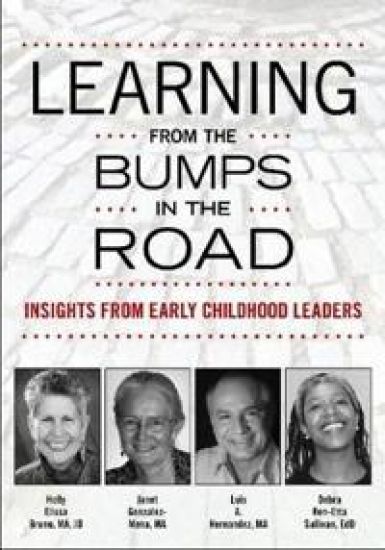
The journey to professional and personal growth takes time, and the road isn’t always smooth, but it is a learning-filled adventure. Holly Elissa Bruno, Janet Gonzalez-Mena, Luis Antonio Hernandez, and Debra Ren-Etta Sullivan are accomplished professionals and respected leaders in the early childhood field. After a decade of speaking together at national professional development conferences, they now give you twelve of their most important presentation topics as essays. Each chapter presents a dialogue among the authors about a particular topic and the lessons gleaned from facing and overcoming uncertainty and obstacles. Merging each author’s distinct voice, expertise, and life experiences, this collection unveils the authors’ personal and meaningful histories, insecurities, and insights. You will be encouraged and challenged to think more deeply and openly about your own practices and philosophies. You will gain a renewed sense of purpose as you help children reach their full potentials. And you will discover—as the authors did—that every bump in the road is an invitation to grow and opportunity to learn.
50 Strategies for Communicating and Working with Diverse Families
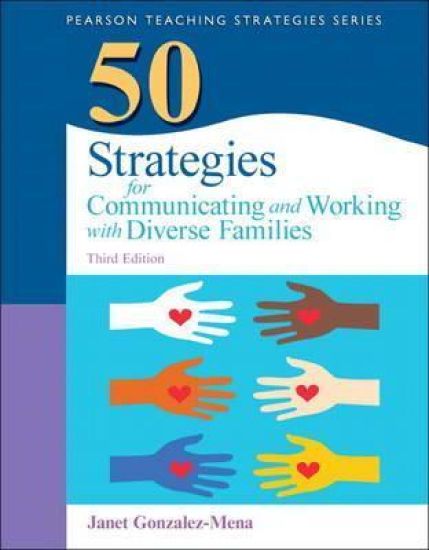
50 Strategies for Communicating and Working with Diverse Families, 3rd edition by Janet Gonzalez-Mena is unique in its practical approach to improving teaching skills of early childhood educators by offering the most practical strategies for partnering with families to support, enhance, and maximize the quality of care and education of young children. It presents a plethora of ideas for creating the trust necessary for true collaboration between families and the early childhood professional, and guides on how to develop useful programs that include all families and individuals. Extensively revised, it reflects the most current themes, trends research and ideas in the field today, making it the most diversity-centered text on the market for courses covering diversity and the relationships between teachers and families in early childhood education classrooms and centers.
We're Not Robots

We're Not Robots

Enid Elliot; Janet Gonzalez-Mena

State University of New York Press
2006
sidottu
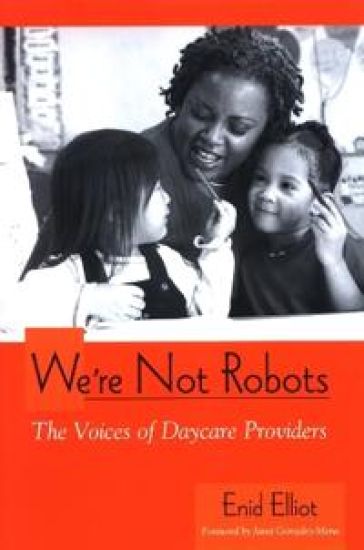
Raises provocative questions about how we care for infants and toddlers, and how to provide education and support for their caregivers.This fascinating book presents the stories of infant/toddler caregivers and their work to illustrate the complexity of balancing relationships with babies, families, coworkers, and self, yet remaining emotionally present and mindfully engaged. Enid Elliot explores the inevitable tensions of working within these various relationships and demonstrates how proficient caregivers can develop strategies for achieving this delicate balance. In the process, she raises provocative questions about how we care for babies, and how to provide education and support for their caregivers.
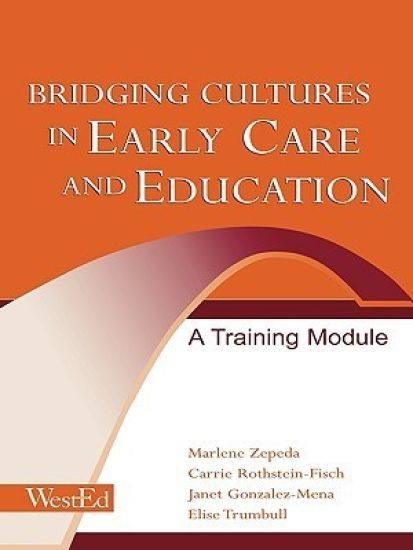
Bridging Cultures in Early Care and Education

Bridging Cultures in Early Care and Education

Marlene Zepeda; Janet Gonzalez-Mena; Carrie Rothstein-Fisch; Elise Trumbull

Routledge Member of the Taylor and Francis Group
2006
nidottu
Bridging Cultures in Early Care and Education: A Training Module is a resource designed to help pre-service and in-service early childhood educators, including infant-toddler caregivers, understand the role of culture in their programs. It is also intended for professionals who work with children and their families in a variety of other roles, such as social workers, special educators, and early interventionists, and for use in college courses focused on early childhood education and child development.The module explains and illustrates how early childhood educators can use the organizing concepts of individualism and collectivism as a means of understanding cultural conflict and difference. These concepts have been shown to be highly useful in improving home-school understanding across cultures. Based on real-life examples of cultural dilemmas in early care and education settings, participants engage the concepts of individualism and collectivism to solve a variety of scenarios in a dynamic and engaging manner.*Chapter 1 introduces the Bridging Cultures for Early Care and Education approach, provides a brief history, and explains the training module. It presents the conceptual framework of individualism and collectivism, which is at the heart of the training.*Chapter 2 provides the information needed for a two-hour workshop, including a script and notes to the facilitator. The script is not meant to be read word for word. Rather, it is offered as a guide, based on a pilot-tested approach. Appendices at the end of the book contain transparency masters for the overheads referenced in the script, and masters for suggested handouts.*Chapter 3 offers ideas for augmenting the basic two-hour training by expanding it over a longer time period. It also identifies additional diversity resources that can complement the Bridging Cultures training.*Appendices providing additional information, data, and bibliographic resources are included. This module originated as part of the Bridging Cultures Project at WestEd--a nonprofit research, development, and service agency working with education and other communities to promote excellence, achieve equity, and improve learning for children, youth, and adults.