Kirjojen hintavertailu. Mukana 12 101 512 kirjaa ja 12 kauppaa.

Kirjailija

Janice Ross

Kirjat ja teokset yhdessä paikassa: 14 kirjaa, julkaisuja vuosilta 2009-2025, suosituimpien joukossa Tri zajtsa: Nefritovyj shar. Vertaile teosten hintoja ja tarkista saatavuus suomalaisista kirjakaupoista.

14 kirjaa

Kirjojen julkaisuhaarukka 2009-2025.

Tri zajtsa: Nefritovyj shar

Tri zajtsa: Nefritovyj shar

S. Lauder; Janice Ross

Eksmo
2025
sidottu
Ekskursija v Zapretnyj gorod zakanchivaetsja dlja Sary Livingston tem, chto ona okazyvaetsja drevnem Kitae. V tenjakh tajatsja sekrety, za kazhdym uglom podsteregaet opasnost. Chtoby vyzhit, Sara polagaetsja na svoju smekalku i rasskazy babushki Tan. Kogda temnye sily soberutsja vmeste, Sara dolzhna srazhatsja v novom mire i najti v sebe muzhestvo protivostojat drevnej magii. A esche uznat, kakuju imenno rol prigotovili dlja nee Vosem Bessmertnykh.
The Choreography of Environments

The Choreography of Environments

Janice Ross

OXFORD UNIVERSITY PRESS INC
2025
sidottu
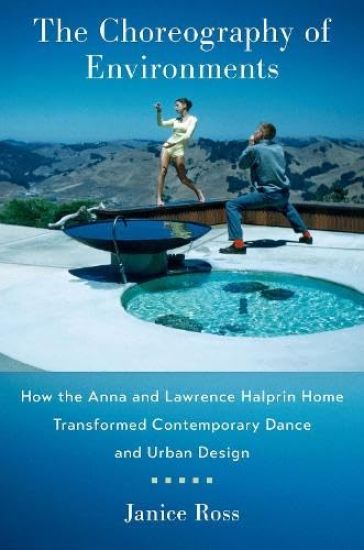
The Choreography of Environments: How the Anna and Lawrence Halprin Home Transformed Contemporary Dance and Urban Design explores how objects and the domestic spaces seep into the aesthetic consciousness of movement-based artists, like dancers and urban designers, significantly shaping their approach to movement invention and choreography. If these objects and spaces happen to have been designed by a leading modernist architect and landscape designer working with the dancer, then the aesthetic imprint is amplified. Dance innovation becomes pressed into dialogue with spatial, environmental, and urban agendas. The Choreography of Environments builds on this premise to consider the use of ordinary objects from a private residence as lenses into viewing dance innovation. Author Janice Ross posits the Halprins' 1950s iconic mid-century modern home and expansive outdoor dance deck as a hidden archive. She explores four objects from their house and gardens -- staircase, deck, chair, and window -- to trace how, despite the conservative postwar climate, this intimate domestic space became a radical template reshaping postmodern dance invention and its expansion into civic, social, and environmental engagement in the twentieth and twenty-first centuries. The work that happened in this white, middle class, Jewish-American home in a San Francisco suburb paved the way for changes that continue to resonate today across contemporary dance, performance, and urban design. These include: defamiliarizing urban landscape and gardens as cloistered theaters where civic identities are rehearsed, orchestrating collective problem solving and invention, normalizing the nude body, privileging a utilitarian and responsive rather than sentimental approach to dance in the environment, and re-positioning choreography as a vital medium for urban problem solving. These four representative objects in the Halprin home are also used to trace the burgeoning of dance as a forceful medium for civic engagement, and its valorization of the ordinary in movement. As a whole, this book shows how dance, architecture, and landscape design would have a profound confluence through these shared domestic spaces and objects of the Halprins' lives.
The Choreography of Environments

The Choreography of Environments

Janice Ross

OXFORD UNIVERSITY PRESS INC
2025
nidottu
The Choreography of Environments: How the Anna and Lawrence Halprin Home Transformed Contemporary Dance and Urban Design explores how objects and the domestic spaces seep into the aesthetic consciousness of movement-based artists, like dancers and urban designers, significantly shaping their approach to movement invention and choreography. If these objects and spaces happen to have been designed by a leading modernist architect and landscape designer working with the dancer, then the aesthetic imprint is amplified. Dance innovation becomes pressed into dialogue with spatial, environmental, and urban agendas. The Choreography of Environments builds on this premise to consider the use of ordinary objects from a private residence as lenses into viewing dance innovation. Author Janice Ross posits the Halprins' 1950s iconic mid-century modern home and expansive outdoor dance deck as a hidden archive. She explores four objects from their house and gardens -- staircase, deck, chair, and window -- to trace how, despite the conservative postwar climate, this intimate domestic space became a radical template reshaping postmodern dance invention and its expansion into civic, social, and environmental engagement in the twentieth and twenty-first centuries. The work that happened in this white, middle class, Jewish-American home in a San Francisco suburb paved the way for changes that continue to resonate today across contemporary dance, performance, and urban design. These include: defamiliarizing urban landscape and gardens as cloistered theaters where civic identities are rehearsed, orchestrating collective problem solving and invention, normalizing the nude body, privileging a utilitarian and responsive rather than sentimental approach to dance in the environment, and re-positioning choreography as a vital medium for urban problem solving. These four representative objects in the Halprin home are also used to trace the burgeoning of dance as a forceful medium for civic engagement, and its valorization of the ordinary in movement. As a whole, this book shows how dance, architecture, and landscape design would have a profound confluence through these shared domestic spaces and objects of the Halprins' lives.

Effekt razorvavshejsja bomby. Leonid Jakobson i sovetskij balet kak forma soprotivlenija
V svoej knige Dzhenis Ross issleduet bogatuju i slozhnuju istoriju sovetskogo baleta skvoz prizmu tvorchestva odnogo iz glavnykh vozmutitelej spokojstvija, Leonida Jakobsona.Jakobson brosal vyzov tsenzoram, preodolevaja zhestkie esteticheskie ramki statichnogo i konservativnogo sovetskogo baleta. On byl khudozhnikom protivorechij, modernistom, proizvedenija kotorogo, sozdannye v mrachnye vremena, pridali novyj smysl roli cheloveka tantsujuschego.Perevodchik: Landikhova Anna, Frolov Kirill
Ubityj kapitalizmom

Ubityj kapitalizmom

Janice Ross

Tsiolkovskij
2018
sidottu
Dzhon Ross - ekstsentrik, poet, bitnik, istorik i politicheskij aktivist. On drug i propagandist sapatistskikh partizan Meksiki, gde on prozhil vsju vtoruju polovinu svoj zhizni, storonnik legalajza, zavsegdataj poeticheskikh slemov i uchastnik antivoennykh aktsij "Zhivogo schita" vo vremja amerikanskikh bombardirovok Bagdada. Amerikanskuju istoriju borby s kapitalizmom Ross perezhival kak svoju lichnuju dramu, cheredu konfrontatsij, podemov i padenij, utopicheskikh nadezhd i revoljutsionnykh opytov. Ego kniga postroena kak doveritelnyj razgovor s uzhe ushedshimi gerojami soprotivlenija - anarkhistami, sotsialistami i marksistami raznykh pokolenij. Eto politicheskaja meditatsija na temu amerikanskikh levykh s momenta ikh fakticheskogo pojavlenija v seredine devjatnadtsatogo veka i vplot do antiglobalistskogo protivostojanija v Sietle i antivoennykh demonstratsij vo vremja vojny v Irake.
Like a Bomb Going Off

Like a Bomb Going Off

Janice Ross; Lynn Garafola

Yale University Press
2015
sidottu
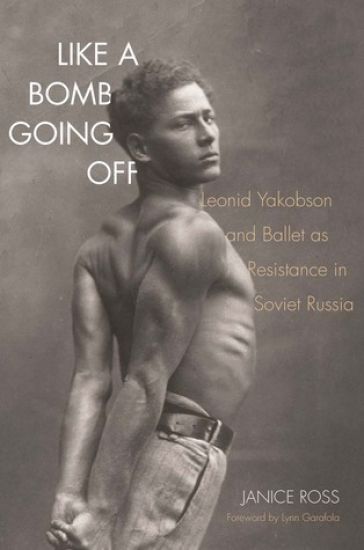
The powerfully moving story of the Russian Jewish choreographer who used dance to challenge despotism Everyone has heard of George Balanchine, but few outside Russia know of Leonid Yakobson, Balanchine’s contemporary and arguably his equal, who remained in Lenin’s Russia and survived censorship during the darkest days of Stalin. Like Shostakovich, Yakobson suffered for his art and yet managed to create a singular body of revolutionary work that spoke to the Soviet condition. His ballets were considered so explosive that their impact was described as “like a bomb going off.” Challenged rather than intimidated by the restrictions imposed by Soviet censors on his ballets, Yakobson offered dancers and audiences an experience quite different from the prevailing Soviet aesthetic. He was unwilling to bow completely to the state’s limitations on his artistic opportunities, so despite his fraught relations with his political overseers, his ballets retained early-twentieth-century movement innovations such as turned-in and parallel-foot positions, oddly angled lifts, and eroticized content, all of which were anathema to prevailing Soviet ballet orthodoxy. For Yakobson, ballet was a form of political discourse, and he was particularly alive to the suppressed identity of Soviet Jews and officially sanctioned anti-Semitism. He used dance to celebrate reinvention and self-authorship—the freedom of the individual voice as subject and medium. His ballets challenged the role of the dancing body during some of the most repressive decades of totalitarian rule. Yakobson’s work unfolded in a totalitarian state, and there was little official effort to preserve his choreographic archive or export knowledge of him to the West—gaps that dance historian Janice Ross seeks to redress in this book. Based on untapped archival collections of photographs, films, and writings about Yakobson’s work in Moscow and St. Petersburg for the Bolshoi and Kirov ballets, as well as interviews with former dancers, family, and audience members, this illuminating and beautifully written study brings to life a hidden history of artistic resistance in the Soviet Union through the story of a brave artist who struggled his entire life against political repression yet continued to offer a vista of hope.
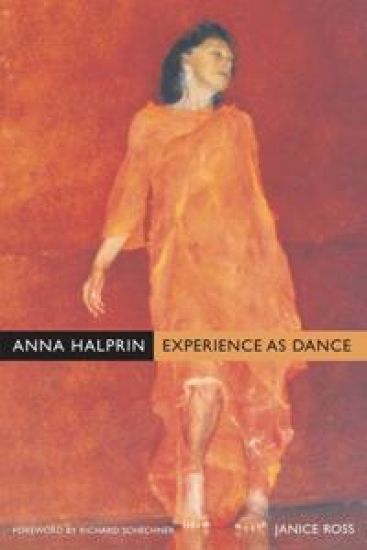
Anna Halprin

Anna Halprin

Janice Ross; Richard Schechner

University of California Press
2009
pokkari
Anna Halprin pioneered what became known as 'postmodern dance', creating work that was key to unlocking the door to experimentation in theater, music, Happenings, and performance art. This first comprehensive biography examines Halprin's fascinating life in the context of American culture - in particular popular culture and the West Coast as a center of artistic experimentation from the Beats through the Hippies. Janice Ross chronicles Halprin's long, remarkable career, beginning with the dancer's grandparents - who escaped Eastern European pogroms and came to the United States at the turn of the last century - and ending with the present day, when Halprin continues to defy boundaries between artistic genres as well as between participants and observers. As she follows Halprin's development from youth into old age, Ross describes in engrossing detail the artist's roles as dancer, choreographer, performance theorist, community leader, cancer survivor, healer, wife, and mother. Halprin's friends and acquaintances include a number of artists who charted the course of postmodern performance. Among her students were Trisha Brown, Simone Forti, Yvonne Rainer, Meredith Monk, and Robert Morris. Ross brings to life the vital sense of experimentation during this period. She also illuminates the work of Anna Halprin's husband, the important landscape architect Lawrence Halprin, in the context of his wife's environmental dance work. Using Halprin's dance practices and works as her focus, Ross explores the effects of danced stories on the bodies who perform them. The result is an innovative consideration of how experience becomes performance as well as a masterful account of an extraordinary life.