Kirjojen hintavertailu. Mukana 12 641 678 kirjaa ja 12 kauppaa.

Kirjailija

Jason A Myers

Kirjat ja teokset yhdessä paikassa: 8 kirjaa, julkaisuja vuosilta 2014-2024, suosituimpien joukossa Paul of Arabia. Vertaile teosten hintoja ja tarkista saatavuus suomalaisista kirjakaupoista.

Mukana myös kirjoitusasut: Jason A. Myers

8 kirjaa

Kirjojen julkaisuhaarukka 2014-2024.

New Testament Rhetoric, Second Edition

New Testament Rhetoric, Second Edition

Ben Witherington; Jason a Myers

Wipf Stock Publishers
2022
sidottu
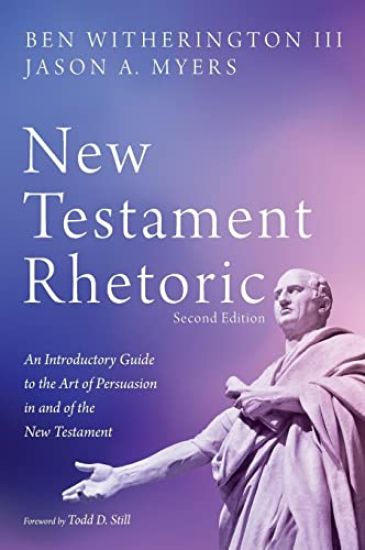
Witherington and Myers provide a much-needed introduction to the ancient art of persuasion and its use within the various New Testament documents. More than just an exploration of the use of the ancient rhetorical tools and devices, this guide introduces the reader to all that went into convincing an audience about some subject. Witherington and Myers make the case that rhetorical criticism is a more fruitful approach to the NT epistles than the oft-employed approaches of literary and discourse criticism. Familiarity with the art of rhetoric also helps the reader explore non-epistolary genres. In addition to the general introduction to rhetorical criticism, the book guides readers through the many and varied uses of rhetoric in most NT documents--not only telling readers about rhetoric in the NT, but showing them the way it was employed. This brief guide book is intended to provide the reader with an entrance into understanding the rhetorical analysis of various parts of the NT, the value such studies bring for understanding what is being proclaimed and defended in the NT, and how Christ is presented in ways that would be considered persuasive in antiquity. - from the introduction
New Testament Rhetoric, Second Edition

New Testament Rhetoric, Second Edition

Ben Witherington; Jason A Myers

Wipf Stock Publishers
2022
pokkari
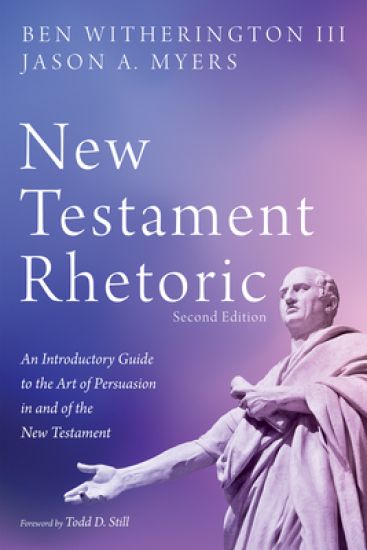
Witherington and Myers provide a much-needed introduction to the ancient art of persuasion and its use within the various New Testament documents. More than just an exploration of the use of the ancient rhetorical tools and devices, this guide introduces the reader to all that went into convincing an audience about some subject. Witherington and Myers make the case that rhetorical criticism is a more fruitful approach to the NT epistles than the oft-employed approaches of literary and discourse criticism. Familiarity with the art of rhetoric also helps the reader explore non-epistolary genres. In addition to the general introduction to rhetorical criticism, the book guides readers through the many and varied uses of rhetoric in most NT documents--not only telling readers about rhetoric in the NT, but showing them the way it was employed. This brief guide book is intended to provide the reader with an entrance into understanding the rhetorical analysis of various parts of the NT, the value such studies bring for understanding what is being proclaimed and defended in the NT, and how Christ is presented in ways that would be considered persuasive in antiquity. - from the introduction

Voices and Views on Paul – Exploring Scholarly Trends

Voices and Views on Paul – Exploring Scholarly Trends

Ben Witherington Ii; Jason A. Myers

IVP Academic
2020
nidottu
ECPA Top Shelf Book Cover Award In the field of Pauline studies, much has changed over the last twenty years. Since Ben Witherington III first published his influential book The Paul Quest, monumental works have appeared from scholars such as James D. G. Dunn, N. T. Wright, E. P. Sanders, and John Barclay. The New Perspective is no longer new, and the flurry of publications continues across a range of specialized studies. Those interested in exploring trends and issues related to Paul may find themselves in need of a map. With Voices and Views on Paul, Ben Witherington and Jason Myers have teamed up to provide a reliable guide to the major terrain of Pauline scholarship. Through a distinctive combination of survey and evaluation, they explain and analyze the thought of recent major Pauline interpreters and track developments over the past two decades. They conclude with an assessment of how these studies have advanced our understanding of Paul and where further work is needed. Voices and Views on Paul offers a helpful service to students, pastors, and anyone seeking to keep up with this dynamic field as scholars continue to wrestle with Paul and his work.
Paul, The Apostle of Obedience

Paul, The Apostle of Obedience

Jason A. Myers

BLOOMSBURY PUBLISHING PLC
2024
nidottu
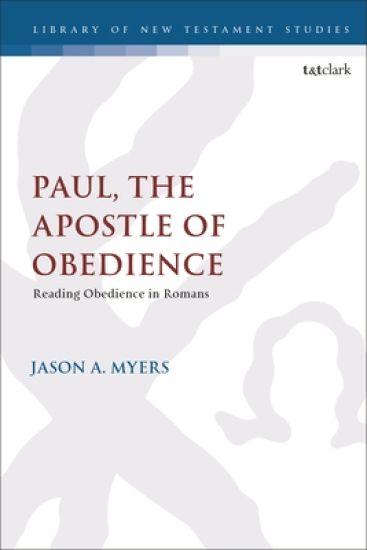
Jason A. Myers reconsiders the meaning and context of the phrase “the obedience of faith” in Rom 1:5 and how it contributes to the theme of obedience in Romans. In contrast to previous studies that have nearly exclusively focused on the obedience language in light of the Hebrew Bible and Second Temple literature, Myers instead investigates how this language functioned within the Greco-Roman world, particularly in the discourse of the Roman Empire.By studying both the Greco-Roman contexts and the use of obedience language during the Empire, Myers sheds fresh light on the meaning of “the obedience of faith,” and concludes that such examination helps contemporary readers understand how Gentiles in Paul’s audience would have heard and received the terms and images relating to obedience. In addition, he argues that Paul’s use of obedience language, both at the beginning and end of Romans (1:5; 15:18), serves as rhetorical bookends, and signals a theme that is central to Paul’s purpose in Romans and integral to his calling as an apostle to the Gentiles.
Paul, The Apostle of Obedience

Paul, The Apostle of Obedience

Jason A. Myers

BLOOMSBURY PUBLISHING PLC
2022
sidottu
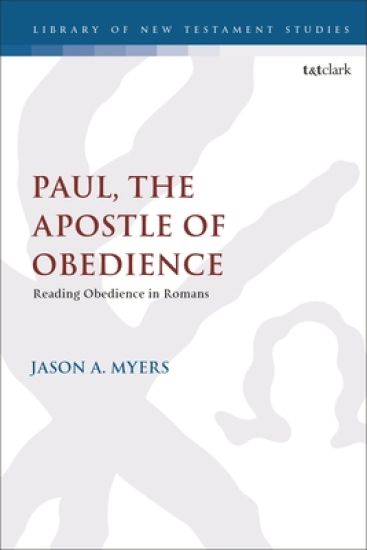
Jason A. Myers reconsiders the meaning and context of the phrase “the obedience of faith” in Rom 1:5 and how it contributes to the theme of obedience in Romans. In contrast to previous studies that have nearly exclusively focused on the obedience language in light of the Hebrew Bible and Second Temple literature, Myers instead investigates how this language functioned within the Greco-Roman world, particularly in the discourse of the Roman Empire.By studying both the Greco-Roman contexts and the use of obedience language during the Empire, Myers sheds fresh light on the meaning of “the obedience of faith,” and concludes that such examination helps contemporary readers understand how Gentiles in Paul’s audience would have heard and received the terms and images relating to obedience. In addition, he argues that Paul’s use of obedience language, both at the beginning and end of Romans (1:5; 15:18), serves as rhetorical bookends, and signals a theme that is central to Paul’s purpose in Romans and integral to his calling as an apostle to the Gentiles.