Kirjojen hintavertailu. Mukana 12 376 651 kirjaa ja 12 kauppaa.

Kirjailija

Jason Brennan

Kirjat ja teokset yhdessä paikassa: 32 kirjaa, julkaisuja vuosilta 2010-2026, suosituimpien joukossa Glass Houses. Vertaile teosten hintoja ja tarkista saatavuus suomalaisista kirjakaupoista.

32 kirjaa

Kirjojen julkaisuhaarukka 2010-2026.

Win

Win

Brent Pope; Jason Brennan

Hachette Books Ireland
2019
pokkari
'Visualise your goals and achieve your potential.'Easy-to-follow and extremely effective, Win will change the way you think about all aspects of your life.From well-known personality and rugby commentator Brent Pope and psychotherapist and mental skills coach Jason Brennan, Win: Proven Strategies for Success in Sports, Life and Mental Health examines the mindset behind the psychology of winning and how the mental skills applied in sports can be adapted for success in everyday life. From dealing with failure, to managing stress and anxiety, to changing your definition of winning - and with interviews from some of the world's most high-profile sports stars including Ronan O'Gara, Bernard Brogan, Conrad Smith, Dean Rock, AP McCoy, Sonia O'Sullivan, Gary O'Donovan and Paul O'Donovan, Dan Carter and many others - Win looks at how you can gain confidence, achieve your goals and build lifelong inner mental strength and resilience - today.
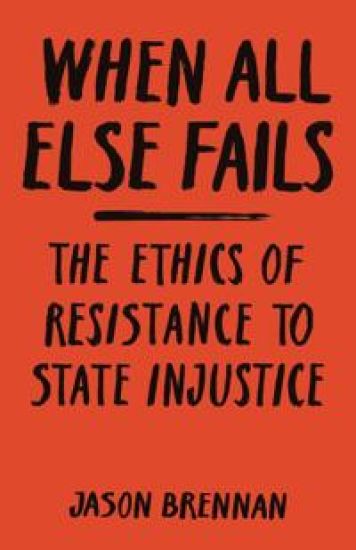
When All Else Fails

When All Else Fails

Jason Brennan

Princeton University Press
2018
sidottu
Why you have the right to resist unjust governmentThe economist Albert O. Hirschman famously argued that citizens of democracies have only three possible responses to injustice or wrongdoing by their governments: we may leave, complain, or comply. But in When All Else Fails, Jason Brennan argues that there is a fourth option. When governments violate our rights, we may resist. We may even have a moral duty to do so.For centuries, almost everyone has believed that we must allow the government and its representatives to act without interference, no matter how they behave. We may complain, protest, sue, or vote officials out, but we can’t fight back. But Brennan makes the case that we have no duty to allow the state or its agents to commit injustice. We have every right to react with acts of “uncivil disobedience.” We may resist arrest for violation of unjust laws. We may disobey orders, sabotage government property, or reveal classified information. We may deceive ignorant, irrational, or malicious voters. We may even use force in self-defense or to defend others.The result is a provocative challenge to long-held beliefs about how citizens may respond when government officials behave unjustly or abuse their power.
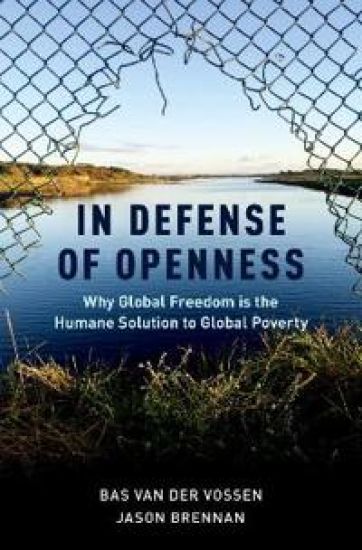
In Defense of Openness

In Defense of Openness

Bas van der Vossen; Jason Brennan

Oxford University Press Inc
2018
sidottu
The topic of global justice has long been a central concern within political philosophy and political theory, and there is no doubt that it will remain significant given the persistence of poverty on a massive scale and soaring global inequality. Yet, virtually every analysis in the vast literature of the subject seems ignorant of what developmental economists, both left and right, have to say about the issue. In Defense of Openness illuminates the problem by stressing that that there is overwhelming evidence that economic rights and freedom are necessary for development, and that global redistribution tends to hurt more than it helps. Bas van der Vossen and Jason Brennan instead ask what a theory of global justice would look like if it were informed by the facts that mainstream development and institutional economics have brought to light. They conceptualize global justice as global freedom and insist we can help the poor-and help ourselves at the same time-by implementing open borders, free trade, the strong protection of individual freedom, and economic rights and property for all around the world. In short, they work from empirical, consequentialist grounds to advocate for the market society as a model for global justice. A spirited challenge to mainstream political theory from two leading political philosophers, In Defense of Openness offers a new approach to global justice: We don't need to "save" the poor. The poor will save themselves, if we would only get out of their way and let them.
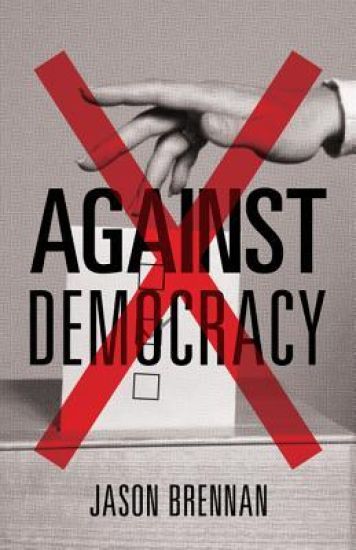
Against Democracy

Against Democracy

Jason Brennan

Princeton University Press
2017
pokkari
Most people believe democracy is a uniquely just form of government. They believe people have the right to an equal share of political power. And they believe that political participation is good for us--it empowers us, helps us get what we want, and tends to make us smarter, more virtuous, and more caring for one another. These are some of our most cherished ideas about democracy. But Jason Brennan says they are all wrong. In this trenchant book, Brennan argues that democracy should be judged by its results--and the results are not good enough. Just as defendants have a right to a fair trial, citizens have a right to competent government. But democracy is the rule of the ignorant and the irrational, and it all too often falls short. Furthermore, no one has a fundamental right to any share of political power, and exercising political power does most of us little good. On the contrary, a wide range of social science research shows that political participation and democratic deliberation actually tend to make people worse--more irrational, biased, and mean. Given this grim picture, Brennan argues that a new system of government--epistocracy, the rule of the knowledgeable--may be better than democracy, and that it's time to experiment and find out. A challenging critique of democracy and the first sustained defense of the rule of the knowledgeable, Against Democracy is essential reading for scholars and students of politics across the disciplines. Featuring a new preface that situates the book within the current political climate and discusses other alternatives beyond epistocracy, Against Democracy is a challenging critique of democracy and the first sustained defense of the rule of the knowledgeable.
Against Democracy

Against Democracy

Jason Brennan

PRINCETON UNIVERSITY PRESS
2016
sidottu
Most people believe democracy is a uniquely just form of government. They believe people have the right to an equal share of political power. And they believe that political participation is good for us--it empowers us, helps us get what we want, and tends to make us smarter, more virtuous, and more caring for one another. These are some of our most cherished ideas about democracy. But, Jason Brennan says, they are all wrong. In this trenchant book, Brennan argues that democracy should be judged by its results--and the results are not good enough. Just as defendants have a right to a fair trial, citizens have a right to competent government. But democracy is the rule of the ignorant and the irrational, and it all too often falls short. Furthermore, no one has a fundamental right to any share of political power, and exercising political power does most of us little good. On the contrary, a wide range of social science research shows that political participation and democratic deliberation actually tend to make people worse--more irrational, biased, and mean. Given this grim picture, Brennan argues that a new system of government--epistocracy, the rule of the knowledgeable--may be better than democracy, and that it's time to experiment and find out. A challenging critique of democracy and the first sustained defense of the rule of the knowledgeable, Against Democracy is essential reading for scholars and students of politics across the disciplines.
Compulsory Voting

Compulsory Voting

Jason Brennan; Hill Lisa

Cambridge University Press
2014
pokkari
In many democracies, voter turnout is low and getting lower. If the people choose not to govern themselves, should they be forced to do so? For Jason Brennan, compulsory voting is unjust and a petty violation of citizens' liberty. The median non-voter is less informed and rational, as well as more biased, than the median voter. According to Lisa Hill, compulsory voting is a reasonable imposition on personal liberty. Hill points to the discernible benefits of compulsory voting and argues that high turnout elections are more democratically legitimate. The authors - both well-known for their work on voting and civic engagement - debate questions such as: • Do citizens have a duty to vote, and is it an enforceable duty? • Does compulsory voting violate citizens' liberty? If so, is this sufficient grounds to oppose it? Or is it a justifiable violation? Might it instead promote liberty on the whole? • Is low turnout a problem or a blessing?
Compulsory Voting

Compulsory Voting

Jason Brennan; Lisa Hill

Cambridge University Press
2014
sidottu
In many democracies, voter turnout is low and getting lower. If the people choose not to govern themselves, should they be forced to do so? For Jason Brennan, compulsory voting is unjust and a petty violation of citizens' liberty. The median non-voter is less informed and rational, as well as more biased, than the median voter. According to Lisa Hill, compulsory voting is a reasonable imposition on personal liberty. Hill points to the discernible benefits of compulsory voting and argues that high turnout elections are more democratically legitimate. The authors - both well-known for their work on voting and civic engagement - debate questions such as: • Do citizens have a duty to vote, and is it an enforceable duty? • Does compulsory voting violate citizens' liberty? If so, is this sufficient grounds to oppose it? Or is it a justifiable violation? Might it instead promote liberty on the whole? • Is low turnout a problem or a blessing?
Libertarianism

Libertarianism

Jason Brennan

Oxford University Press Inc
2013
nidottu
Historically, Americans have seen libertarians as far outside the mainstream, but with the rise of the Tea Party movement, libertarian principles have risen to the forefront of Republican politics. But libertarianism is more than the philosophy of individual freedom and unfettered markets that Republicans have embraced. Indeed, as Jason Brennan points out, libertarianism is a quite different--and far richer--system of thought than most of us suspect. In this timely new entry in Oxford's acclaimed series What Everyone Needs to Know, Brennan offers a nuanced portrait of libertarianism, proceeding through a series of questions to illuminate the essential elements of libertarianism and the problems the philosophy addresses, including such topics as the Value of Liberty, Human Nature and Ethics, Economic Liberty, Civil Rights, Social Justice and the Poor, Government and Democracy, and Contemporary Politics. Brennan asks the most fundamental and challenging questions: What do Libertarians think liberty is? Do libertarians think everyone should be selfish? Are libertarians just out to protect the interests of big business? What do libertarians think we should do about racial injustice? What would libertarians do about pollution? Are Tea Party activists true libertarians? As he sheds light on libertarian beliefs, Brennan overturns numerous misconceptions. Libertarianism is not about simple-minded paranoia about government, he writes. Rather, it celebrates the ideal of peaceful cooperation among free and equal people. Libertarians believe that the rich always capture political power; they want to minimize the power available to them in order to protect the weak. Brennan argues that libertarians are, in fact, animated by benevolence and a deep concern for the poor. Clear, concise, and incisively written, this volume explains a vitally important philosophy in American history--and a potent force in contemporary politics.
Libertarianism

Libertarianism

Jason Brennan

Oxford University Press Inc
2013
sidottu
Historically, Americans have seen libertarians as far outside the mainstream, but with the rise of the Tea Party movement, libertarian principles have risen to the forefront of Republican politics. But libertarianism is more than the philosophy of individual freedom and unfettered markets that Republicans have embraced. Indeed, as Jason Brennan points out, libertarianism is a quite different--and far richer--system of thought than most of us suspect. In this timely new entry in Oxford's acclaimed series What Everyone Needs to Know, Brennan offers a nuanced portrait of libertarianism, proceeding through a series of questions to illuminate the essential elements of libertarianism and the problems the philosophy addresses, including such topics as the Value of Liberty, Human Nature and Ethics, Economic Liberty, Civil Rights, Social Justice and the Poor, Government and Democracy, and Contemporary Politics. Brennan asks the most fundamental and challenging questions: What do Libertarians think liberty is? Do libertarians think everyone should be selfish? Are libertarians just out to protect the interests of big business? What do libertarians think we should do about racial injustice? What would libertarians do about pollution? Are Tea Party activists true libertarians? As he sheds light on libertarian beliefs, Brennan overturns numerous misconceptions. Libertarianism is not about simple-minded paranoia about government, he writes. Rather, it celebrates the ideal of peaceful cooperation among free and equal people. Libertarians believe that the rich always capture political power; they want to minimize the power available to them in order to protect the weak. Brennan argues that libertarians are, in fact, animated by benevolence and a deep concern for the poor. Clear, concise, and incisively written, this volume explains a vitally important philosophy in American history--and a potent force in contemporary politics.
The Ethics of Voting

The Ethics of Voting

Jason Brennan

Princeton University Press
2012
pokkari
Nothing is more integral to democracy than voting. Most people believe that every citizen has the civic duty or moral obligation to vote, that any sincere vote is morally acceptable, and that buying, selling, or trading votes is inherently wrong. In this provocative book, Jason Brennan challenges our fundamental assumptions about voting, revealing why it is not a duty for most citizens--in fact, he argues, many people owe it to the rest of us not to vote. Bad choices at the polls can result in unjust laws, needless wars, and calamitous economic policies. Brennan shows why voters have duties to make informed decisions in the voting booth, to base their decisions on sound evidence for what will create the best possible policies, and to promote the common good rather than their own self-interest. They must vote well--or not vote at all. Brennan explains why voting is not necessarily the best way for citizens to exercise their civic duty, and why some citizens need to stay away from the polls to protect the democratic process from their uninformed, irrational, or immoral votes. In a democracy, every citizen has the right to vote. This book reveals why sometimes it's best if they don't. In a new afterword, "How to Vote Well," Brennan provides a practical guidebook for making well-informed, well-reasoned choices at the polls.
A Brief History of Liberty

A Brief History of Liberty

David Schmidtz; Jason Brennan

Wiley-Blackwell (an imprint of John Wiley Sons Ltd)
2010
nidottu
Through a fusion of philosophical, social scientific, and historical methods, A Brief History of Liberty provides a comprehensive, philosophically-informed portrait of the elusive nature of one of our most cherished ideals. Offers a succinct yet thorough survey of personal freedomExplores the true meaning of liberty, drawing philosophical lessons about liberty from historyConsiders the writings of key historical figures from Socrates and Erasmus to Hobbes, Locke, Marx, and Adam SmithCombines philosophical rigor with social scientific analysisArgues that liberty refers to a range of related but specific ideas rather than limiting the concept to one definition